 Ferndale Siding
 Roofing in Marietta: A Different Kind of Wear
Marietta sits low and close to the water, tucked between Ferndale and Bellingham Bay in Whatcom County. That location is part of why people live here — but it's also why roofs in this stretch of the county age differently than roofs ten miles inland. Salt-laden air off the bay, near-constant marine moisture, and long stretches of shade from mature evergreens combine to shorten the useful life of a roof if it isn't installed and maintained with that environment in mind. We've replaced roofs throughout Marietta and the surrounding Ferndale area long enough to know which failure patterns show up here specifically, and we build every replacement to answer them directly rather than installing a generic roof and hoping it holds up.
This page is about one job: full roof replacement on homes in and around Marietta. Not a repair, not a patch, not a general overview of every roofing option on the market — just what a correct, durable roof replacement looks like for this specific area, and how we do it.
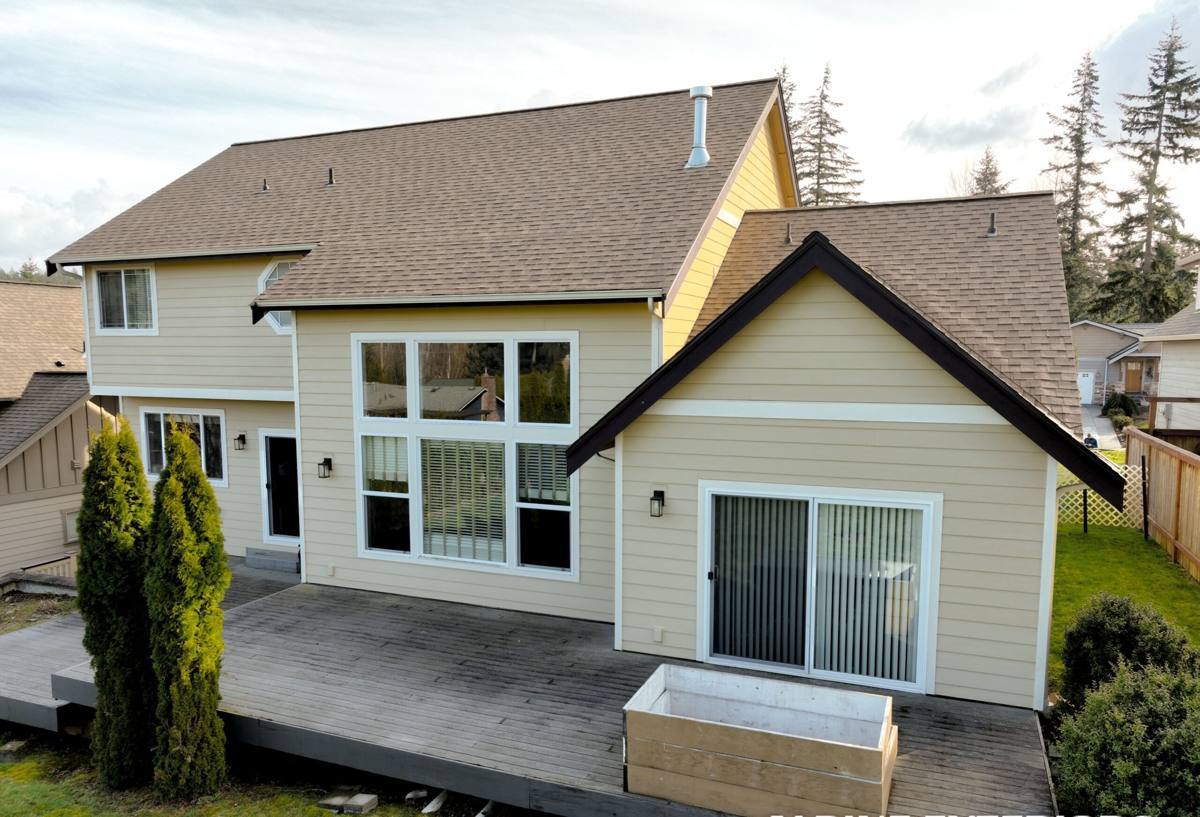
What Marietta's Climate Actually Does to a Roof
Salt Air and Metal Fatigue
Homes closer to Bellingham Bay take on airborne salt that settles on roofing materials, flashing, and fasteners. Over years, that salt accelerates corrosion on any exposed metal — nail heads, drip edge, flashing, and vent boots — well before it would fail further inland. A roof replacement in Marietta needs corrosion-resistant fastening and flashing specified up front, not swapped in later after rust stains start showing up on the fascia.
Driving Rain and Wind-Driven Water
Whatcom County storms coming off the Strait of Georgia don't always fall straight down. Wind-driven rain gets pushed sideways under shingle tabs, around poorly lapped flashing, and into any gap in the underlayment that a calmer climate could get away with ignoring. Roofs here need underlayment and flashing details built for water moving at an angle, not just water falling straight.
Moss, Shade, and Moisture Retention
Marietta's tree cover keeps a lot of roof surfaces shaded for a large part of the day, and shaded roofs stay damp longer after every rain. That's the recipe moss needs. Once moss takes hold, it lifts shingle edges, holds water against the roof deck, and speeds up the very rot and granule loss that shortens roof life. A roof replacement is the right time to break that cycle — with material choices, ventilation, and edge details that make it harder for moss to re-establish, rather than just replacing what was there before.
Signs a Marietta Roof Needs Full Replacement, Not Another Repair
- Granule loss heavy enough that you can see bare, shiny patches on asphalt shingles, especially on south- and west-facing slopes
- Moss coverage that comes back within a season or two of cleaning, even after treatment
- Soft spots or sagging in the roof deck when walked, which usually means the decking underneath has taken on moisture
- Curling, cracked, or missing shingles concentrated on one slope, often the side that catches the most wind-driven rain
- Rust streaking below metal flashing or vent boots — a sign the metal itself is failing, not just cosmetic
- Daylight visible through the roof deck from inside the attic, or damp insulation after storms
- A roof already past 20–25 years old (asphalt) that's due for replacement regardless of visible damage, since underlayment and decking degrade even when shingles still look passable from the ground
If a roof is showing one or two of these signs isolated to a small area, a repair may still make sense. Once several of these show up together, or the roof is old enough that a repair would just be delaying the same failure, replacement is the more honest recommendation — and it's the one we'll give you even if a repair would be the easier sale.
What a Correct Roof Replacement Involves Here
Tear-Off and Deck Inspection
We remove the old roofing down to the deck rather than layering over it. That's the only way to actually see what's underneath — and in a moisture-heavy area like Marietta, what's underneath matters. Soft, delaminated, or water-stained decking gets replaced before anything new goes down. Roofing over a compromised deck is how a new roof ends up failing early, and it's not a shortcut we take.
Underlayment Built for Wind-Driven Rain
Given how much of Marietta's weather comes in sideways off the bay, we pay particular attention to underlayment coverage and lap direction, plus ice-and-water shield or equivalent protection at the eaves, valleys, and any roof-to-wall transitions — the spots where wind-driven water finds its way in first.
Flashing and Fasteners That Won't Corrode Early
Given the salt exposure common in this area, we spec flashing and fastener materials that hold up to salt air rather than the cheapest option that works fine forty miles from the coast. This is a small line-item difference at install time and a large difference in how the roof looks and performs at year ten.
Ventilation That Actually Dries the Deck
A shaded, damp climate needs a roof that can dry out between storms. We check intake and exhaust ventilation as part of every replacement — not just adding a ridge vent for looks, but making sure air actually moves through the attic space. Poor ventilation traps moisture against the underside of the deck, which feeds rot and shortens the life of everything above it, including the shingles themselves.
Material Choice for Moss Resistance
Where it fits the home and budget, we'll talk through algae- and moss-resistant shingle options, along with layout and edge details that reduce the shaded, standing-moisture conditions moss needs to take hold. No material is moss-proof forever in a climate like this, but some choices meaningfully slow it down, and that's worth discussing before the tear-off starts, not after moss is back in year three.
Cost Factors for a Marietta Roof Replacement
Every roof is priced on its own specifics, but the variables that move the number the most on Marietta homes tend to be the same handful of things. We'll walk through these with you during the estimate rather than quoting a number over the phone before anyone's seen the roof.
| Factor | Why It Matters Here |
|---|---|
| Roof size and pitch | Steeper pitches and larger surface areas mean more material and labor, and steeper roofs need more careful footing in wet weather |
| Deck condition | Moisture-related deck damage found during tear-off adds material and labor to replace rotted sheathing — common enough here that we build in an inspection allowance |
| Material selection | Standard asphalt, algae-resistant shingle lines, and metal roofing carry different upfront costs and different long-term maintenance in a salt-air, high-moisture climate |
| Flashing and fastener grade | Corrosion-resistant materials cost more upfront but hold up longer against salt air off the bay |
| Ventilation upgrades | Adding or correcting intake/exhaust ventilation during the tear-off is far cheaper than doing it as a separate project later |
| Access and tree cover | Heavy tree canopy common in Marietta can affect debris removal, staging, and cleanup time |
As a rough starting point, most full roof replacements on typical single-family homes run in the broad range of several thousand to the low tens of thousands of dollars, depending heavily on the factors above. That range is only useful as a starting frame — the real number comes from an on-roof inspection, not a formula.
How Our Process Works
- On-site inspection. We walk the roof, check the attic and deck condition where accessible, and look specifically for the moisture and corrosion patterns common in this area.
- Written estimate. You get a clear scope and price, including material options, before any work is scheduled — no surprise change orders for things we could see up front.
- Scheduling around weather. Roof replacement needs a dry work window, and we plan around Whatcom County's rain patterns rather than rushing a tear-off into a forecast that doesn't allow for it.
- Tear-off and deck repair. Old roofing comes off, decking gets inspected and repaired as needed, and you'll know before we close it back up if anything beyond the original scope was found.
- Underlayment, flashing, and ventilation. Installed to the standards above — built for wind-driven rain and salt exposure, not a generic install.
- New roofing installed. Manufacturer specifications followed to the letter, since that's also what keeps material warranties valid.
- Final walkthrough and cleanup. We review the finished roof with you and make sure the site is cleared of debris and old material.
What to Look For If You're Hiring for This
- A written estimate that itemizes material, tear-off, deck repair allowance, and labor separately
- A crew that inspects the deck in person rather than quoting sight-unseen off a photo
- Clear answers about flashing and fastener material, not just shingle brand
- A real conversation about ventilation, not just a shingle color swatch
- Proper licensing and insurance, and a willingness to show proof without being asked twice
- A manufacturer-backed warranty on materials, plus a clear workmanship warranty from the installer
Why Local Experience in Marietta Matters
A roof replacement done to a generic spec sheet can look fine at handoff and still underperform within a few years in this specific environment. A crew that already works Marietta and the rest of the Ferndale area knows, before the tear-off starts, that this roof is going to face more salt exposure than one twenty miles inland, that this slope is going to hold moss longer because of the tree line, and that the flashing detail that's optional in a drier climate isn't optional here. That's not a sales pitch — it's the difference between a roof that's built for the actual conditions it will sit in for the next few decades and one that's built for conditions somewhere else.
If you're weighing repair against replacement, or you just want a straight answer on where your roof stands, we're happy to take a look and walk you through it. Reach out for a free, no-pressure estimate — the form below gets you started.