 Ferndale Siding
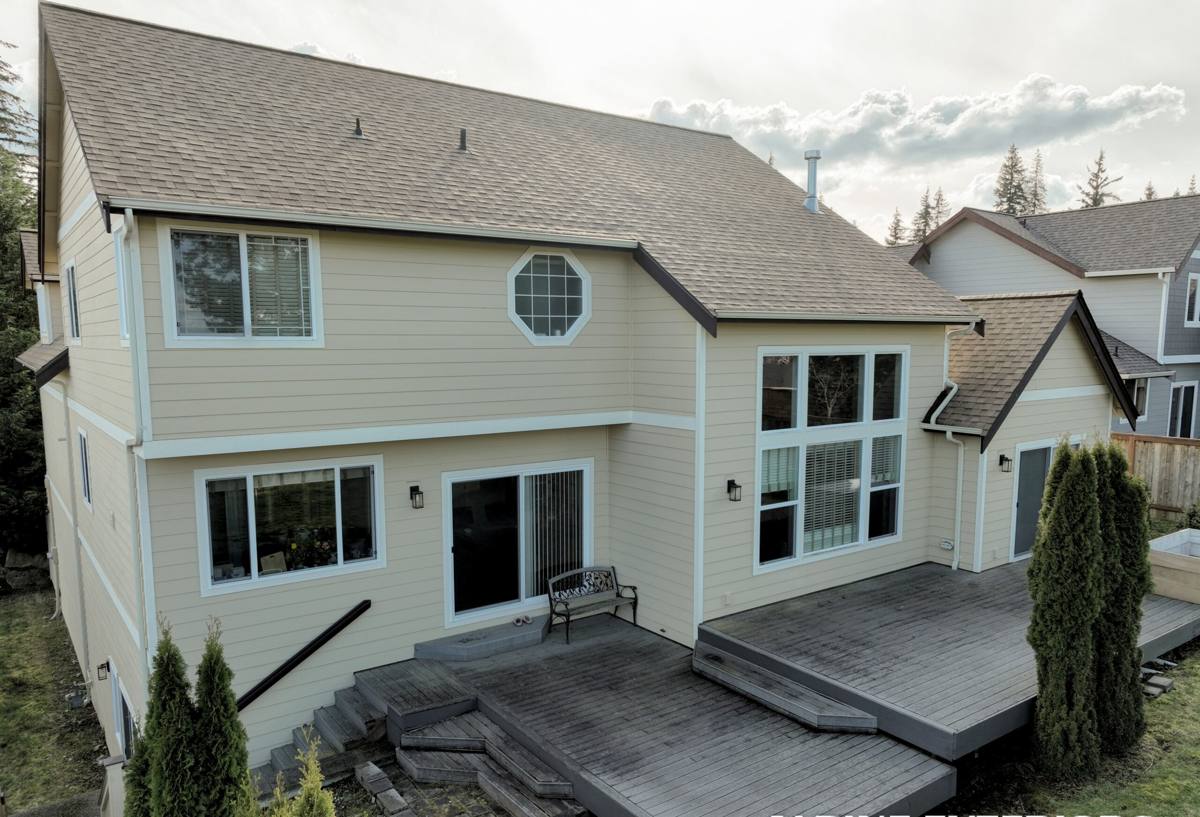
 Siding Installation in Everson: A Job That Has to Match the Climate
Everson sits inland from Bellingham Bay, but it doesn't escape what makes siding fail early in this part of Whatcom County: long stretches of driving rain, a moss season that can run half the year, and marine-influenced air that carries moisture even miles from saltwater. Siding installation here isn't a cosmetic project. It's a moisture-management system that either holds up to that weather for decades or starts failing within a handful of years because it wasn't built for the conditions it's actually sitting in.
A lot of siding installations look fine the day they're finished. The difference shows up three, five, or ten winters later — in swollen seams, soft trim, moss creeping up north-facing walls, or paint that's chalked out and peeling. Getting it right in Everson means understanding both the product going on the wall and the water management happening behind it.
What Everson Homes Actually Deal With Year-Round
Driving rain and prolonged wet exposure
Whatcom County doesn't just get rain — it gets rain pushed sideways by wind for days at a time. Siding that relies on caulk and paint film alone to keep water out will eventually let moisture past the surface. Once that happens, whatever is behind the siding (sheathing, framing, insulation) starts absorbing water it was never designed to hold.
A long moss and algae season
Shaded walls, north exposures, and anything near mature trees or fencing stay damp longer here than in drier climates. That constant dampness is exactly what moss, algae, and mildew need to take hold on a siding surface. Once organic growth establishes itself, it holds moisture against the material even longer, accelerating whatever damage was already starting underneath.
Marine-influenced, salt-tinged air
Even away from the immediate waterfront, this stretch of Whatcom County sits under air that carries more salt and moisture than inland climates far from the coast. That air is harder on fasteners, trim, and any siding material that isn't dimensionally stable when it swells and shrinks with humidity.
Why the Siding Material You Choose Changes Everything
Every siding product handles rain, moss, and humidity differently. Some of that difference shows up in year one; most of it shows up over ten or twenty years, which is exactly why the choice matters more in a climate like this than it would somewhere dry.
| Material | Moisture Behavior | Moss/Algae Resistance | Long-Term Maintenance |
|---|---|---|---|
| Vinyl | Doesn't absorb water, but seams and gaps can trap moisture behind panels | Grows on surface film; needs regular washing | Low upfront, but warps and fades under UV and heat cycling |
| Cedar / primed spruce | Absorbs water directly; swells, cups, and rots without diligent upkeep | High risk in shaded, damp areas without treatment | Repainting, caulking, and rot repair on a recurring cycle |
| LP SmartSide (engineered wood) | Treated to resist moisture, but any breach in the finish exposes wood substrate | Moderate; depends on finish integrity | Finish and edge maintenance is installation-sensitive |
| James Hardie fiber cement | Cement-based composition doesn't rot or swell from moisture exposure | Dense, non-organic surface resists sustained growth | Factory finish holds color and film integrity far longer |
This is the comparison that led us to standardize on James Hardie fiber cement for every siding installation we do, including here in Everson. It isn't that other products can't be installed correctly — it's that fiber cement gives a wetter, mossier climate less to work with in the first place.
What a Correct Siding Installation Actually Involves
The siding itself is maybe half the job. The other half is everything behind it that a homeowner never sees once the project is done — and it's the part that determines whether the installation lasts 10 years or 40.
- A continuous weather-resistant barrier installed over sound, repaired sheathing — no shortcuts around soft spots or old rot left in place
- Correct flashing at every window, door, and roofline penetration, lapped so water sheds outward rather than behind the barrier
- A drainage gap (rainscreen) that lets any moisture that gets behind the siding drain and dry out instead of sitting against the wall
- Manufacturer-specified fastener type, placement, and penetration depth — under-driven or over-driven fasteners are one of the most common causes of early siding failure
- Proper starter strips, corner treatments, and butt joint placement so water is directed down and out at every seam
- Caulking used only where the manufacturer specifies it — not as a substitute for proper flashing and lap sequencing
Skipping or rushing any one of these steps can leave siding that looks correct from the curb but is quietly failing behind the surface. This is the part of the job that separates a proper installation from one that just gets panels on the wall.
Our Installation Process
- On-site assessment: We look at existing siding condition, sheathing, trim, and any moisture or rot already present before quoting the job.
- Tear-off and sheathing check: Old siding comes off and we inspect the wall underneath, repairing any damaged sheathing or framing before anything new goes up.
- Weather barrier and flashing: A continuous water-resistive barrier goes on first, with flashing detailed at every window, door, and penetration.
- Rainscreen and fastening: We install the drainage gap and fasten every course to James Hardie's specification for this climate zone.
- Trim, joints, and finish details: Corners, trim boards, and seams are finished per manufacturer instructions, not generic caulk-and-cover shortcuts.
- Final walkthrough: We review the completed installation with the homeowner before calling the job done.
Why We Install Only James Hardie Fiber Cement
James Hardie makes region-specific product lines engineered for different climate zones across the country, and the HZ5 line is built for areas that see exactly what Everson and the rest of Whatcom County get: heavy, sustained moisture and cooler, wetter seasons for much of the year. The fiber cement composition itself doesn't rot, swell, or feed moss and algae the way organic materials can, and the factory-applied ColorPlus finish is baked on under controlled conditions rather than field-applied, which means better color and film retention over time than paint applied on site.
It's also a non-combustible material, which matters increasingly to insurers and homeowners alike, and it carries a strong transferable warranty when installed to Hardie's specifications — which is exactly why correct installation practice matters as much as the product choice itself. A great product installed wrong still fails wrong.
Cost Factors for Siding Installation in Everson
| Factor | Why It Affects Cost |
|---|---|
| Home size and wall complexity | More square footage, gables, and dormers mean more material and labor |
| Existing siding removal and sheathing repair | Rot or water damage found during tear-off has to be repaired before new siding goes on |
| Siding profile and trim selection | Lap widths, board-and-batten, and trim detailing all affect material and labor cost |
| Color and finish selection | Factory ColorPlus finishes vary by product line and color depth |
| Site access | Tight lots, tree cover, or multi-story sections can add labor time |
We give a firm, itemized quote after an in-person assessment rather than a phone estimate — sheathing condition especially can't be judged accurately without seeing the wall.
Why Hiring a Crew That Already Works Everson Matters
A contractor who regularly works this part of Whatcom County already knows how the local moisture patterns behave on north-facing walls, which trim details actually hold up through a full wet season, and how HZ5 product performs once it's been on a house here for a few years rather than in a showroom. That's not something a crew coming from a drier region or a different climate zone tends to get right on the first try. It also means faster, more accurate quoting, because we've already seen what sheathing damage and moss patterns typically look like on homes in this area.
What to look for if you're vetting a siding contractor here
- Manufacturer training or certification specific to fiber cement installation, not just general siding experience
- A clear explanation of flashing and drainage plans before work starts — not just a material quote
- Willingness to inspect and repair sheathing rather than siding over existing damage
- Local references or projects in Whatcom County they can point to
- Proper licensing and insurance, verifiable before any contract is signed
If your Everson home's siding is showing moss, soft spots, or paint failure — or you're planning ahead before the next wet season sets in — we're happy to walk the property and give you a straight, no-pressure estimate. There's no cost and no obligation to have a look.