 Ferndale Siding
 Siding Replacement in Sumas: Matching the Job to the Climate
Sumas sits out at the eastern edge of Whatcom County, in the flat farmland where the Nooksack River valley runs up against the Canadian border. It's a different setting than the towns closer to Bellingham Bay, and a homeowner here shouldn't assume a siding replacement job that works on a sheltered in-town lot will hold up the same way on a low, open valley property. The rain still comes in sideways more often than straight down, the ground holds moisture longer once a storm passes, and moss has a way of taking over shaded walls for most of the year rather than just a few wet months. Siding replacement done right in Sumas has to be built around that specific combination, not a generic Pacific Northwest checklist.
A Border-Valley Setting, Not a Coastal One
The broader climate story across our Whatcom County service area includes salt air where homes sit closer to the water, but Sumas itself is well inland from that exposure. What it shares with the rest of the county is the driving rain and the long moss season — and in some ways it sees those harder, because flat, low-lying valley ground doesn't drain or dry out the way a hillside or coastal bluff lot does. That's the distinction that should drive material and installation choices here: less about salt corrosion, more about sustained dampness that never fully lets go of a wall assembly between storms.
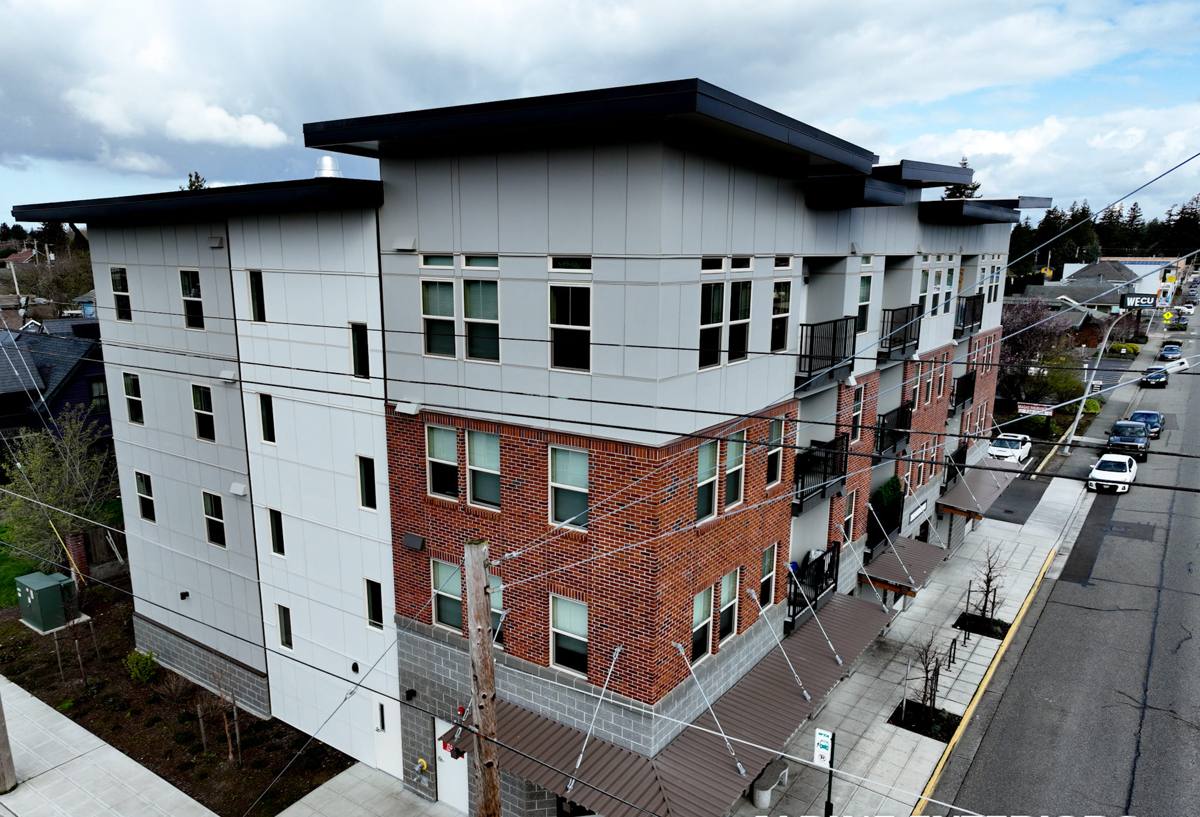
Signs a Sumas Home Needs Full Replacement, Not a Patch
Not every siding problem calls for tearing the whole wall down to the studs. But a few signs tend to mean patching will just delay a bigger job while the underlying damage keeps spreading, which happens faster here than in drier parts of the state.
- Soft or spongy spots when you press on siding, especially near the bottom courses or below windows
- Persistent staining or green growth on north-facing and shaded walls that comes back within weeks of cleaning
- Cracked, warped, or delaminating panels, particularly on older wood-based or engineered wood siding
- Paint that's failing repeatedly in the same spots no matter how often it's redone
- Visible gaps or separation at seams, corners, and trim joints
- A musty smell along an exterior wall from the inside, which often means moisture has already reached the sheathing
If you're seeing two or more of these at once, it's usually a sign that water has been getting behind the siding for a while rather than just sitting on the surface.
What a Correct Siding Replacement Job Involves
Tear-Off Reveals the Real Condition
Removing old siding down to the sheathing is the only way to know what's actually happening behind it. On a Sumas property, that's often where we find the real story — trapped moisture, soft sheathing, or rot around window openings that never showed on the surface. Skipping this step, or just overlaying new siding on top of the old, means building a new exterior on top of a problem instead of fixing it.
The Moisture Barrier Comes Before the Siding
Once the wall is open, the sequence matters more than the siding product itself: a continuous house wrap or weather-resistive barrier, properly lapped and taped at seams, correctly integrated flashing at every window and door opening, and a drainage plane that lets any moisture that does get past the siding find its way back out rather than pooling against the sheathing. On a low-lying valley property that holds ground moisture longer than most, this layer is doing more of the real work than people expect — the visible siding is really the last line of defense, not the only one.
Fastening and Clearance
Fastener type, spacing, and depth all affect how well siding holds up to wind-driven rain over the years, and grade clearance keeps new siding from sitting close enough to wet ground to wick moisture up from below. Both of these get specified to the site conditions, not applied the same way on every job regardless of exposure.
Why We Install Only James Hardie Fiber Cement
We install one siding system, and we install it on every job regardless of budget tier. That decision came out of years of tear-offs and repair calls across Whatcom County, watching which materials actually held up to sustained regional moisture and which ones quietly became maintenance problems a few years in.
- Non-combustible core: fiber cement doesn't feed a fire the way wood-based siding can, which matters for both household safety and insurance considerations.
- Factory-applied ColorPlus finish: baked on under controlled conditions rather than brushed on in the field, so it resists fading and moisture intrusion far longer than site-applied paint.
- Climate-engineered HZ formulations: Hardie builds different product formulations for different exposure levels, including versions suited to sustained moisture and freeze-thaw cycling — a real fit for a Sumas valley property.
- Dimensional stability: it doesn't swell, cup, or warp the way engineered wood siding can after repeated wet-season moisture cycles.
- A strong transferable warranty: backed by the manufacturer when installation follows spec, which gives a homeowner real protection instead of a marketing line.
We don't install LP SmartSide, vinyl, Cemplank, Allura, primed spruce, or cedar. Those products all have a place in the market, and plenty of homeowners are satisfied with them elsewhere. We made a professional call that one system we trust completely, installed to spec, serves a Sumas homeowner better over the long run than a cheaper option that quietly shifts maintenance risk back onto them within a decade.
Matching the Right Hardie Product to Your Home
| Product | Where It Fits | Why It Works for Sumas |
|---|---|---|
| HardiePlank lap siding | Most standard single-family homes | Traditional lap profile sheds wind-driven rain when overlapped and flashed correctly |
| HardiePanel vertical siding | Gables, accent walls, modern or farmhouse styles | Clean vertical lines with the same moisture performance as the lap profile |
| HardieShingle siding | Craftsman-style homes and accent sections | Textured look without the moisture absorption of real wood shingle |
| HardieTrim boards | Corners, window and door casing, fascia | Factory-finished trim holds up to the same valley moisture and freeze-thaw cycling as the field siding |
The specific profile and color come down to the home and the homeowner's taste, but the underlying product family and how it's detailed against this climate stay consistent from job to job.
Our Replacement Process
- On-site walk-through to assess current siding condition, trim, flashing, and any signs of hidden moisture damage
- Honest recommendation on whether the home needs a full replacement, a partial re-side, or targeted repair
- Written estimate covering material, labor, and any substrate repair contingencies before work begins
- Tear-off and inspection of the sheathing underneath, with photos and a direct conversation if we find anything unexpected
- Installation of house wrap, flashing, and drainage detailing before a single piece of new siding goes up
- Hardie siding and trim installed to manufacturer spec, with fastening and clearance set for this site's exposure
- Final walk-through with the homeowner before we call the job finished
What Siding Replacement Costs Depend On
| Factor | What It Affects | Why It Matters in Sumas |
|---|---|---|
| Substrate condition | Repair costs uncovered during tear-off | Sustained valley dampness is more likely to have reached the sheathing on an older home |
| Home size and wall complexity | Material quantity and labor hours | More corners, gables, and window openings mean more flashing detail work |
| Product and profile choice | Material cost per square foot | Lap, panel, and shingle profiles carry different material and labor costs |
| Grade and drainage conditions | Siding clearance and moisture detailing at the base of the wall | Flat, low-lying lots need careful attention to keep new siding from sitting too close to wet ground |
| Site access | Labor time and staging | Rural and agricultural properties can have longer driveways or wider staging needs than an in-town lot |
Exact numbers depend on what we find once the old siding comes off, which is why we walk every home in person and give a real written estimate rather than a phone quote based on square footage alone.
Why Hiring a Crew That Already Works in Sumas Matters
A crew that's replaced siding on other homes out here already knows which wall orientations stay wet the longest through a Whatcom County winter, where the moss builds up fastest, and how a border-valley property's wind and moisture exposure differs from a sheltered lot closer to town. That local track record shows up in small decisions on install day — how much extra time goes into flashing a north-facing wall, how fastening is adjusted for the site, how grade clearance gets handled on a flat lot — the kind of detail that's easy to skip and hard to notice until a wall starts failing a few winters later. We'd rather get it right the first time than come back for a callback.
If your Sumas home needs new siding, or you just want an honest opinion on whether you're looking at a repair or a full replacement, we're happy to take a look. Reach out using the form below to schedule a free, no-pressure estimate.