 Ferndale Siding
 Asphalt Shingle Roofing for Everson Homes
Everson sits inland from the coast, but that doesn't spare it from the weather pattern that defines roofing work across greater Whatcom County. Damp Pacific air moves through the valley for most of the year, driving rain comes in sideways more often than straight down, and shaded rooflines stay wet long after a storm passes. Add a moss season that can run from fall through spring, and you have a climate that is genuinely hard on asphalt shingles if the roof underneath them isn't built correctly. This page covers what that means in practice for an Everson home, and how we approach the work.
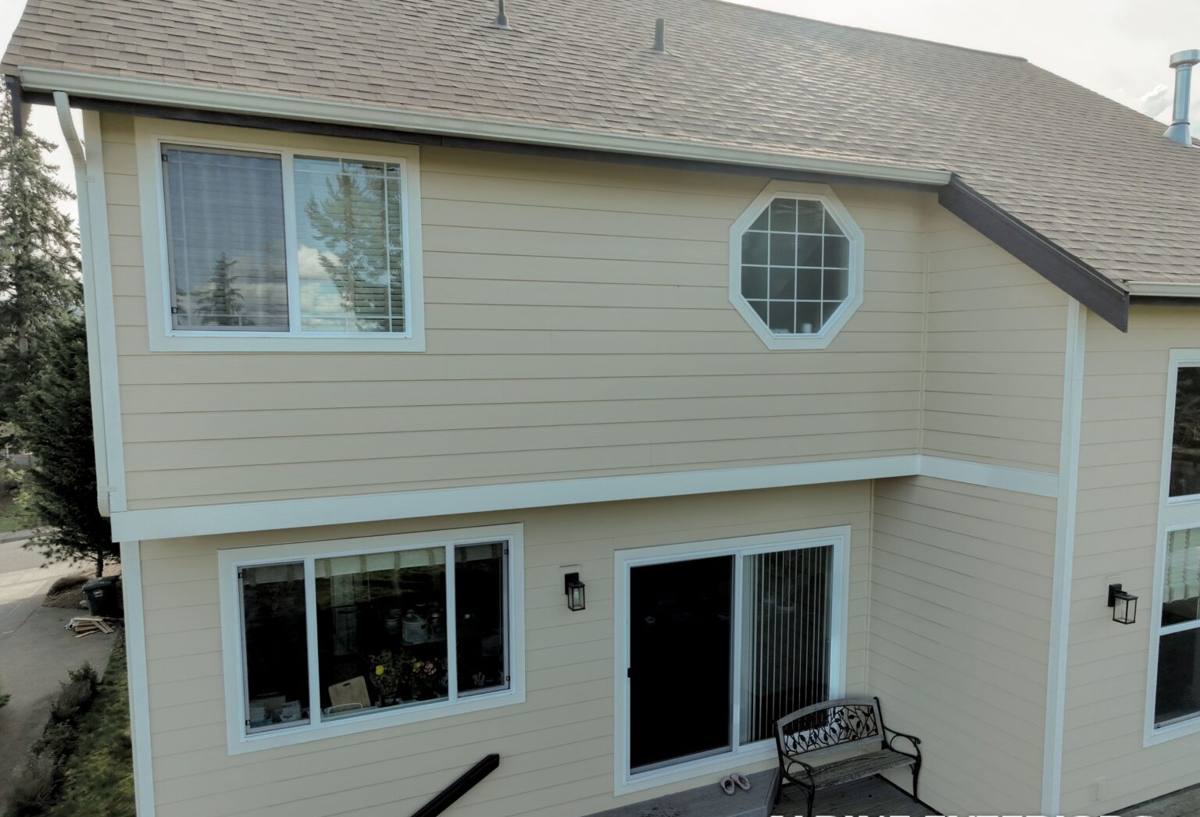
Why This Climate Is Hard on a Shingle Roof
Asphalt shingles are a proven, cost-effective roofing material almost everywhere in the country, including here. The failures we see in this area are rarely about the shingle itself — they're about installation details that matter more in a wet climate than a dry one.
Moisture That Doesn't Dry Out Fast
A roof in a drier climate can tolerate a mediocre ventilation setup because the attic and roof deck get a chance to dry between rain events. In Whatcom County, especially on tree-shaded or north-facing sections of roof common in Everson, that drying window is short. Trapped moisture under the shingles leads to plywood delamination, premature granule loss, and shingles that curl or crack years before their rated lifespan.
Driving Rain at the Details
Wind-driven rain doesn't just fall on a roof — it works its way sideways under shingle tabs, into valleys, and around penetrations like vent stacks and chimneys. Roofs that were installed to a minimum-code standard, rather than to the details that actually hold up in wind-driven rain, tend to develop leaks at these exact spots first.
Moss and Algae Growth
Moss doesn't just look bad — it holds moisture directly against the shingle surface and works its way under tabs, lifting them over time. On shaded or north-facing slopes common on Everson lots with mature trees, moss can become a maintenance issue within a few years on a roof that wasn't set up to resist it.
What a Correct Installation Involves Here
A shingle roof that holds up in this climate is built in layers, and each layer has a job. We don't skip steps to save time, and we don't consider a roof "done" just because shingles are nailed down.
- Underlayment: A synthetic underlayment (or felt where appropriate) that provides a real secondary water barrier, not just a nailing surface for shingles.
- Ice and water shield at vulnerable areas: Self-adhering membrane at eaves, valleys, and around penetrations — the spots where wind-driven rain and standing water are most likely to find a way in.
- Proper flashing: New step flashing, valley flashing, and counter-flashing where the roof meets walls, chimneys, and skylights, rather than reusing old flashing that's already failing.
- Balanced attic ventilation: Intake at the eaves and exhaust at the ridge, sized to actually move air through the attic space so moisture doesn't sit against the underside of the deck.
- Correct nailing pattern: Manufacturer-specified nail count and placement, which affects both wind resistance and warranty validity.
- Starter strip and ridge cap detailing: The edges and ridge are where wind gets the first grip on a roof — done right, they're the difference between a roof that survives a windstorm and one that doesn't.
Choosing a Shingle for Whatcom County Weather
Not every asphalt shingle product is built the same way, and the right choice depends on the home, the budget, and how much of the roof is shaded or moss-prone. We walk through these trade-offs honestly rather than defaulting to whatever is easiest to install.
| Shingle Type | Typical Lifespan | Best Fit | Considerations |
|---|---|---|---|
| 3-Tab Shingle | 15–20 years | Budget-conscious projects, secondary structures | Lower wind rating, less algae resistance available |
| Architectural (Dimensional) | 25–30 years | Most Everson homes | Better wind rating, thicker profile sheds water better, wide style range |
| Algae-Resistant (AR) Shingle | 25–30 years | Shaded lots, north-facing slopes | Copper or zinc granules resist algae staining; doesn't eliminate moss but slows growth |
| Impact-Rated (Class 4) | 25–30+ years | Homeowners prioritizing durability | Higher upfront cost, sometimes an insurance discount |
For most homes in this area, we recommend an architectural shingle with algae-resistant granules as a baseline, particularly on any roof plane that sits under tree cover for part of the day. It costs a modest amount more than a basic 3-tab and pays that back in slower moss and algae buildup.
Our Process, Start to Finish
- On-site inspection: We look at the existing roof deck, ventilation, flashing condition, and any moss or moisture damage before recommending repair or replacement.
- Honest estimate: A written scope of work and price, with material options explained in plain terms — no pressure to upgrade beyond what the home actually needs.
- Tear-off and deck check: Old roofing is removed down to the deck, and any soft or water-damaged sheathing is identified and replaced before anything new goes down.
- Underlayment and flashing: Ice and water shield, underlayment, and new flashing installed per the details above.
- Shingle installation: Installed to manufacturer specification for nailing, exposure, and ventilation.
- Cleanup and walkthrough: Site cleared of debris and nails, and a final walkthrough so you understand what was done and what to expect going forward.
Moss, Algae, and Ongoing Roof Care
A well-installed roof still benefits from basic upkeep in this climate. Moss and organic debris are the main long-term threats to an otherwise sound shingle roof in Everson, and they're manageable with a modest amount of attention.
What Actually Helps
- Keeping gutters and valleys clear of needles and leaf debris, which hold moisture against the roof surface
- Removing moss buildup with proper technique rather than aggressive scraping, which can strip granules and shorten shingle life
- Trimming overhanging branches to let more light and air reach shaded roof sections
- Scheduling a periodic roof check rather than waiting for a visible leak
We're glad to point out these issues when we're already on a roof for another reason — it's a lot cheaper to address moss buildup early than to replace a roof deck that's been sitting under wet moss for several seasons.
Repair or Full Replacement?
Not every roof issue means a full tear-off. We assess this honestly based on the age of the roof, the extent of the damage, and what's underneath the shingles.
| Factor | Leans Toward Repair | Leans Toward Replacement |
|---|---|---|
| Roof age | Under 12–15 years | Approaching or past rated lifespan |
| Damage extent | Isolated area (one slope, one leak point) | Widespread granule loss, curling, multiple leak areas |
| Deck condition | Solid, no soft spots | Water-damaged sheathing found during inspection |
| Ventilation | Adequate, functioning | Undersized or missing, causing recurring moisture issues |
| Moss/algae history | Recent, surface-level | Long-term buildup with visible shingle lifting |
If a roof is fundamentally sound and the damage is contained, we'll say so and price a repair. If the deck or underlayment has been compromised, patching over that just delays a bigger problem — we'll explain exactly what we're seeing and why.
Why a Crew That Already Works Everson Matters
Roofing work in this part of Whatcom County isn't the same job as roofing in a dry, low-wind climate, and it isn't quite the same as roofing right on the water either. A crew that regularly works this area understands the balance of driving rain, shaded lots, and moss pressure that's typical here, and builds for it as a matter of habit — not as an upsell. That means the underlayment, flashing, and ventilation details described above aren't treated as optional extras; they're the standard we install to on every job.
Working locally also means we're realistic about scheduling around this region's wetter months, familiar with the permitting process in this part of the county, and available if a question or issue comes up after the job is finished — not a crew that did one job here and moved on.
Signs Your Roof Needs Attention
Most roof problems in this climate give warning signs well before a leak shows up inside the house. Worth a look if you notice any of the following:
- Granules collecting in gutters or at downspout outlets
- Shingles that look curled, cracked, or are missing outright
- Dark streaking (algae) or thick green growth (moss) on shaded slopes
- Daylight visible through the attic roof deck
- Musty smell or visible staining on attic sheathing or insulation
- Sagging along a ridge or roof plane
- A roof approaching or past 20–25 years old with no major work done
If you're seeing any of these signs, or just want an honest read on where your roof stands, we're happy to take a look. There's a free, no-pressure estimate form below — reach out and we'll get you a straight answer about what your roof needs and what it doesn't.