 Ferndale Siding
 Asphalt Shingle Roofing Built for Kendall's Wet, Wooded Climate
Kendall sits back from the Ferndale core, closer to the foothills along the Mount Baker corridor, where tree cover is heavier and homes sit under shade for a much larger share of the day than properties closer to town. That changes what a roof has to deal with. A shingle roof in Kendall isn't just shedding rain — it's drying out slowly under trees, collecting needles and debris in valleys, and staying damp longer after every storm. Add in the driving rain that rolls through Whatcom County most of the fall and winter, and the marine-influenced, salt-tinged air that moves inland off the Strait of Georgia and Puget Sound, and you have a roofing environment that rewards careful material choice and correct installation far more than it forgives shortcuts.
This page is about one job in one place: asphalt shingle roofing for homes in and around Kendall. Not a generic rundown of shingle types — what actually matters here, why it matters, and what a correct installation looks like on a property that spends a lot of its year under wet trees.
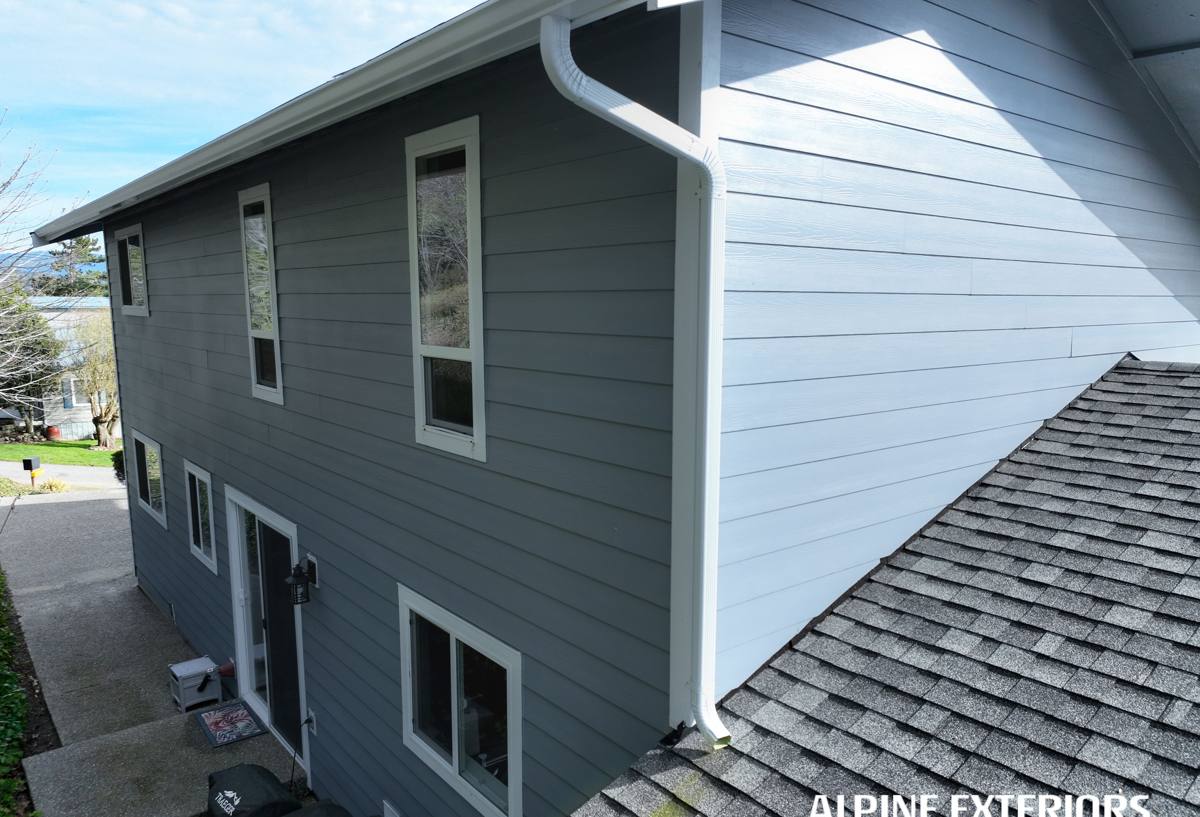
What Kendall's Climate Actually Does to a Roof
Every roofing material ages differently depending on what it's exposed to. In Kendall, the main forces at work are moisture, shade, and time — not any single dramatic weather event, but the slow, repeated cycle of wet-then-dry that never fully finishes.
Moss and Algae Growth
Heavier tree canopy means more shade, more organic debris landing on the roof, and slower drying after rain. That combination is exactly what moss and algae need to take hold. Left unchecked, moss doesn't just look bad — it lifts shingle edges, holds water against the granule surface, and accelerates wear in the exact spots where it grows.
Driving Rain and Wind-Driven Moisture
Whatcom County storms often come in sideways, not straight down. That pushes water up under shingle edges and into laps that were only ever designed to shed water moving downhill. Roofs installed with shortcuts in flashing or underlayment tend to reveal it here first — usually at valleys, chimneys, and skylights.
Salt-Tinged Marine Air
Ferndale and the surrounding Whatcom County lowlands sit close enough to the Strait of Georgia and Puget Sound that prevailing marine air carries a light salt content inland. Kendall is further from the water and gets less of this than waterfront properties, but metal roofing components — flashing, nail heads, vent stacks — still benefit from corrosion-resistant hardware rather than the cheapest option on the shelf.
Long Wet Season, Short Drying Window
The stretch from fall through spring gives a roof very little uninterrupted dry time. That matters for two reasons: it's why moss and algae get such a strong foothold here, and it's why roofing work itself has to be scheduled and executed carefully — a shingle roof installed in the rain, or one that traps moisture under the wrong underlayment, starts its life already compromised.
Choosing the Right Asphalt Shingle for a Kendall Home
Not every asphalt shingle is built the same, and in a climate like this, the differences show up faster than they would in a drier region. The table below compares the main options homeowners in this area choose between.
| Shingle Type | Typical Lifespan Here | Best For | Trade-Offs |
|---|---|---|---|
| 3-Tab Asphalt | Shorter end of the range under heavy tree cover and moss pressure | Budget-conscious replacements, secondary structures | Flatter profile, lower wind resistance, less algae-resistant granule coverage on older product lines |
| Architectural (Laminate) Asphalt | Longer, more consistent lifespan with proper ventilation | Most Kendall homes, especially under tree cover | Higher upfront cost than 3-tab, but better wind rating and thicker granule layer |
| Impact-Resistant Asphalt | Comparable to architectural, with added durability against debris | Properties with overhanging limbs or heavy branch drop | Premium pricing; benefit is mainly about resisting falling debris, not moisture |
For most Kendall properties, we recommend architectural shingles with algae-resistant (AR) granules as the practical baseline. The AR treatment specifically targets the blue-green algae and moss growth that shaded, damp roofs are prone to — it won't make a roof moss-proof forever, but it meaningfully slows the buildup compared to standard granules, which matters on a property that doesn't get much direct sun.
What a Correct Installation Actually Involves
The shingle itself is only one layer of the system. In a climate that pushes water sideways and keeps roofs damp for long stretches, the layers underneath and around the shingles do most of the real work.
Underlayment
We use synthetic underlayment as the standard water-resistant barrier under the shingle field. It handles the constant wet-dry cycling this area produces better than older felt products, which can degrade and wrinkle under repeated moisture exposure.
Ice and Water Shield at Vulnerable Points
Valleys, eaves, and roof-to-wall transitions get a self-adhering waterproof membrane underneath the shingles, not just building paper. These are the spots where driving rain and shaded, slow-draining runoff cause the most trouble, and they're the first places a corner-cut roof will fail.
Flashing
Chimneys, skylights, vent stacks, and roof-wall intersections all need properly formed metal flashing, not just caulk or roofing cement. Given the marine air in this part of Whatcom County, we favor corrosion-resistant flashing metals and fasteners over bare galvanized where budget allows.
Fastening and Wind Resistance
Shingles are nailed to the manufacturer's specified pattern and nail count, not a reduced pattern to save time. Correct nailing is what keeps shingles locked down through the region's windier storm systems and preserves the manufacturer's wind warranty.
Starter Strips and Ridge Caps
Proper starter strip along eaves and rakes, and matched ridge cap shingles at the peaks, seal the edges where wind-driven rain most often finds a way in. These small details are easy to skip and hard to notice until a leak shows up.
Ventilation: The Part of the Roof You Don't See
A shaded roof that doesn't dry quickly from the outside needs to be able to dry from the inside. Balanced attic ventilation — intake at the eaves, exhaust at or near the ridge — lets warm, moist attic air escape instead of condensing against the roof deck. Without it, moisture builds up in the attic space itself, which can lead to deck rot, mold, and premature shingle failure from underneath, independent of anything happening on the surface. On a Kendall property surrounded by trees and shade, ventilation isn't optional — it's part of what makes the moss-resistant granules and underlayment actually do their job over the long run.
Our Process, Start to Finish
- Roof assessment: We walk the roof and attic, checking deck condition, existing ventilation, flashing points, and moss or moisture damage before quoting anything.
- Written estimate: A clear scope of work and price, with material options explained so you know what you're choosing between and why.
- Scheduling around weather: Given how much of the year is wet here, we plan installation for realistic dry windows and tarp exposed sections if weather shifts mid-job.
- Tear-off and deck inspection: Old roofing comes off down to the deck so we can catch and repair any rot or soft spots before new material goes down — not something you want covered up.
- Underlayment, flashing, and ice/water shield installation: The waterproofing layers go in first, at every vulnerable point, before a single shingle is placed.
- Shingle installation: Installed to manufacturer nailing specifications, with attention to valleys, penetrations, and edges.
- Ventilation check and correction: We confirm intake and exhaust airflow is balanced, adding or adjusting vents where the existing setup falls short.
- Cleanup and final walkthrough: Magnetic sweep for nails, debris removal, and a walkthrough so you can see the finished work and ask questions.
Maintaining an Asphalt Shingle Roof Under Kendall's Tree Cover
A well-installed roof still needs upkeep in this environment — the shade and moisture that make Kendall a beautiful place to live are the same conditions that shorten a neglected roof's life.
- Clear gutters and valleys of needles and leaf debris at least twice a year, more often on heavily treed lots
- Keep overhanging branches trimmed back to reduce shade, debris, and physical abrasion on the roof surface
- Address visible moss growth early with proper treatment methods rather than pressure washing, which can strip granules
- Check attic ventilation isn't blocked by insulation, pests, or debris
- Have flashing around chimneys, skylights, and vents inspected periodically, since these are the first places wind-driven rain finds a weakness
- Schedule a roof check after major windstorms to catch lifted or displaced shingles before the next rain event
What Drives the Cost of a Kendall Asphalt Shingle Roof
Every roof is different, and we won't quote a number without seeing the property, but these are the main factors that move the price up or down.
| Factor | Why It Matters Here |
|---|---|
| Roof size and pitch | More surface area and steeper slopes mean more material and labor time |
| Number of valleys, penetrations, and transitions | Each one needs individual flashing and waterproofing detail — the areas most exposed to Kendall's driving rain |
| Shingle type selected | Architectural and impact-resistant shingles cost more upfront than 3-tab but generally hold up better under tree cover |
| Deck condition underneath | Rot or soft decking found during tear-off adds repair work that's necessary before new roofing can go down safely |
| Existing ventilation setup | Adding or correcting intake and exhaust venting protects the investment but adds scope |
| Access and tree clearance | Heavily treed lots can require extra care, staging, or limb clearance to work safely |
As a general rule, budget-tier 3-tab replacements sit at the lower end of the asphalt shingle cost range, while architectural and impact-resistant upgrades cost more per square but typically deliver a longer, lower-maintenance service life in a climate like this one. We'll walk through the real trade-offs for your specific roof during the estimate rather than pushing one option.
Why It Matters to Hire a Crew That Already Works in Kendall
Roofing crews that mostly work in drier, more open parts of the country — or even in less shaded parts of Whatcom County — don't always plan for the specific combination of shade, moisture retention, and moss pressure that a wooded Kendall lot produces. A crew familiar with this specific area knows to prioritize ventilation on shaded roofs, to spec algae-resistant granules as the default rather than an upsell, and to expect the driving rain patterns that make flashing and underlayment quality the difference between a roof that lasts and one that leaks within a few seasons. Local familiarity isn't a marketing point here — it directly shapes the material and installation choices that keep a roof performing through Kendall's long wet season.
Ready for an Honest Look at Your Roof?
If you're dealing with moss buildup, a leak, or you're simply due for a replacement and want a straight answer about your options, we're happy to take a look. Fill out the form below for a free, no-pressure estimate on asphalt shingle roofing for your Kendall property — we'll tell you what your roof actually needs, not what's easiest to sell.