 Ferndale Siding
 Building Decks for Birch Bay's Waterfront Climate
A deck in Birch Bay lives a harder life than a deck a few miles inland. This stretch of Whatcom County sits right on the water, which means homes here get a steady dose of salt-laden marine air, long runs of wind-driven rain through fall and winter, and a moss and mildew season that can linger most of the year on shaded or north-facing surfaces. A deck is more exposed than almost any other part of the house — it takes sun, rain, and salt directly on a horizontal surface with no roof overhead — so the material and hardware choices that work fine in a drier, more sheltered location often don't hold up the same way here.
We build custom decks for homes in and around Birch Bay and Ferndale, and we treat a deck as a structural system first and a finish surface second. That means the framing, fasteners, and flashing details underneath get the same attention as the decking boards and railing on top, because in this climate, what you can't see is usually what fails first.
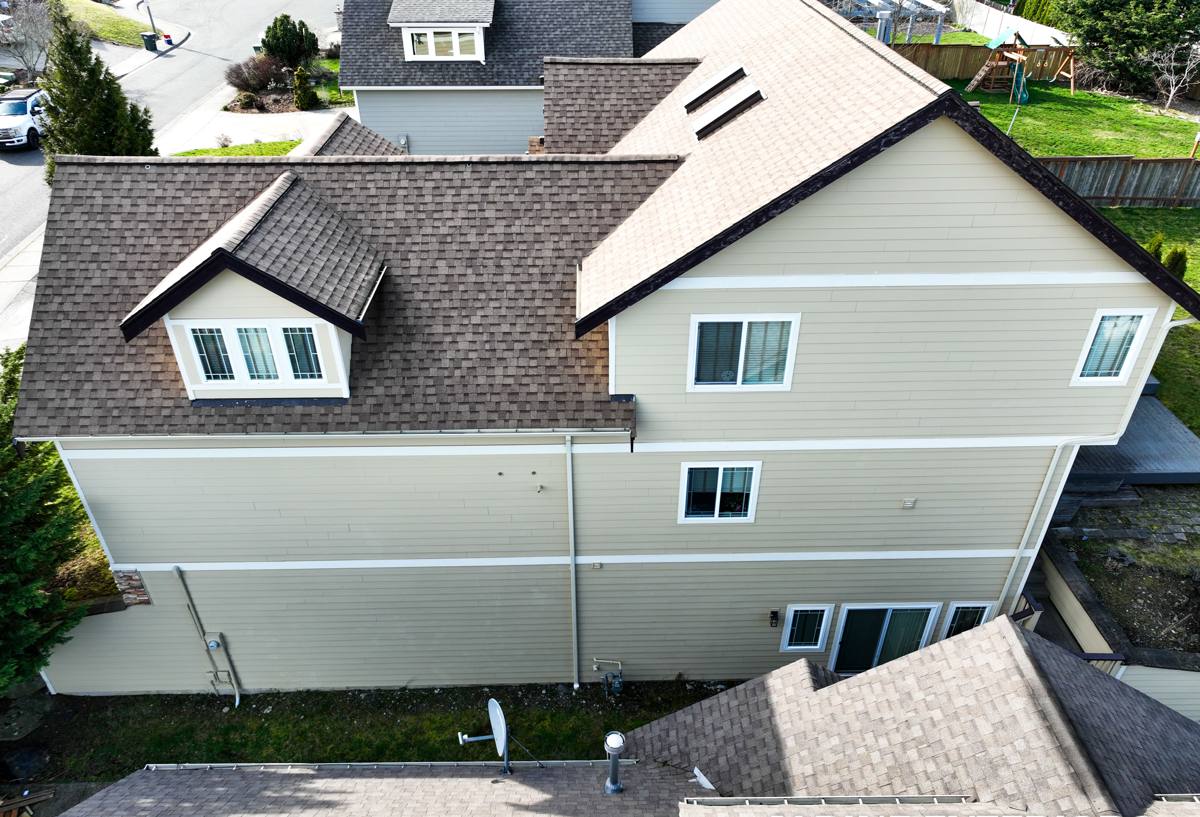
What Birch Bay's Climate Does to a Deck
Salt Air and Corrosion
Being close to the water means more direct salt exposure than most of Whatcom County sees. Salt accelerates corrosion in fasteners, joist hangers, post bases, and any exposed metal hardware. A deck built with standard-grade fasteners can start showing rust streaks and weakened connections years before the decking itself wears out, and once hardware corrodes, it's a structural problem, not just a cosmetic one.
Driving Rain and Standing Moisture
Waterfront exposure also brings more wind, and wind-driven rain doesn't just fall on a deck surface — it gets pushed into ledger connections, under railing posts, and into any gap where two pieces of wood or composite meet. Decks that don't shed water efficiently, or that trap moisture against framing members, end up with rot, mold, or hardware failure well ahead of schedule.
Moss, Algae, and Long Shade Seasons
Mild temperatures and near-constant moisture add up to a long moss and algae season across this part of the county. Deck surfaces that stay shaded, whether from trees or the house itself, are usually the first place it shows up, and any material that holds moisture against its surface becomes a growth site over time. Moss on a deck isn't just an appearance issue — it holds water against the boards and makes the surface slick and unsafe underfoot.
Decking Material Options for Birch Bay Homes
There's no single right answer for every homeowner — budget, maintenance tolerance, and how the deck will be used all factor in. What matters is understanding how each option actually performs in this specific climate, not just how it looks in a showroom.
| Material | Moisture & Salt Air Behavior | Maintenance | Typical Lifespan Here |
|---|---|---|---|
| Capped composite decking | Resists moisture absorption and staining; cap layer protects the core | Low; periodic washing, no staining or sealing | 25-30+ years with correct installation |
| Uncapped composite decking | More moisture-resistant than wood, but exposed core can absorb some water at cut edges | Low to moderate; edge sealing at cuts matters | 20-25 years, varies by product |
| Pressure-treated lumber | Absorbs and releases moisture readily; prone to checking and cupping in wet-dry cycles | High; regular staining or sealing needed | 10-15 years without consistent upkeep |
| Cedar | Naturally moisture-tolerant but still absorbs water over time; softer surface | High; refinishing needed to hold color and resist graying | 15-20 years with consistent maintenance |
Most homeowners on the water side of Birch Bay end up choosing a capped composite for the decking surface specifically because it doesn't need refinishing and handles repeated wetting and drying without warping. That said, wood decking is still a reasonable choice for homeowners who prefer the look and don't mind the maintenance schedule — we'll walk through the honest trade-offs for your specific setup rather than push one option across the board.
A Note on Composite Decking Brands
Composite and PVC decking products vary by manufacturer in how the cap layer is constructed, how the boards are fastened, and what the warranty actually covers. Some products use a full wrap-around cap for better moisture protection at cut edges; others cap only the top and sides. We install to each manufacturer's published fastening and gapping specifications, because a composite deck that's installed loosely — wrong fastener spacing, no expansion gap, wrong hidden-fastener system — will develop problems regardless of how good the board itself is.
What's Underneath Matters as Much as What's on Top
The decking surface is the part everyone sees, but the framing and hardware underneath determine how long the whole structure lasts in a salt-air environment.
- Corrosion-resistant hardware: Joist hangers, post bases, and structural screws rated for coastal or high-corrosion exposure, not just standard galvanized hardware.
- Ledger flashing: Proper flashing where the deck attaches to the house, so wind-driven rain doesn't work its way behind the ledger board and into the wall or rim joist.
- Joist tape or capping: A protective barrier on top of framing lumber that keeps standing water off the wood and slows rot at the point where fasteners penetrate the joist.
- Proper drainage slope: A slight pitch away from the house so water sheds off the deck surface instead of pooling against the ledger or house wall.
- Post base standoffs: Hardware that keeps post ends elevated off concrete footings so they're not sitting in standing water after a storm.
Design Considerations Specific to Birch Bay
Elevation and Wind Exposure
Decks closer to the water tend to sit at higher elevations or take more direct wind, which affects railing design, guard height requirements, and how open or enclosed a design should be. We factor wind exposure into railing and structural choices, not just the view.
Sun and Shade Patterns
Where a deck sits relative to the house and tree cover determines how much moss and algae pressure it'll deal with. A deck that stays shaded most of the day will need more frequent cleaning regardless of material, so we talk through orientation and expected maintenance during design, not after the build.
Railing Material
Metal railing components — cable rail, aluminum pickets, or powder-coated systems — need to be rated for coastal exposure, or they'll show corrosion and finish breakdown faster than they would a few miles inland. Wood and composite railing systems avoid that specific issue but come with their own maintenance considerations.
Cost Factors for a Birch Bay Deck Project
Every deck is different, but the same handful of factors drive most of the cost difference between projects. We won't quote a number without seeing the site, but this is what typically moves the price.
| Factor | Why It Matters |
|---|---|
| Decking material | Pressure-treated lumber costs less upfront than composite, but composite typically costs less over the deck's life once maintenance is factored in |
| Size and footprint | Larger decks mean more framing, more decking, and more labor hours, scaling cost roughly with square footage |
| Height and elevation | A deck built well above grade needs more substantial footings, posts, and often stairs, which adds to both material and labor cost |
| Railing type | Cable rail and metal picket systems generally cost more than wood or composite railing, especially in coastal-rated hardware |
| Site access and grading | Sloped lots or limited equipment access near the water can add labor time for excavation and material handling |
| Permitting | Whatcom County permitting requirements depend on deck height, size, and proximity to the shoreline, which can affect both cost and timeline |
Our Process
We start with an on-site visit to look at the house, the grade, sun and wind exposure, and how the deck will actually be used, then talk through decking and railing options that fit both your budget and this specific climate. From there we put together a clear, written scope covering materials, framing details, hardware, and timeline before any work begins. During the build, the flashing, drainage, and corrosion-resistant hardware details go in as standard practice, not as optional upgrades, because those are the details that decide whether a deck lasts fifteen years or thirty.
Simple Deck Maintenance Checklist for Birch Bay Homeowners
- Sweep debris and standing water off the deck surface regularly, especially in shaded areas
- Check railing hardware and fasteners annually for early signs of corrosion
- Rinse salt residue off the surface periodically if the deck faces the water directly
- Watch for moss buildup on shaded boards and clean it before it becomes slick or holds moisture long-term
- Inspect ledger flashing and the house connection point once a year for gaps or deterioration
Why a Local Birch Bay Crew Matters
A crew that already builds decks in this specific area knows how salt air, wind exposure, and prolonged shade behave differently here than they do even a short drive inland. That shows up in the details — which hardware grade gets specified, how a ledger gets flashed, where extra drainage detailing gets added — and those details are exactly what separate a deck that needs major repair in ten years from one that's still solid in thirty. We work throughout Ferndale and the surrounding Whatcom County waterfront, and Birch Bay's exposure is part of what we plan for from the first site visit, not something we figure out after a problem shows up.
If you're planning a new deck or replacing one that's showing its age, we're happy to walk the site with you and give an honest read on what it needs. Reach out below for a free, no-pressure estimate.