 Ferndale Siding
 Why Lynden Roofs Need More Than a Standard Shingle Job
Lynden sits inland from the coast, but it doesn't escape the weather pattern that defines this corner of Washington. Moist, salt-tinged air moves in off the Salish Sea and pushes across Whatcom County's farmland and low hills, carrying moisture and fine salt residue with it. Add wind-driven rain off the Nooksack lowlands and months of overcast, damp weather each year, and you get a roofing environment that punishes shortcuts. An asphalt shingle roof installed the way it's supposed to be installed will handle all of this for two decades or more. One installed with gaps in flashing, ventilation, or underlayment will show problems — leaks, granule loss, moss colonization, premature aging — within a handful of years.
This page is about doing that job right, specifically for homes in and around Lynden, where the roofing decisions that matter most are the ones that deal with sustained moisture rather than heat or hail.
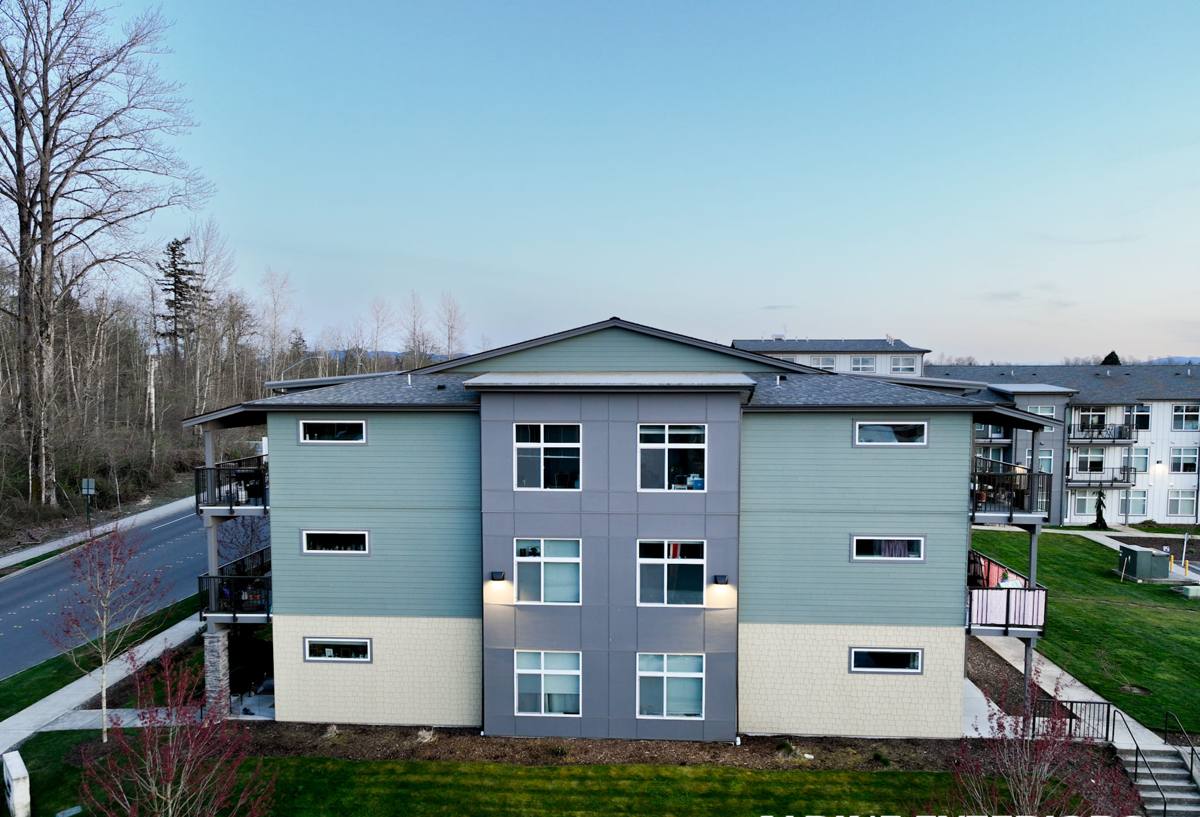
The Regional Climate Factors That Shape a Lynden Roof
Salt-Tinged, Moisture-Heavy Air
Whatcom County's marine climate doesn't stop at the waterfront. The same damp, salt-influenced air that hits Ferndale and Bellingham moves inland across open farmland toward Lynden, especially during fall and winter storm cycles. Over years, that moisture cycle works into shingle granules, exposed fasteners, and any flashing that wasn't sealed correctly the first time.
Driving Rain, Not Just Steady Rain
Whatcom County doesn't just get rain — it gets rain pushed sideways by wind, which finds every weak seam a roof has. Driving rain tests things a light, straight-down shower never will: the laps under ridge caps, the seal strips along rake edges, and any valley where water can be forced uphill under a shingle tab instead of running straight down.
A Long Moss Season
Between the rain, the humidity, and the tree cover common on Lynden's larger rural lots, moss has a long runway to establish itself — often eight or nine months of the year with conditions damp enough to support growth. Moss isn't just cosmetic. It holds moisture against the shingle surface, works into the granule layer, and over time lifts tabs enough to let water underneath.
What a Correctly Installed Asphalt Shingle Roof Actually Requires
"Asphalt shingle roof" describes the visible layer. What actually determines how long it lasts in this climate is everything underneath and around it:
- Deck inspection and repair — any soft, delaminated, or water-stained sheathing gets replaced before a single shingle goes down. Shingles nailed over a compromised deck fail early no matter how good the shingle itself is.
- Ice-and-water shield in vulnerable zones — valleys, eaves, and roof-to-wall transitions get a self-adhering waterproof membrane, not just felt paper, because these are the spots where driving rain and moss-related backup cause the most damage.
- Synthetic underlayment across the field — a continuous secondary barrier under the shingles themselves, so a single damaged or lifted shingle doesn't mean an immediate leak.
- Correct nailing pattern — proper nail count and placement per manufacturer spec, not the minimum needed to pass a quick visual check. Under-nailed shingles are one of the most common causes of wind and rain intrusion.
- Flashing done in metal, not just tar — step flashing at walls and chimneys, and proper valley metal or woven valleys installed to shed water instead of channel it sideways.
- Balanced attic ventilation — intake at the eaves and exhaust at the ridge, sized to the attic volume. Without this, trapped moisture condenses on the underside of the deck and rots it from the inside, regardless of how good the shingles above are.
Choosing the Right Shingle for Lynden's Climate
Not every asphalt shingle product performs the same way under sustained moisture and moss pressure. The table below covers the main categories homeowners choose between.
| Shingle Type | Typical Lifespan | Moss/Algae Resistance | Best Fit |
|---|---|---|---|
| Standard 3-tab | 15–20 years | Low unless treated | Budget-focused re-roofs, secondary structures |
| Architectural (laminate) | 25–30 years | Moderate, improves with algae-resistant granules | Most Lynden homes — better wind rating and thicker profile |
| Algae-resistant (copper- or zinc-infused granules) | 25–30+ years | High — actively resists moss/algae growth | Shaded lots, north-facing roof planes, tree-heavy properties |
| Impact-rated architectural | 30+ years | Moderate to high depending on granule type | Homeowners prioritizing longevity and storm resistance over lowest upfront cost |
For most Lynden properties — especially those with mature trees, fence lines, or outbuildings casting shade on part of the roof — an architectural shingle with algae-resistant granules is the practical middle ground: meaningfully better moss resistance than a standard shingle, without stepping up to premium impact-rated pricing unless there's a specific reason to.
Our Process, Start to Finish
- On-site inspection. We walk the roof, check the attic from inside when accessible, and look at flashing, ventilation, and deck condition — not just shingle wear.
- Written scope and estimate. You get a clear breakdown of what's being replaced, what materials are used, and what it costs — no vague allowances.
- Tear-off and deck check. Old roofing comes off completely so we can inspect the deck directly rather than roofing over hidden problems.
- Underlayment and waterproofing. Ice-and-water shield goes in first at eaves, valleys, and penetrations, followed by synthetic underlayment across the rest of the field.
- Flashing and ventilation work. New flashing at walls, chimneys, and valleys; intake and exhaust ventilation corrected or upgraded as needed.
- Shingle installation. Installed to manufacturer nailing and exposure specs, not shortcuts that happen to look fine from the ground.
- Cleanup and magnetic sweep. Job site and yard cleared of debris and stray fasteners.
- Final walk-through. We go over the finished roof with you before calling the job done.
Why a Crew That Already Works in Lynden Matters
A roofing crew that regularly works Lynden and the surrounding Ferndale area knows the difference between a coastal-exposure roof and a farmland-exposure roof, and adjusts accordingly — more attention to shaded, moss-prone north slopes on tree-lined rural lots, more attention to wind-driven rain on properties with open exposure across fields. That local pattern recognition is what keeps a roof performing for its full expected life instead of just its first few winters.
It also means faster response. When a windstorm knocks a limb into a roof or a valley starts leaking during a heavy rain event, a crew already working in Whatcom County can get to your property faster than one dispatching from outside the region.
Keeping Your New Roof Moss-Free: Homeowner Checklist
- Trim back tree limbs overhanging the roof to reduce shade and debris buildup
- Clear gutters at least twice a year — clogged gutters back water up under the shingle edge
- Rinse visible moss growth gently with plain water rather than pressure-washing, which can strip granules
- Check for granule buildup in gutters and downspouts, which signals accelerated shingle wear
- Have the roof looked at after any major windstorm, even if nothing looks obviously wrong from the ground
- Schedule a professional inspection every 2–3 years, or after any hailstorm or significant wind event
What Affects the Cost of a Lynden Re-Roof
| Factor | Why It Matters |
|---|---|
| Roof size and pitch | Steeper roofs take longer to work safely and use more material per square |
| Number of layers to remove | Tear-off of multiple existing layers adds labor and disposal cost |
| Deck condition | Rotted or delaminated sheathing found during tear-off requires replacement before shingles go on |
| Shingle grade chosen | Standard 3-tab, architectural, and algae-resistant/impact-rated products carry different material costs |
| Roof complexity | Valleys, dormers, skylights, and chimneys all add flashing work and labor time |
| Ventilation upgrades | Adding or correcting intake/exhaust ventilation is a smaller add-on cost with a large payoff in roof lifespan |
Because these factors vary so much from one property to the next, an accurate number only comes from an on-site look — not a phone estimate. What we can say honestly is that architectural shingle re-roofs on typical Lynden homes generally land in the mid-to-upper thousands of dollars, with the specifics depending on the factors above.
Get a Straight Answer on Your Roof
If your Lynden home's roof is showing granule loss, moss buildup, or you're just not sure how many years it has left, an honest on-site look tells you more than any guess from photos. Use the form below to request a free, no-pressure estimate — we'll walk the roof, tell you what we see, and give you a straightforward recommendation, whether that means a full replacement, targeted repairs, or simply keeping an eye on it for now.