 Ferndale Siding
 Building Decks for One of Whatcom County's Toughest Microclimates
Point Roberts sits on its own little peninsula, surrounded by water on three sides, which means homes there take a different kind of weather beating than most of Whatcom County. The salt air off the water works on metal fasteners and hardware year-round. Driving rain off the Strait finds every gap in flashing and framing. And because the peninsula stays damp and shaded through much of the fall, winter, and spring, moss and algae get a long runway to take hold on any horizontal wood surface. A deck built without those three things in mind — salt air, driving rain, and moss — will show problems faster here than it would ten miles inland.
We've worked on homes throughout Ferndale and the surrounding Whatcom County waterfront, and Point Roberts projects get treated differently from the start. The framing choices, fastener grade, drainage detailing, and even the build schedule all shift once you're building this close to salt water.
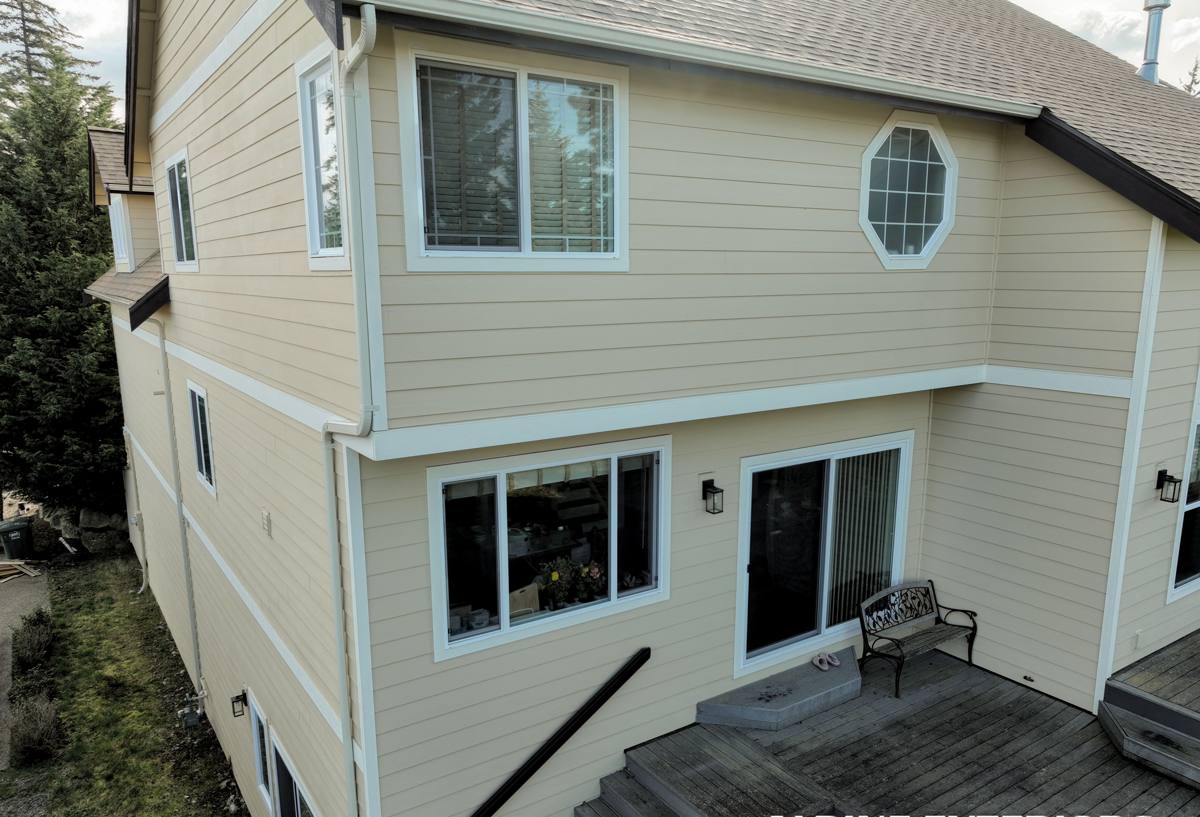
What Salt Air Actually Does to a Deck
Airborne salt doesn't just affect boats and railings on the beach — it settles on everything, including a deck built a block or two back from the water. Over time it accelerates corrosion on anything less than fully corrosion-rated hardware. The failures we see most often on older Point Roberts decks aren't in the decking boards themselves, but in the connectors underneath: joist hangers, structural screws, and post bases that were rated for general use but not for a marine-influenced environment.
Where This Shows Up First
- Rust streaking below joist hangers and structural screws
- Loosening railing posts where standard fasteners have corroded
- Pitting on cheaper "deck screws" that were never rated for coastal exposure
- Premature failure of galvanized (rather than stainless) hardware near ground contact
None of this is dramatic on its own, but it compounds. A corroded hanger doesn't announce itself until a board starts to feel spongy or a railing starts to wobble, and by then the fix is more involved than it would have been with the right hardware from day one.
Driving Rain and the Details That Actually Keep Water Out
Point Roberts gets its share of wind-driven rain, and a deck's biggest vulnerability isn't the surface — it's everywhere the deck attaches to or penetrates the house. The ledger board connection, post footings, and any spot where a beam or stair stringer meets a wall are the places water finds its way in if flashing wasn't done correctly.
Ledger Board and Flashing
A correctly built ledger connection uses proper flashing that sheds water away from the house, not just a bead of caulk and a hope. On older homes we're often replacing decks on, this is the single most common corner that got cut — caulk fails, water tracks behind the ledger, and rot sets in at the rim joist long before anyone notices from the outside.
Footings and Post Bases
Ground contact in a wet climate means footings need to be set below frost depth and post bases need to keep wood off the concrete entirely, using a raised, non-corroding base rather than resting a post directly on a footing. It's a small material cost that prevents years of slow-moving decay at the point where the deck is hardest to inspect.
Decking Material Choices for a Point Roberts Property
There's no single "best" decking material — there's a best material for how a homeowner wants to maintain it, how much shade the deck sits in, and how close it is to the water. Here's how the common options compare specifically against salt air, rain, and moss:
| Material | Salt Air / Moisture Resistance | Moss & Algae Resistance | Maintenance Needed | Typical Lifespan |
|---|---|---|---|---|
| Composite decking | Excellent — doesn't absorb moisture or corrode | Good, though shaded boards still need periodic cleaning | Low — occasional washing | Long, backed by manufacturer warranty |
| Cedar | Good natural rot resistance, but surface needs upkeep | Fair — moss will colonize untreated or worn finish | Moderate — periodic sealing/staining | Moderate, depends on maintenance |
| Pressure-treated pine | Fair — treatment protects core wood, surface still absorbs water | Fair to poor in shaded, damp spots without upkeep | Higher — regular sealing recommended | Moderate |
| Tropical hardwoods (e.g., ipe) | Very good — naturally dense and rot-resistant | Good, but surface can still grow slick with algae | Moderate — periodic oiling to maintain color | Long when maintained |
For decks that sit in partial shade or close to the water — common in Point Roberts — we lean toward materials and finishes that don't give moss and algae an easy foothold, and we always pair the decking choice with proper spacing and drainage underneath, which matters more than the material itself in a lot of cases.
Moss, Algae, and Drainage: The Long-Season Problem
Moss doesn't grow because a deck is old — it grows because moisture sits somewhere long enough for spores to take hold. In Point Roberts, with its extended damp season, that "somewhere" is usually a spot with poor airflow, tight board spacing, or a low corner where water pools instead of draining. Once moss establishes itself, it holds moisture against the board surface, which accelerates rot underneath even on materials that resist rot on their own.
What Prevents It From the Start
- Correct board spacing so water and debris don't get trapped between boards
- A slight slope built into the frame so water sheds instead of pooling
- Clearance underneath the deck for airflow, especially on lower, shaded decks
- Avoiding solid skirting that seals off ventilation on ground-level decks
- Keeping nearby vegetation trimmed back so sun and air can reach the deck surface
These are framing and layout decisions made before a single board goes down. Trying to solve a moss problem after the fact usually means power washing every season, which wears down the wood or composite surface faster than proper drainage ever would have.
Railings, Stairs, and Hardware That Hold Up
Railings and stairs take a different kind of abuse than the deck surface — they're handled constantly, they're often more exposed to wind, and their connections are load-bearing in a way that matters for safety, not just looks. In a salt-air environment, we spec fasteners and structural connectors rated for corrosion resistance rather than standard-grade hardware, particularly anywhere metal is in constant contact with treated lumber, since some treated wood chemistries accelerate corrosion on the wrong fastener type. It costs a little more up front and saves a homeowner from a wobbly railing or a rusted-through bracket years earlier than it should happen.
Our Process for a Point Roberts Deck Project
Building in Point Roberts takes a bit more planning than a job a few miles inland, mostly because of logistics — material deliveries and crew scheduling both have to account for the border crossing that separates the peninsula from the rest of Whatcom County. We plan for that up front rather than letting it become a surprise mid-project.
1. On-Site Assessment
We look at sun exposure, prevailing wind and rain direction, existing drainage, and how close the deck site is to the water, since all of that shapes the material and framing recommendations.
2. Design and Material Selection
We walk through decking, railing, and finish options honestly, including the maintenance trade-offs of each, so the choice matches how the homeowner actually wants to spend their weekends.
3. Permitting
Deck projects typically require a permit through Whatcom County, and we handle that process as part of the job rather than leaving it to the homeowner to sort out.
4. Build and Inspection
We build to the framing, flashing, and fastener standards outlined above, and coordinate any required inspections along the way.
Caring for a Point Roberts Deck After It's Built
Even a well-built deck needs a bit of seasonal attention in this climate. A short annual routine keeps small issues from becoming expensive ones:
- Clear leaves and debris from between boards before fall rains set in
- Rinse off surface algae and grime before it has a chance to establish
- Check railing posts and stair connections for any looseness once a year
- Inspect the ledger board area for staining or soft spots, especially after a wet winter
- Re-seal or re-oil wood decking on the schedule recommended for that specific wood species
- Keep gutters and downspouts near the deck clear so runoff isn't draining directly onto it
Why Local Experience in Point Roberts Matters
Point Roberts is a small, somewhat isolated community, and a crew that's already worked there knows the practical realities: how the wind and rain typically hit a given exposure, how quickly moss establishes on a shaded north-facing deck versus a sunny one, and how to plan a project around the logistics of getting materials and crew onto the peninsula efficiently. That familiarity shows up in fewer surprises during the build and a deck that's specified correctly for the site from the first conversation, not adjusted after the fact.
If you're planning a new deck or replacing one that hasn't held up to the Point Roberts climate, we're happy to take a look and talk through honest options for your property. Reach out for a free, no-pressure estimate using the form below.