 Ferndale Siding
 Siding Built for Where Lummi Nation Sits
Homes in and around Lummi Nation sit close to the water, and that changes what siding has to survive. You're dealing with salt-laden air off the Salish Sea, driving rain that comes in sideways during winter storms, and a moss season that can stretch from October through May in the shaded, damp pockets common to this part of Whatcom County. Siding here doesn't just need to look good — it needs to shed water fast, resist the slow breakdown that salt air causes to fasteners and finishes, and stay dimensionally stable through repeated wet-dry cycles. That's the bar we hold every installation to, and it's why we've standardized on one product: James Hardie fiber cement.
This page is specifically about James Hardie installation for homes in the Lummi Nation area. We're not going to give you a generic rundown of siding options — we're going to walk through what this climate does to a house, what a correct Hardie installation looks like in response, and why the install matters as much as the product itself.
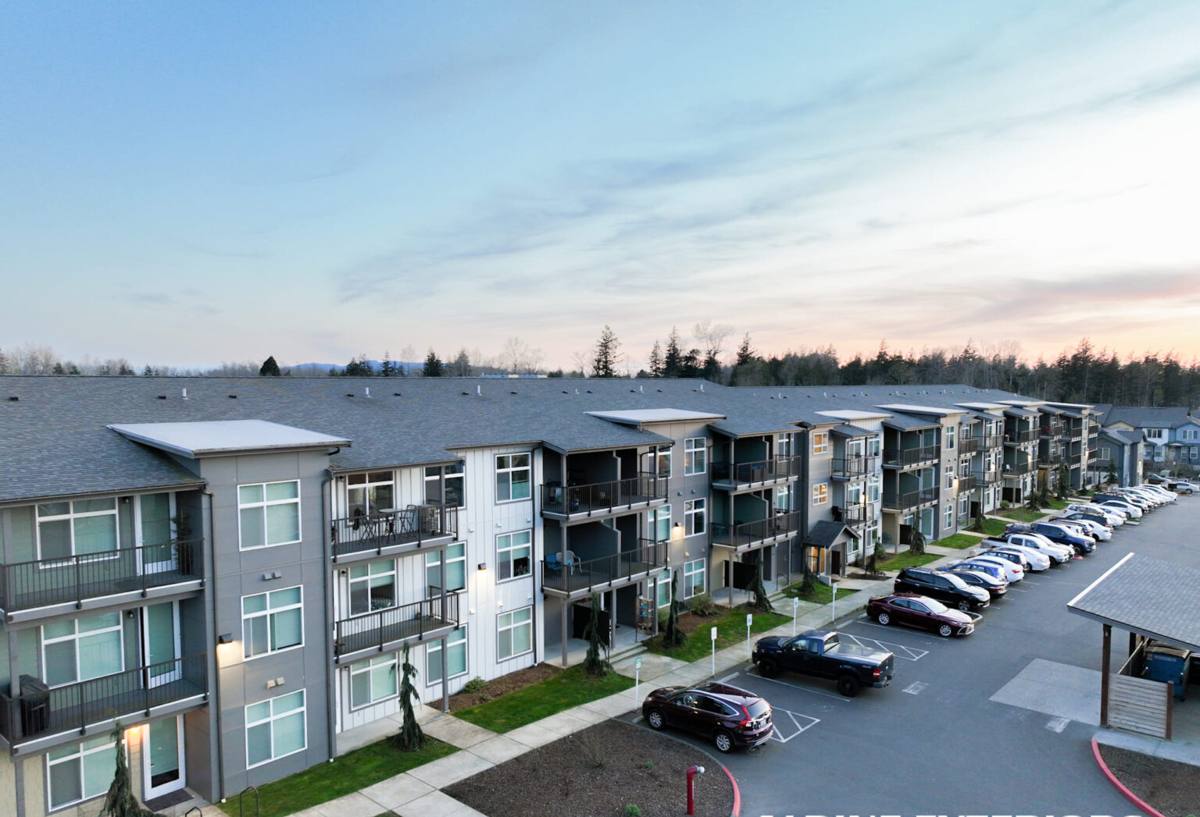
What Salt Air, Rain, and Moss Actually Do to Siding
Salt Air
Proximity to the water means airborne salt settles on every exterior surface, including siding, fasteners, and flashing. Over years, this accelerates corrosion in anything not rated for coastal exposure — cheap fasteners rust and streak, and some paint finishes chalk or fade faster than they would further inland. Fiber cement itself doesn't corrode, but the fasteners, flashing, and caulking used to install it absolutely can if they're not chosen correctly.
Driving Rain
Whatcom County storms don't just fall straight down — wind-driven rain gets pushed sideways into wall assemblies, especially on west- and southwest-facing elevations that face open water or exposed fields. Any gap in flashing, any wrong-way lap, any missing kick-out flashing above a roofline becomes a path for water to get behind the siding and into the wall sheathing. Once that happens, the siding material almost doesn't matter — the damage happens behind it.
Moss and Sustained Moisture
Long, cool, wet stretches let moss and algae get a foothold on north-facing walls, under eaves, and in any spot that doesn't get direct sun or airflow. Moss itself doesn't destroy fiber cement, but it holds moisture against the surface far longer than it would otherwise sit there, and it's a sign that a wall isn't drying out between rain events — which matters more for the wood trim, fasteners, and sheathing behind the siding than for the siding face itself.
Why We Only Install James Hardie
We don't install vinyl, LP SmartSide, Cemplank, Allura, or bare cedar or primed spruce siding, and we're upfront about why. Each of those products has legitimate uses — but none of them holds up to this specific combination of salt air, wind-driven rain, and sustained damp the way James Hardie fiber cement does when it's installed correctly.
- Vinyl expands and contracts significantly with temperature swings and can warp or crack in high-wind coastal exposure; it's also more prone to visible fading over time in bright, reflective coastal light.
- LP SmartSide and other wood-strand products are engineered wood — meaning they're more sensitive to sustained moisture exposure at cut edges and butt joints than fiber cement, which matters in a climate where walls don't always get a chance to fully dry out.
- Cedar and primed spruce are traditional and attractive but require an ongoing maintenance commitment — restaining, resealing, and moisture monitoring — that most homeowners underestimate until the first signs of rot show up.
- Cemplank and Allura are also fiber cement, and reasonable products, but we've standardized our crews, fastening specs, and warranty relationships around one manufacturer so every job we do gets the same scrutiny and the same accountability.
James Hardie is non-combustible, dimensionally stable in wet climates, and holds a factory-applied ColorPlus finish that's baked on and warranted against fading and chipping — which matters more here than in a drier climate, because the finish is doing constant work against salt air and UV bouncing off the water.
Which Hardie Product Line Fits This Area
James Hardie makes climate-engineered product lines, and homes near Lummi Nation fall into the HZ5 zone designation, engineered for regions with freeze-thaw cycles and significant moisture exposure. In practice, most homes in this area use a combination of:
- HardiePlank lap siding — the primary field siding, typically in a smooth or cedar-textured finish, lapped to shed wind-driven rain correctly.
- HardiePanel vertical siding — often used as an accent on gables or modern-style facades, or on outbuildings.
- HardieTrim boards — for corners, window and door casing, and fascia, matched to resist the same moisture exposure as the field siding rather than mixing in wood trim that will weather differently.
- ColorPlus factory finishes — pre-finished color baked on under controlled conditions, which holds up better against salt air and UV than field-applied paint and comes with its own finish warranty.
The right combination depends on the home's exposure — a house with a clear line to open water on its west side gets treated differently than one tucked behind trees or other structures.
What a Correct Installation Actually Involves
Fiber cement siding is only as good as the installation behind it. In a climate that pushes water at a wall this often, the details most homeowners never see are the ones that determine whether the siding lasts 30-plus years or starts showing problems in five.
Flashing and Water Management
Every window, door, and roof-to-wall intersection needs correctly lapped flashing so water is directed out and away from the wall assembly, not just from the siding surface. Kick-out flashing where a roofline meets a wall is a small detail that gets skipped constantly and causes some of the most expensive hidden damage we see.
Weather-Resistive Barrier
A correctly lapped house wrap behind the siding, with all penetrations properly sealed, gives the wall a second line of defense if any water does get past the siding face — which, in driving rain, it eventually will at some point over the life of the house.
Fastening
Hardie's specifications call for corrosion-resistant fasteners driven at the correct depth and location on the plank — not too high, not overdriven. Near saltwater, using anything less than a fully corrosion-resistant fastener shortens the life of the installation regardless of how good the siding itself is.
Clearances
Manufacturer specs call for minimum clearance between the bottom of the siding and grade, roofing, decks, and patios. Skipping these clearances is one of the most common shortcuts we see from crews unfamiliar with Hardie's actual installation manual, and it's one of the fastest ways to trap moisture against the bottom edge of the siding.
Caulking and Joint Treatment
Butt joints and trim intersections need to be treated according to spec — some joints are meant to be caulked, others are designed to be left as a rainscreen gap. Caulking everything, or caulking nothing, are both wrong in different ways.
Cost Factors for a Lummi Nation Area Home
| Factor | Why It Matters Here |
|---|---|
| Home size and wall complexity | More corners, gables, and dormers mean more cutting, trim work, and flashing detail |
| Existing siding removal | Tear-off and disposal of old siding, plus any sheathing repair found underneath |
| Exposure level | West- and southwest-facing walls exposed to open water or wind often need extra flashing attention |
| Product line and finish | Lap vs. panel vs. trim combinations, and ColorPlus vs. field-applied finish, affect material cost |
| Moisture or rot found during tear-off | Damaged sheathing or framing behind old siding needs to be repaired before new siding goes on |
Any honest estimate starts with a look at the existing siding and wall condition — not just a square-footage number pulled from a phone call.
Living With Hardie Siding in This Climate
Once it's installed correctly, James Hardie siding is genuinely low-maintenance compared to wood or engineered-wood alternatives, but "low-maintenance" doesn't mean zero-attention in a climate like this one.
- Rinse siding periodically, especially north-facing and shaded walls, to discourage moss and algae buildup
- Keep gutters clear so overflow doesn't run down the siding face repeatedly in the same spot
- Trim back vegetation and tree cover that keeps a wall section shaded and damp longer than the rest of the house
- Check caulking at trim joints every few years — caulk is the one component in the system that wears out before the siding does
- Watch for any dark staining or soft spots at the bottom edge of the siding near grade, which can signal a clearance or drainage issue worth addressing early
Why It Matters to Hire a Crew That Already Works This Area
A crew that's installed siding elsewhere in Washington but hasn't worked the specific conditions around Ferndale and Lummi Nation can still do fine work — but they're guessing at exposure decisions that a crew familiar with this shoreline area has already worked through repeatedly. Knowing which elevations in this specific area tend to take the worst of the wind-driven rain, how much moss pressure to expect on a shaded north wall near tree cover, and which fastening and flashing details actually hold up against sustained salt air isn't something you get from a manufacturer's install manual alone — it comes from doing the work here, on homes with the same exposure your house has.
We install James Hardie exclusively, to Hardie's written specifications, on every home we work on in this area — no shortcuts on flashing, clearances, or fastening to save an hour on the job.
If you're planning a siding project on a home in or near Lummi Nation, we're happy to take a look and walk you through what your specific house needs. Reach out for a free, no-pressure estimate using the form below.