 Ferndale Siding
 Siding on an Exclave: Why Point Roberts Homes Take More Abuse
Point Roberts sits at the end of its peninsula with water on three sides, which means homes here catch a version of Whatcom County's weather that inland Ferndale properties simply don't see. Salt-laden air off the surrounding waters settles on every exterior surface, driving rain comes in sideways during winter storms, and the long Pacific Northwest wet season keeps north-facing and shaded walls damp for weeks at a stretch. Add the moss that thrives in that combination of shade and moisture, and you have a climate that is genuinely harder on exterior siding than most of the region realizes.
None of that means siding installation here has to be a gamble. It means the details that get glossed over in a typical install — flashing, fastening, clearances, product selection — matter more, and getting them right the first time saves a homeowner from redoing the job in ten years instead of thirty.
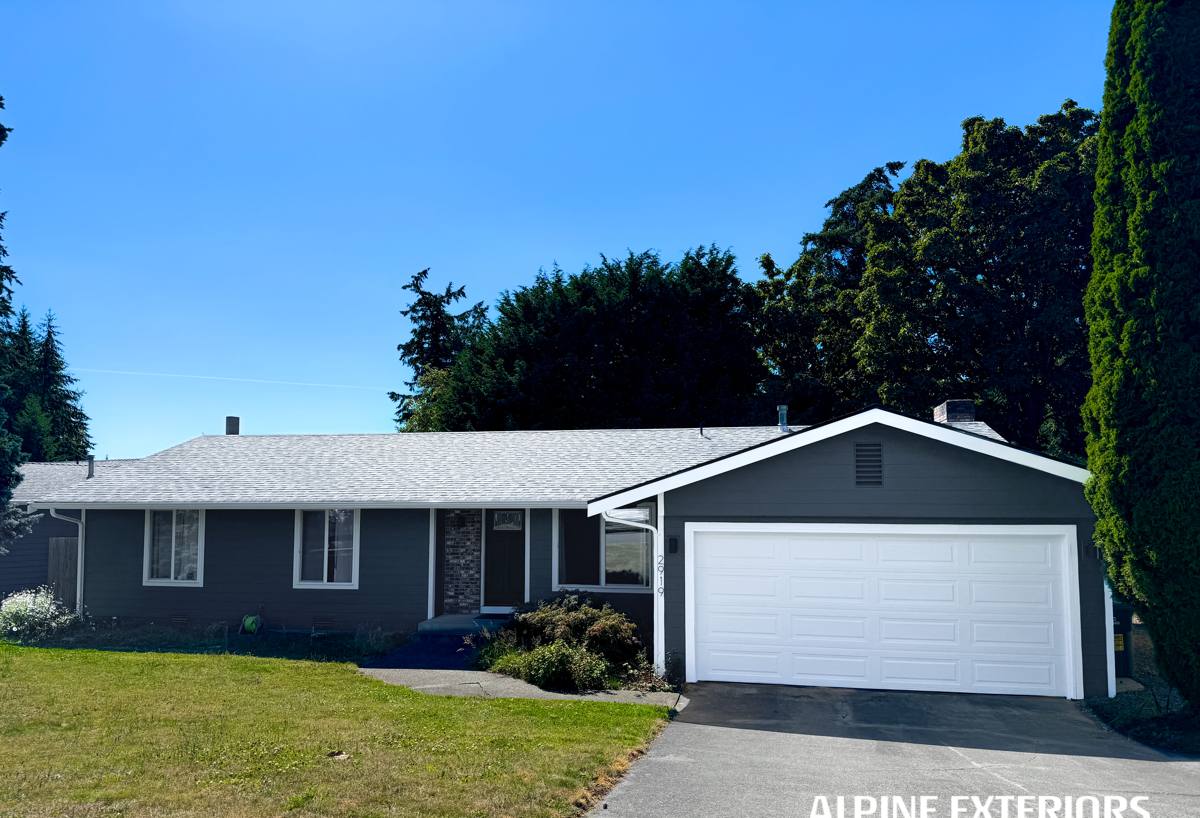
What Salt Air, Rain, and Moss Actually Do to a Wall
Salt air
Airborne salt is corrosive to fasteners, flashing, and trim hardware, and it accelerates the breakdown of paint and coatings that aren't formulated to resist it. Over years, a siding product with a weak factory finish will chalk, fade unevenly, or start showing rust bleed at every nail head and seam.
Driving rain
Wind-driven rain doesn't just wet a wall — it forces water sideways and upward, testing every lap, joint, and penetration in the siding system. A wall assembly that works fine in a calm rain can still fail during a coastal storm if the water-resistive barrier, flashing, and siding overlaps weren't detailed for that kind of exposure.
Moss and prolonged moisture
Shaded, north-facing, and tree-sheltered walls stay damp longer here, and that moisture is exactly what moss and algae need to establish. Left alone, moss holds water against the surface, which is a slow but steady threat to any siding material that isn't dimensionally stable when wet.
Why Product Choice Is the First Decision, Not an Afterthought
We install James Hardie fiber cement siding exclusively — we don't install vinyl, LP SmartSide, primed wood, or cedar. That's a deliberate standard, not a lack of options. In a climate like Point Roberts', the material has to hold its shape and finish through repeated wet-dry cycles, resist moisture intrusion at the core, and take a factory finish that's engineered to outlast sun and salt exposure, not just look good on install day.
James Hardie's fiber cement is non-combustible, dimensionally stable in wet weather, and available with a ColorPlus factory finish that's baked on and warranted against fading and chipping in ways field-applied paint typically isn't. For a coastal-exposed property, that combination matters more than it does on a sheltered inland lot.
| Concern | What It Means for Point Roberts |
|---|---|
| Moisture absorption | Fiber cement doesn't swell, rot, or delaminate the way wood-based products can when repeatedly soaked |
| Factory finish | ColorPlus coating resists fading and chipping better than most field-applied paints exposed to salt air and UV |
| Fire resistance | Non-combustible material, relevant given the region's dry-season wildfire risk alongside its wet winters |
| Warranty structure | Manufacturer-backed and transferable, which matters on a peninsula where resale and second-home ownership are common |
What a Correct Installation Actually Involves Here
The siding product is only part of the equation. Most siding failures we see on coastal Whatcom County homes trace back to installation shortcuts, not the material itself. On a Point Roberts home, we pay particular attention to:
- A continuous, properly lapped water-resistive barrier behind the siding, with all penetrations sealed before a single board goes up
- Correct head, side, and step flashing at windows, doors, and roof-to-wall transitions, oriented to shed wind-driven rain rather than trap it
- Manufacturer-specified fastener type, spacing, and embedment — corrosion-resistant fasteners matter more here than almost anywhere else in the county
- Proper clearance between siding and grade, decks, and roof lines so moisture and moss-feeding debris don't collect against the bottom course
- Tight, correctly caulked or engineered joints at butt seams and corners, since a poorly sealed joint is where driving rain finds its way in first
- Ventilation behind the cladding where the wall assembly calls for it, so any moisture that does get past the exterior can dry out instead of sitting against sheathing
Skipping any one of these doesn't usually show up right away. It shows up in year six or seven as staining, soft trim, or siding that's holding moss no matter how often it's cleaned.
Our Process for a Point Roberts Siding Installation
1. On-site assessment
We walk the exterior, check the condition of the existing wall assembly, and note the specific exposure each elevation faces — the wall taking the brunt of the wind and salt off the water is treated differently in the plan than a sheltered rear elevation.
2. Scope and product plan
We spec the Hardie product line, profile, and finish that fits the home and the exposure, and lay out the flashing and moisture-barrier detailing before any material is ordered.
3. Material staging
Because Point Roberts is only reachable by land through Canada, material logistics get planned in advance rather than handled on the fly. We stage what the job needs so the crew isn't waiting on a delivery mid-project.
4. Removal and prep
Existing siding comes off, sheathing is inspected for hidden moisture damage, and any rot or compromised material is addressed before new siding goes on — covering up a wet wall is how a good install turns into a bad one.
5. Installation to spec
Barrier, flashing, fastening, and clearances go in per James Hardie's published installation requirements, not a generic siding approach. This is also what keeps the manufacturer's warranty intact.
6. Final walkthrough
We review the finished work with the homeowner, including care and cleaning guidance suited to a salt-air, high-moss-pressure property.
Cost Factors for a Point Roberts Installation
Every home is different, so we don't quote broad numbers without seeing the property, but these are the factors that most often move the scope and price on a job out here:
| Factor | Why It Matters Here |
|---|---|
| Tear-off and disposal | Removing existing siding, especially if it's covering hidden moisture or rot damage that needs repair first |
| Wall exposure | Elevations facing open water or prevailing wind typically need more flashing and detailing attention than sheltered walls |
| Trim and accessory scope | Fascia, trim boards, and soffit work often get bundled into a siding project and add labor and material |
| Home size and complexity | Corners, dormers, and roof-to-wall intersections add cutting, fitting, and flashing time |
| Material logistics | Staging materials for a location reached only by land through Canada is factored into project scheduling |
| Product selection | Profile, texture, and ColorPlus finish choice within the Hardie lineup affect material cost |
Living With Moss and Coastal Growth After Installation
New siding doesn't make moss disappear from the property — trees, shade, and the wet season are still there. What correct installation and the right material do is remove the siding itself as the weak point. Fiber cement doesn't feed moss growth the way some wood-based products can, and it holds up to the occasional gentle cleaning needed to keep shaded elevations looking sharp, without the surface degrading the way a softer material might under repeated washing.
We also talk homeowners through simple habits that make a real difference on a coastal lot: keeping gutters clear so overflow doesn't run down the wall, trimming back vegetation that keeps a wall in permanent shade, and addressing any moss buildup before it has years to establish.
Signs Your Point Roberts Home's Siding Needs Attention
- Persistent moss or dark staining on north-facing or shaded walls that comes back quickly after cleaning
- Soft or spongy siding or trim, especially near the bottom courses or around window and door trim
- Visible rust streaking from fasteners or flashing
- Paint or finish that's chalking, peeling, or fading unevenly, particularly on walls facing open water
- Gaps opening up at seams, corners, or trim joints
- Warping, cupping, or visible movement in the siding boards themselves
Why It Matters That We Already Work Point Roberts
Point Roberts' access — by land only through Canada — isn't a small detail for a construction project. Crews and suppliers who haven't planned for it can end up with delayed material, scheduling gaps, or a job that stalls halfway through. A contractor who already works the area builds that logistics reality into the plan from day one, so the project timeline holds and the crew isn't improvising border-crossing and delivery logistics while your home sits half-sided.
There's also a familiarity factor that shows up in the work itself: knowing which elevations on a Point Roberts lot typically take the worst of the wind and salt, and detailing the flashing and barrier work accordingly, comes from having done it here before — not from a generic install checklist.
Get a Free, No-Pressure Estimate
If your Point Roberts home's siding is showing wear from salt air, storm exposure, or years of moss pressure, we're happy to take a look and walk you through what correct installation would involve for your specific property. There's no obligation and no pressure — just a straight assessment and a clear scope, using the estimate form below.