 Ferndale Siding
 Asphalt Shingle Roofing Built for Sudden Valley Conditions
Sudden Valley sits in one of the more demanding microclimates in Whatcom County. Homes here are surrounded by tall conifers, tucked into wooded lots, and exposed to a long, wet shoulder season that runs from fall through late spring. Add in the salt-laden air that moves through the region and steady driving rain off the water, and you have a combination that ages an asphalt shingle roof faster than it would in a drier, more open part of the state. A roof that looks fine from the driveway can be quietly failing underneath the moss and shade.
We install, repair, and replace asphalt shingle roofing for homes throughout this neighborhood, and the approach we take here is different from what we'd use on an open, sun-exposed lot. Ventilation, underlayment choice, and moss prevention all get more attention because the environment demands it.
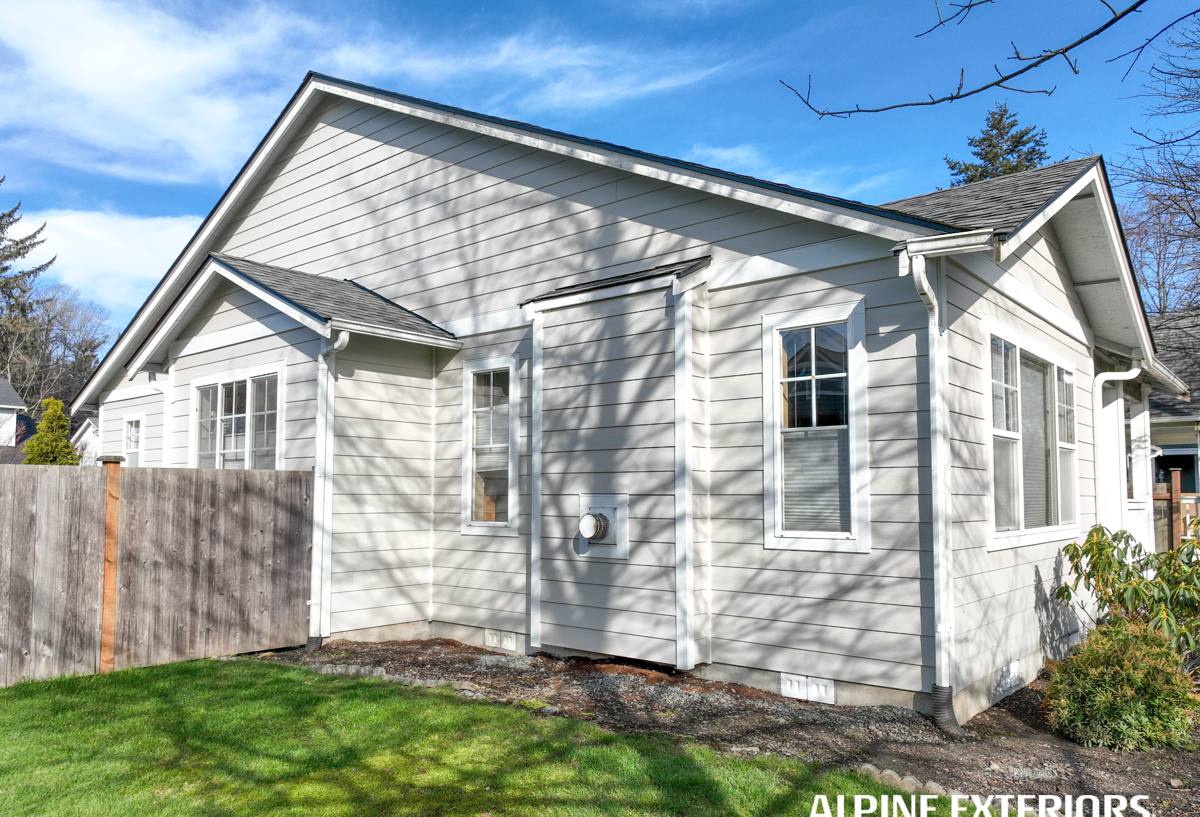
Why This Climate Is Hard on Shingle Roofs
Moss and Organic Growth
Heavy tree cover means constant shade on large sections of most Sudden Valley roofs, and shade plus moisture is exactly what moss needs to establish. Once moss takes hold, it lifts shingle edges, holds water against the roof deck, and works its way under tabs over time. A roof that's been neglected for a few seasons often has moss doing real structural damage, not just cosmetic staining.
Moisture and Driving Rain
Long stretches of steady rain, sometimes driven sideways by wind off the water, put pressure on every seam, flashing point, and nail line on a roof. Underlayment and flashing details that would be adequate in a drier climate aren't enough here. Water finds the weak point eventually, and in this area it usually finds it faster than homeowners expect.
Salt Air and Slow Corrosion
Airborne salt accelerates corrosion on exposed metal — roofing nails, flashing, vent caps, and gutter hardware all wear faster than the manufacturer's general specs assume. Standard fasteners can start rusting years ahead of schedule, which shows up as streaking on the shingles and, eventually, loose flashing.
What a Correct Asphalt Shingle Roof Looks Like Here
An asphalt shingle roof done right for Sudden Valley isn't just about the shingle brand on top. It's the assembly underneath and the details around penetrations that determine how long it actually lasts.
- Balanced intake and exhaust ventilation so moisture doesn't get trapped against the underside of the deck in shaded, tree-covered areas
- A synthetic or self-adhered underlayment rated for sustained wet exposure, not just a minimum-code felt layer
- Ice-and-water shield or equivalent protection at eaves, valleys, and any low-slope transitions where water can back up
- Corrosion-resistant flashing and fasteners suited to salt-air exposure, especially around chimneys, skylights, and roof-to-wall transitions
- Proper nailing pattern and shingle exposure so wind-driven rain can't work its way under the tabs
- Drip edge and gutter apron detailing that actually sheds water away from the fascia instead of letting it wick back in
Skipping any one of these doesn't usually cause an immediate problem. It shows up two, five, or ten years later as a soft deck, a stained ceiling, or shingles that granulated out early — and by then the fix is bigger than it needed to be.
Asphalt Shingles vs. Other Roofing in a Wooded, Wet Setting
Homeowners in Sudden Valley sometimes ask whether asphalt shingles even make sense given the tree cover and moisture, or whether they should consider something else. Asphalt remains a solid choice here when it's installed with the right underlayment and ventilation — it's not the material that fails, it's usually a shortcut somewhere in the assembly. Here's how the common options compare for this specific environment:
| Factor | Asphalt Shingle (properly installed) | Metal Roofing | Cedar Shake |
|---|---|---|---|
| Moss resistance | Good with proper ventilation; benefits from occasional cleaning | Very good, sheds moisture quickly | Poor without regular maintenance; organic material holds moisture |
| Salt-air durability | Good with corrosion-resistant fasteners and flashing | Depends on coating; can corrode without the right finish | Fair; weathers but needs upkeep |
| Upfront cost | Lowest of the three | Higher material and labor cost | Higher, plus ongoing treatment cost |
| Typical lifespan in this climate | 20-30 years with correct install and basic upkeep | 40-plus years | Shorter than rated life without diligent maintenance |
| Maintenance burden | Low to moderate — periodic moss treatment and gutter checks | Low | High — regular treatment needed to resist rot and moss |
For most Sudden Valley homes, asphalt shingles offer the best balance of upfront cost and long-term performance, as long as the installation accounts for the shade, moisture, and salt exposure specific to this area. We'll always give you a straight answer on which option fits your roof and your budget.
Repair, Full Replacement, or Maintenance — How We Decide
Signs a Repair Is the Right Call
Isolated flashing leaks, a handful of wind-lifted or cracked shingles, or moss buildup that hasn't yet compromised the shingle mat underneath can often be addressed with a targeted repair. If the roof is under fifteen years old and the deck underneath is sound, repair is usually the more responsible recommendation — we're not going to sell you a full roof if it isn't warranted.
Signs Full Replacement Makes More Sense
Widespread granule loss, multiple soft spots on the deck, recurring leaks in different locations, or a roof already past its expected service life are all signs that repair would just be a temporary patch. In these cases we'll walk you through what a full tear-off and replacement actually involves and why it's the better long-term value.
Ongoing Maintenance
Given how much moss pressure this area sees, a periodic moss treatment and roof inspection — even on a healthy, newer roof — pays for itself by catching small issues before they become deck damage. We can advise on a reasonable interval based on your lot's tree cover and sun exposure.
Our Process for Sudden Valley Roofing Projects
Every roof we work on here starts with an actual inspection, not a drive-by estimate. We get on the roof, check the deck condition, look at ventilation, and examine flashing at every penetration before we recommend anything.
- On-site inspection covering the shingle field, flashing, ventilation, and any visible interior signs of moisture
- A written scope and estimate that explains what we found and why we're recommending repair or replacement
- For replacement projects, careful tear-off and deck inspection so any soft or damaged sheathing gets addressed before new material goes down, not covered up
- Installation with underlayment, flashing, and fastener choices matched to this area's moisture and salt exposure
- Final walkthrough so you understand what was done and what to expect going forward
We clean up the site thoroughly when the work is done — magnetic sweeps for stray nails, debris removal, and a final check around the property.
Why Hire a Crew That Already Works This Neighborhood
Sudden Valley's tree cover, terrain, and access can differ noticeably from job to job — steep driveways, mature landscaping close to the house, and roof lines shaped by heavy tree canopy all factor into how a project gets planned and staged. A crew that's already worked homes in this community knows what to expect before the ladder goes up, which means fewer surprises and a more accurate estimate from the start.
We're a Ferndale-based siding and roofing contractor working throughout Whatcom County, and Sudden Valley is part of our regular service area. We're not driving in blind — we understand how this climate and this kind of wooded, lake-adjacent setting treats a roof over time, and we build our recommendations around that, not a generic statewide spec sheet.
Simple Steps Between Visits
A few habits go a long way toward protecting an asphalt shingle roof in this climate between professional inspections:
- Keep overhanging branches trimmed back so shingles get more light and airflow, which slows moss growth
- Clear gutters and downspouts each fall so water has somewhere to go instead of backing up under the eaves
- Watch for moss or dark streaking and address it early rather than letting it spread across the roof field
- Check the attic occasionally for signs of moisture, musty odor, or daylight where there shouldn't be any
- After major windstorms, do a visual check from the ground for obviously lifted or missing shingles
If your Sudden Valley roof is showing moss, aging shingles, or you're just not sure what condition it's in, we're happy to take a look. We offer free, no-pressure estimates — use the form below and we'll get a visit scheduled.