 Ferndale Siding
 Why Fairhaven's Coastal Position Changes What a Metal Roof Needs to Do
Fairhaven sits close to the water, and that changes the math on roofing decisions in ways that don't apply a few miles inland. A metal roof installed here is doing a different job than the same roof installed in a dry, landlocked part of Whatcom County. It's dealing with salt-laden air moving off the bay, wind-driven rain that hits siding and roof edges sideways instead of straight down, and a wet, shaded moss season that runs longer than it does in sunnier parts of the state. None of that means metal roofing is a bad choice for a home in this area — it's actually one of the better long-term choices, if it's specified and installed correctly for the conditions. The problems show up when a roof is installed the same way it would be anywhere else, using materials or details that work fine forty miles inland but aren't built for salt exposure and sustained moisture.
This page is about that distinction: what a metal roof needs to hold up specifically in the Fairhaven area, and what a correct installation looks like when the job accounts for it.
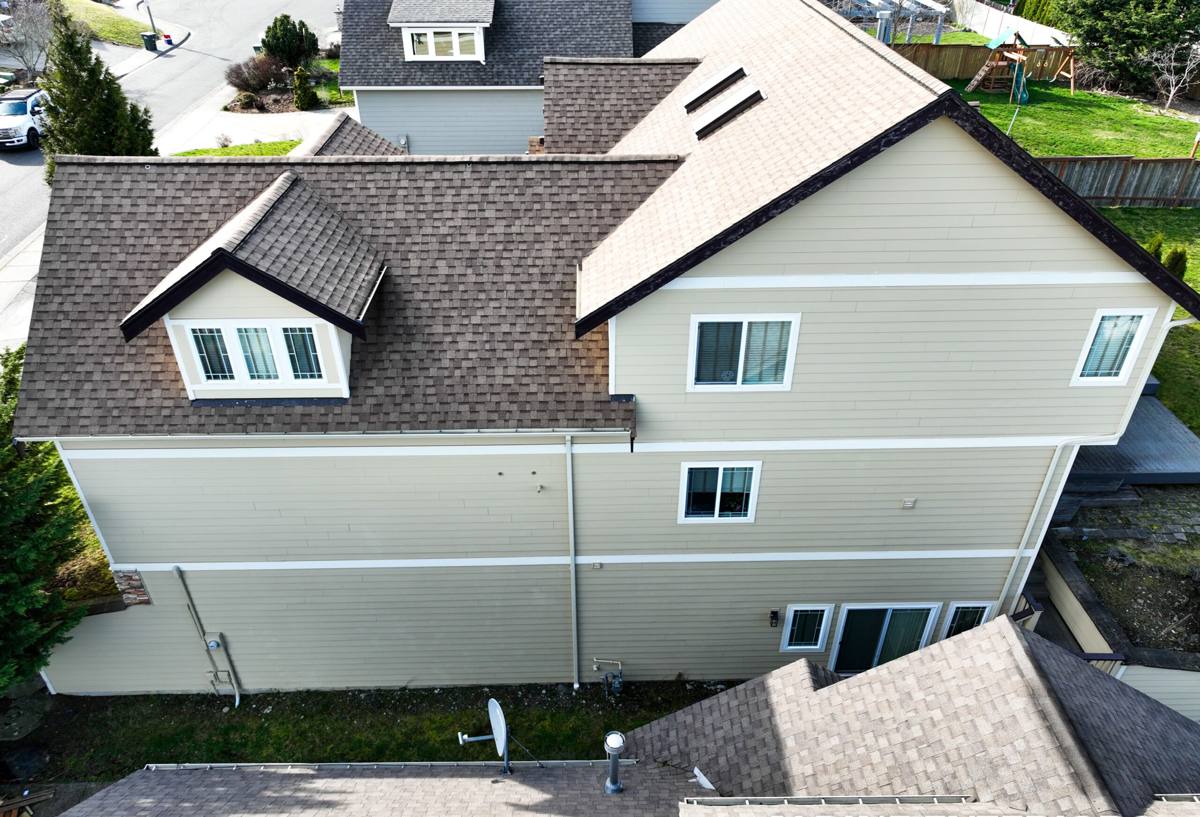
What Salt Air Actually Does to a Roof Over Time
Salt air is corrosive, but it doesn't act uniformly — it concentrates on exposed metal edges, fasteners, and any spot where the protective coating has been scratched, cut, or worn thin. On a roof that isn't rated or coated for coastal exposure, this shows up as:
- Rust bleeding from cut edges, screw heads, and panel fastener points first, years before the field of the panel shows any wear
- Premature breakdown of cheaper paint systems, leading to chalking and fading well ahead of the manufacturer's stated life
- Galvanic corrosion where dissimilar metals touch — mismatched flashing, fasteners, or trim accelerates rust at those contact points
- Faster degradation of exposed fastener heads compared to concealed-fastener systems, since every exposed screw is a small point of vulnerability
None of this is a reason to avoid metal roofing near the coast — it's the reason the material and detailing choices matter more here than they would inland. A steel or aluminum roof with the right coating and fastener package will substantially outlast the salt exposure that would eat through an unprotected or mismatched system.
Material and Coating Choices That Hold Up Near the Water
Steel vs. Aluminum in a Coastal Setting
Both steel and aluminum panels can perform well close to the water, but they get there differently. Galvalume or Galvanized steel relies on its coating to resist corrosion — the coating quality and coverage weight matter a lot, and it needs fastener and flashing metals that don't set up galvanic reactions against it. Aluminum doesn't rust the way steel does, because it forms its own oxide layer, which makes it a common choice for homes directly exposed to salt spray. Neither is automatically the "right" answer — it depends on the specific coating system, the panel profile, and how the trim and fasteners are matched to the panel.
Coatings and Finishes
The paint or coating system on a metal roof is doing as much work as the metal itself. A baked-on PVDF (often sold under trade names like Kynar-based finishes) resists fading and chalking far longer than a basic polyester coating, and that gap widens in salt air. Cheaper coatings that are perfectly adequate on an inland roof can start failing years early this close to the bay. When we spec a roof for this area, coating quality is not an upgrade — it's a baseline requirement.
| Panel/Coating Type | Coastal Salt Resistance | Typical Trade-Off |
|---|---|---|
| Standing seam, PVDF-coated steel | Very good with proper fastener matching | Higher material and install cost |
| Standing seam aluminum | Excellent — no ferrous corrosion | Softer metal, more careful handling on install |
| Exposed-fastener steel panel, standard coating | Fair — fastener points are the weak spot | Lower upfront cost, more maintenance over time |
| Exposed-fastener panel, basic polyester coating | Poor for direct coastal exposure | Not what we'd recommend this close to the water |
We won't put a coating package on a Fairhaven roof that we know is undersized for the exposure, even if it's the cheaper quote. It's a maintenance and callback problem waiting to happen, and it's not fair to sell a homeowner a roof that needs replacing again in half the expected life.
Fasteners, Flashing, and the Details That Actually Stop Leaks in Driving Rain
Wind-driven rain off the water doesn't fall straight down — it hits laps, seams, and penetrations from the side, which is exactly where a roof is most likely to leak if the details are cut short. The parts of the job that matter most here rarely show up in a photo:
- Fastener metallurgy matched to the panel — stainless or coated fasteners compatible with the panel metal, not whatever's cheapest on the shelf
- Closed-cell foam closures at eaves and ridges so wind-driven rain and blowing debris can't work their way up under the panel
- Extra-wide side laps and properly sealed seams on standing seam systems, since seam integrity is what keeps this style watertight without exposed fasteners
- Step and counter-flashing at every wall, chimney, and dormer intersection, sealed and lapped correctly rather than caulked over as a shortcut
- Ice-and-water or high-quality synthetic underlayment as a second line of defense under the panels, so a rare failure point doesn't become an interior leak
A metal roof that looks identical from the ground can perform completely differently depending on whether these details were done right. This is where an installer's familiarity with driving coastal rain actually shows up — not in the panel brochure, but in the flashing details nobody sees once the job is finished.
Moss Season: Design and Maintenance Considerations
Whatcom County's wet season runs long, and shaded, north-facing, or tree-covered roof sections stay damp for months at a stretch. Moss doesn't take hold on metal roofing the way it does on shingles or shakes — a smooth, sealed metal surface gives it far less to grip — but debris buildup in valleys, at panel laps, and around fasteners can still trap moisture long enough for growth to start, especially on roofs with heavy tree cover. A few things reduce that risk from the outset:
- Panel profiles and seam details that shed debris rather than trapping it
- Keeping overhanging branches back from the roofline so needles and leaves don't accumulate in valleys
- Gutter and valley design that actually clears water and debris instead of pooling it
- An occasional debris clear-off, especially heading into fall, rather than waiting until moss or algae staining is visible
This is one of the practical advantages of metal over shingles or wood shakes in this climate — it's not moss-proof, but it's far less hospitable to the growth that plagues other roofing materials through a long, wet Pacific Northwest winter.
How the Install Process Works
1. On-Site Assessment
We look at the roof's exposure — how close it sits to the water, how much direct salt spray and wind it takes, tree cover, existing drainage, and the condition of the decking underneath. This is what drives the material and coating recommendation, not a one-size-fits-all default.
2. Material and Detail Selection
Based on that assessment, we spec the panel type, coating, fastener package, and underlayment together as a system — not as separate line items picked independently.
3. Tear-Off and Deck Inspection
Old roofing comes off, and the decking gets inspected for rot or moisture damage before anything new goes down. Skipping this step is one of the most common ways a new roof fails early, because it's covering up a problem instead of fixing it.
4. Underlayment and Flashing
This is where the leak protection actually lives — synthetic or ice-and-water underlayment, then flashing at every penetration, wall, and transition, installed and lapped correctly before a single panel goes on.
5. Panel Installation
Panels go on with the fastener and seaming approach specified for the coastal exposure, with attention to consistent alignment and properly torqued fasteners — overdriven or underdriven screws are a common source of early failure.
6. Final Walkthrough
We walk the finished roof, check seams, flashing, and trim, and go over basic maintenance expectations so there are no surprises down the road.
Cost Factors to Expect
Metal roofing costs more upfront than asphalt shingles, and coastal-grade materials and detailing add to that further. What actually drives the number on a given home:
| Factor | Why It Matters |
|---|---|
| Panel type (exposed-fastener vs. standing seam) | Standing seam costs more but has fewer long-term weak points near salt air |
| Coating quality | PVDF-type finishes cost more than basic polyester but resist coastal fading and chalking far longer |
| Roof complexity | Valleys, dormers, and multiple roof planes add flashing labor |
| Deck condition | Rot or moisture damage found at tear-off adds repair cost before install |
| Tear-off vs. overlay | Full tear-off costs more but is generally the sounder choice on an older roof |
We'll walk through actual numbers for your specific roof during an estimate — broad ranges without seeing the roof aren't much use to you, and we'd rather give you a real figure than a guess.
What to Look for in a Contractor for This Area
A crew that mainly works drier, inland roofs isn't necessarily going to default to coastal-appropriate materials or details unless they're specifically asked — and a homeowner shouldn't have to know enough roofing metallurgy to catch that gap themselves. A few things worth checking before hiring anyone for a metal roof this close to the water:
- Ask directly whether they spec different coatings or fasteners for homes near the water versus inland — a contractor who hasn't thought about it will hesitate on this question
- Confirm they inspect and address decking condition before installing, not just over the old roof
- Ask how they handle galvanic compatibility between panels, flashing, and fasteners
- Get the manufacturer warranty terms in writing, and ask what voids them — improper fastener or flashing choices commonly do
- Ask for the workmanship warranty separately from the material warranty — they cover different things
A roof installed correctly for this environment should need very little from you for a long time. A roof installed generically, without accounting for salt air and driving rain, tends to show its weak points early — usually right where the fasteners and flashing are.
If you're weighing options for a home in the Fairhaven area, we're happy to take a look and give you a straight read on what your roof actually needs — no pressure, no upsell, just an honest estimate based on your specific house and its exposure. The form below gets you started.