 Ferndale Siding
 Building a Deck That Actually Holds Up in Bellingham
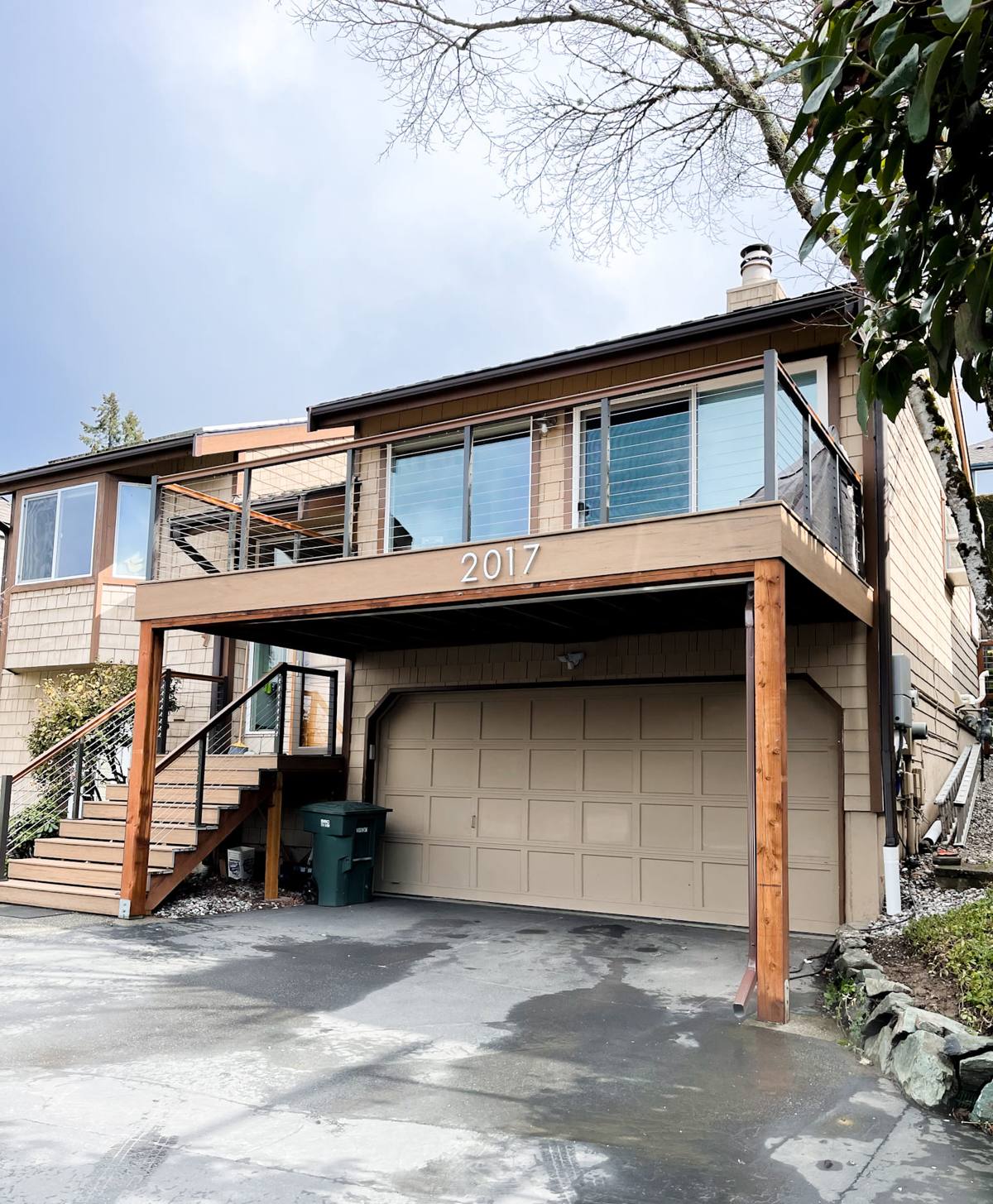
Bellingham sits right up against Whatcom County's marine climate, and that climate is hard on outdoor structures in ways a lot of homeowners don't fully appreciate until they've lived with a bad deck for a few winters. Salt-tinged air off the water, long stretches of driving rain, and a moss season that can run from October clear through April all work against wood, fasteners, and finishes at the same time. A deck built the way it might be built somewhere dry and warm will start showing problems here fast — cupping boards, rust streaks around fasteners, green film on every horizontal surface. We build decks for this specific area, not a generic template, and that shows up in the material choices, the framing details, and the hardware we use.
This page covers what a correctly built custom deck looks like for a Bellingham property, what tends to go wrong with decks that weren't built for this climate, and how our process works from the first conversation to the final walkthrough.
What This Climate Actually Does to a Deck
Moisture That Doesn't Let Up
It's not just the total rainfall — it's the duration. Bellingham gets long stretches of steady, low-intensity rain rather than short heavy downpours, which means deck surfaces, framing, and ledger connections stay damp for days at a time. Wood that can't shed water and dry out between storms starts to hold moisture in joints and fastener holes, which is where rot and rust both get their start.
Moss and Algae Growth
Shaded decks, north-facing decks, and anything under tree cover will grow moss and algae on a predictable schedule here. Beyond looking bad, moss holds moisture against the decking surface and turns wet boards into a slip hazard. A deck design that ignores drainage and airflow underneath is signing up for a moss problem within a year or two, regardless of decking material.
Salt Air From the Coast
Bellingham's proximity to the water means salt-laden air reaches further inland than people expect, accelerating corrosion on any exposed metal — fasteners, brackets, railing hardware, post bases. This is one of the most overlooked factors in deck failures we see: the boards look fine, but the fasteners holding them down have rusted and lost grip.
Decking Material Options for a Whatcom County Deck
There's no single "best" decking material — the right call depends on your budget, how much upkeep you're willing to do, and how exposed the deck is to sun, shade, and moisture. Here's how the common options actually perform in this climate:
| Material | How It Handles Our Climate | Maintenance | Typical Lifespan Here |
|---|---|---|---|
| Pressure-treated pine | Good if properly sealed; prone to moss/mildew if neglected | Annual cleaning and re-sealing recommended | 15–20 years with upkeep |
| Cedar | Naturally moisture- and insect-resistant; still needs finish maintenance to hold color | Cleaning and oil/stain every 1–2 years | 20–25 years with upkeep |
| Composite decking | Doesn't rot or splinter; can still grow surface algae if not cleaned | Periodic washing, no sealing/staining | 25–30+ years |
| PVC/capped polymer | Fully moisture-resistant surface, best for shaded or damp spots | Low — occasional washing | 30+ years |
We'll walk through these trade-offs with you honestly, including cost, rather than steering you toward whatever has the widest margin. A well-maintained cedar deck and a low-maintenance composite deck can both be the right answer depending on how you actually want to spend your Saturdays.
Framing and Structure: What's Underneath Matters Most
The decking boards are the part everyone sees, but the framing underneath is what determines whether the deck is still safe and level in fifteen years. In a climate like ours, three structural details matter more than usual:
Ledger Board Flashing
Where a deck attaches to the house, water intrusion behind an improperly flashed ledger board is one of the most common — and most expensive — failure points we see on older decks. Correct flashing keeps water from tracking behind the siding and into the wall framing, which is a much bigger repair than the deck itself.
Footings and Post Bases
Footings need to be set below frost depth and sized for the soil conditions on your lot, and post bases should hold the post up off the concrete so it isn't sitting in standing water after every rain. This one detail alone prevents a huge share of the rot we find at the base of deck posts on older builds.
Joist Spacing and Protection
Joist tape or a comparable moisture barrier on top of the joists, combined with proper spacing for the decking material chosen, keeps water from pooling on bare framing lumber. Skipping this is a common shortcut that doesn't show up as a problem for a few years — and then shows up all at once.
Railings, Fasteners, and Hardware for a Salt-Air Environment
Hardware is where cutting corners is easiest to hide and most costly to live with. Standard zinc-coated deck screws and brackets will start showing rust within a couple of seasons in a coastal-influenced climate like Bellingham's. We spec stainless steel or high-grade coated fasteners and structural hardware rated for exterior, corrosion-prone environments, and we use hidden fastener systems on composite and PVC decking where it makes sense both for appearance and for reducing the number of exposed metal points on the deck surface.
Railings get the same consideration — cable rail, aluminum, and composite railing systems all handle moisture and salt air differently, and we'll talk through what fits your home's style and your maintenance tolerance.
Our Process, Start to Finish
- On-site visit: We look at sun and shade exposure, drainage on the lot, how the deck ties into the house, and what you actually want to use the space for.
- Design and material walkthrough: Honest pros, cons, and cost ranges for decking material, railing style, and layout — no pressure toward the most expensive option.
- Permitting: We handle the permit application and inspections required for your project so you're not chasing paperwork.
- Framing and structural work: Footings, posts, ledger flashing, and joists built to hold up under our rain and moisture load, not just to pass a one-time inspection.
- Decking, railing, and finish work: Installed with corrosion-resistant hardware and attention to drainage and airflow underneath.
- Final walkthrough: We go over the finished deck with you, including what maintenance (if any) the material you chose will need going forward.
Maintenance: Keeping a Bellingham Deck Looking Right
Even a well-built deck needs some seasonal attention in this climate, especially anything shaded or close to trees. A little consistency goes a long way toward avoiding moss buildup and slow surface damage:
- Sweep leaves and debris off the deck regularly in fall, especially in shaded corners where moss gets a foothold first
- Wash the surface at least once a year with a deck cleaner appropriate for your material — pressure washing wood decks requires care to avoid damaging the grain
- Check fastener heads and railing connections annually for early rust or looseness
- Re-seal or re-stain wood decking on the schedule appropriate for the product, typically every 1–2 years
- Keep gutters and downspouts near the deck clear so runoff isn't dumping extra water onto the structure
- Trim back overhanging branches to improve airflow and sun exposure, which cuts down on moss significantly
Why a Ferndale-Based Crew That Already Works Bellingham Matters
We're based in Ferndale and work throughout Whatcom County, including Bellingham, on a regular basis — which means we're not learning the local climate and permitting process on your project. We know how the driving rain and moss season here actually behave over a full year, not just what a spec sheet says about a product's moisture rating. That local familiarity shows up in small decisions throughout a build: how footings are set for the soil conditions common in this area, which hardware actually holds up, and how a deck should be oriented and vented to fight moss rather than feed it. A crew that's built decks across this specific region brings that judgment to your project from day one, instead of figuring it out as they go.
Getting Started
If you're weighing a new custom deck or replacing one that's showing its age, we're happy to come take a look, walk the site with you, and put together honest options with real cost ranges — no pressure, no obligation. Reach out using the form below to set up a free estimate.