 Ferndale Siding
 Deck Replacement in Lynden: Built for Whatcom County Weather
A deck in Lynden lives a harder life than it looks like it does. Between the long wet season, the humidity that settles into the valley off the Nooksack, and the moss and algae that find their way onto any horizontal wood surface here, a deck that was solid ten or fifteen years ago is often quietly failing by the time anyone notices. We're a Ferndale-based crew that works Lynden regularly, and the deck replacements we see out here almost always come down to the same culprit: moisture that had nowhere to go for years before anyone caught it.
This page is about deck replacement specifically — not a repair, not a resurfacing, but pulling a deck down to (or past) the ledger and framing and rebuilding it correctly for this climate. If your deck still has a few good years left, a repair or refinish might be the smarter move. If the framing is soft, the ledger connection is suspect, or you're patching the same boards every other summer, replacement is usually the more honest answer.
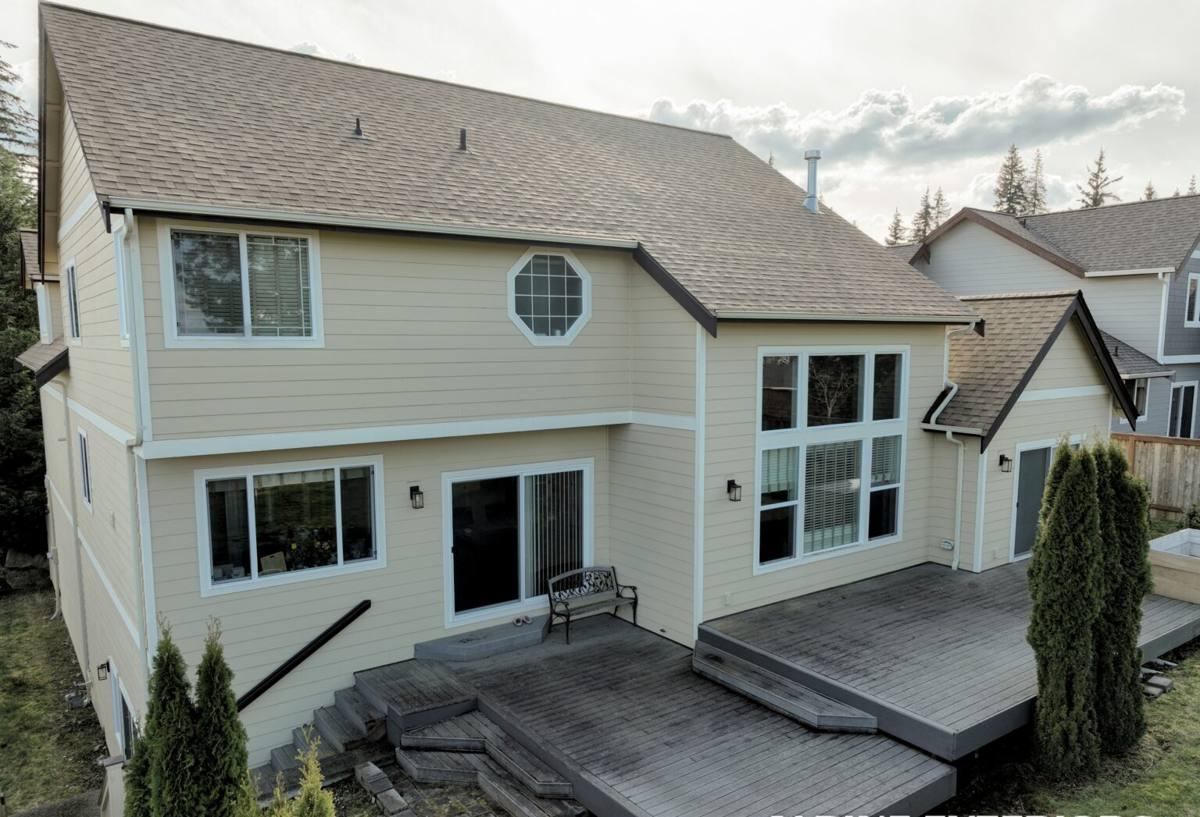
Why Decks Fail Faster Out Here
Rain That Doesn't Let Up
Whatcom County doesn't get the heaviest rainfall totals in the state, but it gets a lot of days of it, spread across a long, gray stretch of the year. Wood decking that's rated for occasional wetting is instead sitting damp for weeks at a time. Where boards butt together, where flashing was skipped, and where a ledger board meets the house, that sustained moisture works into end grain and fastener holes and just stays there.
Moss and Algae Season
Shaded decks, decks under trees, and north-facing decks in Lynden grow moss and algae almost year-round if nobody's keeping up with them. Beyond the slip hazard, moss holds water against the wood surface constantly, which accelerates rot far faster than open exposure to rain and sun would on its own.
Salt Air and Coastal Moisture
Lynden sits inland, but Whatcom County as a whole gets a steady dose of marine air off the Strait of Georgia and Bellingham Bay, and that moisture-laden, slightly salty air corrodes exposed fasteners, hardware, and any lower-grade metal connectors faster than a dry inland climate would. On an older deck, corroded joist hangers and screws are often as much of a problem as the wood itself.
Signs Your Lynden Deck Needs Replacement, Not Repair
- Soft or spongy spots in the decking, especially near the house or at board ends
- Ledger board that's stained dark, soft to a screwdriver test, or separating slightly from the house
- Joists or beams with visible rot, splitting, or heavy staining underneath the deck
- Railing posts that wobble at the base — often a sign the post-to-frame connection has rotted
- Persistent moss or algae that comes back within weeks of cleaning
- Rust streaks below fasteners or hardware, meaning the metal is corroding under the wood
- A deck older than 15-20 years that's never had the framing inspected, only the surface refinished
What a Correct Deck Replacement Actually Involves
Full Teardown, Not a Deck-Over
We remove the decking, railings, and typically the framing down to what's structurally sound, rather than building a new deck surface over old joists. Decking over a compromised frame just hides the problem for a few more years and costs the homeowner twice.
Ledger Flashing Done Right
The ledger-to-house connection is where the majority of the moisture damage we find in this area actually originates. A correct rebuild uses proper flashing that directs water away from the house band board, not just caulk and a hope. This single detail matters more in a climate like ours than almost anything else on the project.
Joist Protection
Joist tape or an equivalent moisture barrier on top of the framing keeps rain from sitting directly on exposed wood every time it soaks through the deck boards above. In a low-rainfall climate this is a nice-to-have; in Whatcom County, we treat it as standard practice.
Fasteners and Hardware Rated for the Coast
Given the salt-laden air, we use corrosion-resistant fasteners and connectors sized correctly for the framing, not whatever was cheapest at the time the old deck was built. This is one of the areas where an older deck often shows its age first.
Drainage and Airflow Underneath
Where grading or deck height allows for it, we build in airflow beneath the deck so the framing can actually dry out between wet spells instead of staying damp all winter. A deck that never dries out underneath is a deck that's rotting on a schedule.
Decking Material Options for Lynden Homes
There's no single right material for every home — it comes down to budget, how much upkeep you're willing to do, and how the deck is used. Here's how the common options actually compare in this climate.
| Material | Moisture Behavior Here | Maintenance | Typical Lifespan |
|---|---|---|---|
| Pressure-treated wood | Handles wet cycles well if sealed regularly; end grain is the weak point | Annual cleaning, resealing every 2-3 years | 15-20 years with upkeep |
| Cedar | Naturally rot-resistant but still needs sealing against our rain and moss | Regular cleaning, occasional refinishing | 15-25 years with upkeep |
| Composite decking | Doesn't absorb water or rot; handles moss and algae better than wood | Periodic washing, no sealing or staining | 25-30+ years |
| PVC decking | Fully moisture-immune; best resistance to mold and algae staining | Lowest of the group — occasional washing | 30+ years |
For a lot of Lynden homeowners, composite or PVC decking ends up being the more honest long-term choice specifically because of how much of the year this deck spends wet or shaded. Wood can absolutely still be the right call — it costs less up front and plenty of owners like the look and don't mind the maintenance — but we'll walk you through the real trade-offs for your specific deck rather than push one material across the board.
Our Process for a Lynden Deck Replacement
- On-site assessment — we inspect the ledger, framing, posts, and footings, not just the decking surface, to confirm replacement is actually the right call.
- Honest scope and estimate — you get a clear breakdown of what's being removed, what's being rebuilt, and what materials are being used, with no vague allowances.
- Permitting — deck replacements of most sizes require a permit; we handle that so the work is inspected and legitimate, which also matters if you sell the home later.
- Teardown and framing — old structure removed, new framing built with correct flashing, joist protection, and hardware for this climate.
- Decking and railing installation — installed to manufacturer spacing and fastening specs, which matters for both appearance and how the material sheds water.
- Final walkthrough — we go over the finished deck with you before calling the job done.
Why a Crew That Already Works Lynden Matters
A deck replacement isn't just a materials question — it's a question of whether the person building it understands how this specific climate treats wood and hardware over time. We're based in Ferndale and work throughout Whatcom County, including Lynden regularly, so we're not learning the local weather pattern on your project. We know which details — ledger flashing, joist protection, fastener grade — actually earn their keep here versus which ones are corner-cutting waiting to show up as a soft spot in ten years.
Being local also means we're a known quantity if something needs a warranty visit or a follow-up question down the road, rather than a crew that finished the job and moved three counties away.
What to Ask Before You Hire Anyone for a Deck Replacement
- Are you tearing down to the framing, or building a new surface over the old joists?
- What flashing detail are you using at the ledger board?
- Is a permit included, and will the work be inspected?
- What fastener and hardware grade are you using, given our coastal air?
- What's the warranty on labor versus the manufacturer's warranty on materials?
- Can you walk me through the drainage and airflow plan underneath the new deck?
Get a Straightforward Estimate
If your deck is showing soft spots, chronic moss, or you just don't know how much longer it's got in this climate, we're happy to take a look. We'll give you a straight answer on whether it needs full replacement or if a repair will genuinely hold up. Reach out for a free, no-pressure estimate using the form below.