 Ferndale Siding
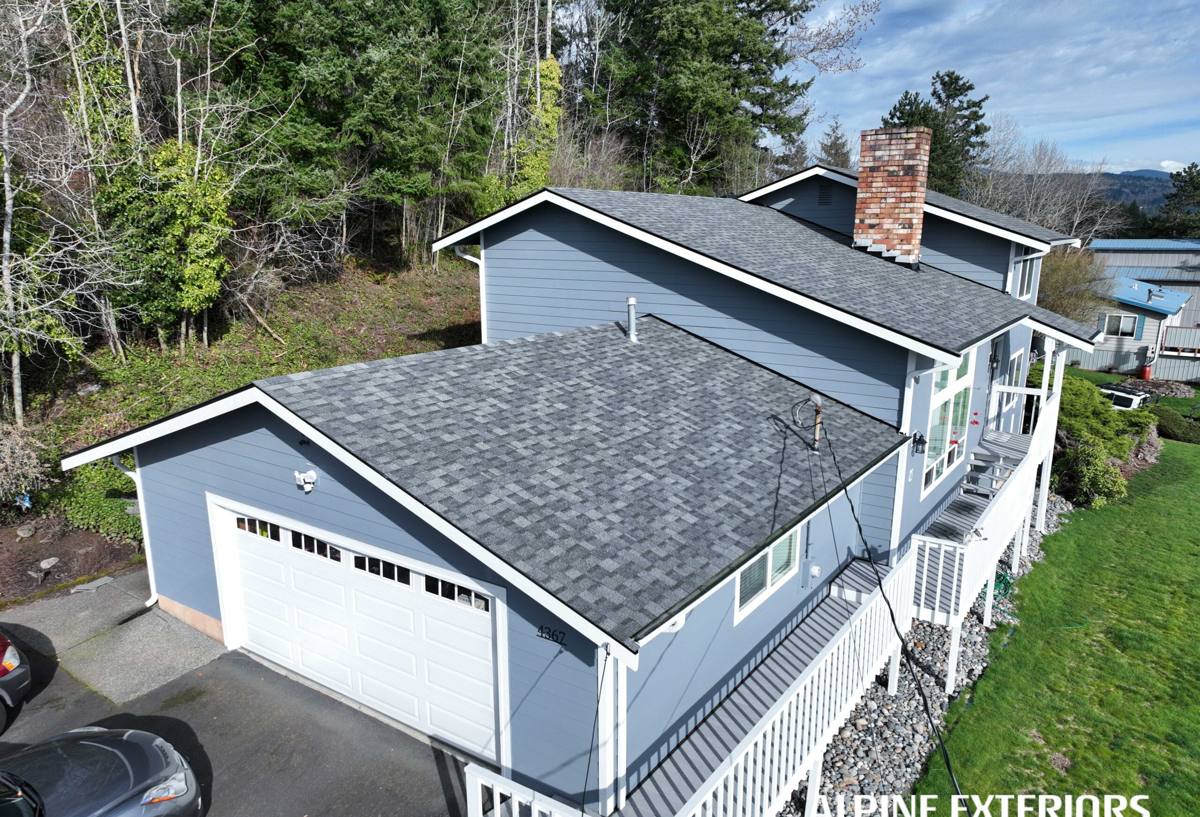
 Asphalt Shingle Roofing Built for Birch Bay's Climate
Birch Bay sits right on the water, and that changes what a roof has to deal with compared to a house a few miles inland. Salt-laden air off the bay accelerates the breakdown of metal fasteners and flashing, wind-driven rain finds its way into any gap in the underlayment or flashing detail, and the long, damp Whatcom County winters keep roofs wet enough, long enough, for moss and algae to take hold and stay. An asphalt shingle roof installed here needs to be built with all three of those factors in mind from the first course of shingles to the ridge cap, not just installed to a generic spec sheet.
We're a Ferndale-based crew, and Birch Bay is part of our regular service area — not a stretch job we drive out for once a year. That matters for a roofing project more than most homeowners realize, and we'll get into why further down.
What Birch Bay Homes Actually Need From a Shingle Roof
Wind and Wind-Driven Rain
Waterfront and near-waterfront lots catch more wind than sheltered inland properties, and wind is rarely a straight-line force — it drives rain sideways and up under shingle tabs and around flashing edges. A correctly installed roof accounts for this with proper shingle sealing, adequate nailing (six nails per shingle in higher-exposure areas rather than the minimum four), and ice-and-water shield at the eaves, valleys, and any roof-to-wall transition where wind-driven water tends to find a way in.
Salt Air and Metal Components
Salt air corrodes exposed metal faster than it does further inland — flashing, drip edge, roofing nails, and vent stacks all take more of a beating near the water. We spec corrosion-resistant flashing and fasteners on Birch Bay jobs as standard practice, not an upgrade, because replacing rusted-through flashing under an otherwise good shingle roof is a repair nobody wants to pay for twice.
Moss, Algae, and Moisture
Whatcom County's wet season runs long, and a shaded, north-facing roof slope in Birch Bay can stay damp for weeks at a stretch. That's exactly the environment moss and algae need. Algae-resistant shingle granules (usually copper- or zinc-infused) help slow staining, but granules alone don't stop moss from taking root in valleys, around penetrations, or along the shaded eaves — good roof ventilation and periodic maintenance do more of that work than the shingle itself.
Signs Your Roof Needs Attention
Asphalt shingle roofs fail gradually, and most homeowners don't notice until there's a leak. Here's what we look for, and what you can check for yourself from the ground or the attic:
- Granules collecting in gutters or at downspout outlets — a sign shingles are wearing thin
- Shingles that are curling at the edges or cupping in the middle
- Dark streaking (algae) or thick green moss growth, especially on shaded slopes
- Cracked, torn, or missing shingles after a windstorm
- Soft or spongy spots when walked on, which usually means the decking underneath is compromised
- Daylight visible through the roof deck, or water stains on attic sheathing or ceiling drywall
- A roof that's 20+ years old, regardless of how it looks from the street
What a Correct Asphalt Shingle Installation Involves
A shingle roof is only as good as what's underneath it. Cutting corners on the parts nobody sees is the single biggest reason roofs fail early in a climate like this one.
Tear-Off and Deck Inspection
We remove old shingles down to bare decking rather than layering over an existing roof. That lets us actually see the plywood or OSB underneath, replace any sections that are soft, delaminated, or water-stained, and confirm the deck is properly nailed before anything new goes down.
Underlayment and Ice-and-Water Shield
Synthetic underlayment goes down over the full deck, with self-adhering ice-and-water membrane at eaves, valleys, around chimneys and skylights, and anywhere two roof planes meet. These are the spots where wind-driven rain and ice-dam backup cause the most damage, and they're the areas most often shortchanged on cheap installs.
Flashing and Ventilation
New step flashing, counter-flashing, and drip edge — not reused, rusted originals — go in at every wall intersection, chimney, and roof edge. We also check and correct attic ventilation as part of the job. A shingle roof without balanced intake and exhaust ventilation traps heat and moisture, which shortens shingle life and feeds the moss problem this area already fights.
Shingle Installation
Starter strips at the eaves and rakes, correct nail placement per the manufacturer's high-wind pattern, and properly aligned courses so water sheds the way the shingle is designed to shed it. Ridge caps go on last, over a ridge vent where the attic design calls for one.
Shingle Options for Birch Bay Conditions
| Shingle Type | Typical Lifespan | Wind Rating | Best Fit |
|---|---|---|---|
| 3-Tab Strip Shingles | 15–20 years | Lower (typically 60–70 mph) | Budget-conscious jobs on sheltered lots |
| Architectural (Laminate) Shingles | 25–30 years | Moderate to high (110–130 mph) | Most Birch Bay homes — better wind and weather performance |
| Impact-Resistant (Class 4) Shingles | 30+ years | High | Exposed waterfront lots or homeowners prioritizing longevity and insurance discounts |
We don't push impact-resistant or premium laminate shingles on every job — a well-installed mid-grade architectural shingle will serve most Birch Bay homes well for decades. But on exposed, wind-heavy lots close to the water, the upgrade in wind rating and impact resistance often pays for itself in fewer repairs and less frequent replacement.
What Drives the Cost of a Reroof
| Factor | Why It Matters |
|---|---|
| Roof size and pitch | More square footage and steeper pitches mean more material and labor, plus added safety measures on steep slopes |
| Number of existing layers | Removing two layers of old shingles takes longer and costs more in disposal than removing one |
| Decking condition | Rotted or delaminated plywood/OSB found during tear-off needs to be replaced before new shingles go on |
| Ventilation changes | Adding or upgrading ridge vents, baffles, or intake vents affects both cost and long-term roof performance |
| Flashing and penetrations | Chimneys, skylights, and multiple roof planes all add flashing detail work |
| Site access | Steep driveways, limited staging area, or difficult dumpster placement can add time to a job |
We give a firm, itemized quote after an on-site inspection — not a phone estimate — because the factors above vary a lot from one Birch Bay property to the next, even on similar-sized homes.
Our Process
We keep this straightforward and try not to waste your time or ours:
- Inspection: We walk the roof and attic, check the decking, ventilation, and flashing, and take photos of anything we find.
- Written estimate: A clear, itemized quote covering material, labor, disposal, and any deck repair allowance — no vague lump sums.
- Scheduling: We work around Whatcom County's weather windows and give you a realistic timeline, not an optimistic one.
- Protection and tear-off: Landscaping, siding, and gutters get protected before tear-off starts; old material is removed and hauled off the same day where possible.
- Installation: Deck repair, underlayment, ice-and-water shield, flashing, and shingles installed to manufacturer spec and local wind conditions.
- Cleanup and magnetic sweep: We run a magnetic nail sweep of the yard and driveway before we consider the job done.
- Final walkthrough: We go over the finished roof with you and answer any questions before we leave.
Maintaining a Shingle Roof in a Salt-Air, Moss-Heavy Climate
A good installation buys you a long-lasting roof, but a little upkeep keeps it performing the way it should for its full lifespan:
- Keep gutters clear so water doesn't back up under the lowest course of shingles
- Have moss physically removed (not just chemically killed) from shaded slopes every year or two
- Trim back overhanging branches to cut down on shade, debris, and moss-friendly conditions
- Check flashing and vent boots periodically for corrosion or cracked sealant, especially closer to the water
- Address small leaks or missing shingles right away — a $50 repair now beats a $5,000 deck replacement later
Why a Local Birch Bay Crew Makes a Difference
Roofing companies that don't regularly work this stretch of Whatcom County tend to under-spec for the wind and salt exposure, because their default install standard was built for a milder, drier area. A crew that works Birch Bay and greater Ferndale on a routine basis knows which slopes hold moss the longest, which flashing details actually hold up near the water, and what the local permitting and inspection process looks like for a residential reroof. We're also close enough to come back quickly if a warranty issue or storm damage comes up — not a phone number from out of the area with a multi-week wait for a service call.
If your roof is showing its age, took storm damage, or you just want an honest read on how many years it has left, we'll come take a look and give you a straight answer along with a free, no-pressure estimate using the form below.