 Ferndale Siding
 Deck Building in Kendall, Built for the Weather That's Actually Here
Kendall sits out toward the foothills of Whatcom County, close enough to the Nooksack River corridor and the tree line that a deck here deals with a different set of pressures than a deck downtown or on the coast. Long wet stretches, heavy shade from surrounding fir and cedar, cooler ground temperatures, and moisture that lingers instead of drying out quickly all add up over a few seasons if a deck wasn't built with that in mind. Add in the driving rain that comes through with Pacific storms and the marine-influenced air that moves through the county, and you've got a climate that's hard on wood, hard on fasteners, and unforgiving of shortcuts in framing.
A deck built for a drier region, or built to the minimum a permit requires, will show it within a few years: soft spots underfoot, black streaking on the boards, rust bleeding from screw heads, and moss creeping across anything that doesn't see direct sun. A deck built for Kendall's actual conditions doesn't have those problems, because the material choices, fastener grade, and drainage details were sized for this climate from the start.
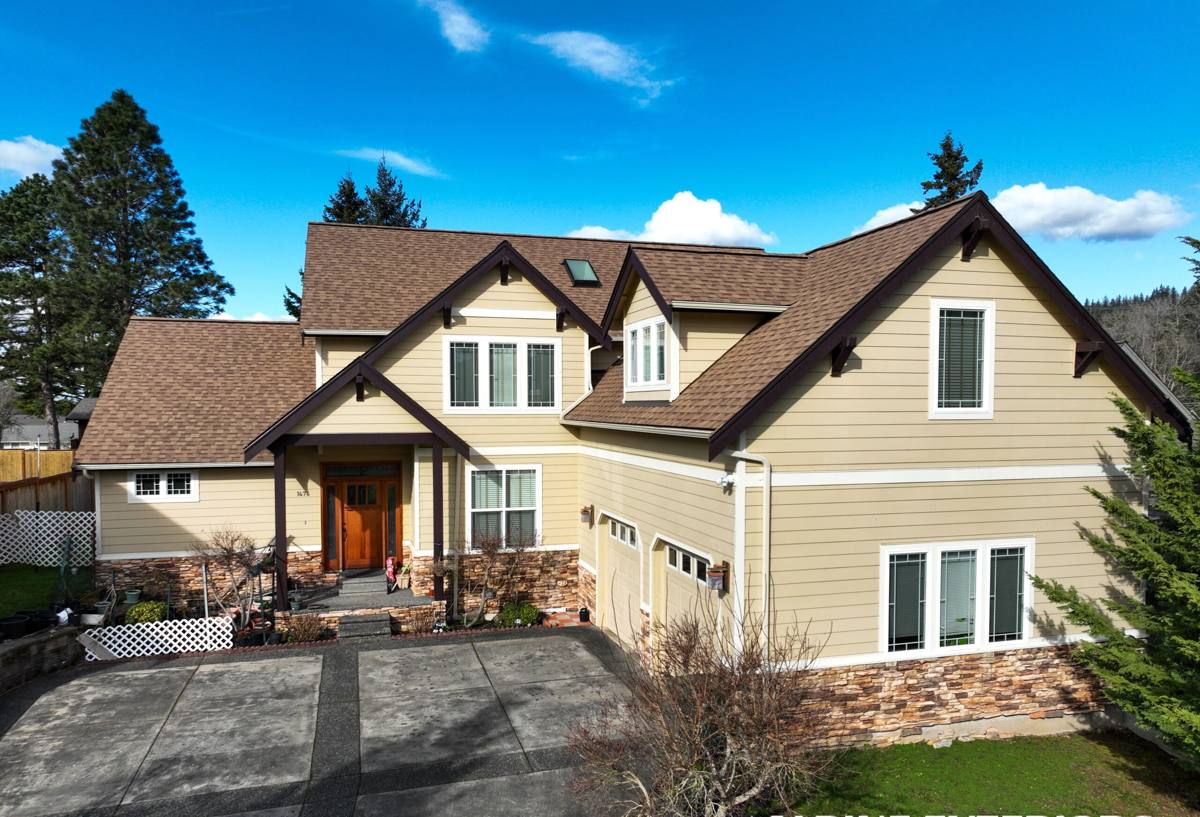
What Kendall's Setting Means for Your Deck
Most Kendall properties have more tree cover and more shade than lots closer to town. That's part of what people like about living out here, but it changes how a deck ages:
- Slower drying time. Shaded decks stay damp longer after rain, which is exactly the condition moss, algae, and mildew need to establish.
- More organic debris. Needles, leaves, and seed litter collect between boards and in corners, holding moisture against the wood if they're not cleared.
- Cooler, damper ground. Post bases and framing low to the ground are exposed to more sustained moisture than an open, sunny lot would see.
- Wind-driven rain. Storms off the Pacific push rain sideways into ledger connections and rim joists, which is where a lot of hidden rot actually starts.
None of this means a deck can't hold up in Kendall — it means the build has to account for shade and moisture retention specifically, not just rain totals.
Choosing the Right Decking Material
There's no single "correct" material for every deck — the right choice depends on budget, how much sun the deck gets, and how much upkeep you actually want to do. Here's how the common options compare for a shaded, wet-climate lot like most in Kendall:
| Material | Upfront Cost | Maintenance in Shade | How It Handles Moss/Algae |
|---|---|---|---|
| Pressure-treated lumber | Lowest | Annual cleaning, periodic re-staining or sealing | Prone to moss and mildew staining if not cleaned; needs sealed cuts and end grain |
| Cedar | Mid-range | Regular oiling/sealing to maintain color and resist moisture uptake | Naturally more rot-resistant but still stains and greens in constant shade without upkeep |
| Composite decking | Higher | Occasional washing; no staining or sealing | Resists rot entirely, but can still develop surface algae in deep shade and needs washing to stay clean |
| PVC decking | Highest | Occasional washing only | Best moisture resistance of the group; still benefits from periodic washing in heavy shade |
We don't push composite or PVC on every job — a well-built, properly sealed cedar or treated-lumber deck is a perfectly good choice, especially if you don't mind the maintenance rhythm. What we do insist on is being honest with you up front about what each material actually requires once it's under your trees, not just what it costs to install.
A Note on "Ground Contact" Ratings
If any part of your deck — posts, skirting, or framing — sits close to grade, it needs lumber rated for ground contact, not the standard above-ground treatment. This matters more in Kendall's damp, shaded lots than it would on a dry, open site, and it's one of the first things we check on a repair call: the wrong-rated lumber near the ground is a common reason decks fail early.
Framing and Structure: What's Underneath Matters Most
The decking boards are what you see and walk on, but the framing underneath is what determines whether the deck is still solid in ten years. In a climate like this, a few details matter more than they would somewhere drier:
- Proper flashing at the ledger board — the connection to the house is the single most common point of hidden rot on any deck, and it's worse in a climate with sustained wet weather.
- Joist tape or capping over cut lumber to seal end grain and screw holes from water intrusion.
- Post bases set on proper footings, off the ground, with drainage that keeps water from pooling against the base.
- Airflow underneath the deck so the framing can actually dry out between rain events instead of staying damp for weeks.
- Fastener spacing and blocking sized to the actual span and load, not just what looks close enough.
These are the parts that don't show up in photos and that a homeowner can't easily inspect once the decking is down — which is exactly why they matter most.
Fasteners and Hardware: Where Cheap Decks Fail First
In a wet, shaded climate, the wrong fastener is often the first thing to fail — not the wood. Standard zinc-coated screws and brackets corrode faster than most people expect once they're exposed to sustained moisture, and that corrosion weakens the connection long before the surrounding lumber shows any damage. We use stainless steel or hot-dip galvanized structural hardware rated for exterior, ground-contact-adjacent use, and fasteners matched to whatever decking material you choose — treated lumber, cedar, and composite all call for slightly different screw coatings to avoid staining or reacting with the material.
Our Deck Building Process
- On-site assessment. We look at sun exposure, drainage on your specific lot, grade, and how the deck will tie into the house before recommending a material or layout.
- Design and material selection. We walk through the trade-offs honestly — cost, maintenance, and how each option will actually perform given your shade and drainage situation.
- Permitting. We handle the permit application and inspections required for Whatcom County, including footing depth and structural sign-off.
- Framing. Ledger flashing, footings, joists, and blocking go in first, built to the load and span the design calls for — not the minimum.
- Decking and railing installation. Boards, fascia, and railings are installed with fastener spacing and hardware matched to the material and climate.
- Final walkthrough. We go over basic care for whatever material you chose, so you know what upkeep to expect and what's a warranty issue versus normal wear.
Permits and Code Requirements
Most new decks and any significant deck replacement in Whatcom County require a building permit, with inspections at the footing and framing stages before decking goes down. Requirements around footing depth, guardrail height, stair geometry, and attachment to the house are set by the county and enforced through inspection — they're not optional details, and skipping them is a common reason older decks get flagged during a home sale. We pull the permit, schedule the inspections, and build to what the inspector is actually checking for, so there are no surprises later.
Maintenance: What to Actually Expect
Every deck material needs some upkeep in this climate — the differences are in how much and how often.
- Clear leaves, needles, and debris from between boards regularly, especially in fall.
- Wash the deck surface at least once a year to remove the moss and algae film that shaded, damp conditions encourage.
- Re-seal or re-stain wood decking on the schedule the product calls for — skipping a cycle is when moisture starts getting into the grain.
- Check railings and stair connections annually for movement, which can signal a loosening fastener before it becomes a safety issue.
- Keep gutters and downspouts near the deck clear so runoff isn't dumping extra water onto or under the structure.
Signs Your Deck Needs Replacing, Not Just Cleaning
- Soft or spongy spots when you walk across the boards
- Fasteners that are rusted, backing out, or missing
- Visible gaps or movement where the ledger meets the house
- Wood that's gone gray, splintery, and soft rather than just weathered on the surface
- Persistent moss or dark staining that comes right back after cleaning
Why Hire a Crew That Already Works Kendall
A deck builder who mostly works drier, sunnier parts of the county can still build a structurally sound deck — but they may not think to plan for the specific combination of shade, tree litter, and sustained dampness that a lot in Kendall deals with every fall and winter. Knowing to spec ground-contact-rated lumber where posts sit close to grade, to plan for airflow under a shaded deck, and to choose hardware that won't corrode under constant moisture isn't guesswork — it's familiarity with how decks actually age in this specific setting. That's the difference between a deck that looks good for one summer and one that's still solid a decade in.
If you're planning a new deck or replacing one that's showing its age, we're happy to come take a look and talk through what makes sense for your property — no pressure, no obligation. Reach out using the form below for a free estimate.