 Ferndale Siding
 Roofing on the Water: Why Birch Bay Is a Different Job
Birch Bay sits right on the water, and that changes what a roof has to survive. Homes a few blocks from Semiahmoo Bay or Drayton Harbor deal with a steady drift of salt-laden air that ordinary inland roofs in Whatcom County simply don't see. Add in wind-driven rain off the water, low winter sun angles that keep north-facing slopes shaded and damp for months, and the thick tree cover that shelters a lot of Birch Bay lots, and you've got a climate that ages roofing materials faster than the manufacturer's brochure suggests. A roof replacement out here isn't just "put new shingles on" — it's a decision about materials, ventilation, and detailing that has to account for salt corrosion, moss colonization, and water that doesn't always fall straight down.
We work throughout Ferndale and the surrounding Whatcom County waterfront communities, and Birch Bay roofs come with their own patterns we watch for every time we're up there.
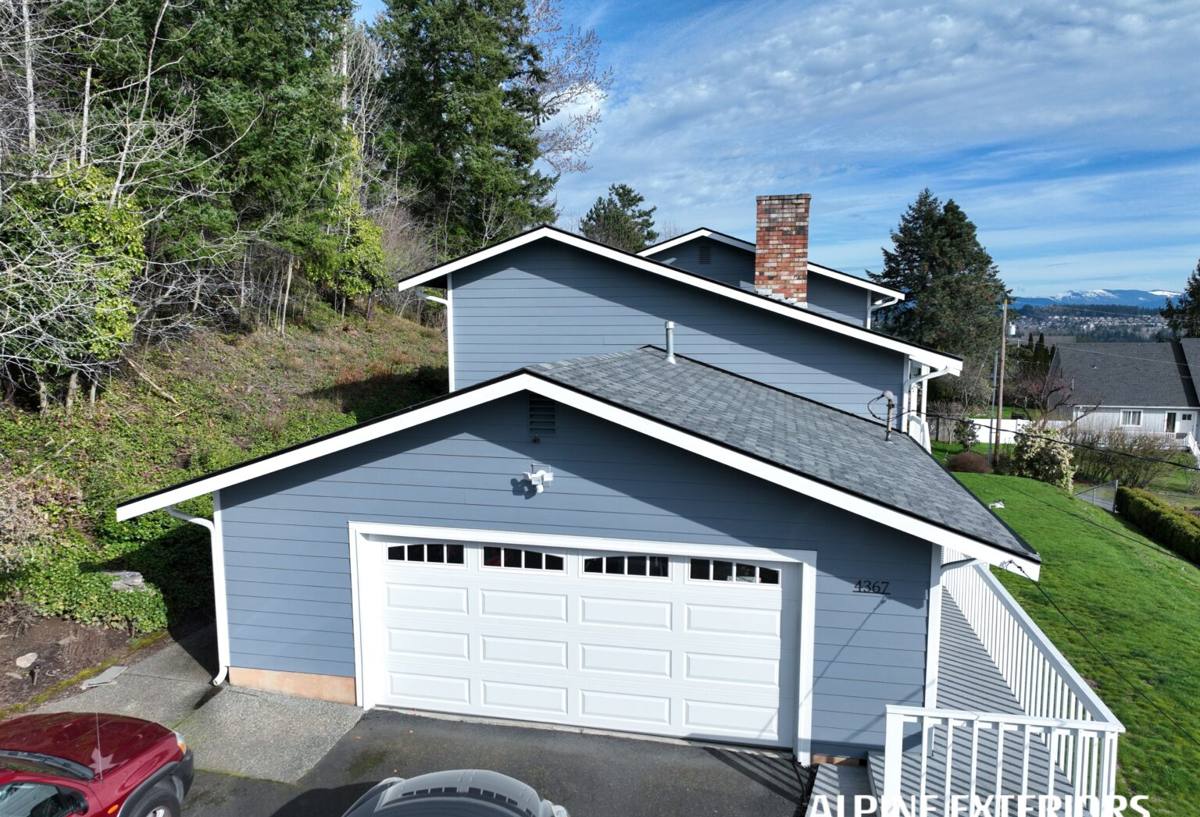
What Salt Air and Moss Actually Do to a Birch Bay Roof
Salt Air and Metal Components
Salt in the air accelerates corrosion on anything metal — flashing, fasteners, vents, gutters, and metal roofing panels. Standard galvanized fasteners can start showing rust streaks years before they would inland. This is one of the most overlooked failure points on coastal re-roofs: the shingles look fine, but the exposed metal underneath and around them is quietly corroding, which eventually lets water in around penetrations long before the field of the roof is actually worn out.
Driving Rain
Wind off the bay doesn't just drop rain straight down — it pushes it sideways and up under laps, ridge caps, and poorly sealed flashing. A roof system that would hold up fine in a calmer inland yard can leak at Birch Bay if the underlayment, flashing overlaps, and fastening pattern weren't built with wind-driven rain in mind.
Moss and Shade
Birch Bay's tree cover and marine humidity add up to a long moss season — moss and algae can establish on north-facing and shaded slopes almost any time of year here, not just in the wet months. Moss holds moisture against the roofing material, works its way under shingle tabs, and lifts edges over time. A roof that isn't detailed and, where appropriate, treated for moss resistance during installation will fight this battle for its entire life.
Signs a Birch Bay Roof Is Due for Replacement
- Moss buildup that keeps coming back within a season or two of cleaning, especially on shaded or north-facing slopes
- Granule loss showing up in gutters, or bald patches on shingles
- Rust staining around vents, flashing, or metal trim
- Curling, cupping, or lifted shingle edges, particularly on the windward side facing the water
- Soft spots, sagging, or visible daylight in the attic near eaves and valleys
- Water stains on interior ceilings, especially after a windy rain event
- A roof approaching or past the manufacturer's expected service life, adjusted downward for coastal exposure
Coastal exposure tends to shorten a roof's realistic service life compared to the same product installed a few miles inland. If your roof is in its second half of expected life and showing any of the above, it's worth a straightforward inspection rather than waiting for an active leak.
Material Choices That Make Sense for This Location
There's no single "best" roofing material for every home — it depends on your roof's pitch, exposure, budget, and how the house is built. What matters for Birch Bay is choosing a system and a fastener/flashing package suited to salt air and wind-driven rain, not just picking a product off a general price list.
| Material | How It Handles Salt Air & Moss | Considerations for Birch Bay |
|---|---|---|
| Architectural asphalt shingles | Good performance with algae-resistant granules; moderate moss resistance | Most common, cost-effective; choose a coastal-rated product line and corrosion-resistant fasteners |
| Metal roofing (standing seam) | Excellent water shedding in driving rain; needs marine-grade fasteners and coatings to resist salt corrosion | Higher upfront cost, long lifespan, performs well on steeper coastal slopes |
| Composite/synthetic shingles | Resists moisture absorption well; moss resistance varies by product | Good option where appearance and durability both matter |
| Wood shake/shingle | More vulnerable to moisture retention and moss without diligent maintenance | We're honest that this requires the most upkeep in a marine, shaded environment |
Whatever material you choose, coastal fastener and flashing hardware — stainless or otherwise corrosion-resistant — matters more here than almost anywhere else in the county. It's a small line item on an estimate that has an outsized effect on how long the roof actually lasts.
What a Correct Roof Replacement Involves in Birch Bay
Tear-Off and Deck Inspection
We remove the old roofing down to the deck and inspect for rot or soft spots, which show up more often here around eaves and valleys where moisture sits longest. Any damaged decking gets replaced before anything new goes down — covering over a compromised deck just hides the problem.
Underlayment Built for Wind-Driven Rain
A synthetic underlayment with strong lap sealing, plus self-adhered membrane at eaves, valleys, and other vulnerable transitions, gives the roof a second line of defense when wind pushes rain sideways under the shingles or panels.
Ventilation
Balanced intake and exhaust ventilation keeps the attic dry and temperature-regulated, which matters for both moisture control and moss prevention — a poorly ventilated attic runs cooler and damper on north-facing slopes, giving moss an easier foothold.
Flashing and Fasteners
Corrosion-resistant flashing and fasteners at every penetration, valley, and edge — this is the detail that separates a roof that holds up on the water from one that starts leaking around year five.
Moss-Resistant Detailing
Where appropriate, zinc or copper strip installation near the ridge and algae-resistant shingle products help slow moss and algae regrowth on shaded slopes, buying you real time between maintenance cleanings.
Our Process for a Birch Bay Roof Replacement
- On-site assessment — we look at pitch, exposure, current material condition, ventilation, and any moss or rust patterns specific to your lot
- Honest scope and material recommendation — we tell you what your roof actually needs, not the most expensive option
- Written estimate — clear line items so you know what you're paying for, including any coastal-rated hardware upgrades
- Scheduling around weather windows — we plan tear-off and dry-in around Whatcom County's marine weather patterns to minimize exposure
- Installation — deck repair as needed, underlayment, flashing, ventilation, and roofing material installed to manufacturer and coastal-exposure standards
- Final walkthrough — we go over the finished roof and warranty coverage with you before we consider the job done
Why It Matters to Hire a Crew That Already Works Birch Bay
A roofing crew that mostly works inland neighborhoods can install a technically correct roof and still get it wrong for this location — using standard fasteners instead of corrosion-resistant ones, skipping moss-resistant detailing on shaded slopes, or underestimating how much wind-driven rain a north-facing exposure actually takes. Crews familiar with Birch Bay specifically know which slopes on a given lot tend to hold moisture, where salt corrosion shows up first, and how local wind patterns off the water actually behave against a roofline. That local pattern recognition is the difference between a roof that needs attention again in a few years and one that goes the distance.
Maintenance That Extends the Life of Your New Roof
- Schedule moss removal and gentle roof cleaning on a regular interval, more frequently on shaded or north-facing sections
- Keep gutters clear so water isn't sitting against roof edges and fascia
- Trim back overhanging branches to reduce shade, debris buildup, and moss growth
- Have flashing and fasteners inspected periodically for early signs of corrosion
- Address small leaks or lifted shingles promptly — coastal exposure turns small issues into bigger ones faster than inland conditions do
A well-installed roof still benefits from this kind of upkeep. It's a small time investment that protects a much larger one.
Get a Straight Answer About Your Birch Bay Roof
If your roof is showing moss that won't quit, rust around the flashing, or you're just not sure how much life it has left with this much salt air and rain coming off the water, we're happy to take a look. We'll give you an honest assessment of what your roof needs — whether that's a full replacement or not — and a clear, no-pressure estimate. Fill out the form below to schedule a free evaluation of your Birch Bay roof.