 Ferndale Siding
 Why Birch Bay Siding Work Is Different
Birch Bay sits right on the water, and that changes what a house needs from its exterior. Homes a few miles inland in Ferndale or Lynden deal with typical Whatcom County rain and humidity. Homes in Birch Bay deal with all of that plus salt-laden air coming off the water, wind-driven rain that hits siding sideways instead of falling straight down, and long stretches of shade and dampness that keep moss and algae established almost year-round. Siding that would hold up fine a few miles east can wear out faster here, and the installation details that don't matter much inland matter a great deal on a bay-front or near-bay lot.
This page covers siding installation specifically for Birch Bay properties: what the local climate actually does to exterior materials, what a correctly installed job looks like in this environment, and why we install James Hardie fiber cement exclusively rather than vinyl, LP SmartSide, or other options.
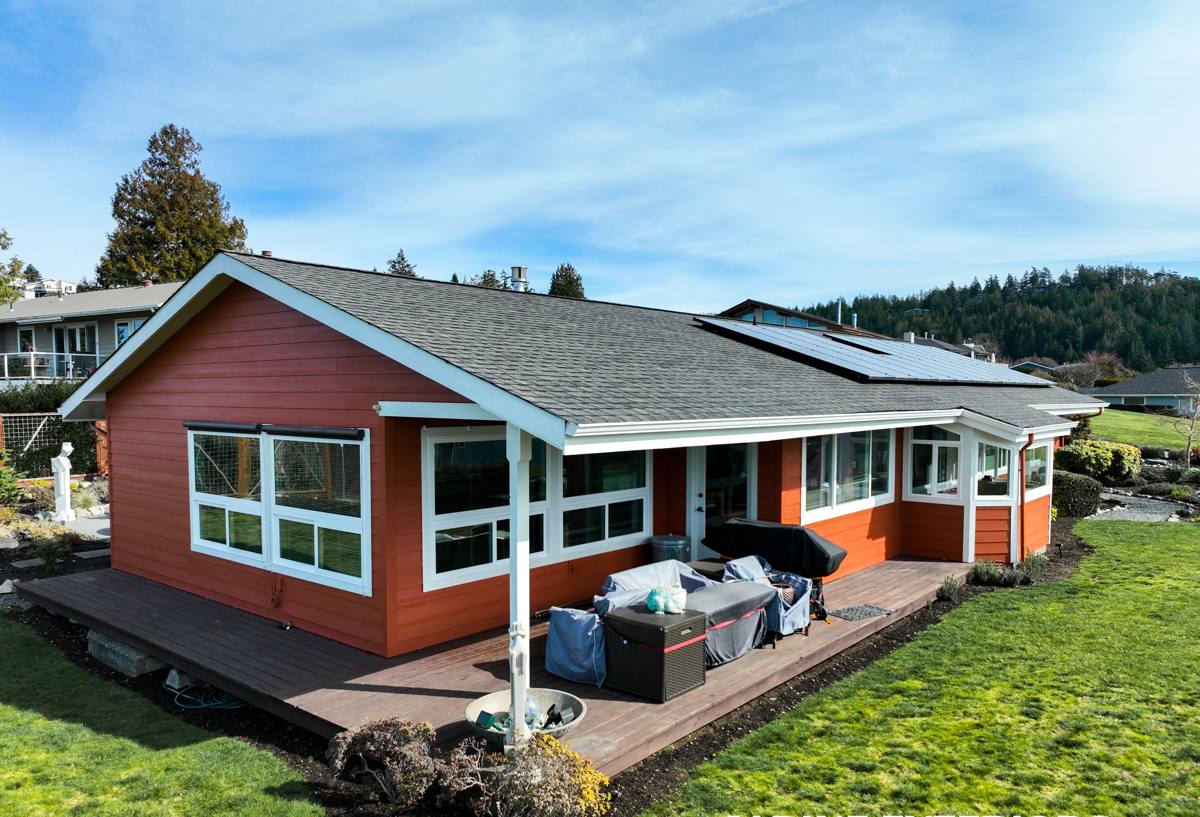
What Birch Bay's Climate Does to Siding
Salt Air
Airborne salt from Birch Bay and the surrounding waters settles on exterior surfaces and accelerates corrosion of exposed metal fasteners, flashing, and trim. It also breaks down cheaper coatings and finishes faster than plain rain would on its own. Materials and fastener choices that are "fine" a few miles inland can show premature wear on a bay-exposed elevation.
Wind-Driven Rain
Open water means wind, and wind turns ordinary rain into a lateral force that pushes moisture up under laps, around trim, and into any gap in the water-resistive barrier. Siding systems designed only to shed water that falls straight down aren't enough here — the whole assembly (house wrap, flashing, laps, and sealant) has to be built to resist rain moving sideways and even slightly upward under wind pressure.
Moss and Algae
Shaded lots, tree cover, and consistently damp air give moss and algae a long growing season in Birch Bay — often nearly all year on north-facing or heavily shaded walls. Moss holds moisture against the siding surface, which is bad for any material, and it's especially hard on products that swell, rot, or delaminate when they stay wet.
Why Material Choice Matters More Here
In a milder, drier climate, the gap between a good product and a mediocre one might take a decade or more to show up. In Birch Bay's combination of salt exposure, driving rain, and near-constant dampness, that gap shows up faster. This is why we standardized on James Hardie fiber cement for every job we do, including Birch Bay, and don't install vinyl, LP SmartSide, Cemplank, Allura, or unfinished wood siding.
- Vinyl can warp or become brittle with temperature swings and UV exposure, and its seams and J-channels give wind-driven rain more places to work its way behind the panel.
- Wood-based composites (like LP SmartSide) use an engineered wood substrate that is vulnerable to swelling and edge deterioration if moisture gets past the finish — a real risk in an environment where walls stay damp for days at a time.
- Unfinished or primed wood siding (cedar, primed spruce) demands frequent recoating to keep water out, and in a moss-prone microclimate that maintenance schedule gets even less forgiving.
- James Hardie fiber cement is non-combustible, doesn't swell or rot from moisture exposure the way wood-based products can, and holds its factory-applied ColorPlus finish far longer under UV and salt exposure than field-applied paint.
Hardie isn't magic — no siding survives bad installation — but it gives a well-built assembly the best odds of actually performing over the 30-plus years a homeowner expects it to.
What a Correct Installation Involves
Most siding failures in coastal Whatcom County aren't a material problem — they're an installation problem. The material is only as good as the water management system behind it. For a Birch Bay home, that means:
Water-Resistive Barrier and Flashing
A continuous, properly lapped house wrap behind the siding, with flashing at every window, door, and horizontal trim transition, installed shingle-style so water is always directed outward and down — never into a seam. Given the wind-driven rain here, sloppy flashing details are where leaks start.
Rain Screen Gap
A ventilated gap between the back of the siding and the water-resistive barrier lets any moisture that does get past the outer layer drain and dry out instead of sitting against the wall sheathing. This detail matters more in a consistently damp, shaded environment like Birch Bay than it does in a drier inland location.
Fastening and Clearances
Corrosion-resistant fasteners driven to Hardie's specified pattern and depth, proper starter strip placement, and correct clearance from grade, roofing, and decks so the bottom edge of the siding isn't sitting in standing water or splashback.
Caulking and Sealant Placement
Sealant only where Hardie's install specs call for it — over-caulking is as much a problem as under-caulking, since it can trap moisture behind the siding instead of letting it escape.
James Hardie Product Lines for a Bay-Exposed Home
James Hardie engineers its siding by climate zone (HZ5 for the Pacific Northwest's wetter, cooler conditions), and factory-applies the ColorPlus finish rather than relying on paint applied on site. For a Birch Bay property we typically discuss:
| Product | Best Use | Why It Fits Birch Bay |
|---|---|---|
| HardiePlank Lap Siding | Primary wall siding | Most common choice; HZ5 formulation and factory finish hold up to salt air and driving rain |
| HardieTrim Boards | Corners, window and door trim | Fiber cement trim won't swell or rot at the joints the way wood trim can in a damp climate |
| HardieSoffit Panels | Eaves and overhangs | Non-combustible, moisture-resistant soffit for homes with heavy tree cover and shade |
| ColorPlus Finish | All exposed siding and trim | Factory-cured finish resists fading and salt-air breakdown far longer than field-applied paint |
Our Process for Birch Bay Homes
- On-site assessment — we check current siding condition, look for existing moisture damage, and evaluate wall orientation relative to prevailing wind and sun exposure.
- Tear-off or overlay decision — if there's any sign of trapped moisture or damaged sheathing behind the existing siding, we tear off and inspect the wall assembly rather than covering a problem up.
- Water management first — house wrap, flashing, and rain screen installed and inspected before a single piece of Hardie siding goes up.
- Installation to Hardie spec — correct fastener pattern, clearances, and joint treatment for HZ5 climate requirements.
- Final walkthrough — we review the finished job with the homeowner and go over basic care for a salt-air, moss-prone property.
What Drives the Cost
| Factor | Why It Matters in Birch Bay |
|---|---|
| Tear-off vs. new construction | Removing old siding often reveals moisture or rot repairs needed before new siding can go on |
| Wall exposure | Bay-facing and wind-exposed walls may warrant extra attention to flashing and fastening detail |
| Trim and architectural detail | More corners, windows, and trim transitions mean more flashing and labor |
| Siding profile and finish | Plank width, texture, and ColorPlus color selection affect material cost |
| Site access | Waterfront and hillside lots can add setup and staging time |
We give homeowners an honest, itemized estimate after walking the property — we don't quote blind off a phone call.
Living With Salt Air and Moss: Ongoing Care
- Rinse siding periodically to clear accumulated salt residue and airborne debris, especially on bay-facing walls
- Keep gutters and downspouts clear so water isn't cascading down the siding face
- Trim back vegetation and tree limbs that keep a wall in constant shade and dampness
- Address moss or algae growth early with a gentle wash rather than letting it establish
- Have caulking and trim joints checked periodically, since sealant is the first thing to wear in a salt-air environment
- Watch for soft spots, discoloration, or bubbling paint as early signs of moisture intrusion, and have them checked promptly
Choosing a Contractor for Birch Bay Siding Work
Not every siding crew has real experience with coastal Whatcom County conditions. Before hiring, it's worth asking:
- Have they installed siding on other Birch Bay or waterfront properties, and do they understand HZ5 climate requirements?
- Do they explain their water-resistive barrier and flashing details, or just talk about the visible siding?
- Are they James Hardie certified installers who follow the manufacturer's published fastening and clearance specs?
- Will they inspect and address existing moisture or rot issues rather than sidng over them?
- Do they carry proper licensing and insurance for exterior work in Washington State?
A crew that already works this stretch of Whatcom County knows that a Birch Bay wall needs a different level of attention than an inland Ferndale wall, and builds the job accordingly.
Get a Free, No-Pressure Estimate
If you're weighing siding options for a Birch Bay home, we're happy to walk the property, take a look at current conditions, and put together an honest estimate — no pressure, no obligation. Use the form below to get started.