 Ferndale Siding
 Storm Damage Roof Repair Built for Birch Bay's Coastline
Birch Bay sits right on the water, and that changes what a roof has to deal with compared to a house a few miles inland in Whatcom County. Salt air, driving rain off the Strait, and a moss season that runs most of the year all work on a roof at the same time, often quietly, until a storm finds the weak spot first. When that happens, homeowners need a repair that addresses the actual cause of the damage, not just a patch over the visible hole.
We work on roofs throughout Ferndale and the surrounding Whatcom County coastline, and Birch Bay comes with its own set of patterns we watch for. This page focuses on one job specifically: storm damage roof repair for Birch Bay homes, done in a way that holds up to the next storm instead of just the next inspection.
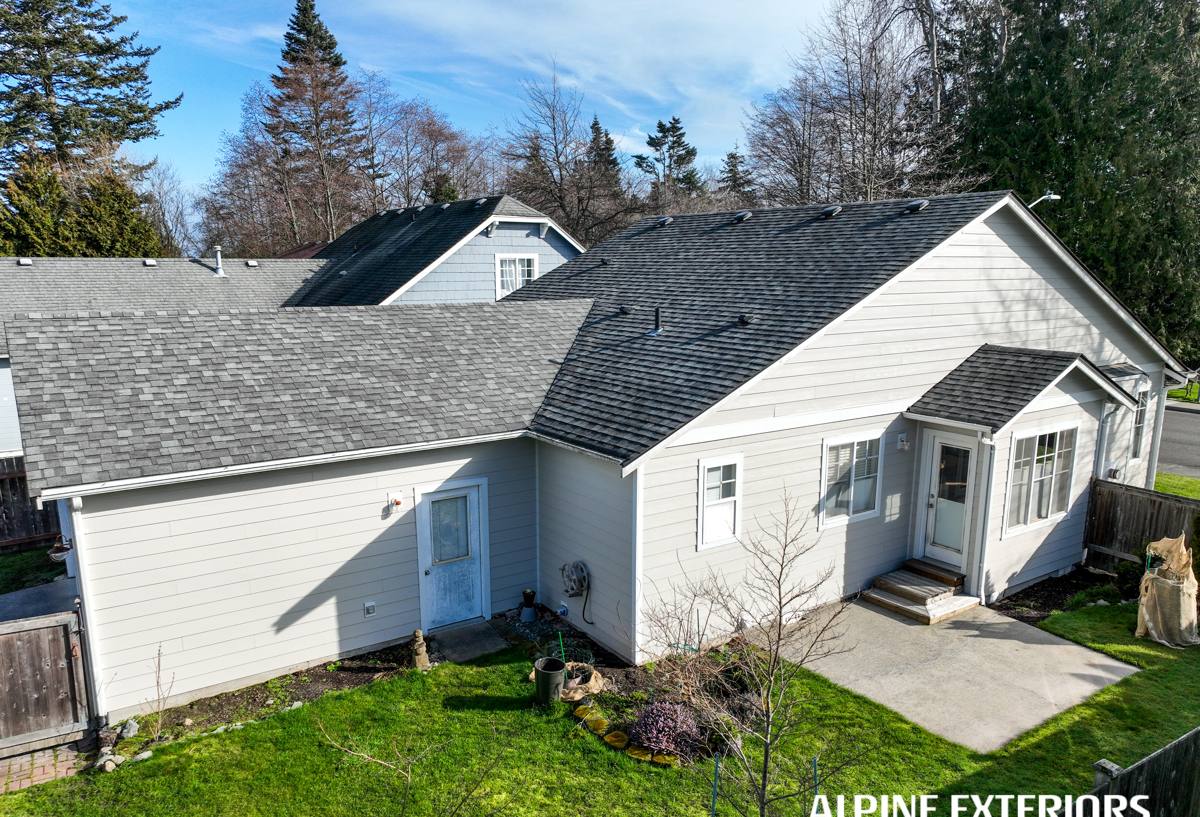
What Makes Birch Bay Roofs Take a Different Kind of Beating
Salt Air and Metal Fatigue
Any home near open water deals with airborne salt settling on exposed surfaces. On a roof, that means flashing, fasteners, and metal drip edges corrode faster than they would inland. A nail that's lost its grip because the shank has corroded won't hold a shingle down in the next windstorm, even if the shingle itself still looks fine.
Wind-Driven Rain, Not Just Wind
Storms off the water rarely bring rain straight down. Wind pushes it sideways and drives it up under shingle edges, into lap joints, and behind flashing that would otherwise shed water fine in a calm rain. This is why a roof can look intact from the ground after a storm and still be leaking into the attic — the damage is at the laps and edges, not out in the open field of the roof.
A Moss Season That Never Really Ends
Whatcom County's wet, mild climate keeps moss growing on north-facing and shaded slopes for most of the year. Moss holds moisture against the shingle surface, lifts shingle edges as it grows, and works its way under flashing over time. A roof with heavy moss going into a storm is already primed to lose shingles or take water intrusion that a clean roof would have shrugged off.
Recognizing Storm Damage Before It Becomes a Bigger Repair
Not all storm damage is obvious. Some of it shows up inside the house weeks later as a stain or a musty smell. After any significant wind or rain event, it's worth checking for:
- Shingles that are cracked, curled, creased, or missing entirely
- Granules collecting in gutters or at the base of downspouts
- Lifted or bent flashing around chimneys, vents, and skylights
- Soft spots or discoloration on ceilings, especially near exterior walls
- Gutters pulled loose or sagging from wind load or debris
- New moss growth concentrated right where a shingle edge has lifted
- Daylight visible through the roof deck from inside the attic
If you see any of these after a storm, it's worth getting a look sooner rather than later. Water intrusion damage compounds fast once it starts, and what would have been a straightforward repair can turn into deck replacement and interior repair if it sits through a few more rain events.
Our Storm Damage Repair Process
Inspection and Documentation
We start by getting on the roof, not just looking at it with binoculars. That means checking the field of the roof, all flashing points, the ridge, and — where accessible — the underside of the deck from the attic. We document what we find with photos, which matters both for you and for any insurance claim you may file.
Temporary Protection
If there's active water intrusion or exposed decking, that gets covered and secured the same visit, before we talk through the full repair. A roof left open to the weather while a repair gets scheduled is how a manageable problem turns into a rot problem.
Matching Materials and Proper Flashing
Storm repairs fail most often at the transitions — where new material meets old, or where flashing was reused instead of replaced. We match shingle type, profile, and color as closely as available product allows, and we treat flashing as part of the repair, not an afterthought. Reusing corroded or bent flashing to save a step is a shortcut that shows up as a leak within a season or two, especially in a salt-air environment like Birch Bay.
Checking the Decking, Not Just the Surface
Any spot where water has been getting in gets checked for deck damage underneath. Soft, delaminated, or rotted decking has to be cut out and replaced before new shingles go down — shingling over compromised decking just hides the problem and voids the point of doing the repair at all.
Ventilation and Long-Term Moisture Control
Where a repair area shows signs of trapped moisture unrelated to the storm itself — condensation staining, for example — we'll flag attic ventilation as part of the conversation. A roof with poor airflow holds moisture longer after every rain event, which shortens the life of everything above it.
Repair or Replace? How We Help You Decide
Storm damage doesn't always mean the whole roof needs to come off, but sometimes a repair is just delaying a replacement that's coming anyway. We walk through it honestly with you, using factors like these:
| Factor | Leans Toward Repair | Leans Toward Replacement |
|---|---|---|
| Roof age | Under two-thirds of expected shingle life | Near or past expected shingle life |
| Damage extent | Isolated to one slope or area | Spread across multiple slopes |
| Decking condition | Solid, dry, no rot found | Soft spots or rot in multiple areas |
| Shingle availability | Close match still available | Discontinued, obvious mismatch |
| Moss/salt exposure history | Roof otherwise well-maintained | Chronic moss and corrosion issues |
There's no pressure toward one answer or the other — a repair that's the right call is the right call, and we'd rather tell you that than sell a replacement you don't need yet.
Materials We Choose for Salt Air and Coastal Wind
Given the environment Birch Bay roofs sit in, we lean toward fasteners and flashing rated for corrosion resistance rather than standard-grade options, since standard fasteners are the first thing salt air attacks. For underlayment at eaves and valleys, we favor self-adhering, waterproof membrane rather than felt alone — felt can perform fine in drier climates, but in a wind-driven-rain environment it's more prone to letting water track through at seams over time. These are choices about durability and maintenance burden for this specific environment, not a judgment on any particular manufacturer — plenty of products perform well when matched to the right conditions and installed correctly. Our standard is simply to specify what holds up best to salt air, sustained wind, and a long wet season, and to be upfront if a cheaper option would leave you doing this repair again sooner.
Working With Insurance on a Storm Damage Claim
Many storm repairs in this area get filed as insurance claims, and the difference between a smooth claim and a frustrating one usually comes down to documentation. Before any tarping or repair work covers up the damage, we recommend:
- Taking dated photos of the damage from the ground and, if safe, closer up
- Noting the date and approximate time of the storm event that caused it
- Getting our written inspection findings before repairs begin
- Keeping any receipts for emergency tarping or temporary protection
- Requesting an itemized estimate that separates storm-caused damage from any pre-existing wear
We're glad to provide documentation your adjuster can use, and to be available if they have questions about the scope of work. We don't manage claims for you, but we make sure the paperwork on our end doesn't slow things down.
Why Local Experience in Birch Bay Matters
A roofing crew that only occasionally works this stretch of Whatcom County coastline doesn't always think to check for the things that matter here — corroded fasteners that look fine from a distance, flashing that's been slowly failing under moss for two seasons, decking that's wetter than it should be given how the roof looks on top. We work in and around Birch Bay and Ferndale regularly enough to know these patterns before we're even on the ladder, which means less time spent diagnosing and more time spent on the actual fix.
It also means we're realistic about timing. Storm damage repairs in this area often need to happen between weather windows, and a crew based locally can get on your roof faster than one traveling in from further away — which matters when there's an open spot letting water in.
After the repair, a little upkeep goes a long way toward not repeating the experience: keeping gutters clear so wind-driven rain has somewhere to go, treating moss growth before it re-establishes on repaired areas, and having the roof looked at after any unusually severe storm rather than waiting for a stain to show up inside. We're happy to point out what to watch for on your specific roof once the repair is done.
If a recent storm has left your Birch Bay home with roof damage, or you're just not sure whether what you're seeing needs attention, we're glad to take a look. Reach out for a free, no-pressure estimate using the form below.