 Ferndale Siding
 James Hardie Siding for Cordata Homes
Cordata sits in the corridor between Ferndale and Bellingham, in northwest Whatcom County, close enough to the water to fall inside the same marine climate zone that shapes exterior work across the region, but with a bit more distance from open water than a true waterfront lot. That distance doesn't take the climate out of the equation — it just changes the mix. Homes here still deal with salt-laden air moving in off Bellingham Bay and the Strait, driving rain that arrives on a slant more often than it falls straight down, and a moss and mildew season that runs long even by Pacific Northwest standards. We install James Hardie fiber cement siding exclusively, and for a community sitting at this in-between distance from the water, it's the material that holds up best without over-building for conditions the property doesn't actually see.
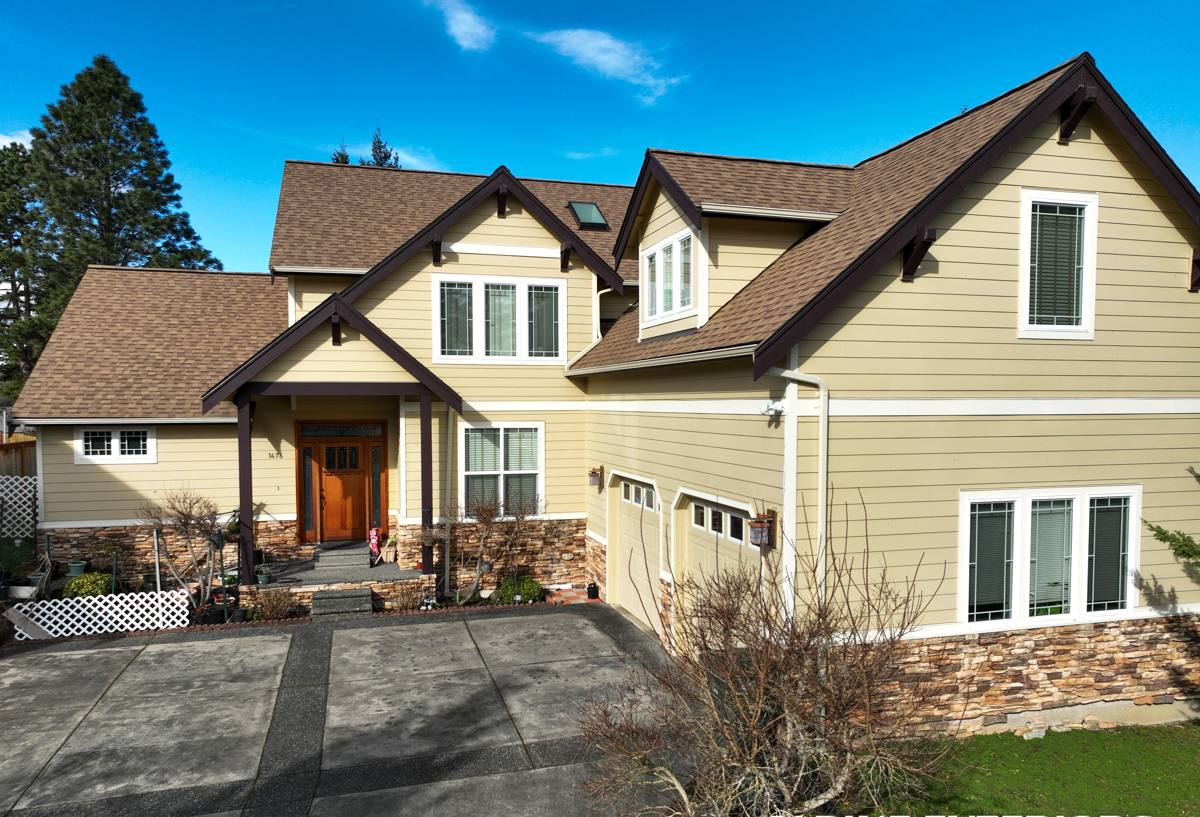
What This Corridor's Climate Does to a Home's Exterior
Salt Air, Diluted But Not Gone
Set back from the immediate shoreline, Cordata doesn't take the concentrated salt exposure that a waterfront property does, but salt-laden moisture still travels inland on prevailing wind and settles on siding, trim, and fasteners over time. It's a slower process than what a beachfront home experiences, which is exactly why it gets overlooked — homeowners assume they're outside the zone that matters, then find rusting nail heads or a chalky, faded finish a few years earlier than they expected.
Driving Rain and Wind-Driven Moisture
Whatcom County's wet season doesn't just drop rain straight down — storm systems moving through this corridor regularly push rain sideways, and wind-driven rain finds its way into lap joints, trim seams, and any spot where flashing isn't doing its job. A siding system that would perform fine in a calmer climate can still fail here because the water is attacking from an angle a straight-down rainfall test never accounts for.
A Long Moss and Mildew Season
Between tree cover, shaded elevations, and near-constant dampness for much of the year, moss and mildew get a long runway in this part of the county. It typically shows up first on north-facing walls and shaded siding, and it's more than a cosmetic problem — sustained organic growth holds moisture directly against the wall assembly, which is the exact condition that leads to rot behind the siding if it isn't cleaned and addressed.
Why James Hardie Is the Only Siding We Install Here
We used to install a broader range of siding products before narrowing to one system, based on which materials actually held up under years of this climate and which ones quietly didn't. For a Cordata home, the case for fiber cement comes down to a handful of specific advantages:
- Non-combustible core: Fiber cement doesn't feed a fire the way wood-based or wood-derived siding products can, which matters for both household safety and insurance underwriting.
- Factory-applied ColorPlus finish: The color is baked on under controlled factory conditions rather than brushed on in the field, so it resists fading, chalking, and salt exposure far longer than site-applied paint.
- Climate-engineered HZ formulations: Hardie builds its siding in different formulations for different climate zones, and we spec the product line built for this region's moisture load rather than defaulting to a generic version.
- Dimensional stability: Fiber cement doesn't swell, cup, or warp the way engineered wood siding can after repeated wet-season moisture cycles.
- Strong transferable warranty: Hardie backs its products with a real warranty structure, provided the installation follows spec, giving homeowners actual protection instead of a marketing claim.
We don't install LP SmartSide, vinyl siding, Cemplank, Allura, primed spruce, or cedar. Each of those products has a place in the broader market and plenty of owners who are satisfied with them. But we made a professional call that one system we trust completely, installed correctly, is worth more to a homeowner than a cheaper option that quietly shifts maintenance risk onto them a few years down the road.
What a Correct Installation Involves
Prep and the Water-Resistive Barrier
Correct installation starts before a single piece of siding goes up. That means confirming the sheathing underneath is sound, installing a water-resistive barrier that's actually lapped and sealed correctly, and getting flashing right at every window, door, and penetration. Siding is the visible layer, but the barrier system behind it is what actually keeps water out of the wall when driving rain gets past the surface.
Fastening and Flashing
James Hardie publishes specific fastening patterns, nailing zones, and clearance requirements, and following them isn't optional if you want the warranty to mean anything. That includes proper clearance from grade, from roof lines, and from decks or patios, along with flashing details at every horizontal joint and trim intersection rather than relying on caulk to bridge a gap that shouldn't be there in the first place.
Finish Work and Joints
Butt joints need to be back-primed and properly sealed, trim needs to be fastened per spec rather than just tacked in place, and caulking should be used to finish a correctly built joint, not to cover for a gap that was never closed up right. This is where a rushed job shows itself first — usually in the first wet season, not years down the road.
Our Process for a Cordata Siding Project
- Walk-through and assessment: We look at the current siding, trim, flashing, and any signs of trapped moisture before recommending a scope of work.
- Repair, overlay, or full re-side: We tell you which situation you're actually in, based on what we find, not which answer is more profitable for us.
- Written estimate: A clear, itemized estimate with no pressure to sign on the spot.
- Tear-off and prep: If a full re-side is warranted, we remove the old material, inspect the sheathing underneath, and address any hidden rot or damage before it gets covered up again.
- Barrier and flashing installation: Water-resistive barrier and flashing go in correctly at every penetration before any Hardie board touches the wall.
- Siding installation to spec: Fastening patterns, clearances, and joint treatment follow Hardie's published requirements, not a shortcut version.
- Final walkthrough: We go over the finished work with you before calling the job done.
Cost Factors for Cordata Siding Projects
| Factor | What It Affects | Why It Matters Here |
|---|---|---|
| Tear-off vs. overlay | Labor scope and access to the sheathing underneath | Tear-off reveals hidden moisture damage that can build up quietly under older siding in this climate |
| Substrate condition | Repair costs before new siding goes on | Long-term trapped moisture from a long moss season can rot sheathing and framing before it's visible from outside |
| Trim and detail work | Labor time around windows, corners, and joints | Wind-driven rain finds gaps at these details first, so they need more careful (and more time-intensive) treatment |
| Siding profile and color | Material cost | ColorPlus finishes and certain profiles carry different material pricing than standard options |
| Site access | Labor time and equipment needs | Lot layout, fencing, and landscaping around a home affect how quickly a crew can stage and work |
Exact costs depend on the specific property, which is why we walk the home in person before giving a real number instead of quoting off a generic price sheet.
Signs a Cordata Home's Siding Needs Attention
- Moss or dark staining that comes back quickly after cleaning, especially on shaded or north-facing walls
- Soft or spongy siding low on the wall or around window and door trim
- Rusting fasteners, corroding flashing, or a chalky, faded finish
- Cracked, chipped, or lifted siding sections, particularly after a windstorm
- Visible gaps at seams, corners, or trim joints
- Peeling or bubbling paint on trim, which often points to moisture trapped behind it
- Rising energy bills that may point to a wall assembly that's no longer sealing properly
Why a Local Crew That Already Works Cordata Matters
A crew that works this specific stretch of Whatcom County regularly understands how salt air, wind-driven rain, and a long moss season actually behave here, not just how a product performs on a spec sheet. That experience shapes real decisions on install day: which wall orientations stay damp longest, where extra flashing attention actually pays off, and which fastening details are worth the added time so a homeowner isn't dealing with a callback after the next wet winter. Cordata's distance from open water means it sees a moderated version of what waterfront Whatcom County properties deal with, and a crew with hands-on local experience adjusts for that instead of either over-building for conditions the home doesn't face or under-building for the ones it does.
What to Expect When You Call Us
- A walk-through of the home's siding, trim, and flashing before any recommendation is made
- An honest assessment of whether you need a repair, an overlay, or a full re-side
- A clear explanation of why we recommend James Hardie for a home in this specific area
- A written estimate with no pressure to sign on the spot
If your Cordata home needs new siding, a repair, or just an honest second opinion on what's happening behind an aging wall, we're glad to take a look. Reach out using the form below to schedule a free, no-pressure estimate.