 Ferndale Siding
 Roof Repair for Blaine Homes
Blaine sits close enough to the water that its roofs deal with a different combination of stresses than homes even a few miles inland. Salt-laden air off the Strait, wind-driven rain that comes in sideways during winter storms, and a moss season that can run most of the year all work on a roof at the same time. A repair here has to account for all three, not just patch the spot that's leaking.
This page covers what roof repair actually involves for homes in the Blaine area, what we look for during an inspection, and how to tell whether a repair is the right call or whether you're better off putting that money toward a replacement instead.
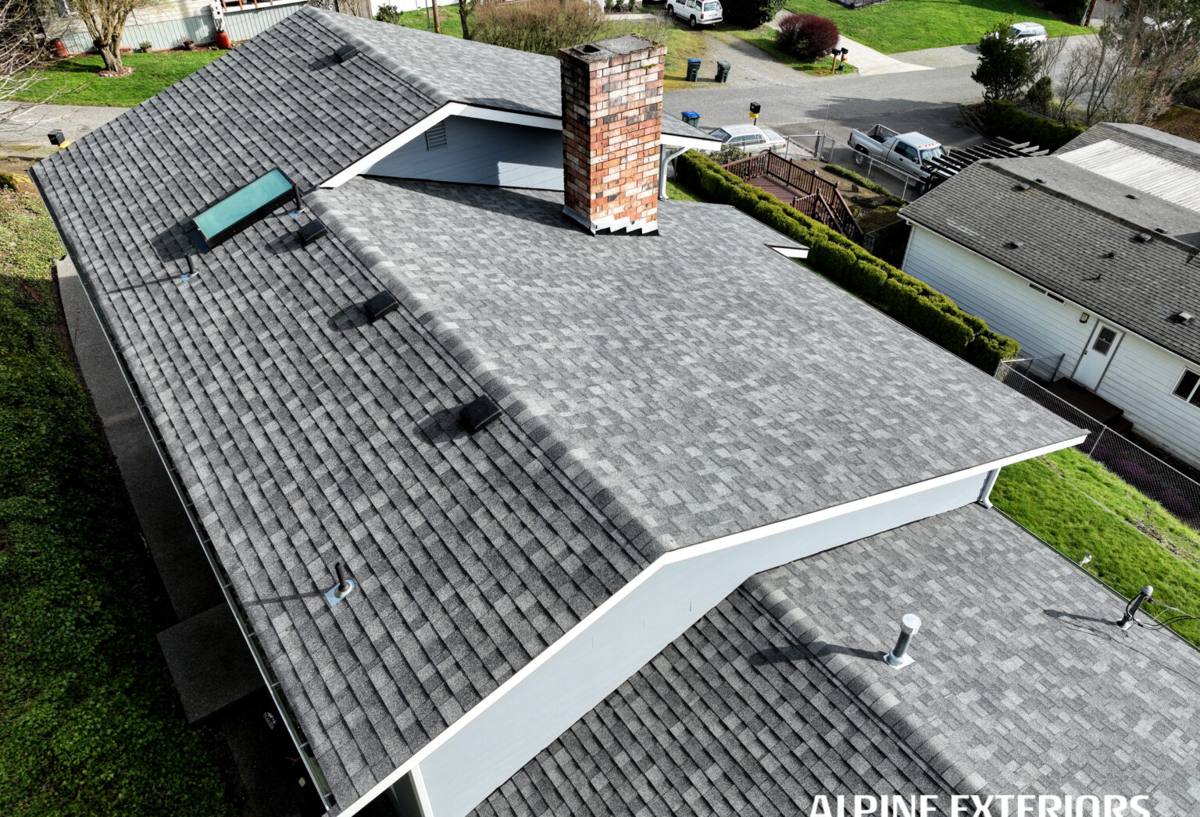
Why Blaine's Coastal Climate Is Hard on Roofs
Whatcom County roofs age differently depending on how exposed they are to marine air and weather. Homes near the water in Blaine tend to show a few problems earlier than roofs further inland:
Salt Air and Corrosion
Airborne salt accelerates corrosion on exposed metal — nail heads, flashing, gutter fasteners, and screws on any metal roofing or accessories. A fastener that would last decades in a dry inland climate can start rusting and losing its grip years sooner near the coast. Once fasteners back out or corrode through, that's a direct path for water.
Driving Rain
Storms coming off the water often bring rain in at an angle instead of straight down. Wind-driven rain finds its way under shingle edges, through marginal flashing, and into any gap that a calmer rain would never reach. Roof details that are just "good enough" in a sheltered valley often aren't good enough a few miles closer to the water.
A Long Moss Season
Whatcom County's mild, wet winters and shaded, tree-lined lots give moss a long window to establish itself — often close to year-round on north-facing slopes or roofs shaded by conifers. Moss holds moisture against the roofing material, works its way under shingle tabs as it grows, and can lift edges enough to let wind and rain underneath.
Signs a Roof Needs Repair
Most roof repairs get called in after a leak shows up inside the house, but there are earlier warning signs worth catching first. Worth checking for, or asking a contractor to check for during an inspection:
- Dark streaking, thick moss growth, or algae concentrated on shaded or north-facing slopes
- Shingle tabs that are lifted, cupped, or missing granules in patches
- Rusted, loose, or missing flashing around chimneys, vents, and skylights
- Gutters that are pulling away from the fascia or overflowing during heavy rain
- Soft spots underfoot, or sagging visible from the ground along a roof plane
- Water stains, discoloration, or a musty smell on ceilings or in the attic
- Daylight visible through the roof deck from inside the attic
Any one of these on its own might be minor. Several together, especially on an older roof, usually mean it's time for a closer look.
What a Proper Roof Repair Involves
A repair that's done right addresses the cause of the leak, not just the spot where water showed up inside. Water travels along the underlayment and decking before it drips through, so the visible stain and the actual entry point are often not in the same place.
Flashing and Valleys
Flashing around chimneys, skylights, vents, and roof valleys fails more often than the shingle field itself, especially in a climate with this much wind-driven rain. A repair usually means removing the surrounding shingles, replacing the flashing rather than just re-sealing it, and reinstalling with fresh underlayment underneath.
Decking and Structural Checks
If water has been getting in for a while, the plywood or OSB decking underneath may be soft, delaminated, or rotted. Patching shingles over damaged decking doesn't hold up — the repair has to include cutting out and replacing any compromised deck sections before new roofing goes down.
Matching Materials
Shingle repairs on an older roof run into a practical problem: matching the existing color and profile gets harder as products age out of production and as the rest of the roof weathers unevenly compared to new material. We're upfront when a perfect match isn't realistic, and we'll place repairs where the difference is least noticeable when it isn't.
Moss and Debris Removal
Any repair on a roof with active moss growth includes clearing it from the work area and checking how far it's worked under the shingles. Moss removal on the rest of the roof can be handled as part of the same visit if it makes sense, or scheduled separately as maintenance.
Repair or Replacement?
Not every roof problem calls for a full replacement, and not every leak is fixable with a patch. The right call usually comes down to the roof's age, how widespread the damage is, and what shape the decking is in underneath.
| Factor | Repair Usually Makes Sense | Replacement Usually Makes Sense |
|---|---|---|
| Roof age | Well within its expected service life | At or past the end of its expected lifespan |
| Extent of damage | Isolated to one area (a valley, a vent, a section of flashing) | Showing up in multiple, unrelated areas |
| Decking condition | Solid, with damage limited to a small section | Soft or rotted across a large portion of the roof |
| Moss and staining | Present but shingles are still sound underneath | Widespread with granule loss and lifted tabs throughout |
| Cost outlook | A repair costs a fraction of a full roof and buys meaningful time | Repeated repairs are starting to add up close to replacement cost |
Cost depends heavily on what we find once we're actually on the roof — a straightforward flashing repair is a modest job, while a repair that involves replacing sections of decking is a bigger one. We'll always tell you honestly which category a given repair falls into before we start.
Our Repair Process
We keep the process straightforward, because the last thing a homeowner needs after finding a leak is more uncertainty.
1. Inspection
We get on the roof and in the attic where possible, tracing the leak back to its actual source rather than just the stain on the ceiling. We check flashing, valleys, penetrations, and the general condition of the shingle field and decking while we're up there.
2. Honest Assessment
You get a plain explanation of what's actually wrong, what's causing it, and what it'll take to fix — including whether a repair is the right move or whether you're better off putting the money toward a replacement instead.
3. The Repair
We remove and replace only what needs it — damaged shingles, compromised flashing, or affected decking — and tie the repair back into the surrounding roof so it sheds water the way the rest of the roof does.
4. Cleanup and Walkthrough
We clear debris and old material from the site and walk you through what was done before we consider the job finished.
Materials and Fasteners We Use
Given how much salt air and driving rain factor into roof performance this close to the water, we're deliberate about the materials that go into a repair, not just the shingles themselves.
We use corrosion-resistant fasteners and flashing rather than the cheapest option available, because standard fasteners are exactly the ones that fail early in a marine climate. We also pay close attention to underlayment coverage around valleys and penetrations, since that's the layer doing the real work when wind pushes rain up under the shingle edge. None of this is about any one brand being bad — it's about matching the materials to what a Blaine roof actually has to deal with over its lifetime.
Why Local Experience in Blaine Matters
A roof repair done by a crew that hasn't worked this specific stretch of Whatcom County can miss things that aren't obvious from a general inspection — which slopes tend to hold moss longest, which flashing details tend to fail first under driving rain, or how much salt exposure a given lot actually gets based on its distance from the water and prevailing wind. Working in and around Ferndale and Blaine regularly means we've already seen how these roofs age here, and we bring that into every repair instead of treating it as a generic patch job.
Maintenance Between Repairs
A few habits go a long way toward keeping small problems from turning into repair calls:
- Keep gutters and downspouts clear so water isn't backing up under the roof edge
- Trim back branches that keep a section of roof shaded and damp longer than the rest
- Have moss addressed before it works under shingle tabs, not after
- Walk the attic after major storms and check for new staining or daylight
- Have flashing and valleys checked every few years, since they fail long before the shingle field usually does
If you're dealing with a leak, visible moss, or a roof that's just getting up there in age, we're happy to take a look and give you a straight answer on what it needs. Reach out for a free, no-pressure estimate — we'll tell you honestly whether it's a repair or something bigger, and what that actually involves.