 Ferndale Siding
 Why Blaine's Coastal Climate Is Hard on Siding
Blaine sits in the far northwest corner of Whatcom County, close to the water and just a few miles from the Canadian border. That location comes with a specific set of exterior problems most inland siding contractors never have to think about. Salt-laden air moves off the water and settles on everything, including the siding on your home. Combine that with wind-driven rain that comes in sideways during winter storms, and a stretch of fall and winter months where surfaces barely dry out, and you get a climate that is genuinely tough on exterior materials.
Add in moss. Whatcom County's moss season isn't a two-week nuisance — it's a months-long condition where north-facing walls, shaded siding, and anything near overhanging trees stay damp long enough for moss and algae to take hold. Moss holds moisture against the wall, and moisture held against the wall is where siding failures start, whether that's paint breakdown, swelling, delamination, or rot in whatever's behind the siding. Any siding replacement in Blaine has to be planned around these three things — salt exposure, driving rain, and sustained dampness — not just picked off a shelf because it looks good.
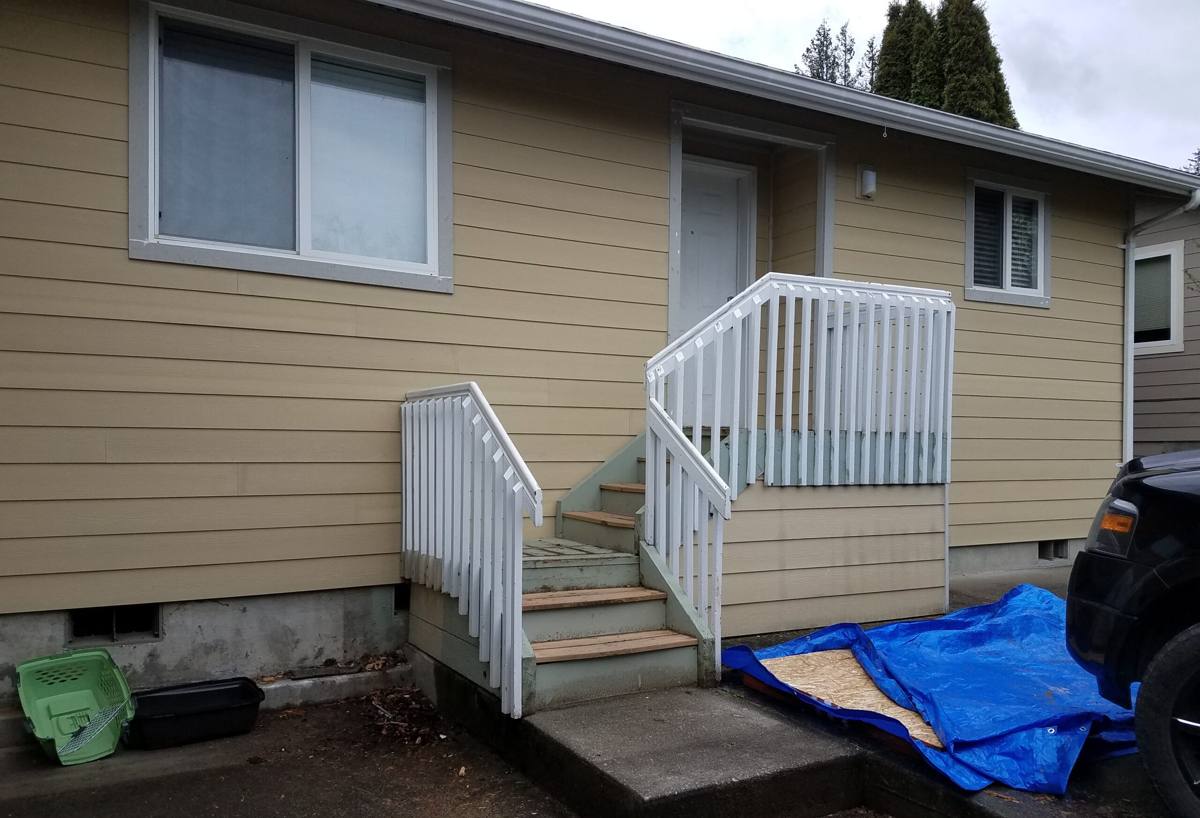
Signs Your Blaine Home Needs Siding Replacement
Coastal siding failure doesn't always look dramatic. Often it shows up as a handful of small issues that, together, mean the siding is no longer doing its job. Before you commit to a full replacement, it's worth knowing what to actually look for:
- Soft, spongy, or bubbling spots when you press on the siding, especially near the bottom courses and around windows
- Persistent moss or dark streaking that comes back within weeks of being cleaned
- Paint that's peeling, chalking, or failing faster than it should, particularly on the sides facing prevailing wind and rain
- Visible gaps, warping, or cupping in wood-based or engineered wood siding panels
- Rising utility bills or noticeably drafty rooms, which can point to a compromised weather barrier behind the siding
- Cracking at butt joints, corners, or anywhere caulk has failed and been reapplied more than once
- A musty smell in interior rooms along exterior walls, which often means moisture has already gotten past the siding
One or two of these on their own might mean a repair. Several at once, especially combined with siding that's approaching or past its expected service life, usually means it's time to talk about full replacement rather than patching around the problem.
What the Right Siding Material Needs to Do Here
Whatever goes back on your walls needs to hold up to salt exposure, shed wind-driven rain, resist moisture absorption, and stay stable through repeated wet-dry cycles without warping or supporting moss growth. That's a short list, but it rules out a lot of common siding options once you look at how they actually perform over years, not just on install day.
| Material | Moisture Behavior | Coastal / Salt Exposure | Long-Term Maintenance |
|---|---|---|---|
| Vinyl siding | Doesn't rot, but seams and panels can warp or distort in temperature swings and wind | Can fade and become brittle from UV and salt air over time | Low upfront, but replacement rather than repair once damaged |
| Cedar / primed wood | Absorbs moisture readily; prone to swelling, splitting, and rot without diligent upkeep | Salt air accelerates finish breakdown and grain checking | High — regular refinishing and moisture monitoring required |
| LP SmartSide (engineered wood) | Wood-based core is moisture-sensitive; edge and seam sealing is critical | Vulnerable to swelling if seals fail near the water | Moderate — depends heavily on installation quality |
| James Hardie fiber cement | Cement-based composition doesn't absorb and swell the way wood products do | Engineered for wet coastal and marine climates; factory finish resists fading | Low — periodic cleaning and inspection, no refinishing cycle |
This is exactly why we install James Hardie fiber cement siding exclusively. It's not that every alternative is a bad product — vinyl and engineered wood have their place. It's that when we weigh how each one actually performs against Blaine's specific combination of salt air, driving rain, and prolonged dampness, fiber cement is consistently the material that holds its shape, its finish, and its protective function the longest with the least upkeep.
Built for This Exact Climate
James Hardie makes climate-engineered product lines, and for the Pacific Northwest that means HZ10 formulations designed specifically for wetter, moisture-heavy regions. That engineering matters more here than it would in a dry inland climate — it's the difference between siding that's rated for your conditions and siding that's just rated for "siding conditions" in general.
What a Correct Siding Replacement Job Involves
The material is only half the equation. A lot of siding failures we see in this area aren't material failures at all — they're installation failures. Here's what a job actually needs to include to hold up in Blaine's climate.
Tear-Off and Sheathing Inspection
Full replacement means removing the old siding down to the sheathing, not covering over it. That's the only way to actually find hidden moisture damage, soft sheathing, or rot that's been developing behind the old material — problems that don't go away just because new siding gets installed on top.
Weather-Resistive Barrier and Flashing
A correctly lapped weather-resistive barrier, properly integrated window and door flashing, and correct kick-out flashing at rooflines are what actually keep wind-driven rain out of the wall assembly. In a climate like Blaine's, this layer does as much work as the siding itself. Skipping or rushing it is the single most common cause of siding call-backs.
Fastening and Clearances
James Hardie has specific fastening patterns, nailing zones, and ground-clearance requirements, and those specs exist for a reason — get them wrong and you create entry points for moisture even with the right material on the wall. Correct clearance between the bottom of the siding and grade, decks, or roof lines also matters more here, where standing moisture and splash-back are a real concern.
Factory Finish, Not Field Paint
ColorPlus factory-applied finish is baked on under controlled conditions and backed by its own finish warranty, which holds up far better against UV and salt exposure than field-applied paint. Getting the caulking, joints, and touch-up right at install is what preserves that finish long term.
Cost Factors for Siding Replacement in Blaine
Every home is different, and we don't quote real numbers without seeing the house, but the factors that move the price are consistent. Knowing them ahead of time makes for a more useful conversation when we do come out.
| Factor | Why It Matters |
|---|---|
| House size and wall complexity | More corners, gables, and dormers mean more cutting, flashing, and labor time |
| Condition of the sheathing underneath | Hidden rot or moisture damage found during tear-off adds repair scope |
| Siding profile chosen | Lap, panel, and shingle-style Hardie products differ in material and labor cost |
| Trim and accessory work | Corner boards, window trim, and fascia are often replaced or upgraded alongside siding |
| Access and site conditions | Slopes, tight lot lines, and staging space affect how quickly a crew can work |
Our Process, Start to Finish
We keep the process straightforward and communicate at each stage, since siding replacement is disruptive enough without added guesswork.
- An on-site assessment where we look at your current siding, check for moisture or sheathing damage, and talk through the exposure your home actually faces
- A written proposal that spells out the Hardie product line, profile, and color, along with the scope of trim and flashing work included
- Careful tear-off and disposal of the old siding, with sheathing repairs addressed before anything new goes on
- Correct installation of the weather-resistive barrier, flashing, and fiber cement siding to manufacturer specification
- A final walkthrough so you can see the finished work and ask questions before we consider the job done
Why a Crew That Already Works Blaine Matters
A crew that regularly works this corner of Whatcom County has already dealt with the specific problems your home is facing — the salt exposure, the sustained dampness, the moss, the wind patterns off the water. That experience shows up in small decisions during installation: how flashing gets detailed around a window that takes direct wind-driven rain, how much clearance to leave near a low spot in the yard, which walls need extra attention because they never fully dry out between storms. None of that is guesswork when it's a crew that's installed siding on homes with the same exposure as yours, not a generic install that would work fine in a drier, calmer climate but leaves gaps here.
If your siding is showing signs of wear, or you're just planning ahead for a home that's had the same siding for a couple of decades, we're happy to take a look and give you a straightforward, no-pressure estimate. There's no obligation — just an honest assessment of where your siding stands and what a correct replacement would involve. Use the form below to get started.