 Ferndale Siding
 Windows on the Water Take More Punishment
Blaine sits right on Semiahmoo Bay, with open water and marine wind on one side and the kind of prolonged wet winters that define Whatcom County on the other. That combination is tough on windows in ways that inland homes never have to deal with. Salt-laden air corrodes aluminum hardware, cheap fasteners, and unprotected metal flashing over time. Wind-driven rain off the water doesn't just fall straight down — it gets pushed sideways into wall assemblies, which means any weak point in the flashing or sealant around a window becomes a leak path sooner rather than later. And then there's moss season: the long stretch of low sun angle and near-constant dampness that keeps siding, trim, and window sills wet for weeks at a time, which is exactly the environment wood rot and mildew need to get established.
None of that means windows in Blaine need to be exotic or over-engineered. It means the installation has to be done correctly, with the right materials in the right places, by someone who understands why those details matter here specifically. A window that's installed fine in a dry inland climate can fail early in a place like Blaine if the water management details were skipped.
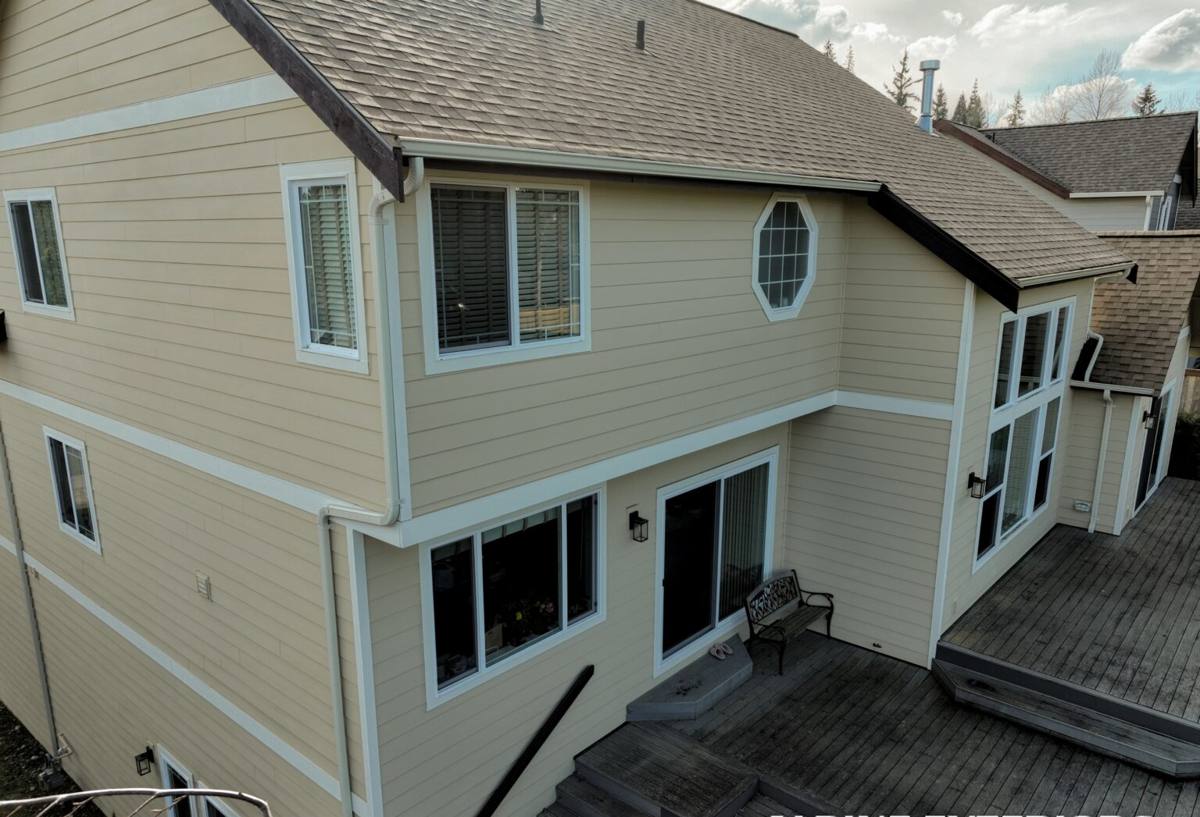
What a Correct Installation Actually Involves
Window installation gets treated as a simple swap far too often — pull the old unit, drop in the new one, run a bead of caulk around the outside, done. That approach might look fine for a year or two, but on an exposed, salt-air property it's usually the start of a slow leak that doesn't show up until there's already rot in the framing.
Removing the Old Window Without Damaging the Opening
The rough opening gets inspected as soon as the old window is out, not after. This is when we find out whether there's hidden water damage, soft framing, or a sill that's already started to rot from years of moisture sitting against it. Catching that now is far cheaper than discovering it later, and it's information you deserve to have before we close the wall back up.
Flashing and Water Management
This is the step that actually determines whether a window stays dry for the next twenty years. A proper installation includes a sloped sill pan so any water that gets past the window sheds outward instead of pooling, flashing tape integrated correctly with the house wrap (not just taped over the top, but shingled so water always flows down and out), and a clear path for any incidental moisture to escape rather than get trapped in the wall cavity. On a home exposed to driving rain off the bay, this step matters more than the window itself.
Sealing, Insulating, and Finishing
Around the frame, we use a low-expansion foam or backer rod and sealant designed to stay flexible through temperature swings and UV exposure, not a bead of caulk that will crack and shrink within a couple of winters. Exterior sealant joints get sized and tooled properly so they actually shed water instead of just looking finished. Interior trim goes back cleanly, and the whole opening gets checked for square, level, and smooth operation before we call it done.
Choosing Materials for a Coastal Property
There's no single "best" window material — the right choice depends on your home's exposure, your maintenance preferences, and your budget. What we won't do is talk you into a product that's a poor match for a salt-air, high-moisture environment just because it's cheaper up front.
Frame Material Trade-Offs
| Material | Coastal Durability | Maintenance | General Cost |
|---|---|---|---|
| Vinyl | Good — won't rust or rot; hardware quality varies by manufacturer | Low — occasional cleaning | Lower |
| Fiberglass | Very good — dimensionally stable, resists corrosion well | Low | Mid to higher |
| Wood-clad | Depends heavily on cladding quality and installation detailing around exposed end grain | Higher — periodic inspection and upkeep | Higher |
| Aluminum (older/uncoated) | Poor in salt air — prone to corrosion and thermal issues | Higher over time | Varies |
For homes with direct water exposure or strong prevailing wind off the bay, we generally steer clients toward vinyl or fiberglass for the hardware and frame components, simply because they hold up better against salt exposure with less long-term maintenance. That's a practical recommendation based on how these materials perform in this specific environment, not a knock on wood-clad windows in general — they can be a great fit on more sheltered elevations.
Glass Packages That Make Sense Here
Dual-pane glass with a low-E coating and an inert gas fill (typically argon) is the standard for a reason: it cuts down on heat loss during cold, damp stretches and reduces interior condensation on cold mornings, which is a common complaint with older single-pane or poorly sealed windows in this climate. We'll walk through glass options based on which direction a room faces and how exposed it is to wind and moisture, rather than pushing the most expensive package by default.
Our Process, Start to Finish
- Walkthrough and measurement. We look at every opening being replaced, note existing damage or exposure concerns, and take precise measurements.
- Product selection. We go over frame material, glass package, and style options based on your home's exposure and your priorities — not a one-size-fits-all recommendation.
- Scheduling and prep. We plan around weather where possible, since installing in the middle of a driving rainstorm is bad for everyone. Openings are only opened up when we can get them weathertight the same day.
- Installation day. Removal, opening inspection, flashing and water management, setting the new window plumb and square, sealing, and interior/exterior trim finishing.
- Cleanup and walkthrough. We test every window for smooth operation and proper seal, clean up the work area, and go over care and warranty information with you before we consider the job finished.
What Drives the Cost
Every window job is different, but the price is generally shaped by a handful of factors rather than a flat per-window rate. Straightforward replacements in an existing, sound opening cost less than jobs that involve structural repair, unusual sizes, or difficult access.
| Factor | Why It Matters |
|---|---|
| Number and size of windows | Larger openings and full-house projects have more material and labor involved |
| Frame material and glass package | Vinyl, fiberglass, and wood-clad options carry different material costs |
| Condition of the existing opening | Rot repair or reframing adds labor beyond a standard swap |
| Access and height | Second-story or hard-to-reach windows take more time and equipment |
| Disposal of old windows | Hauling and disposal of old units and materials |
As a rough guide, most straightforward window replacements land somewhere between a few hundred and a couple thousand dollars per window installed, depending on the factors above — but the only way to get a real number is a walkthrough of your specific windows. We'll always tell you upfront if we find hidden damage that changes the scope, before any surprise costs show up on a bill.
Signs Your Windows in Blaine Need Attention
- Fogging or moisture trapped between panes of double-glazed glass
- Soft, spongy, or discolored wood at the sill or corners of the frame
- Windows that stick, won't stay open, or are hard to lock
- Visible gaps, cracked caulk, or peeling paint around the frame exterior
- Noticeable drafts near the window even when it's fully closed
- Condensation building up on the inside of the glass during cold, wet mornings
- A rise in heating costs without another clear explanation
Any one of these on its own isn't necessarily an emergency, but on a home exposed to Blaine's wind and moisture, they tend to get worse quickly once they start. Catching them early usually means a simpler repair or replacement instead of dealing with hidden rot later.
Why Hiring a Crew That Already Works in Blaine Matters
Window installation isn't just about the product — it's about understanding how a specific property sits relative to wind, rain, and sun. A crew that regularly works in Blaine already knows which elevations tend to take the worst of the wind-driven rain off the bay, how the area's older housing stock was typically built, and what kind of water intrusion patterns show up in homes with this level of coastal exposure. That local familiarity shows up in the small decisions made during installation — where to add extra flashing, which sealant will hold up best, how to detail a sill on a wall that faces the water directly.
It also matters after the job is done. If a question comes up about how a window is performing through its first winter, or a warranty issue needs a second look, you're dealing with a local crew that can get back out to your property without a long drive, not a call center for a national chain.
Let's Take a Look at Your Windows
If you're dealing with drafty, foggy, or hard-to-operate windows, or you're planning ahead for a full replacement, we're happy to walk through your home, point out what we see, and give you honest options — no pressure, no hard sell. Use the form below to request a free estimate and we'll get back to you to schedule a time that works.