 Ferndale Siding
 Decking Built for Everson's Weather, Not Just Its Looks
Everson sits close enough to the Nooksack River and open farmland that homes here deal with a particular mix of conditions: damp ground for much of the year, morning fog that lingers longer than it does closer to the water, and the same salt-tinged marine air that reaches inland across Whatcom County on a west wind. Add a moss season that can stretch from late fall through spring, and you have an environment that is hard on any exterior surface that sits low to the ground and stays wet.
A deck in Everson isn't just a place to put a grill and some chairs. It's a structure that has to shed water fast, resist moss and algae growth, and survive freeze-thaw cycles without the boards cupping, splitting, or the fasteners backing out. Composite decking, installed correctly, handles that job better than wood — but "installed correctly" is doing a lot of work in that sentence, and it's where a lot of decks in this area go wrong.
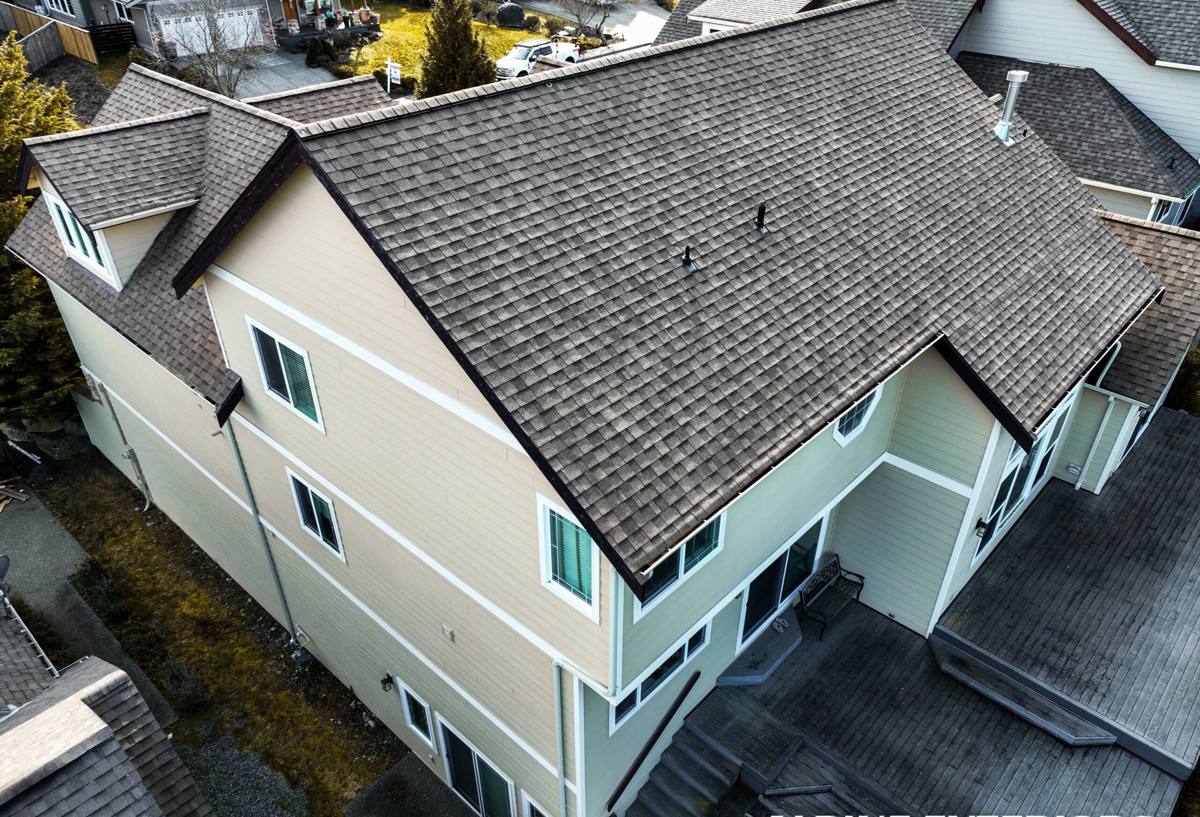
What Composite Decking Actually Solves for Local Homes
Composite boards are a blend of wood fiber and plastic, capped or uncapped depending on the product line. The appeal for a place like Everson isn't cosmetic — it's practical:
- No annual sanding, staining, or sealing to keep moisture out of the board's surface
- Capped boards resist moss and algae staining far better than raw wood, which matters given how long surfaces stay damp here
- Consistent density means boards don't warp or twist the way lumber can when it dries unevenly after a wet winter
- No splinters or popped nails from repeated wet-dry cycling
That said, composite isn't maintenance-free — it's lower-maintenance. Even the best-capped board will grow moss or mildew on its surface if it sits under a canopy of trees with poor airflow and never gets cleaned. The material buys you a big reduction in upkeep, not an exemption from it.
The Part Nobody Sees: Substructure and Drainage
Most complaints about composite decking failing early trace back to what's underneath the boards, not the boards themselves. In a climate where the ground stays saturated for months, three things matter more than the brand of decking you choose:
Joist protection
Untreated or unprotected joists sitting under composite boards will hold moisture against the wood far longer than an open, ventilated deck would, because composite doesn't wick water the way lumber does — it just sheds it downward. That's good for the boards and bad for the framing underneath if the joists aren't wrapped or capped. We flash and protect joist tops before boards ever go down.
Ground clearance and airflow
Low decks close to grade are common on Everson lots, especially where the yard is flat and the soil drains slowly. Without enough clearance between the ground and the framing, air can't move underneath, and that's exactly the environment moss and mold need. We check clearance and grading before we commit to a deck height, and we'll flag it if the existing structure doesn't leave room to breathe.
Fastening and gapping
Composite boards expand and contract with temperature more than wood, and Whatcom County's swing between summer heat and winter cold is enough to matter. Gapping that's too tight leads to buckling; gapping that's too loose lets debris and moisture collect between boards, which is where moss gets its foothold. We follow the manufacturer's specified gap for the exact board profile and the season we're installing in.
Choosing the Right Board for an Everson Deck
Not every composite product performs the same way in wet, mossy conditions. The two decisions that matter most are cap type and surface texture.
| Feature | Fully Capped Composite | Uncapped / Partially Capped |
|---|---|---|
| Moss & algae resistance | Strong — sealed surface resists organic growth | Weaker — exposed core absorbs moisture and stains |
| Fade resistance | Good, backed by manufacturer warranty | More prone to graying over time |
| Upfront cost | Higher | Lower |
| Long-term upkeep | Periodic washing | More frequent cleaning, shorter lifespan in wet shade |
| Best fit | Shaded or low-airflow Everson lots | Sunnier, well-drained sites with good airflow |
Surface texture matters too. A heavily embossed wood-grain finish looks great on a showroom sample, but in a shaded, damp yard it can hold a thin film of moisture and grime in the grooves longer than a smoother finish does. For decks that don't get much direct sun — common under mature trees on larger Everson properties — we'll often steer homeowners toward a lower-texture or streaked finish that sheds water and cleans up faster, rather than the deepest wood-grain pattern available.
How We Approach a Composite Deck Build Here
1. Site assessment
We look at drainage patterns on the lot, existing tree cover, sun exposure, and how close the proposed deck sits to grade. This is where we catch problems — like a low spot that collects runoff — before they become part of the structure.
2. Framing and structural check
If we're replacing an existing deck, we inspect the ledger board, footings, and joists for rot or movement before reusing anything. A new composite deck surface on a compromised substructure just hides the problem for a few years instead of fixing it.
3. Moisture management
Joist tape or flashing on every joist top, correct ledger flashing where the deck meets the house, and attention to how water sheds off the deck's edge rather than pooling against the foundation.
4. Board installation
Hidden fastener systems where the product supports it, correct board gapping for the season, and picture-frame or border detailing where it makes sense for the layout.
5. Final walkthrough
We go over cleaning recommendations specific to the board you chose, since capped and uncapped products call for slightly different care.
Moss, Algae, and Everson's Long Wet Season
Moss doesn't need much to get started — shade, moisture, and a surface it can grip. A properly capped composite deck with good airflow underneath will resist it far longer than wood, but no exterior surface in Whatcom County is completely immune during a wet fall-to-spring stretch. The difference with composite is that when moss or algae does show up, it sits on the surface rather than working into the fibers, so it comes off with routine cleaning instead of requiring sanding or refinishing.
Homeowners closer to open fields or tree lines around Everson tend to see more organic buildup simply because of exposure and shade patterns — that's a site condition, not a product flaw, and it's part of why we look at sun and airflow before recommending a specific board finish.
Simple Maintenance That Actually Matters
- Rinse or sweep debris (leaves, needles, seed pods) off the deck regularly through fall — trapped organic matter is what feeds moss and staining
- Wash with a soft-bristle brush and mild soap and water once or twice a year; avoid pressure washers set too high, which can damage the cap layer
- Keep gutters and downspouts near the deck clear so runoff isn't dumping directly onto the surface or the framing below
- Trim back overhanging branches where possible to improve sun exposure and airflow
- Check railing posts and stair connections annually for movement, especially after a hard winter
What Affects the Cost of a Composite Deck in This Area
| Factor | Why It Matters Here |
|---|---|
| Deck size and shape | More linear footage of board and fastener, plus more cut waste on complex layouts |
| Board tier | Fully capped, higher-warranty boards cost more upfront but hold up better in shade and moisture |
| Substructure condition | Rot or inadequate footings found during a rebuild add cost but shouldn't be skipped |
| Height and railing needs | Taller decks or code-required guardrails add labor and material |
| Site access | Tight side yards or long carry distances from the driveway affect labor time |
We give straightforward, itemized estimates rather than a single lump number, so you can see what you're actually paying for — material tier, framing work, and labor — before deciding anything.
Why a Crew That Knows Everson Makes a Difference
A lot of decking problems in this area aren't the product's fault — they're the result of a generic installation that didn't account for local ground conditions, shade patterns, or how much moisture this part of Whatcom County holds onto compared to drier regions. A crew that regularly works in and around Everson and Ferndale already knows to check ground clearance before framing, to flash joists as standard practice rather than an upsell, and to steer homeowners away from board finishes that trap moisture on shaded lots.
That local pattern-recognition is the difference between a deck that still looks and performs well in ten years and one that needs board replacement or moss remediation in three or four. We'd rather spend an extra half hour on the site assessment than hand back a deck that fights the climate instead of working with it.
If you're considering a composite deck for your Everson property, we're happy to walk the site, look at your drainage and sun exposure, and put together a straightforward, no-pressure estimate using the form below.