 Ferndale Siding
 Composite Decking Built for Lummi Island's Conditions
Lummi Island sits close enough to the water that every deck out here deals with salt-laden air, wind-driven rain, and long stretches of gray, damp weather that keep surfaces wet far longer than homes further inland. A deck built without that reality in mind will show it within a few seasons — soft spots, streaking, fastener corrosion, and a moss carpet that never fully dries out. Composite decking, installed correctly, is one of the more sensible answers to that climate, but "correctly" is doing a lot of work in that sentence. The material matters less than the substructure underneath it, the drainage plan, and the fastener choices, and that's where a lot of decks in this area go wrong.
We're a Ferndale-based crew that works Lummi Island regularly, so this isn't a generic write-up of composite decking in the abstract. It's what we've learned building and repairing decks in a marine, high-moisture environment where the wrong details fail faster than they would fifty miles inland.
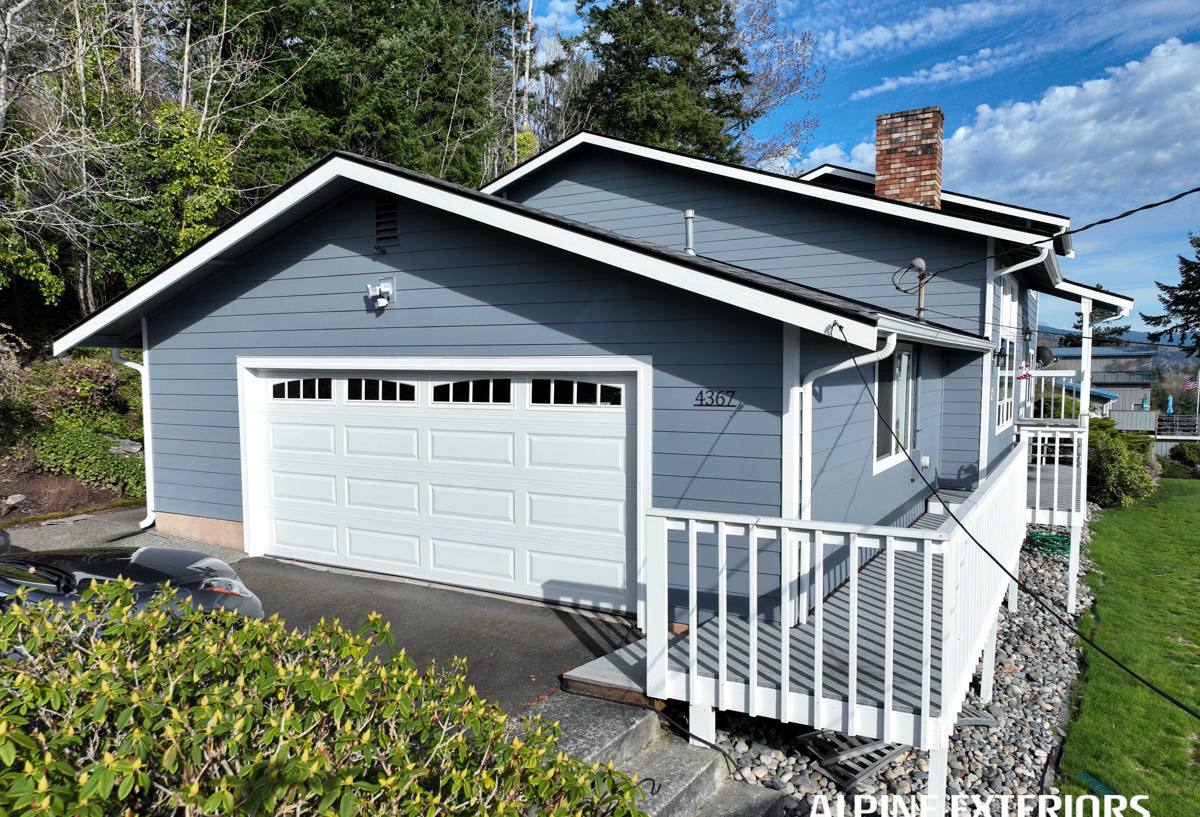
What Whatcom County's Coastal Climate Does to a Deck
Three things drive almost every decking failure we see on Lummi Island and the surrounding Ferndale coastline:
- Salt air: airborne salt accelerates corrosion on any exposed metal — fasteners, joist hangers, ledger flashing — long before it visibly affects the decking boards themselves.
- Driving rain: wind off the water pushes moisture sideways, into end grain, fastener holes, and any gap in flashing that a calmer climate might get away with ignoring.
- Extended moss season: our wet season runs long here, and shaded or low-airflow deck areas can stay damp for weeks at a time, which is exactly the environment moss and algae need to take hold.
None of this means composite decking is a bad fit — it generally handles moisture better than untreated wood. But it means the substructure, fasteners, and drainage details have to be treated as seriously as the decking material itself, because those are the parts that actually fail first in this climate.
Why the Substructure Matters More Than the Boards
Composite boards themselves resist rot, but the framing underneath — joists, beams, posts, and ledger connections — is still typically wood, and it's still exposed to the same salt air and rain. A composite deck built over an under-protected frame just moves the failure point down a level: the surface looks fine while the structure underneath quietly deteriorates. Proper joist tape, corrosion-resistant hardware, and correct ledger flashing matter as much on Lummi Island as the decking brand you choose.
What a Correct Composite Deck Install Involves
A composite deck that's going to hold up here needs attention at every layer, not just the visible surface:
Framing and Structure
Pressure-treated joists and beams sized to the actual span and load, set on properly footed posts. On a shoreline-adjacent property, we pay close attention to post embedment and footing depth, since saturated or shifting soil is more common near the water than in drier inland lots.
Moisture Management
Joist tape over every top edge, correct ledger board flashing where the deck ties into the house, and a slight slope built into the framing so water sheds away from the structure instead of pooling. This is the single most overlooked detail in decks that fail early — it costs little at build time and saves the most in the long run.
Fasteners and Hardware
Stainless steel or coated, corrosion-rated fasteners and joist hangers throughout — not just at the visible surface. In a salt-air environment, standard galvanized hardware corrodes faster than homeowners expect, and hidden hardware failures are far more costly to fix than a board replacement.
Airflow Underneath
Adequate ventilation beneath the deck so moisture can actually escape rather than sit trapped against the framing — a bigger factor in our long wet season than it would be in a drier climate.
Board Selection and Layout
Composite board grooves, gaps, and picture-framing details all affect how water drains off the surface. Board spacing that's too tight traps standing water and speeds up moss and algae growth on the walking surface.
Composite vs. Wood on Lummi Island: An Honest Comparison
| Factor | Composite Decking | Wood Decking |
|---|---|---|
| Moisture resistance | Generally strong; core material doesn't rot the way wood does | Requires ongoing sealing/staining to resist moisture, especially near saltwater |
| Maintenance | Periodic cleaning to prevent surface algae/moss buildup | Regular sealing, staining, and inspection for soft spots |
| Fastener/hardware exposure | Still a factor — hidden hardware needs the same corrosion protection | Same exposure risk; often more visible fasteners to maintain |
| Upfront cost | Higher material cost | Lower material cost, higher lifetime maintenance cost |
| Appearance longevity | Color and texture generally stable over time | Graying, splintering, and finish wear are common over years of exposure |
| Long-term value in this climate | Tends to hold up well against the specific moisture/salt combination here | Can perform well but demands more consistent upkeep to avoid rot |
Neither option is maintenance-free in a coastal environment — the difference is what kind of maintenance you're signing up for and how forgiving the material is when upkeep slips for a season or two.
Moss, Algae, and Surface Care
Even a well-built composite deck on Lummi Island will need occasional attention to the surface itself. Shaded areas, north-facing sections, and spots with limited airflow are the most likely to develop a green film during our wetter months. This isn't a defect in the decking — it's a function of the climate — and it's manageable with routine cleaning rather than structural work. Where we can, we also account for it in the design: adjusting board orientation, gap width, and where possible, siting or shading to reduce the areas most prone to staying damp.
Our Process for a Lummi Island Decking Project
- On-site assessment: we look at existing structure (if replacing a deck), drainage patterns, sun/shade exposure, and proximity to the water, since that affects both material and hardware choices.
- Design and material selection: board layout, railing, and fastener spec matched to the site's actual exposure — not a one-size-fits-all package.
- Permitting: we handle the applicable permitting for the scope of work, coordinated for Whatcom County requirements.
- Demolition (if replacing): careful removal of old decking and inspection of the framing underneath before anything new goes on top of it.
- Framing and moisture protection: joist tape, flashing, and corrosion-resistant hardware installed before a single composite board goes down.
- Decking installation: boards, fasteners, and spacing set to manufacturer spec and adjusted for local drainage needs.
- Final walkthrough: we go over the finished deck with you, including what routine care looks like given your specific site's sun and shade exposure.
Why a Crew That Already Works Lummi Island Matters
Ferry scheduling, tide-dependent access windows, and the general logistics of getting crews and materials to and from the island add real time and coordination to a project if a contractor isn't already used to working out here. Beyond logistics, familiarity with how this specific stretch of coastline behaves — wind exposure on different sides of the island, which areas hold moisture longest, how salt air has treated other decks nearby — means fewer surprises during the build and a more accurate estimate up front. We build in Ferndale and across this part of Whatcom County regularly, so Lummi Island's access and climate quirks aren't something we're solving for the first time on your project.
Questions to Ask Before You Hire
- Will the framing include joist tape and proper ledger flashing, or just the visible decking?
- What grade of fastener and hardware is being used, and is it rated for coastal/salt-air exposure?
- How is the deck sloped or drained to prevent standing water?
- Is ferry scheduling and site access to Lummi Island already factored into the project timeline?
- What does routine maintenance actually look like for the specific board and location you're proposing?
Getting the Details Right the First Time
The cost of doing a deck right on Lummi Island isn't dramatically different from doing it wrong — the difference shows up years later, in whether the frame underneath is still sound and whether the hardware has corroded away inside a structure that looks fine on the surface. That's the standard we build to: the parts you can't see get the same attention as the parts you can.
If you're planning a new composite deck or replacing an aging one on Lummi Island, we're happy to come take a look and walk you through what your specific site needs. There's no pressure and no obligation — just an honest estimate based on your home's exposure, layout, and access. Use the form below to get started.