 Ferndale Siding
 Building Decks for Lummi Nation Homes
Lummi Nation sits out on the peninsula west of Ferndale, close enough to open water that homes there deal with a heavier version of the marine exposure the rest of Whatcom County only sees occasionally. A deck built here has to hold up to salt-laden air, rain that comes in sideways as often as it falls straight down, and a moss season that runs long enough to stay active most of the year. We build decks for homes in this area regularly, and the difference between a deck that lasts and one that starts failing in five years almost always comes down to decisions made before the first board goes down — footing depth, ledger flashing, fastener grade, and material choice.
This page is about deck building specifically for Lummi Nation homes, not a generic overview of decking. If you're weighing a new deck, a rebuild, or a repair on a property out here, this is the exposure it's actually up against and what a correctly built deck needs to handle it.
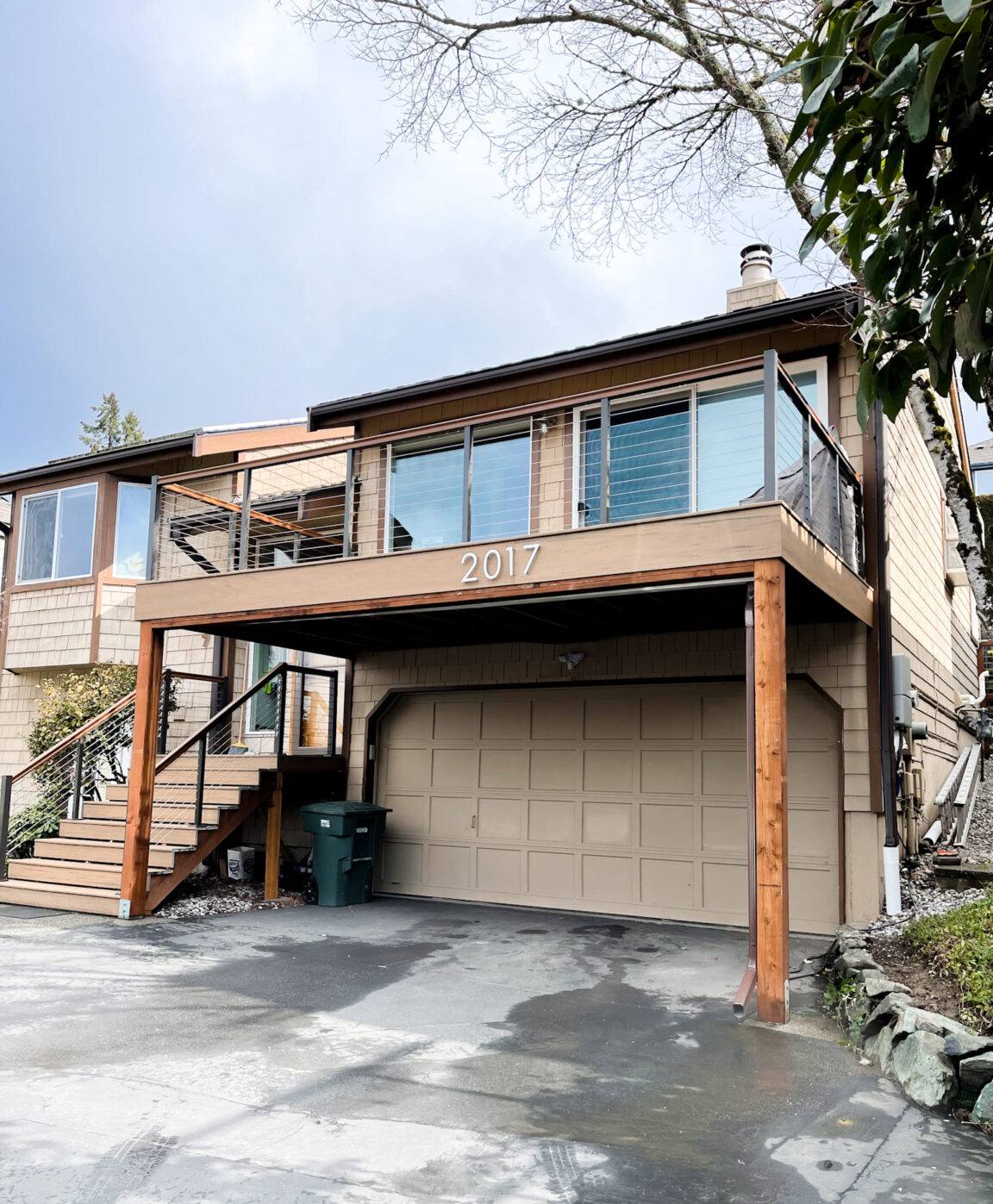
What This Exposure Does to a Deck
Salt Air and Corroding Hardware
The closer a lot sits to open water, the more salt-laden moisture settles on everything outside, including a deck's structural hardware. Standard fasteners, joist hangers, and post bases that would hold up fine on an inland lot corrode faster here, and corroding hardware is a structural problem, not a cosmetic one — a rusted-through joist hanger or post base is a deck that's lost load-bearing capacity, sometimes without any visible warning from the surface.
Wind-Driven Rain and the Ledger Connection
Open water exposure means less windbreak and more direct wind, which pushes rain sideways into places it wouldn't normally reach. For a deck, the single most important detail is the ledger board — the framing member that bolts the deck to the house — because a poorly flashed ledger gives wind-driven rain a direct path into the wall assembly behind it. That's not a deck problem at that point, it's a hidden rot problem inside the house, and it's one of the more common origins of exterior damage we find on Lummi Nation properties when we're called out for something else entirely.
A Long Moss Season on Deck Surfaces
Peninsula terrain, tree cover on many lots, and near-constant dampness add up to a moss and algae season that runs longer here than in drier parts of the county. On a deck, that shows up as slick green growth on shaded boards, especially anywhere water sits after rain instead of draining off. It's a slip hazard first, but sustained moss growth also holds moisture against the decking surface, which shortens the life of lower-grade wood and even affects how some composite products age if drainage underneath isn't handled correctly.
Frost, Ground Movement, and Footings
Footings for an attached or freestanding deck need to go below the local frost line so seasonal ground movement doesn't heave or shift the structure over time. Whatcom County's frost depth requirements aren't dramatic compared to harsher inland climates, but skipping or shortcutting footing depth is still one of the more common corners cut on lower-cost deck jobs, and it's the kind of mistake that doesn't show up until a post starts to lean or a deck surface develops a noticeable slope.
Choosing Decking Material for This Exposure
There's no single right answer for every homeowner — budget, maintenance tolerance, and how the deck will be used all factor in. What we can do is walk through how each common option actually performs under this specific combination of salt air, sustained dampness, and a long moss season, rather than just quoting a price per square foot.
| Material | Moisture & Moss Behavior | Maintenance | Typical Lifespan Here |
|---|---|---|---|
| Pressure-treated pine | Absorbs moisture readily; moss and algae take hold quickly on shaded sections | Annual cleaning and periodic re-staining or sealing | 10-15 years with upkeep |
| Cedar | Naturally rot-resistant but still absorbs moisture over time; moss still forms on damp, shaded boards | Regular sealing to preserve color and resist moisture | 15-20 years with consistent maintenance |
| Capped composite decking | Doesn't absorb moisture into the core; surface is more moss-resistant but still needs cleaning where debris and shade allow buildup | Occasional washing; no staining or sealing | 25-30 years, per most manufacturer warranties |
| PVC decking | Fully synthetic, no organic material for moisture or moss to work into | Lowest maintenance of the common options; still benefits from periodic cleaning | 25-30+ years, per most manufacturer warranties |
We don't push one product on every homeowner. Wood decking has a real place, especially for owners who want that look and are willing to keep up with the maintenance. But for a Lummi Nation property specifically, where the moss season runs longer and moisture exposure is heavier than most of the county, we're upfront that a capped composite or PVC product will ask a lot less of you over the life of the deck, and we'll explain that trade-off honestly rather than defaulting to whatever's cheapest to install.
What a Correctly Built Deck Involves Here
Material choice only gets a deck halfway there. The build details matter just as much, and they matter more on an exposed peninsula lot than they would somewhere calmer.
- Ledger flashing done right: proper flashing and water-resistant barrier behind the ledger board, not just lag bolts and caulk, so wind-driven rain can't track behind it into the wall.
- Corrosion-rated hardware: hot-dip galvanized or stainless fasteners, joist hangers, and post bases rated for coastal and marine exposure, not standard interior-grade hardware.
- Joist tape on framing: a protective barrier over the tops of joists and beams that keeps standing moisture from sitting directly against cut lumber, which matters more here given how long surfaces stay damp.
- Footings below the frost line: concrete footings sized and set to local depth requirements so seasonal ground movement doesn't shift posts over time.
- Drainage and board spacing: gapping and slope that actually lets water run off instead of pooling, since standing water is what feeds moss growth and accelerates surface wear.
- Code-compliant railings and stairs: proper height, baluster spacing, and stair geometry built to current code, not just what looks close enough.
Skipping any one of these on a calmer inland lot might not show up for years. On a Lummi Nation property, taking more direct wind and more sustained moisture, a shortcut in the framing or flashing tends to surface faster — sometimes within a single wet season.
Permits and Building Near Tribal Land
Permitting requirements for a new deck or major rebuild can differ depending on where a property sits relative to reservation boundaries, and that's not something we'd guess at on a homeowner's behalf. Some projects fall under standard county building code, others may fall under different jurisdiction depending on land status, and the requirements can also vary based on whether the deck is attached to the house, its height above grade, and its square footage. We confirm what applies to your specific property before pulling any permit rather than assuming one set of rules covers every lot in the area.
Cost Factors for a Lummi Nation Deck Project
| Factor | What It Affects | Why It Matters Here |
|---|---|---|
| Decking material | Material cost and long-term maintenance | Wood costs less upfront but asks more upkeep given the moss season and moisture here |
| Attached vs. freestanding | Ledger flashing scope, permitting, and structural connection | An attached deck's ledger connection is the highest-risk point for water intrusion on this kind of lot |
| Footing depth and count | Excavation and concrete work | Correct frost-depth footings prevent shifting from seasonal ground movement |
| Hardware grade | Fastener and connector cost | Corrosion-rated hardware costs more but is not optional this close to open water |
| Site access and grade | Labor time and equipment needs | Peninsula lots can have steeper grades, tighter access, or limited staging space |
| Railing and stair complexity | Linear footage of code-required railing and stair work | Elevated decks facing open water often need more substantial railing runs |
These factors interact differently on every lot, which is why we walk the property in person before giving a real number instead of quoting off a generic price sheet.
Signs an Existing Deck Needs Attention
- Soft, spongy, or spring-feeling boards, especially near the ledger or in shaded areas
- Moss or dark staining that returns quickly after cleaning
- Rust streaks around fasteners or visibly corroding hardware and connectors
- A ledger board that feels soft, or staining on the wall directly above it
- Posts that feel loose, lean slightly, or sit on visibly shifted footings
- Railings that flex or feel less rigid than they should under normal pressure
- Standing water that lingers on the surface well after rain has stopped
Any one of these is worth a look before it turns into a bigger structural or moisture problem. A deck that's failing at the ledger connection, in particular, is often masking a wall problem behind it that's worse than the deck issue itself.
Our Process on a Lummi Nation Deck Project
We start with a walk-through of the site, the existing structure if there is one, and the wall it will attach to. From there:
- Assess the existing deck (if any) for hidden rot, hardware corrosion, and footing condition before deciding between repair, partial rebuild, or full replacement.
- Confirm permitting and jurisdiction requirements specific to the property before design work moves forward.
- Design the framing plan around correct footing depth, structural spans, and ledger connection detail for this level of exposure.
- Walk through decking material trade-offs honestly, based on your budget and how much maintenance you actually want to take on.
- Build with corrosion-rated hardware, proper ledger flashing, joist tape, and code-compliant railings throughout.
- Final walkthrough to confirm drainage, board spacing, and railing rigidity before calling the job done.
Why a Crew That Already Works Lummi Nation Matters
A crew that builds decks in this specific area regularly has already seen which ledger connections hold up and which ones fail, which footing depths actually account for real ground conditions here, and which decking materials genuinely handle a long moss season versus which ones just get marketed that way. That experience shows up in small decisions on build day — how tightly to space boards for drainage on a shaded elevation, where extra flashing attention actually pays off, which hardware grade is worth the added cost. Lummi Nation's proximity to open water means its homes take a heavier version of the same exposure the rest of Ferndale deals with, and a deck built without that in mind is a deck that's going to need attention sooner than it should.
If you're considering a new deck, a rebuild, or want an honest assessment of a deck you already have, we're glad to take a look. Reach out using the form below to schedule a free, no-pressure estimate.