 Ferndale Siding
 Building New in Everson: What Local Windows Are Up Against
Everson sits inland from Bellingham Bay along the Nooksack River, but it still lives under the same wet, marine-influenced weather system that shapes construction all over Whatcom County. Driving rain off the Strait pushes through this valley for months at a time, humidity stays high enough to keep moss and mildew active on north-facing surfaces well into spring, and the freeze-thaw swings of a Whatcom County winter put real stress on any gap or seam in a building envelope. None of that is dramatic on any single day. It's the cumulative exposure — rain event after rain event, season after season — that finds every shortcut in a window installation and turns it into a leak, a rotted sill, or a fogged-up sash within a few years.
For a new build, this matters more than most homeowners realize. A window that's installed wrong on day one of construction doesn't show a problem on day one. It shows up two or three winters later, after the siding is buttoned up, the landscaping is in, and the only way to fix it properly means pulling trim and possibly siding back off. New-construction window work is the one chance to get the water management right before the wall is closed up for good.
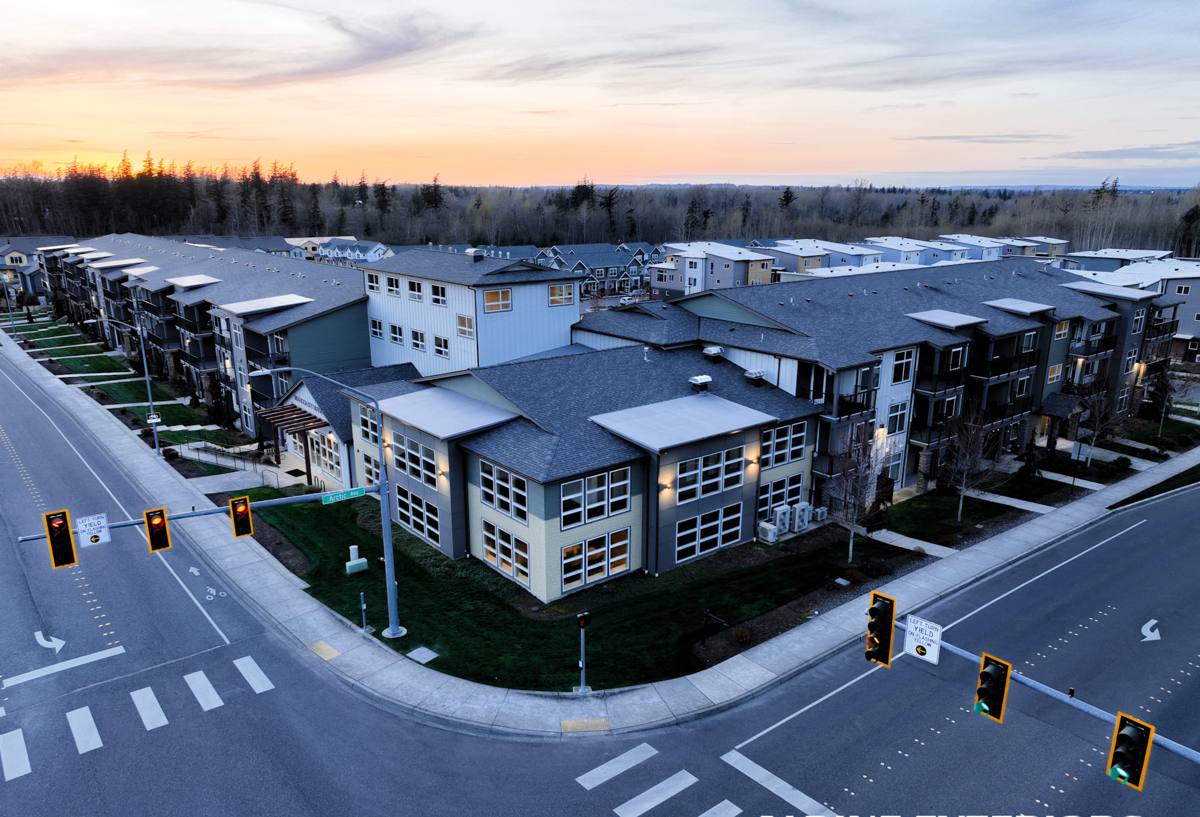
New-Construction Installation vs. Retrofit — Why It's Not the Same Job
A lot of window companies are set up to do replacement work: pull an old window out of a finished wall, set a new one in the existing opening, caulk the perimeter, done. New-construction installation is a different discipline entirely. The rough opening is bare framing, there's no existing trim or siding to work around, and the window has to be integrated into the wall's water management system — house wrap, flashing, and sill pan — in a specific order before anything else closes over it.
Sill Pans and Flashing Sequence
Every new-construction window opening should get a sloped sill pan before the window ever goes in. The pan gives any water that gets past the window a way to drain back out to the exterior instead of soaking into the framing. From there, the flashing goes on in a strict shingle-lap order — sill pan first, then the window's nailing fin, then side flashing, then head flashing, each layer overlapping the one below it so water is always directed outward and down, never trapped behind a seam. Get that sequence backward, even by one layer, and you've built a pocket that collects water instead of shedding it.
Integrating with House Wrap and Siding
The window also has to tie into the house wrap correctly — wrap cut and folded into the opening before the window sets, then flashing taped back over the wrap in the right order so the whole assembly sheds water as one continuous system. Get this step wrong and the window itself can be installed perfectly and still leak, because water is getting behind the wrap somewhere else and running down to find the first gap it can. This is also the point where we're thinking ahead to whatever siding is going on the house, so trim depths, flashing extensions, and reveal lines are set up correctly the first time instead of getting patched around later.
Choosing Windows for a Whatcom County New Build
New construction gives you a real choice in window frame material and glass package, since you're not constrained by an existing opening size or an old frame you're matching. For this climate, we steer clients toward products that hold up to sustained moisture exposure without a lot of ongoing maintenance, and that meet or beat Washington State Energy Code requirements for U-factor in your climate zone.
| Frame Material | Moisture Performance | Maintenance | Typical Fit for Everson Builds |
|---|---|---|---|
| Vinyl | Won't rot or corrode; performs well in wet climates | Low — no painting or sealing | Strong value option for most new builds |
| Fiberglass | Very stable in moisture and temperature swings | Low | Good upgrade where dimensional stability matters |
| Wood-clad | Good if detailing and drainage are correct; vulnerable if not | Higher — cladding and interior wood need upkeep | Best for homeowners who want a wood interior look and will maintain it |
| Aluminum | Prone to condensation without a thermal break | Moderate | We generally steer away from it here except for specific architectural needs |
Whichever frame material fits your build and budget, we also make sure the glass package and overall U-factor meet current Washington State Energy Code for our climate zone — this isn't optional on new construction, and it gets checked at inspection, so it's worth getting right the first time rather than swapping units later.
Our New-Construction Window Process
On a new build, we're usually coordinating with a builder or general contractor rather than working alone in a finished home, so the process is built around fitting into their schedule cleanly:
- We review the plans and rough opening sizes before the windows are ordered, so nothing shows up on site that doesn't fit.
- We confirm house wrap is installed and ready before we start setting windows — installing over incomplete wrap creates the exact gaps we're trying to avoid.
- Each opening gets a sloped sill pan, then the window, then flashing in the correct shingle-lap sequence.
- We check every unit for square, plumb, and level before final fastening — a window that's slightly racked in the opening will bind, leak at a corner, or fail to seal properly no matter how good the flashing is.
- We document flashing and sill pan work with photos before it's covered by siding, since that's the one point in the build where it's visible and verifiable.
- We stay available through the rest of the build in case trim or siding crews have questions about window depth or reveal.
Mistakes We Watch For on New-Construction Sites
Most window failures we get called out to repair in this region trace back to a handful of repeat problems, and they're almost always installation issues rather than product defects:
- Missing or flat (non-sloped) sill pans that let water pool instead of drain
- Flashing taped in the wrong order, trapping water behind the house wrap
- Nailing fins fastened before the sill pan and side flashing are in place
- Rough openings that are out of square, forcing the window frame to rack once fastened
- Gaps between window and rough opening filled with the wrong material, restricting the window's ability to expand and contract with temperature
- Siding installed tight against window trim with no clearance for water to escape
Every one of these is preventable with the right sequence and a crew that's paying attention to water management, not just getting units set and moving to the next opening.
What to Ask Before You Hire
If you're a homeowner working with a builder on a new home in Everson, or a builder bringing in a window subcontractor, these are worth confirming up front:
- Do they install a sloped sill pan on every opening, or only when asked?
- Can they walk you through their flashing sequence and explain why it's in that order?
- Do they check U-factor and glass specs against current Washington State Energy Code before ordering?
- Will they document flashing and sill pan installation with photos before siding covers it?
- Have they worked new-construction jobs in this specific area, not just replacement work in finished homes?
- Who handles warranty issues if a leak shows up two or three years after the home is finished — the window manufacturer, the installer, or both?
Why a Ferndale-Based Crew That Works Everson Matters
We work new-construction window installs throughout Whatcom County, including Everson, and that regional familiarity matters more than it might seem. We're used to the volume and duration of rain events here, the moss and moisture buildup that shows up on north- and west-facing walls, and the freeze-thaw cycles that stress caulk and sealant joints over a Whatcom County winter. That's different from installing windows in a drier inland climate, and it shapes decisions we make on site — how generous the flashing overlap is, what sealant we trust to stay flexible through a wet winter, and where we add extra attention on north-facing or exposed elevations. Being local also means we're reachable if a builder has a follow-up question mid-build, and we're still around years later if a warranty question comes up.
If you're building new in Everson and want windows installed the way they should be — correctly flashed, properly sealed, and sized right for this climate from the start — we're happy to take a look at your plans and give you a straightforward, no-pressure estimate using the form below.