 Ferndale Siding
 Composite Decking Built for Lynden's Weather, Not Just Its Looks
Lynden sits inland from Ferndale in Whatcom County, but it shares the same weather pattern that wears down decks all over this corner of Washington: long wet winters, a short but intense growing season for moss and algae, and enough humidity most of the year that wood never really gets a chance to dry out between rain events. Add in the salt-tinged air that drifts up from Bellingham Bay and the Strait of Georgia on windy days, and you've got a climate that's hard on any exterior surface — decks especially, since they sit horizontal and catch standing water, pine needles, and organic debris in a way that siding and trim never do.
Composite decking was built for exactly this kind of environment. It doesn't absorb water the way wood does, it doesn't need to be stripped and re-stained every couple of years, and it holds up to the freeze-thaw cycling and driving rain that are just part of living here. This page is about what that looks like specifically for a deck in Lynden — what the climate actually does to a deck, what a properly built composite deck involves, and what to expect if you hire us to build one.
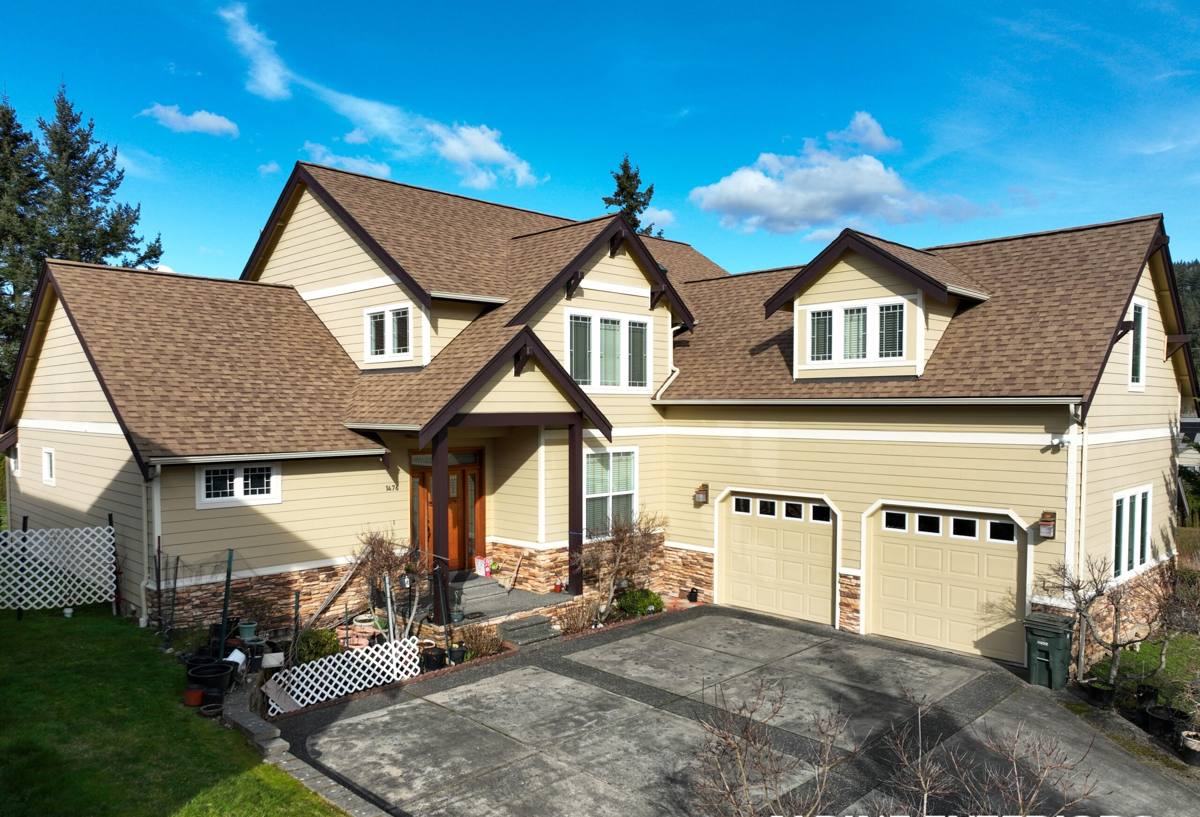
What Whatcom County Weather Does to a Deck Over Time
Every material has a failure point, and in this region the failure point is almost always moisture combined with organic growth. Understanding the mechanism helps explain why the build details matter as much as the decking material itself.
Moss and algae
Whatcom County's moss season runs long — realistically fall through spring, and sometimes year-round on shaded north-facing decks or ones tucked under mature trees. Moss doesn't just look bad; it holds moisture against whatever surface it's growing on, and on wood decking that moisture retention accelerates rot, especially around fasteners and board ends where water already tends to sit longest. On composite boards, moss can still grow on the surface (it's an airborne spore, not something the material invites), but because composite doesn't absorb water into its structure the same way wood does, moss growth stays a surface cleaning issue rather than a structural one.
Driving rain and standing water
Rain here doesn't fall straight down as often as people assume — wind off the water pushes it sideways, which means it gets under railings, into ledger board connections, and into any gap where end grain or fastener heads are exposed. A deck that isn't detailed for drainage will hold water in low spots, and that's where you see the earliest failures: cupping, dark staining, and eventually soft or rotten framing underneath.
Salt air
Lynden is inland enough that salt exposure is lighter than it is right on Ferndale's coastline, but it's not zero — coastal air moves through the whole county, and salt accelerates corrosion on any exposed metal hardware: fasteners, joist hangers, railing brackets. A deck built with the wrong fastener spec will show rust streaks and loosening hardware years before the decking itself shows wear.
Freeze-thaw cycling
Whatcom County doesn't get brutal winters, but it does get repeated freeze-thaw swings — cold snaps followed by rain, followed by more cold. Any water that's trapped in a joint, a screw hole, or a poorly sealed cut end will expand when it freezes, and that's what turns a small crack into a bigger one over a few seasons.
Why Composite Makes Sense for This Climate
Composite decking is made from a blend of wood fiber and recycled plastic, capped (on most quality boards) with a protective polymer shell that seals out moisture. That cap layer is the real advantage in a climate like ours — it means the board isn't absorbing rainwater the way solid wood does, so it doesn't swell, cup, or feed rot from the inside out. It also means staining and sealing, which is an annual or biannual chore with wood decking here, simply isn't part of the maintenance routine.
That doesn't mean composite is maintenance-free — nothing exposed to Whatcom County weather truly is — but it shifts the maintenance from structural upkeep (sanding, sealing, replacing rotted boards) to surface cleaning (washing off moss, pollen, and organic buildup). For most homeowners in Lynden, that trade-off is the whole reason to go composite in the first place.
Composite vs. Pressure-Treated Wood vs. PVC
| Factor | Composite | Pressure-Treated Wood | PVC (cellular) |
|---|---|---|---|
| Moisture absorption | Low, capped boards resist water intrusion | High, absorbs and releases with weather | Very low, fully synthetic |
| Moss/algae response | Grows on surface only, cleans off | Can embed into grain over time | Grows on surface only, cleans off |
| Annual upkeep | Periodic wash | Sand, stain, or seal every 1-2 years | Periodic wash |
| Expansion/contraction | Moderate, needs proper gapping | Moderate, forgiving of minor gaps | Higher, needs careful spacing |
| Upfront cost | Mid to upper-mid | Lowest | Highest |
| Typical warranty | 25-50 years, fade/stain limited | Lumber warranty only, if any | Lifetime on material, limited on fade |
We install composite on the large majority of deck projects in this area because it hits the best balance of upfront cost, low maintenance, and proven performance in wet climates. We'll still build in pressure-treated wood or PVC when a homeowner has a specific reason to prefer them — but we'll walk through the trade-offs honestly rather than push whatever's easiest to sell.
What a Correctly Built Composite Deck Actually Involves
The decking boards get the attention, but most of what determines whether a deck lasts 10 years or 30 happens underneath, in details that are invisible once the project is done. This is where a lot of decks — composite or otherwise — go wrong.
- Framing and structure: Joists and beams sized and spaced to the manufacturer's span rating for composite, not just whatever's "close enough" from a wood-deck spec sheet.
- Ledger board flashing: Proper flashing where the deck attaches to the house, so water is directed away from the band joist and siding rather than trapped behind the ledger — one of the most common rot points on older decks in this region.
- Joist tape: A waterproof membrane over the top of every joist, which keeps rain from sitting directly on cut lumber and starting rot from the top down — cheap insurance that gets skipped on a lot of budget builds.
- Fastener selection: Corrosion-resistant, coastal-rated fasteners and hardware given the salt exposure that moves through this whole county, not just standard-grade screws that'll streak and loosen early.
- Board spacing and ventilation: Correct gapping between boards for drainage and material expansion, plus airflow underneath the deck so moisture doesn't get trapped in the crawlspace below.
- Picture-frame and trim detailing: Cut ends of composite boards capped or trimmed properly, since exposed cut ends are the one place composite can still take on moisture if left unfinished.
- Railing and stair hardware: Brackets and post connections rated for the same coastal exposure as the deck fasteners, since railings take direct weather and structural load.
Our Process, Start to Finish
1. On-site walkthrough
We come look at the actual site — grade, drainage, sun/shade exposure, existing structure if it's a replacement — before we talk numbers. A deck that gets full afternoon sun needs different considerations than one shaded under trees most of the day, especially for moss and algae buildup.
2. Design and material selection
We walk through board profiles, colors, and railing options, and we're straightforward about which composite lines perform best in wet PNW conditions versus ones that look good on a showroom sample but aren't built for this climate.
3. Permitting
Deck projects above certain heights or attached to the home typically require a permit through Whatcom County or the applicable jurisdiction. We handle that process rather than leaving it on the homeowner.
4. Demolition and framing (for replacements)
If we're replacing an old deck, we remove the old structure, inspect the ledger and any posts or footings for rot or settling, and rebuild the framing correctly rather than decking over a compromised substructure — which is a shortcut we won't take even if it's faster.
5. Installation
Joist tape, flashing, fasteners, decking, and railing installed to spec, with attention to the drainage and ventilation details above.
6. Final walkthrough
We walk the finished deck with the homeowner, check fastener lines and spacing, and go over the actual maintenance the specific product needs.
Living With a Composite Deck in a Moss Climate
Composite is low-maintenance, not no-maintenance, and setting realistic expectations up front avoids surprises later. In Whatcom County, that generally means:
- Sweeping off leaves, needles, and organic debris regularly, especially in fall — trapped debris holds moisture against the board surface and is the main driver of surface staining.
- Washing the deck with soap and water (or a manufacturer-approved composite cleaner) once or twice a year to clear moss spores and algae film before they establish.
- Avoiding pressure washers on high settings directly against the board surface, which can damage the cap layer on some composite lines — a soft-bristle brush and hose is usually enough.
- Keeping gutters and downspouts near the deck clear, since overflow directed onto or under the deck defeats the drainage the structure was built with.
- Checking railing posts and stair connections annually for any looseness, since hardware is still the part of the system most exposed to weather.
What Affects the Cost of a Composite Deck in Lynden
| Factor | Why it matters |
|---|---|
| Deck size and shape | Square footage plus complexity — multi-level decks, curves, or picture-frame borders add labor |
| Substructure condition | New footings and framing cost more than decking over an existing sound structure |
| Board tier | Composite lines range from entry-level capped boards to premium high-performance lines with longer warranties |
| Railing system | Composite or aluminum railing typically costs more than basic wood but needs far less upkeep |
| Site access | Grade, tree removal, or tight access can add time and equipment cost |
| Permitting | Height, attachment to the home, and local jurisdiction requirements affect permit scope |
We give a real number after seeing the site — anything quoted sight-unseen is a guess, and guesses tend to be wrong in one direction or the other once the crew is actually there.
A Checklist for Choosing a Deck Contractor in Lynden
- Do they carry current Washington contractor licensing and insurance, and will they show it without hesitation?
- Do they explain why they build the substructure the way they do, or just quote a price and a start date?
- Do they use joist tape and proper ledger flashing as standard practice, not an upsell?
- Can they speak specifically to moss, moisture, and salt-air conditions in Whatcom County, or is their pitch generic?
- Do they pull permits themselves, or leave that on the homeowner?
- Do they give a written scope and material spec, not just a total dollar figure?
Why a Crew That Already Works Lynden Matters
A deck built by a contractor unfamiliar with this specific climate can still look fine on installation day and still have problems in three or four years — undersized drainage gaps, standard fasteners that start rusting, or a ledger connection that wasn't flashed for the amount of driving rain this area actually gets. A crew that already works Ferndale, Lynden, and the rest of Whatcom County has already seen what fails here and builds accordingly from the start, rather than learning the lesson on someone's deck.
That local knowledge also means fewer surprises on permitting, a better read on how sun and shade patterns on a given lot will affect moss growth, and a straight answer about what a deck in this climate actually needs versus what's just upsell.
If you're planning a new composite deck or replacing one that's showing its age, we're happy to come take a look and give you a straightforward, no-pressure estimate — just fill out the form below.