 Ferndale Siding
 Building Decks for Cordata's Marine Climate
Cordata sits close enough to the Whatcom County coastline that homes here deal with a mix of weather most inland deck builders never have to plan around: salt-laden air rolling in off the Salish Sea, long stretches of driving rain, and a moss and algae season that can run eight months or longer. A deck built with generic, one-size-fits-all methods will show its age fast in this environment — soft spots in the decking, rusted fasteners bleeding orange streaks, railings that wobble because a post base rotted from the inside out. A deck built for Cordata specifically holds up to all of that, and looks like it for a lot longer.
This page is about one project type in one area: custom deck construction for homes in and around the Cordata community, a short drive from our Ferndale home base. Everything below reflects how we actually build decks out here, not a generic national checklist.
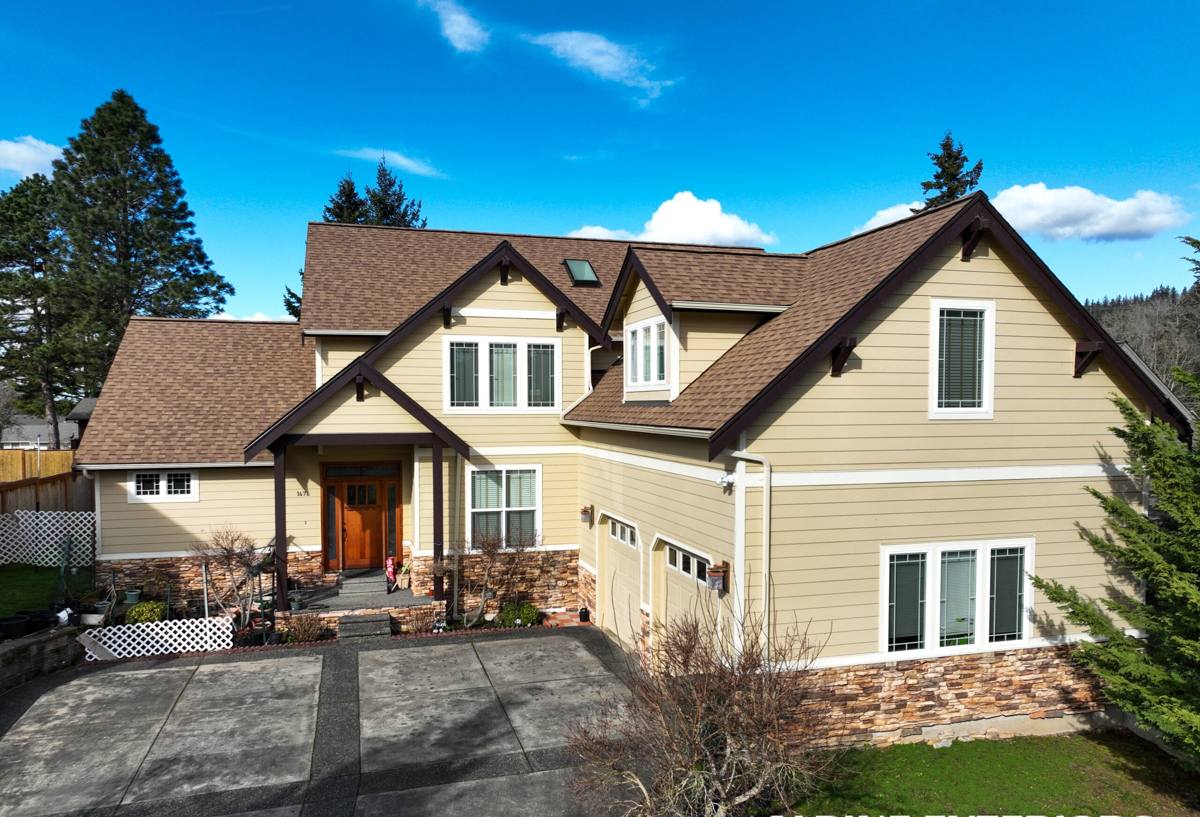
What the Local Climate Actually Does to a Deck
It helps to understand the specific ways this climate attacks a deck, because it changes almost every material and hardware decision.
Moisture that never fully dries out
In a lot of the country, a deck gets rained on and then has weeks of sun and low humidity to dry out between storms. In Whatcom County, that drying window is short. Wood that stays damp for extended periods is where rot, cupping, and fastener corrosion all start — especially in shaded areas under trees or against the house where airflow is limited.
Salt air and metal fatigue
Being close to the water means airborne salt settles on everything outdoors, including your deck's fasteners, brackets, and railing hardware. Salt accelerates corrosion on anything that isn't rated for a marine or coastal environment, which is why standard interior-grade screws and generic galvanized hardware fail here years before they would somewhere drier and further inland.
Moss, algae, and surface buildup
Moss doesn't just look bad — it holds moisture directly against the decking surface and turns walking surfaces slick and dangerous, especially on stairs. A deck design that ignores drainage, airflow, and surface texture is signing up for a moss problem from year one.
Choosing the Right Decking Material for This Area
There's no single "best" decking material — there's a best material for your budget, your maintenance appetite, and how much sun or shade your deck actually gets. Here's how the common options actually perform in a climate like Cordata's.
| Material | Moisture Behavior Here | Maintenance | Typical Lifespan Locally |
|---|---|---|---|
| Cedar | Naturally rot-resistant but still needs sealing to shed constant rain | Annual cleaning and re-sealing recommended | 15-20 years with upkeep |
| Pressure-treated fir/pine | Treated for rot but end cuts and fastener holes are vulnerable if not sealed | Regular sealing, moss removal on shaded sections | 10-15 years with upkeep |
| Capped composite | Doesn't absorb water or rot; surface sheds moss more easily than wood | Occasional wash-down, no sealing or staining | 25+ years, backed by manufacturer warranty |
| Uncapped/budget composite | Can absorb moisture at cut edges over time | Low, but edge sealing on cuts matters | Shorter than capped composite in wet climates |
Our honest take
For a full-sun deck with good airflow, a well-maintained cedar or pressure-treated deck can still look great for years. For shaded decks, north-facing decks, or anyone who doesn't want an annual sealing chore, capped composite is usually the better long-term investment given how much rain and shade this area gets. We'll walk your yard with you and give a straight answer on which fits your specific site — we're not pushing one material because it's easier to sell.
What's Underneath Matters More Than What's On Top
Homeowners often focus on decking boards, but the framing, footings, and connection points are what actually determine whether a deck lasts 10 years or 30 in a climate like this.
Footings sized for local soil and frost conditions
Footings need to be sized and set to the depth required for Whatcom County soil and frost conditions, not guessed at. Undersized or shallow footings are one of the most common causes of a deck that starts to heave, sink unevenly, or feel bouncy within a few years.
Ledger board flashing
The ledger board — where the deck attaches to the house — is the single most common source of hidden rot on an attached deck. Proper flashing, correctly lapped with the house's water-resistive barrier, is what keeps rainwater from running behind the siding and into the wall framing instead of off the deck. This detail is invisible once the deck is finished, which is exactly why it gets skipped by crews trying to save time.
Joist protection
Joist tape or an equivalent moisture barrier over the top of each joist keeps water from pooling in fastener holes and starting rot from the inside of the framing lumber, where you can't see it until it's a structural problem.
Hardware and Fasteners: Where Salt Air Does the Most Damage
Fasteners and structural hardware are small, but they're the parts that fail first in a coastal-influenced climate, and a fastener failure can compromise the whole structure.
| Hardware Type | Coastal Performance | Where We Use It |
|---|---|---|
| Standard zinc-plated | Poor — corrodes quickly with salt air exposure | We don't use this on exterior deck structures |
| Hot-dip galvanized | Good — thicker zinc coating resists corrosion well | Structural connectors, joist hangers, post bases |
| Stainless steel | Best — highly resistant to salt air corrosion | Visible fasteners, railing hardware, ledger bolts |
| Coated composite screws | Good, when matched to the decking manufacturer's spec | Composite decking board fastening |
Mixing incompatible metals also causes galvanic corrosion — a reaction between dissimilar metals that eats away hardware faster than either material would corrode on its own. We match every fastener and connector to the decking and framing material it touches, not just whatever's cheapest at the supply house.
Railings, Stairs, and Code Requirements
Railings and stairs are where most deck injuries happen, and they're also inspected closely because of that. A properly built railing system holds up to the load requirements in the building code, uses baluster spacing that meets code, and is anchored into structural framing — not just screwed into decking boards. Stair stringers need to be sized correctly for the rise and run, and in a climate this wet, stair treads benefit from a decking material or surface texture that stays gripable when damp, since stairs are usually the first place moss and algae take hold.
Our Process for a Cordata Deck Project
- On-site consultation. We walk your yard, assess sun/shade exposure, drainage, soil, and how the deck will connect to your house.
- Design and material selection. We go over decking material, railing style, and layout options based on your budget and how you'll actually use the space.
- Permitting. Deck construction in Whatcom County typically requires a permit; we handle that process rather than leaving it on the homeowner.
- Footings and framing. Footings are dug and set to the required depth, framing goes in with properly flashed ledger connections and joist protection.
- Decking, railing, and stairs installed. Fasteners and hardware are matched to the materials used, not generic hardware store stock.
- Final walkthrough. We inspect the finished deck with you and go over any maintenance recommendations specific to your site's sun and shade exposure.
Keeping a New Deck Ahead of the Moss
A well-built deck still needs some seasonal attention in this climate. This is the same list we give our own deck clients:
- Sweep leaves and debris off the deck surface regularly, especially in fall — trapped debris holds moisture against the boards.
- Clean moss and algae off the surface before it builds up, particularly on shaded sections and stair treads.
- Keep gutters and downspouts near the deck clear so runoff isn't draining directly onto or under the structure.
- Check railing posts and stair connections once a year for any looseness or hardware corrosion.
- If you have wood decking, plan on cleaning and re-sealing on the schedule your material actually needs — don't wait until it's visibly gray and worn.
- Trim back vegetation that's shading the deck and keeping it damp longer than it needs to be.
Why Hire a Crew That Already Works in Cordata
A deck built by a crew unfamiliar with this area's rain patterns, soil, and moss cycle is a deck that gets designed like it's going somewhere drier. We build decks in this climate regularly, which means the footing depths, flashing details, fastener choices, and material recommendations above aren't theoretical — they're what we actually do on every project, because we've seen what happens when they're skipped. That local familiarity is the difference between a deck that needs real repair work in five years and one that's still solid in twenty.
If you're planning a custom deck in Cordata or anywhere else around Ferndale, we're happy to come take a look and give you a straightforward, no-pressure estimate — just fill out the form below.