 Ferndale Siding
 Siding That Has to Earn Its Keep in Cordata
Cordata sits in a part of Whatcom County where the weather doesn't take a season off. Homes here deal with salt-tinged air rolling in off the water, months of driving rain that finds every weak seam in a wall system, and a moss season that stretches far longer than most of the country ever has to think about. Siding that looks fine going up can start failing quietly within a few years if it isn't matched to that reality. We install James Hardie fiber cement siding in this area because it's the one product we trust to hold its line, its finish, and its warranty under these exact conditions.
This page is specifically about fiber cement siding for Cordata properties — what the climate actually does to a wall assembly here, what a correct installation looks like, and how our process is built around the problems this neighborhood's weather causes.
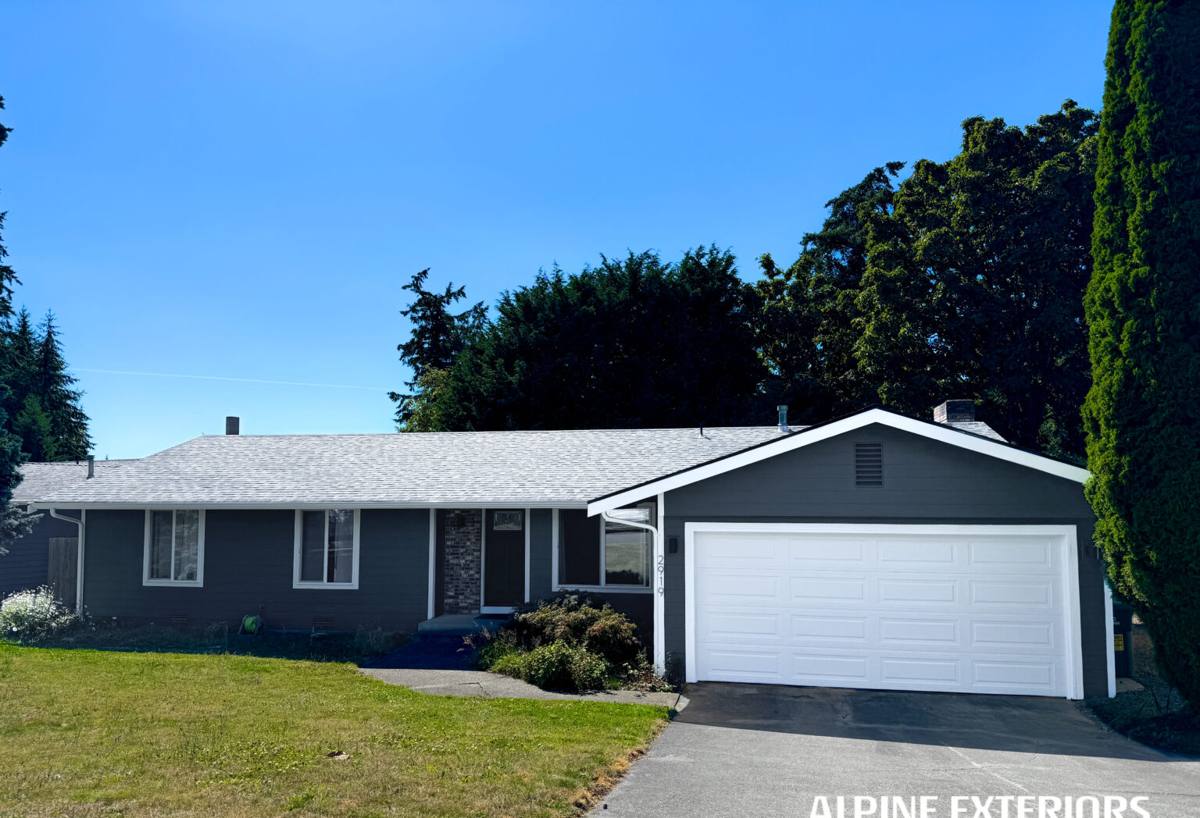
What Cordata's Climate Does to Siding Over Time
Salt Air and Moisture
Whatcom County's proximity to the water means siding, trim, and fasteners are exposed to airborne salt and near-constant humidity, even on days without rain. Salt-laden moisture accelerates corrosion in cheap fasteners and trim, and it works into any material that isn't dimensionally stable — swelling wood fibers, softening OSB-based products, and dulling paint faster than it would inland.
Driving Rain and Wind-Driven Wetting
Rain in this region rarely falls straight down. Wind-driven rain pushes water sideways into laps, seams, and trim joints, which is exactly where most siding failures start. A wall system that isn't detailed correctly behind the siding — proper flashing, house wrap, and drainage gaps — will trap that moisture instead of shedding it, and the damage happens where you can't see it until it's serious.
A Long Moss Season
Between the rainfall totals and the tree cover common around Cordata, many homes stay shaded and damp for a large part of the year. That's a long moss and algae season by almost any national standard. Wood-based sidings give moss something to root into; painted surfaces that trap moisture underneath give it a place to spread unseen. Siding here needs a surface that doesn't feed organic growth and a finish that doesn't need re-coating every few years to keep up with it.
Why Fiber Cement Holds Up Where Other Materials Struggle
Fiber cement is made from cellulose fiber, sand, and Portland cement, pressed and cured into a dense, dimensionally stable board. It doesn't expand and contract with moisture the way wood does, it isn't a food source for moss and mildew the way wood fiber and some engineered wood products are, and it holds paint and factory finishes far longer because the substrate underneath stays stable. It's also non-combustible, which matters more every year as wildfire season creeps further into the Pacific Northwest's calendar. For a neighborhood dealing with salt air, wind-driven rain, and a long wet season, those properties aren't a marketing point — they're the actual reason the material performs.
Why We Only Install James Hardie Fiber Cement
Not all fiber cement is engineered the same way, and we've standardized on James Hardie specifically rather than treating fiber cement as a generic category. James Hardie's HZ5 product line is engineered for exactly this kind of climate — freeze-thaw cycling, sustained moisture exposure, and coastal-influenced air. Their ColorPlus finish is baked on in a controlled factory process, which gives it far better fade and wear resistance than a field-applied paint job, and it carries a stronger, more clearly defined warranty than most job-site-painted alternatives. We don't install LP SmartSide, vinyl, cedar, or lower-tier fiber cement brands, because we've seen what this climate does to products that weren't built with it in mind, and we're not willing to put our name on a wall we don't expect to still look right in fifteen years.
What a Correct Fiber Cement Installation Involves
Moisture Management Behind the Siding
The siding itself is only part of the system. Correct installation starts with a properly lapped weather-resistant barrier, flashing at every window, door, and horizontal transition, and a drainage plane that lets any moisture that does get behind the cladding find its way back out instead of sitting against the sheathing. This is the part of the job that's invisible once it's done — and it's also the part most responsible for whether a wall stays dry for the next thirty years.
Fastening, Clearances, and Joints
James Hardie specifies exact fastener types, spacing, and penetration depth for a reason — get it wrong and you either split boards or leave fasteners that back out and let water in. Butt joints need to be flashed or caulked to manufacturer spec, not just butted tight and painted over. Ground clearance and clearance from roof lines, decks, and hardscaping also matter more here than in drier climates, since anything siding that sits too close to standing moisture or splash-back stays damp longer and invites the moss and mildew this area is already prone to.
The ColorPlus Factory Finish
When a home is finished in a ColorPlus color, the goal is to avoid field-painting it at all — cut edges get factory-matched touch-up product, not a repaint. That preserves the factory finish's warranty and its superior fade resistance. Installers who aren't used to working with ColorPlus product sometimes treat it like primed siding that needs a full paint job after install, which defeats the point of choosing it in the first place.
How Our Process Works on a Cordata Home
Assessment and Planning
We start by walking the exterior to check the condition of the existing wall assembly — sheathing, trim, window flashing, and any areas already showing moisture or moss damage. This tells us whether it's a straightforward re-side or whether there's underlying repair work to address first, which is common on older homes in wetter neighborhoods where problems have had time to develop unnoticed.
Tear-Off and Prep
Old siding and damaged trim come off, sheathing gets inspected and repaired where needed, and the weather-resistant barrier and flashing details go in correctly before a single piece of new siding is hung. This is the step that gets skipped or rushed on lower-bid jobs, and it's the step that determines whether the new siding actually outperforms the old.
Installation
Boards, panels, and trim go up to James Hardie's fastening and clearance specifications, with attention to butt joints, penetrations, and transitions — the exact details that determine how the wall handles wind-driven rain over the following decades.
Final Walkthrough
We walk the finished exterior with the homeowner, check caulking and touch-up work, and go over basic care so the siding performs the way it's designed to from day one.
Comparing Siding Options for This Climate
| Material | Moisture & Moss Resistance | Salt Air Durability | Maintenance Burden |
|---|---|---|---|
| James Hardie Fiber Cement | Strong — dense, stable substrate resists moisture and moss growth | Strong — corrosion-resistant fastening specs, stable finish | Low — factory finish, no repainting cycle needed |
| Vinyl Siding | Sheds surface water but traps moisture behind panels; can warp | Can become brittle and fade faster near salt air over time | Low upfront, but limited repair options if damaged |
| Cedar / Wood | Absorbs moisture, prone to rot and moss without constant upkeep | Salt air accelerates weathering and finish breakdown | High — regular staining, sealing, and moisture monitoring |
| Engineered Wood (LP SmartSide) | Better than raw wood but still moisture-sensitive at cut edges and seams | Moderate — depends heavily on correct sealing and upkeep | Moderate — edge sealing and finish maintenance required |
What Drives the Cost of a Fiber Cement Project
Every home is different, so we price projects individually after a walkthrough rather than quoting off square footage alone. The factors below are what typically move a project up or down in scope and cost.
| Cost Factor | Why It Matters |
|---|---|
| Condition of existing sheathing and framing | Hidden moisture damage found during tear-off adds repair work before new siding can go on |
| Home size and number of stories | More surface area and taller walls mean more material and staging time |
| Trim, window, and roofline complexity | Detailed flashing and cutting around dormers, bays, and multiple rooflines takes more labor |
| Siding profile and finish choice | Lap width, panel style, and ColorPlus color selection affect material cost |
| Site access | Tight lots, slopes, or landscaping close to the house can affect staging and cleanup |
Why Hiring a Crew That Already Works This Area Matters
A crew that installs siding across Whatcom County regularly already knows how this region's rain and moss patterns behave against a wall, which is different from what a contractor coming from a drier or milder climate is used to planning for. That familiarity shows up in small decisions — where extra flashing attention pays off, how much clearance to leave near shaded, slow-drying areas of a lot, and which details tend to get neglected on homes that see this much sustained moisture. It also means we're not learning Whatcom County's weather on your project.
Keeping Your New Siding Looking Right
Fiber cement is low-maintenance compared to wood or vinyl, but "low-maintenance" isn't "no-maintenance," especially in a climate this wet. A short annual routine keeps a Hardie exterior performing the way it's designed to:
- Rinse the exterior with a garden hose once or twice a year to clear pollen, salt residue, and early moss growth before it takes hold
- Keep gutters clear so overflow doesn't run down the siding face or pool at the base of a wall
- Trim back trees and shrubs that keep sections of siding shaded and damp for extended periods
- Inspect caulking at joints and trim yearly and have any cracked or missing sections resealed
- Address any chip or scratch that exposes bare substrate promptly with factory-matched touch-up product
- Watch for moss or algae at ground-level sections and shaded corners, and clean it early rather than letting it establish
If your Cordata home's siding is showing moss, moisture staining, or paint failure, or you're planning ahead for a replacement, we're glad to walk the exterior with you and give a straightforward, no-pressure estimate — just fill out the form below.