 Ferndale Siding
 Why Cordata Homes Need a Metal Roof Built for This Climate
Cordata sits close enough to the water and to open farmland that homes here take a different kind of weather beating than roofs a few miles inland. Salt-laden air moving off the Strait works its way into fastener heads and cut edges over time. Driving rain, pushed sideways by wind rather than falling straight down, finds every weak lap and undersized flashing detail. And the long, damp shoulder seasons that define Whatcom County winters keep roof surfaces wet for weeks at a stretch — exactly the conditions moss needs to take hold. A roof that would hold up fine in a drier climate can start showing problems here within a few years if it wasn't detailed for this specific mix of exposure.
Metal roofing, installed correctly, handles all three of those stressors better than most other roofing materials available at a comparable price point. But "installed correctly" is doing a lot of work in that sentence — a metal roof is only as good as its flashing, fastening, and ventilation details, and those details change depending on what a house is actually exposed to.
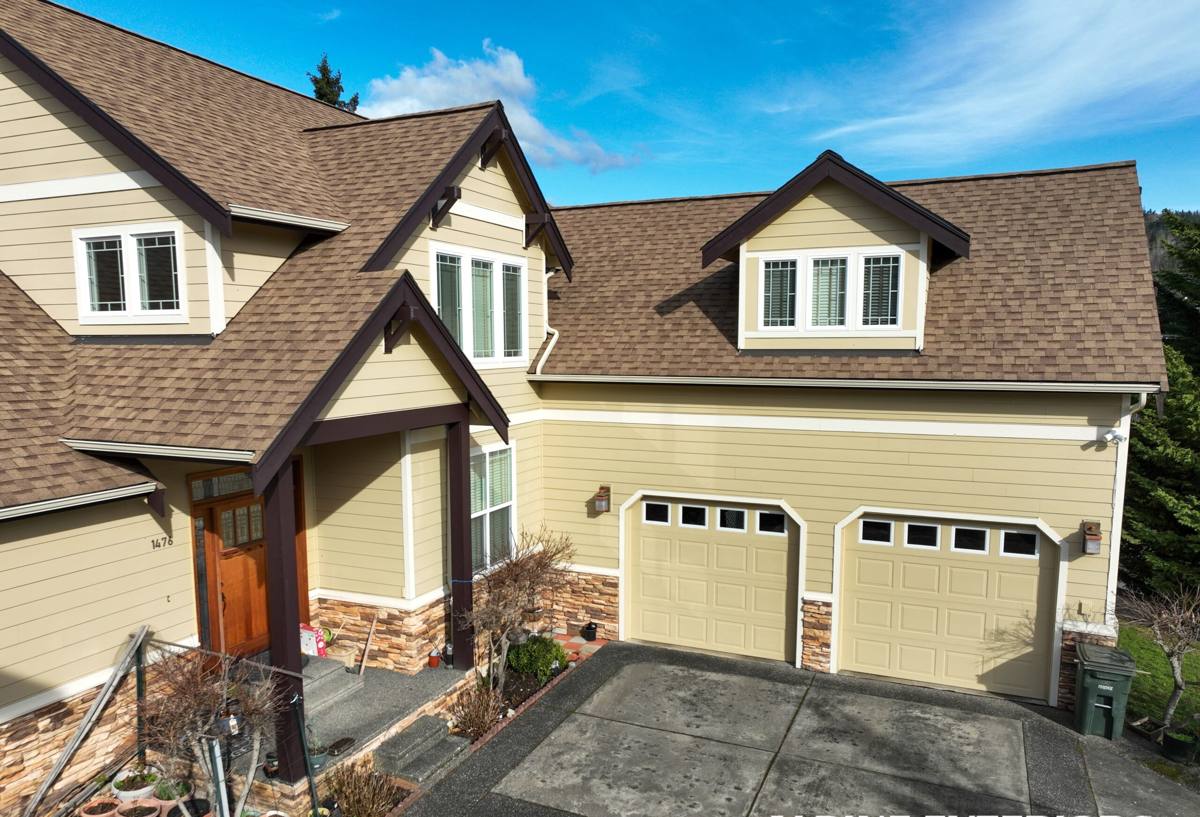
What a Correct Metal Roofing Installation Actually Involves
Metal roofing gets sold as a simple, low-maintenance upgrade, and it can be — but a rushed or generic install undercuts most of the benefit. A correct job on a home in this area covers a few things that are easy to skip and hard to notice until they fail:
- Underlayment matched to exposure. A synthetic, high-temp underlayment (or ice-and-water membrane at eaves, valleys, and penetrations) gives the roof a real second line of defense if wind-driven rain gets past the panels.
- Fasteners and flashing metal that won't corrode against the panel. Mixing incompatible metals invites galvanic corrosion, which is a bigger problem near the coast than inland.
- Proper panel overlap and seam direction relative to the prevailing wind and water flow on that specific roof plane, not just a standard layout.
- Closed or vented ridge details that keep wind-driven rain out while still allowing the attic to breathe.
- Ice-and-water shield at valleys, eaves, and any low-slope transitions, where standing water and freeze-thaw cycling do the most damage.
None of this is exotic. It's the difference between a panel job that looks right on install day and one that's still tight ten and twenty years later.
Comparing Metal Roofing Options for Cordata Homes
Not every metal roofing system fits every house or budget. Here's how the common options stack up for a home dealing with this area's rain and salt-air exposure:
| System | Best For | Coastal/Moisture Performance | Trade-Offs |
|---|---|---|---|
| Standing seam | Homes wanting the longest service life and cleanest look | Excellent — concealed fasteners, no exposed penetrations to leak or corrode | Higher upfront cost; installation is more labor-intensive and installer-skill dependent |
| Exposed-fastener panel (screw-down) | Budget-conscious projects, outbuildings, some roof pitches | Good if fasteners are gasketed and re-torqued over time; gaskets do wear | Exposed screws are the first thing to fail if maintenance lapses |
| Stone-coated steel | Homeowners who want a shingle or shake look with metal's durability | Good — coating adds a wear layer, but installation detailing still matters most | Costs more than exposed-fastener panel; fewer installers locally are experienced with it |
For most Cordata homes, we lean toward standing seam or a properly detailed exposed-fastener system depending on budget and roof complexity — we'll walk the actual roof with you before recommending either.
How Metal Roofing Stands Up to Salt Air, Rain, and Moss
Salt Air
Salt-laden moisture accelerates corrosion on any metal that isn't rated for it. Quality steel and aluminum panels come with factory finishes designed to resist this, but the fasteners, flashing, and trim pieces used around them matter just as much as the panel itself. We use fastening and flashing hardware compatible with the panel system so the whole roof ages at the same rate, rather than having trim pieces fail years before the panels do.
Driving Rain
Wind off the water doesn't let rain fall straight down — it pushes it sideways and up under laps that would stay dry in calmer weather. That's why underlayment quality and flashing detail at valleys, walls, and penetrations matter more here than the panel spec sheet does. A roof that's rated for a given wind and water resistance on paper still depends on every seam being installed to that standard.
Moss and Sustained Moisture
Metal roofing doesn't give moss the organic surface it needs to root the way wood shakes or aging composition shingles do, which is a real advantage through Whatcom County's long wet season. It isn't moss-proof on its own, though — debris, overhanging branches, and shaded north-facing planes can still collect enough organic buildup to let moss and algae get a foothold over time. Panel choice helps; keeping the roof clear of debris helps more.
Our Metal Roofing Process, Step by Step
- On-site assessment. We look at your existing roof deck, ventilation, flashing points, and any trouble spots — not just the surface material.
- System recommendation. Based on your roof's pitch, exposure, and budget, we recommend a panel type and layout, and explain the trade-offs honestly.
- Deck prep. Any soft, rotted, or undersized decking gets addressed before anything goes down — metal panels won't fix a bad substrate.
- Underlayment and ice-and-water membrane installation at all the vulnerable points: eaves, valleys, penetrations, and low-slope transitions.
- Panel installation, with seams and overlaps run to shed water in the direction it actually moves on your roof, not just by default layout.
- Flashing, trim, and ventilation details finished to match the panel system so the whole roof performs as one assembly.
- Final walkthrough and cleanup, including a magnetic sweep for stray fasteners and debris removal.
Ventilation and Attic Health Matter as Much as the Panels
A metal roof that's watertight on the outside can still cause problems if the attic underneath isn't ventilating properly. Trapped moisture from daily household use condenses against the underside of a cold roof deck in our climate, and over a wet Whatcom County winter that can lead to deck rot or insulation damage even with a perfectly good roof surface above it. Part of a correct metal roof installation is confirming intake and exhaust ventilation are balanced — ridge vents, soffit vents, or both, sized for the attic volume — before we close everything up. It's an easy thing to skip and one of the most common causes of "why is my new roof having problems" calls in this region.
What Metal Roofing Costs and What Drives the Price
Metal roofing costs more upfront than asphalt shingles, but the gap has narrowed as shingle prices have climbed, and metal typically outlasts shingles by decades. Rough, honest cost drivers for a Cordata-area project:
| Factor | Why It Moves the Price |
|---|---|
| Panel system (exposed-fastener vs. standing seam) | Standing seam requires more labor and specialized tooling, which shows up in the bid |
| Roof complexity (valleys, dormers, penetrations) | More flashing detail work means more labor hours regardless of panel type |
| Tear-off vs. overlay | Removing old roofing adds cost but lets us inspect and repair the deck underneath |
| Ventilation upgrades | Adding or correcting intake/exhaust venting is often bundled in during a re-roof for good reason |
| Panel material and finish | Steel, aluminum, and coating grade all affect both price and corrosion resistance |
We won't quote a number without seeing the roof — pitch, access, deck condition, and existing layers all move the price more than most homeowners expect.
Keeping Your Metal Roof Performing for Decades
Metal roofing is genuinely low-maintenance compared to shingles, but "low-maintenance" isn't "no-maintenance." A short annual routine keeps a well-installed metal roof performing the way it's supposed to:
- Clear debris from valleys and around penetrations, especially after fall leaf-drop and windstorms
- Trim back overhanging branches that shade the roof and hold moisture against it
- Check exposed fasteners (if applicable) for backing out or gasket wear every few years
- Look for moss or algae starting on shaded, north-facing planes and address it early
- Confirm gutters are clear so water isn't backing up against eave flashing
- After any major windstorm, do a visual check for lifted trim or panel edges
Why a Crew That Already Works Cordata Makes a Difference
Roofing details that work fine in a mild, dry climate don't always hold up here, and a crew that mostly works other regions can miss that. Knowing how wind actually moves across roofs in this part of Whatcom County, which panel systems hold up against salt air without excessive maintenance, and where moss tends to establish first on local homes isn't something you get from a spec sheet — it comes from doing the work here repeatedly and seeing what actually fails and why. That local pattern recognition is what separates a roof that looks good on install day from one that's still performing correctly in fifteen years.
If you're weighing a metal roof for your Cordata home, we're happy to take a look and give you a straight assessment — no pressure, no upsell, just an honest read on what your roof actually needs. Reach out for a free estimate using the form below.