 Ferndale Siding
 Roofing in Custer Isn't the Same Job as Roofing Inland
Custer sits close to the water, tucked between Ferndale and the Canadian border in Whatcom County, and that location shapes what a roof has to survive here. Salt-laden air moves in off the Strait of Georgia and Puget Sound, driving rain comes in sideways more often than it falls straight down, and shaded, tree-lined lots hold moisture long after a storm passes. An asphalt shingle roof built for a drier inland climate will underperform here — not because the shingle itself is bad, but because the installation details that matter most in Custer are different from what a contractor working in Spokane or even Bellingham's drier pockets would prioritize.
This page is about doing one job right in one place: asphalt shingle roofing for homes in and around Custer. Not a general overview of roofing everywhere — the specifics that actually matter for this stretch of Whatcom County.
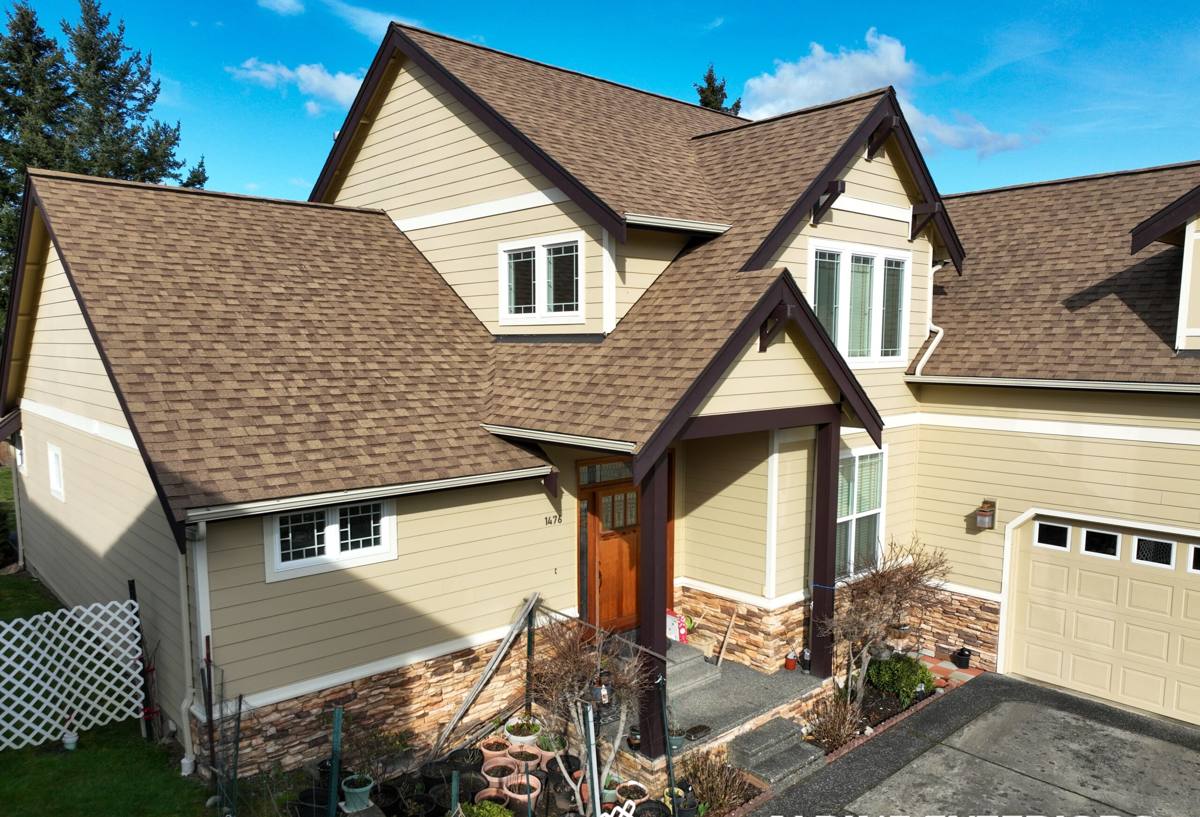
What Custer's Climate Actually Does to a Roof
Salt Air and Metal Fatigue
Salt air accelerates corrosion on anything metal — flashing, nail heads, vent boots, gutter hardware. Cheap or improperly coated fasteners and flashing can start showing rust streaks and pinhole leaks years before they should. It's a slow problem, which is exactly why it gets missed: nothing looks wrong until water finds a gap.
Driving Rain and Wind-Driven Moisture
Rain that comes in at an angle tests every seam, lap, and flashing detail differently than straight-down rain does. Underlayment coverage, shingle overlap, and how flashing is integrated at valleys, walls, and penetrations matter more here than the shingle brand printed on the wrapper.
Moss and Shade
Custer's mix of mature trees and marine humidity creates long moss seasons — often close to year-round on north-facing slopes or roofs shaded by conifers. Moss isn't just cosmetic. It holds moisture against the shingle surface, lifts edges as it grows, and works its way under tabs, which shortens the life of an otherwise sound roof.
What a Correctly Installed Asphalt Shingle Roof Needs Here
A roof that's going to hold up in this climate needs a handful of details done right, every time — not as upgrades, but as the baseline:
- Ice and water shield at eaves, valleys, and penetrations — the areas most exposed to wind-driven rain and ice damming during cold snaps.
- Full synthetic underlayment across the field, not just felt paper, for a longer-lasting moisture barrier under the shingles.
- Corrosion-resistant flashing and fasteners rated for coastal or marine-exposure use, especially on homes within a mile or two of the water.
- Balanced attic ventilation — intake at the eaves and exhaust at the ridge — so trapped heat and moisture don't cook the shingles from underneath or feed moss growth from the inside out.
- Proper nailing pattern and placement per the manufacturer's wind-rating requirements, since under-nailed shingles are the most common cause of early wind lift and warranty denial.
- Clean valley and flashing integration at every roof-to-wall and roof-to-chimney transition, sealed and layered correctly rather than caulked over as an afterthought.
None of this is exotic. It's the difference between a roof installed to a checklist and one installed by a crew that understands why each step matters in this specific climate.
Signs a Custer Roof Needs Attention
Homeowners often wait for an active leak before calling anyone, but by then the damage usually extends past the shingles. Worth checking for, or asking a contractor to check for, before it gets to that point:
- Moss or dark algae streaking, especially on shaded or north-facing slopes
- Granules collecting in gutters or at downspout outlets
- Curling, cracking, or lifted shingle edges
- Rust staining around flashing, vent boots, or nail heads
- Soft spots or sagging when walked (only ever assessed by a roofer, not a homeowner on a ladder)
- Daylight visible through the attic decking, or damp insulation near the roofline
Any one of these on its own might be minor. Two or three together usually means it's time for a real inspection rather than a patch.
Choosing the Right Shingle for This Climate
Not every asphalt shingle product is equally suited to a marine, moss-prone climate. The differences that actually matter for a Custer roof come down to wind rating, granule quality, and algae resistance — not brand marketing.
| Shingle Type | Typical Wind Rating | Moss/Algae Resistance | Best Fit |
|---|---|---|---|
| Standard 3-tab | 60–70 mph | Basic; algae-resistant granules optional | Budget-conscious projects on less exposed roofs |
| Architectural (laminate) | 110–130 mph | Usually includes algae-resistant (AR) granules | Most Custer homes — the practical baseline given local wind and moisture |
| Premium/designer laminate | 110–150 mph | Enhanced AR granules, heavier mat | Homes with heavy tree cover, steep pitches, or longer-term ownership plans |
We generally steer Custer homeowners toward architectural shingles with algae-resistant granules as the practical starting point — the wind rating and granule durability earn their keep in this climate, and the cost difference over a standard 3-tab is modest relative to the life of the roof. Premium lines make more sense on heavily shaded lots where moss pressure is constant.
Our Process on a Custer Roofing Project
- On-site inspection — we look at the existing roof, decking condition, ventilation, and any moss or moisture patterns specific to the lot's sun exposure and tree cover.
- Honest tear-off vs. overlay assessment — overlaying over failing shingles or damaged decking just hides a problem; we'll tell you plainly when a full tear-off is the only responsible option.
- Decking repair as needed — any soft, rotted, or delaminated sheathing gets replaced before a single shingle goes down.
- Underlayment and flashing installation — ice and water shield at vulnerable areas, synthetic underlayment across the field, corrosion-resistant flashing throughout.
- Shingle installation to manufacturer wind-rating specs — correct nail pattern, exposure, and starter course detail.
- Ventilation check and correction — intake and exhaust balanced so the attic isn't trapping moisture that feeds future moss growth.
- Site cleanup and magnetic sweep — debris and stray fasteners cleared from the yard and driveway.
- Walkthrough and warranty paperwork — what's covered, for how long, and what maintenance keeps that coverage valid.
What Affects the Cost
Every roof is priced on its own specifics, but the same handful of factors drive most of the variation we see on Custer homes:
| Factor | Why It Matters Here |
|---|---|
| Roof pitch and complexity | Steeper pitches and multiple valleys take longer and use more flashing and underlayment |
| Tear-off vs. overlay | Tear-off costs more upfront but is often the only sound option once moss or moisture damage is present |
| Decking condition | Rotted or soft sheathing found during tear-off adds material and labor to replace |
| Shingle tier | Architectural and premium lines cost more per square but carry better wind ratings and AR granules |
| Tree cover and access | Overhanging branches, steep driveways, and tight access affect setup time and safety measures |
| Ventilation upgrades | Adding or correcting intake/exhaust venting during the same job is far cheaper than doing it later |
Living With Moss Season: A Maintenance Checklist
Even a correctly installed roof needs some upkeep in a climate like Custer's. This isn't about creating work — it's the short list that actually extends a roof's life here:
- Have moss physically removed (not just chemically treated) every 1–2 years on shaded slopes
- Keep gutters clear so water doesn't back up under the shingle edge
- Trim back overhanging branches to reduce shade and debris buildup
- Check attic ventilation isn't blocked by insulation or storage
- Have flashing and vent boots inspected every few years for early rust or gaps
- Address small leaks immediately — in this climate, a small leak rarely stays small
Why Hiring a Crew That Already Works Custer Matters
Custer isn't a big market, and that's part of the point. A contractor who regularly works this stretch of Whatcom County already knows which slopes hold moss longest, which flashing details tend to fail first in salt air, and what ventilation setups actually work in homes built decades apart under different codes. That local pattern recognition is worth more than a generic estimate from a crew that mostly works somewhere drier or further from the water. It means fewer surprises during tear-off, and a roof spec'd for the conditions it will actually face rather than a one-size-fits-all package.
If you're weighing a repair against a full replacement, or just want a straight answer on what your roof actually needs, we're happy to take a look and give you a free, no-pressure estimate — no obligation, just an honest read on where your roof stands. Fill out the form below to get started.