 Ferndale Siding
 Windows Built for Custer, Not Just "the Northwest"
Custer sits close enough to Puget Sound and Birch Bay that homes here take on a specific mix of weather: salt-laden air moving in off the water, wind-driven rain that hits siding and window frames sideways instead of straight down, and a long, damp moss season that keeps everything shaded and slow to dry. Windows that are marketed as "energy-efficient" in a catalog don't automatically hold up to that combination. A window rated well for a dry climate can still fail early in Custer if the flashing detail, frame material, or seal wasn't chosen with local conditions in mind.
This page is about one thing: replacing or upgrading windows on Custer homes so they actually perform — lower energy bills, no fogging or rot, and a install that's built to handle what this specific stretch of Whatcom County throws at it year-round.
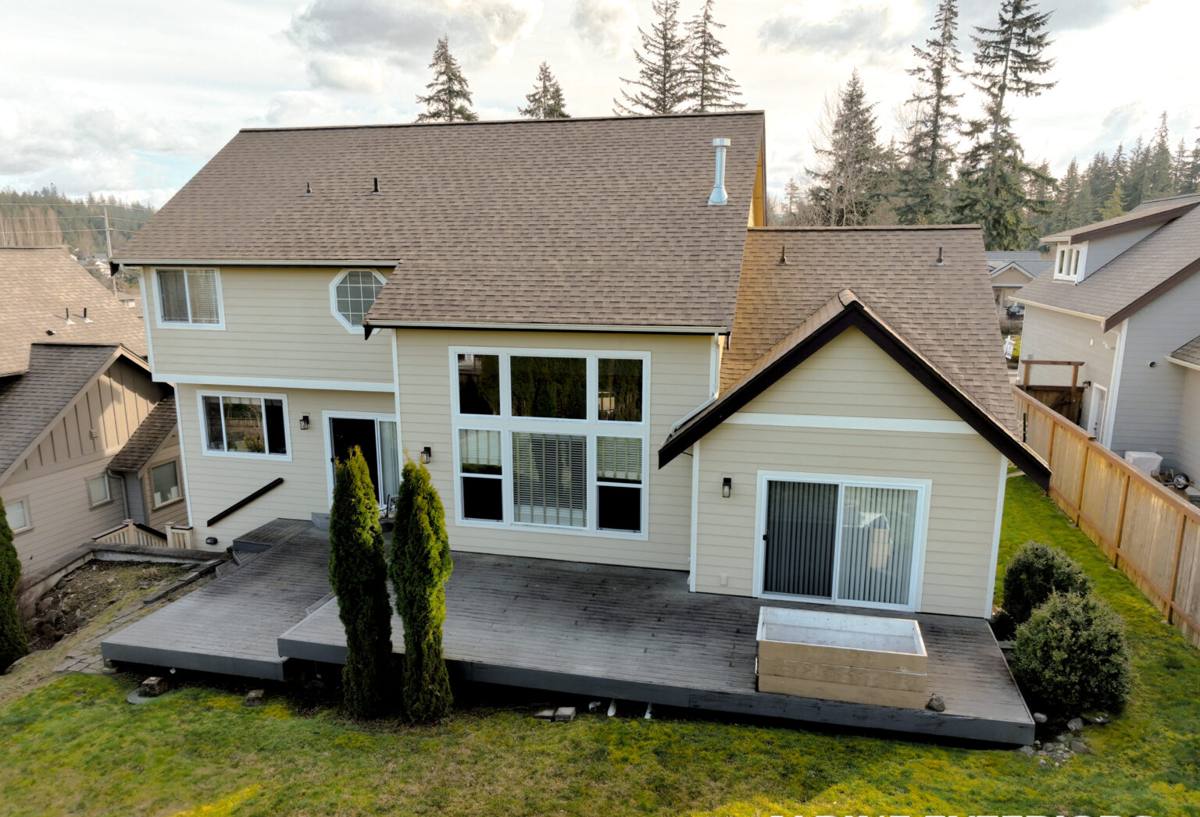
What Custer's Climate Actually Does to Windows
Salt Air
Proximity to the Strait of Georgia and Puget Sound means airborne salt is a real factor on the west-facing and north-facing sides of Custer homes. Salt accelerates corrosion on hardware — hinges, locks, cranks, and lesser-grade aluminum components — and it can degrade some sealants faster than manufacturers' standard warranties assume. Windows with corrosion-prone hardware or unprotected metal parts show pitting and stiff operation years before they should.
Driving Rain
Rain in this part of Whatcom County rarely falls straight down. Wind pushes it sideways and up under trim, sills, and poorly sealed flashing. A window can have a great energy rating on paper and still leak, because the leak isn't about the glass — it's about how the unit was flashed and sealed into the wall. This is one of the most common failure points we see on older Custer installs.
Moss Season
Long stretches of overcast, damp weather mean wood trim and sills around windows stay wet longer than they would in a drier climate, and moss and algae get a foothold on north-facing frames and sills that don't get direct sun. That constant moisture is hard on wood-frame windows and on any caulk or sealant that isn't rated for sustained damp exposure.
Signs Your Custer Home's Windows Are Losing You Money
- Cold drafts near the window frame even when the window is fully latched
- Condensation or fog forming between the panes (a sign the seal has failed)
- Visible daylight or air movement around the trim when you run a hand along the edge
- Soft, discolored, or swelling wood on the sill or lower frame
- Windows that are hard to open, close, or lock — a sign of frame warping or hardware corrosion
- A noticeable jump in heating costs compared to similarly sized rooms in the home
- Visible moss, algae, or black staining building up on the sill or lower sash
Any one of these on its own might not mean much. Two or three together, especially on the side of the house that faces prevailing weather, usually means the window is no longer doing its job.
What Actually Makes a Window Energy-Efficient
"Energy-efficient" gets used loosely in this industry. For a Custer home, three things determine whether a window actually performs: the glass package, the frame material, and — just as important — how well it's installed and sealed into the wall. A high-end window installed poorly will underperform a mid-grade window installed correctly.
Glass
Double-pane glass with a low-E coating and an insulated (argon or krypton-filled) gap is the baseline we recommend for this climate. The low-E coating reflects heat back into the home in winter and blocks excess solar heat gain on south and west exposures in summer. For rooms that face driving weather directly, we also look at the U-factor and air infiltration rating, not just the marketing label.
Frame Material
Frame choice matters more here than in drier inland climates because the frame is what's directly exposed to salt air and driven rain year-round.
| Frame Material | How It Handles Custer's Climate | Maintenance |
|---|---|---|
| Vinyl | Won't rot or corrode from salt air; performs well against moisture | Low — occasional cleaning |
| Fiberglass | Very stable in wet, salty, temperature-swinging conditions; strong long-term seal retention | Low |
| Aluminum (standard) | Prone to corrosion and heat loss unless thermally broken; a poor fit for salt-exposed sides of a home | Moderate to high |
| Wood | Attractive but vulnerable to moisture and rot in a climate with a long damp season, unless well-clad and maintained | High |
| Wood-clad (vinyl or fiberglass exterior) | Wood interior look with a weather-resistant exterior shell; good middle ground | Moderate |
The Installation Itself
This is where most window failures in this region actually start. Correct flashing (installed to shed water down and out, never trapping it behind the trim), proper sill pan detailing, and sealants rated for sustained damp and salt exposure are what keep a good window performing for decades instead of ten years. We treat the installation detail as equally important as the window brand — because in Custer's weather, it is.
Our Process for a Custer Window Job
- On-site assessment: We look at each window's exposure — which sides face prevailing wind and rain, which stay shaded and damp longer, and where existing moisture or hardware damage already shows.
- Product recommendation by exposure: Not every window on the house needs the same spec. Salt- and rain-exposed sides often get a different frame or sealant approach than sheltered sides.
- Removal and inspection: Once the old window is out, we check the surrounding framing and sheathing for hidden moisture damage before anything new goes in. This step catches problems that aren't visible from outside.
- Correct flashing and sealing: Sill pan, flashing tape, and sealant rated for this climate — installed so water is directed out, not trapped.
- Window installation and air-seal check: The unit is set, shimmed level and plumb, and insulated around the frame to close air gaps without over-compressing the frame.
- Final walkthrough: Operation, locks, and seals checked with the homeowner before we consider the job done.
Why It Matters That We Already Work in Custer
A crew that works Custer and the Ferndale area regularly already knows which sides of a home typically take the worst weather, what a healthy sill looks like versus one that's been slowly failing for years, and which flashing and sealant approaches actually hold up through a full Whatcom County winter — not just what a spec sheet claims. That local repetition matters more than it sounds like it should: it's the difference between a crew guessing at a fix and one that's already seen the same failure pattern on the house down the road.
It also means straightforward logistics — accurate scheduling, no long mobilization delays, and a crew that's realistic about weather windows for exterior work in this area rather than working off a generic regional timeline.
What Affects the Cost of a Custer Window Project
| Factor | Why It Affects Cost |
|---|---|
| Frame material | Vinyl is typically the most budget-friendly; fiberglass and wood-clad options cost more upfront but often cost less in long-term maintenance |
| Number of windows replaced at once | Doing multiple windows in one project usually reduces per-window labor and mobilization cost |
| Exposure and flashing complexity | Windows on the weather-exposed sides of the home may need more detailed flashing work, which adds labor time |
| Existing damage | If old moisture damage is found in the framing during removal, repair is needed before the new window goes in |
| Glass upgrade level | Higher-performance low-E and gas-fill packages cost more but reduce energy loss over the life of the window |
| Window size and style | Larger units, custom shapes, or operable styles (casement vs. slider) vary in both material and labor cost |
We give straight, itemized numbers on-site rather than a vague ballpark over the phone — every Custer home's exposure and existing window condition is different enough that a real assessment matters.
Keeping Efficient Windows Efficient in This Climate
Even a correctly installed window needs basic upkeep in a climate like this. Rinsing salt residue off frames and glass periodically, especially on wind-exposed sides, keeps hardware and finishes from degrading early. Clearing moss or debris from sills and tracks prevents trapped moisture. And checking exterior caulk lines once a year — especially after a hard winter — catches small sealant gaps before they turn into water intrusion behind the trim. None of this is complicated, but skipping it is one of the most common reasons a good window underperforms its warranty life.
If your Custer home has windows that feel drafty, look foggy, or are simply due for an honest assessment, we're glad to take a look. We offer free, no-pressure estimates — use the form below to get a time on the calendar.