 Ferndale Siding
 Why Windows Take a Beating in Custer
Custer sits close enough to the water that homes here catch salt-laden wind straight off the Strait of Georgia and Birch Bay, and much of the surrounding land is open farmland with few trees or buildings to break the wind before it hits a house. That combination — salt air, driving rain that comes in sideways instead of straight down, and a long stretch of the year spent under low clouds and moss-friendly moisture — is harder on windows than the average inland home ever sees. Original construction-grade windows, especially anything installed as a builder-grade upgrade decades ago, often weren't specified for this kind of exposure.
The result shows up slowly. Seals fail a few years early. Wood sills soften before you'd expect. Aluminum frames pit and corrode faster near the coast. None of this means a Custer home needs anything exotic — it means the window and the installation both need to match the actual conditions the house sits in, not a generic spec sheet.
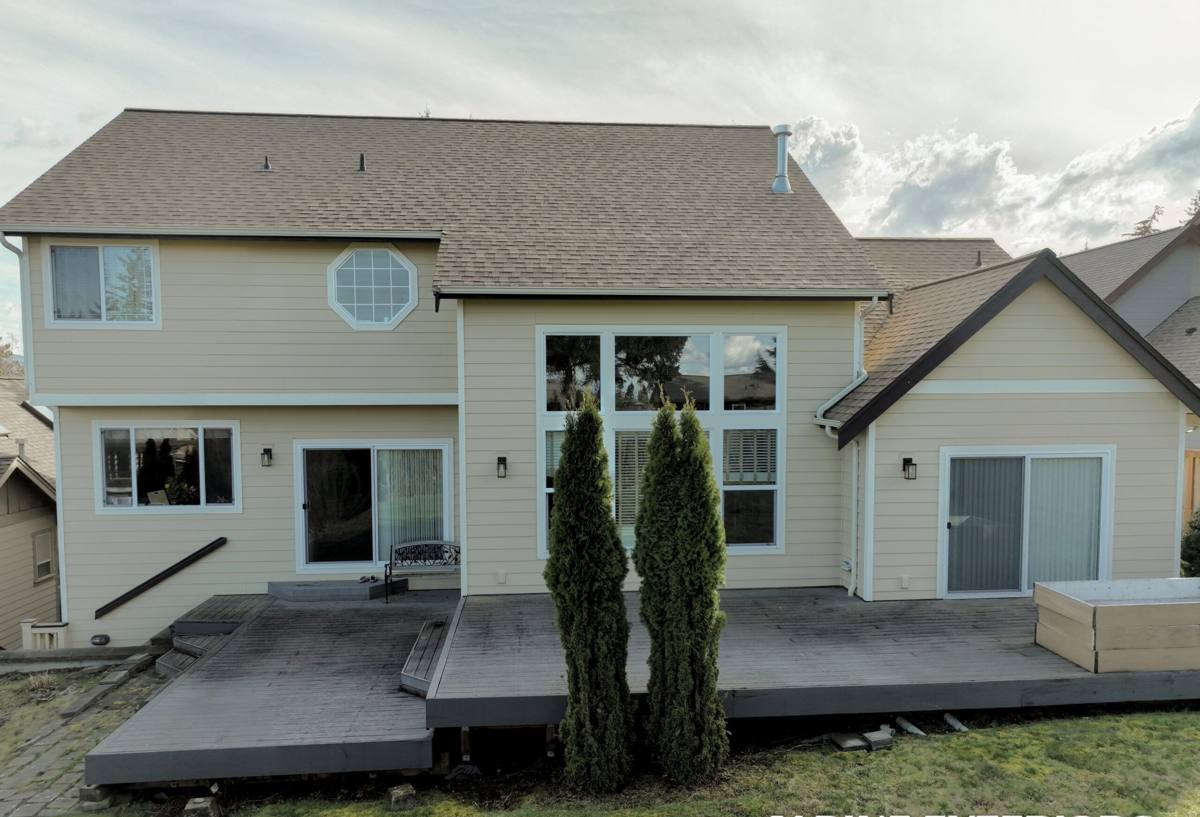
Signs a Custer Home Needs Replacement, Not Just Repair
Not every drafty or stiff window needs to come out. But there's a point where repair stops making sense and replacement becomes the honest recommendation. Look for:
- Fogging or a milky haze between the panes — the seal has failed and the gas fill is gone for good
- Soft, spongy, or discolored wood at the sill or bottom corners of the frame
- A window that's been painted shut or won't stay open on its own
- Cold air you can feel near the frame even with the window latched
- Condensation forming on the inside of the glass regularly, especially in winter
- Visible daylight or gaps around the frame when you look closely from inside
- Frames that have warped, bowed, or no longer sit square in the opening
If you're only seeing one of these on one window, a repair or reseal might buy time. If you're seeing several of these across multiple windows, especially on the sides of the house that face the weather, replacement is usually the more cost-effective path — you stop paying to patch a problem that keeps coming back.
What a Correct Window Replacement Job Actually Involves
Removing the Old Window Without Hidden Damage
A rushed removal can crack trim, tear the weather-resistive barrier behind the siding, or hide rot that was already spreading into the wall framing. Part of doing this correctly is slowing down at removal to actually look at what's behind the old window — sheathing condition, any soft framing, and whether the old flashing was doing its job or just papering over a leak that's been running for years.
Flashing and Moisture Barrier — the Part That Actually Prevents Rot
This is the step that separates a window that lasts from one that causes problems two winters later, and it's also the step that's easiest to shortcut because nobody sees it once the trim goes back on. Proper flashing tape and sill pan work needs to shed water down and out, layered correctly with the house wrap so water draining down the wall runs over the flashing, not behind it. Given how much driving rain this area gets, a window installed without a proper sill pan or with flashing lapped the wrong direction is a rot problem waiting to happen — even if the window itself is a good one.
Air Sealing and Insulation
The gap between the new window frame and the rough opening needs to be sealed and insulated correctly — not packed too tight, which can bow the frame, and not left with gaps, which lets in drafts and moist air that can condense inside the wall cavity. Low-expansion foam or backer rod and sealant, used appropriately for the gap size, is what actually stops the draft complaints that windows get blamed for.
Picking the Right Window Material for This Climate
Every window material has a place, but they don't all handle salt air and constant moisture the same way. Here's how the common options stack up for a home in this area:
| Material | Moisture & Salt Air Resistance | Maintenance | Typical Lifespan Here |
|---|---|---|---|
| Vinyl | Very good — won't rust or rot, handles salt air well | Low — occasional washing | 20–30+ years |
| Fiberglass | Excellent — very stable in wet, temperature-swinging conditions | Low | 30+ years |
| Wood-clad | Good if the cladding and flashing detail are done right; the wood core is the risk | Higher — cladding and joints need periodic inspection | Varies widely with maintenance |
| Bare aluminum | Poor near salt air — prone to pitting and corrosion over time | Moderate to high | Shorter in this environment |
We tend to steer Custer homeowners toward vinyl or fiberglass for most applications, not because other materials are inherently bad, but because they're the most forgiving of this specific mix of salt exposure and near-constant moisture with the least ongoing upkeep. Wood-clad windows can still be the right call for a specific look or a historic home, but that decision should be made with clear eyes about the extra maintenance it commits you to.
Our Window Replacement Process
- On-site assessment — we look at every window being considered, check for rot or moisture damage behind the trim, and note which sides of the house are taking the worst weather exposure
- Measuring and ordering — accurate measurements matter more than people expect; a window that's slightly off doesn't seal or operate right no matter how good the installation is
- Prep and protection — interior and exterior work areas are protected before anything is removed
- Removal and inspection — old windows come out carefully so we can check the framing and sheathing underneath before closing anything back up
- Flashing, install, and sealing — proper sill pan and flashing sequence, correct shimming so the frame sits square, and appropriate sealant at the exterior
- Interior and exterior finish — trim, caulking, and touch-up work to match the existing finish
- Final walkthrough — every window is opened, closed, and locked with you before we consider the job done
What Affects the Cost of Window Replacement
There's no single price that applies to every home, but the factors that move the number around are consistent:
| Factor | Why It Matters |
|---|---|
| Number and size of windows | More glass and larger openings mean more material and labor |
| Window material and glass package | Vinyl, fiberglass, and glass upgrades (like better low-E coatings) each carry different costs |
| Accessibility | Second-story windows, tight side yards, or windows above a roofline take longer to work safely |
| Condition of the existing opening | Rot repair or reframing adds time and material beyond the window itself |
| Trim and interior finish work | Matching existing trim profiles or repainting adds labor |
| Code requirements | Bedroom egress sizing or other code triggers can affect what size or type of window is allowed |
Most straightforward window replacement projects land in a broad mid-range per window once you factor in materials and labor, with whole-house projects and jobs that uncover rot or framing issues running higher. We'll give you real numbers for your home after a walkthrough — not a phone estimate based on guesswork.
Why a Crew That Already Works in Custer Matters
Whatcom County isn't uniform. A home a few miles inland gets different wind loading and moisture exposure than one closer to the water, and a house on open farmland takes weather differently than one tucked into a neighborhood with mature trees and other buildings around it. A crew that's already worked on homes in and around Custer has a feel for which sides of a house typically take the worst of it, which window details tend to fail early out here, and what actually holds up through a full wet season rather than just looking good on installation day.
There's also a practical side: familiarity with county permitting requirements, realistic scheduling around the wetter months, and not needing a learning curve on rural property access or driveway situations that are common in this area. That local experience doesn't replace good workmanship, but it does mean fewer surprises during the job.
Keeping New Windows Performing for the Long Haul
A correctly installed window in a good material should need very little from you, but a small amount of upkeep goes a long way in this climate:
- Wipe down tracks and weep holes periodically so drainage paths don't clog with debris or moss buildup
- Rinse salt residue off exterior frames and glass a few times a year, especially on sides facing the water
- Check exterior caulking annually and touch up anywhere it's cracked or pulled away
- Keep gutters and downspouts clear so runoff isn't sheeting directly down over windows below
- Address any new soft spots in exterior trim right away rather than waiting for the next dry season
None of this is heavy maintenance — it's the kind of once-or-twice-a-year attention that keeps a good installation good for its full lifespan instead of letting small issues turn into a repeat project.
If your windows are fogging, drafting, or just past their working life, we're happy to take a look and give you a straightforward, no-pressure estimate for window replacement on your Custer home — use the form below to get started.