 Ferndale Siding
 Decks in Kendall Have to Work Harder Than the Brochure Photos Suggest
A deck in Kendall doesn't live an easy life. It sits outside through wet Whatcom County winters, takes on moisture that never fully dries between storms, and spends months at a time shaded by fir and cedar canopy that keeps everything underneath it damp. Add in the salt-tinged air that drifts inland off Bellingham Bay and the Strait of Georgia on a west wind, and you've got a structure that's fighting corrosion, rot, and moss growth nearly year-round. Most deck failures we see out here aren't dramatic — they're slow. A fastener rusts, a ledger board traps water, moss builds a wet mat on a walking surface, and five or six years later a deck that should have had two more decades left is soft underfoot.
Building a custom deck for this specific area means designing for that reality from the first sketch, not adding weatherproofing as an afterthought. That's the difference between a deck that needs real repairs by year eight and one that's still solid at year twenty-five.
What a Kendall Property Actually Needs From Its Deck
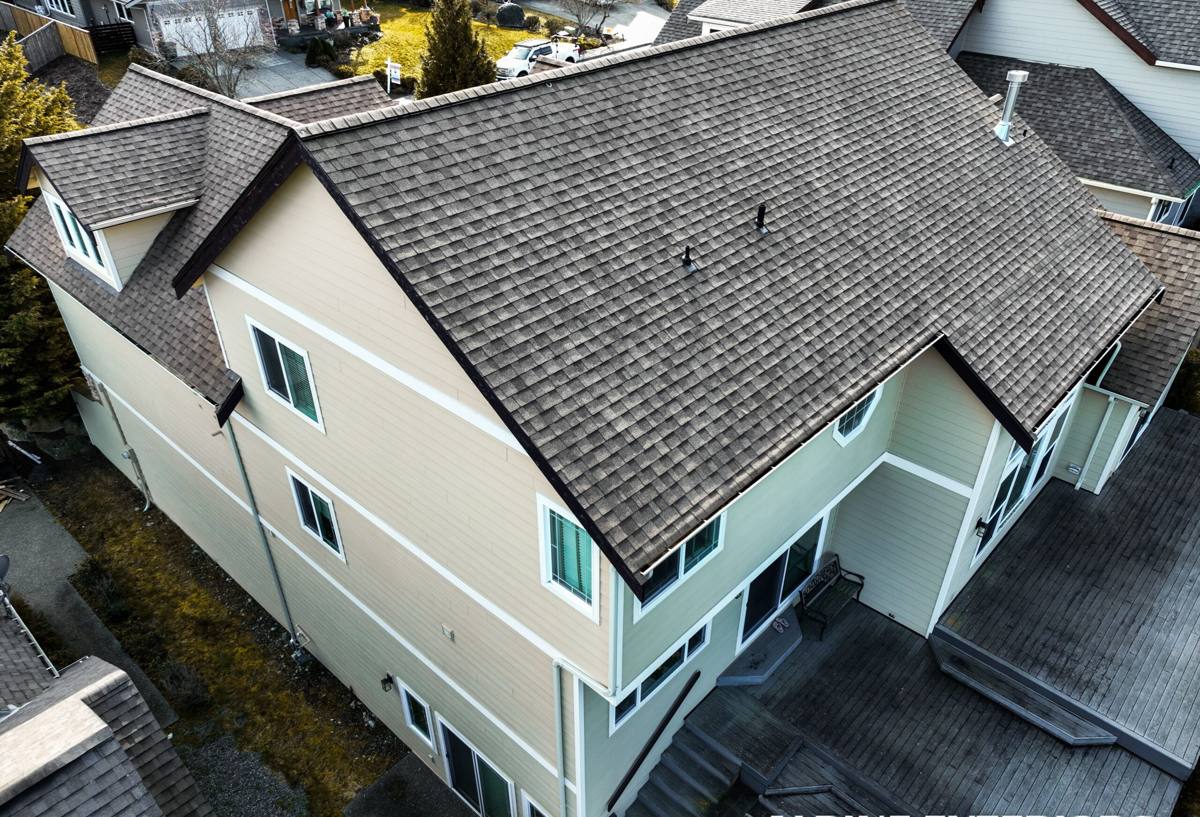
Kendall's mix of wooded lots, larger acreage, and homes set back from the road changes what a deck has to handle compared to a tight in-town lot. A few things come up again and again when we're out designing decks in this area:
- Shade and airflow. Mature trees are a selling point for privacy but a problem for a deck — less sun means slower drying, which means more moss, algae, and mildew.
- Standing water and grade. Many Kendall lots have gentle slopes or low spots near the house; a deck built without real attention to drainage becomes a place for water to pool under the frame.
- Distance from town services. A deck out here often has to be more self-sufficient — built to go longer stretches between maintenance visits, because it's not something you're going to casually check every weekend.
- Wildlife and ground moisture. Rural and semi-rural lots tend to have more ground moisture and vegetation pressing in close, both of which speed up wood decay at ground level.
None of this means a deck in Kendall has to look utilitarian. It means the choices under the surface — framing, fasteners, drainage, and decking material — need to be made with this specific site in mind, not a generic spec sheet.
Sun Exposure Changes the Design Conversation
A south-facing deck with open sky above will dry out between storms and can tolerate a wider range of decking materials. A deck tucked under trees or on the north side of the house needs wider board gaps, better substructure ventilation, and a material that resists moss and mildew — because it will simply never get the sun exposure to dry out the way a more exposed deck would.
Decking Material Comparison for Ferndale's Wet Climate
There's no single "best" decking material — there's a best material for your budget, your sun exposure, and how much upkeep you actually want to do. Here's how the common options hold up under Whatcom County conditions specifically:
| Material | Moisture & Moss Resistance | Maintenance | Typical Lifespan Here |
|---|---|---|---|
| Pressure-treated fir/pine | Good if sealed regularly; end grain and fasteners are the weak points | Re-seal or stain every 1-2 years | 15-20 years with upkeep |
| Cedar | Naturally rot- and insect-resistant, but surface still grows moss in shade without care | Cleaning and oil/stain every 1-2 years | 20-25 years with upkeep |
| Composite decking | Excellent — won't rot, but surface algae/moss can still form in deep shade and needs washing | Occasional washing, no staining or sealing | 25-30+ years |
| PVC/capped polymer | Excellent moisture resistance; smooth caps resist moss adhesion better than wood-grain composites | Occasional washing | 25-30+ years |
For shaded, low-airflow lots — which describes a good number of Kendall properties — we lean toward composite or capped polymer decking specifically because it removes the sealing and staining maintenance that wood demands, and that's the maintenance homeowners in shaded spots realistically fall behind on. On open, sunny lots, cedar or a quality treated wood is a perfectly sound choice if you're willing to keep up with it.
The Framing and Substructure: Where Decks Actually Fail
The decking surface gets all the attention, but the framing underneath is what determines whether your deck is standing in twenty years. In this climate, we treat a few details as non-negotiable:
Ledger Board Flashing
Where a deck attaches to the house, water intrusion at the ledger board is one of the most common — and most serious — failure points we find on older decks. Proper flashing that directs water away from the house rim joist isn't optional here; it's the single detail most responsible for keeping structural rot out of your home's framing, not just the deck's.
Joist Protection
Cut ends and top edges of joists absorb water fast if left bare. Joist tape or a comparable protective barrier on every cut and top edge slows that absorption dramatically and is cheap insurance against the slow rot that ruins framing from the inside.
Ground Clearance and Airflow
Low decks built tight to damp ground trap moisture and invite moss and mildew underneath, which eventually works its way up. Adequate clearance and, where the design allows it, some ventilation under the deck makes a real difference in how fast the structure dries out after our long wet stretches.
Designing Against Moss Instead of Fighting It Every Spring
Moss doesn't grow because a deck was built badly in some obvious way — it grows because water sits and shade lingers. You can't eliminate Whatcom County's weather, but you can design a deck that dries faster than moss can establish itself:
- Board spacing sized for drainage, not just appearance
- Grooved or ridged decking surfaces avoided in the shadiest spots, since they hold moisture longer than a smoother board profile
- Stair treads and low-traffic corners — the areas that dry slowest and get walked on least — get special attention during design, since they're where moss takes hold first
- Gutter and downspout placement considered relative to the deck, so roof runoff isn't dumping directly onto or under it
Even a well-designed deck will need an occasional wash in a climate like this. The goal isn't zero maintenance — it's building so that maintenance is occasional cleaning, not structural repair.
Fasteners, Fittings, and Railings That Won't Corrode
Salt-influenced air moving inland off the bay is hard on any exposed metal, and it's an area where cutting corners shows up fast — usually as rust streaks bleeding down a deck face within a couple of years. We build with stainless steel or high-grade coated fasteners rated for coastal exposure, and we're deliberate about railing hardware, post bases, and any structural connectors for the same reason. It costs more upfront than standard hardware. It's also the difference between railings that still look and function right in ten years and ones that are streaked, loose, or seized by then.
Our Process for a Kendall Deck Project
- On-site walkthrough. We look at your lot's actual sun exposure, drainage, tree cover, and how the deck ties into the house — not a generic template.
- Design and material conversation. We talk through decking material, layout, railing style, and any covered or partially covered options, with honest trade-offs on cost and upkeep for each.
- Permitting. We handle the Whatcom County permit process for the structural work, so you're not left figuring out inspection requirements on your own.
- Framing built for this climate. Ledger flashing, joist protection, appropriate clearance, and corrosion-resistant fasteners as a baseline, not an upgrade.
- Decking and railing installation. Careful attention to board spacing and drainage in shaded areas, and railing hardware sized for the exposure your specific site gets.
- Final walkthrough. We go over care and maintenance specific to your material choice and your lot's sun and shade pattern.
Permits in Whatcom County
Most new decks and significant deck rebuilds in Whatcom County require a building permit, and inspections typically cover footings, framing, and railing height and spacing for safety. Requirements can vary depending on deck height, size, and attachment to the house, so we confirm specifics with the county before work begins rather than guessing.
What to Look for When Hiring a Deck Contractor in Kendall
Because so much of what makes a deck last is invisible once it's finished, it's worth asking the right questions before work starts, not after:
- Do they flash the ledger board properly, or just bolt it to the house?
- Do they use stainless or coated fasteners rated for this climate, or standard hardware?
- Will they talk through how sun and shade on your specific lot should affect the material choice?
- Do they pull the required Whatcom County permit, or suggest skipping it?
- Can they explain their drainage and ground-clearance approach in plain terms?
- Do they have real experience building in this area's rain and moss conditions, not just decks in general?
Why Local Experience in This Area Matters
A deck built to a national average spec is a deck built for a climate that doesn't quite exist here. Ferndale and the surrounding Whatcom County communities, including Kendall, get a specific combination of persistent rain, extended cloud cover, coastal-influenced air, and heavy tree shade that punishes shortcuts most other regions could get away with. A crew that already works this area knows which details actually matter here — ledger flashing, fastener grade, board spacing for drainage, and material choice based on your lot's real sun exposure — because we've seen what happens on decks that skipped them and what holds up on the ones that didn't.
If you're planning a new deck or replacing one that's showing its age, we're happy to come take a look at your property, walk you through material and design options suited to your specific site, and put together a straightforward estimate. No pressure, no pushy sales pitch — just an honest look at what your Kendall home needs and what it would take to build it right.