 Ferndale Siding
 Decks Built for Lummi Island's Marine Climate
Lummi Island sits out in the Salish Sea, reached by ferry from the Ferndale area, and that setting is exactly why decks here need a different level of attention than a typical inland build. Waterfront and view lots are common, which means more wind-driven rain hitting the structure, more salt-laden air moving off the water, and more shaded, damp corners where moss and algae take hold. A deck built to a generic spec might look fine the first year and start showing corrosion, soft spots, or slick green growth by the third or fourth. Building correctly for this island's conditions from day one costs little extra and saves a lot of grief later.
We're not describing a different product — a deck is still a deck. The difference is in the details: which fasteners go into the frame, how the boards are spaced, where the footings sit, and which materials actually hold up to salt air and a long wet season instead of just tolerating it for a while.
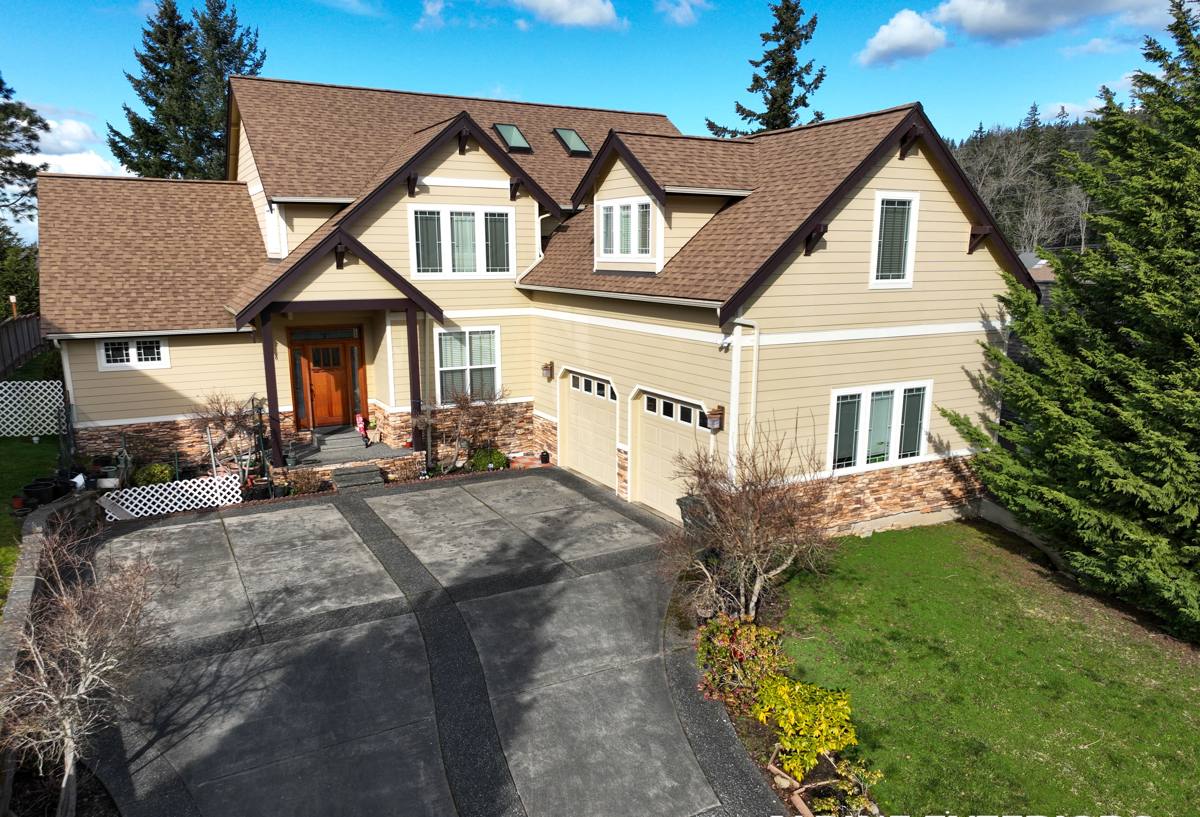
What a Correctly Built Deck Looks Like Here
Framing and Fasteners
Salt air accelerates corrosion on anything less than fully rated hardware. For Lummi Island builds we use stainless steel or heavy hot-dip galvanized fasteners and structural connectors rated for coastal exposure, not the standard exterior-grade hardware that's fine thirty miles inland but starts rusting and staining decking within a couple of seasons out here. The same goes for joist hangers, post bases, and ledger flashing — cutting corners on hardware is the single most common reason we see older island decks failing structurally while the decking itself still looks presentable.
Footings and Post Bases
Many Lummi Island properties are wooded, sloped, or perched with a view over the water, which means footings often have to deal with uneven grade, exposed root systems, or wind loads that a flat inland lot never sees. We size and place footings for the actual site conditions — not a generic minimum — and keep post bases elevated off grade so standing water and debris don't sit against untreated wood or bare metal.
Choosing Decking Material for Salt Air and a Long Moss Season
Wood Decking
Cedar and quality pressure-treated lumber still make sense for a lot of Lummi Island homes, especially where the look of natural wood matters or the budget favors it. The trade-off is honest: wood needs regular cleaning and resealing to keep water and salt film from working into the grain, and in shaded, damp spots it will grow moss faster than composite if it isn't kept clear and maintained.
Composite and PVC Decking
Capped composite and PVC boards resist moisture absorption and won't rot, which matters in a climate with this much rain and humidity. They still need periodic rinsing to clear salt residue and algae film, and board spacing still has to be right, but the maintenance burden is lower over the life of the deck. The trade-off here is upfront cost and, with some composite products, a plastic-like appearance that not every homeowner wants.
| Material | Salt-Air / Moisture Performance | Moss & Algae Resistance | Ongoing Maintenance | Relative Upfront Cost |
|---|---|---|---|---|
| Cedar | Good if sealed and maintained; can cup or check if neglected | Moderate — needs regular cleaning in shaded areas | Annual cleaning and resealing | Mid-range |
| Pressure-Treated Lumber | Good structurally; surface needs sealing to look its best | Moderate to low without upkeep | Annual cleaning, periodic sealing | Budget-friendly |
| Capped Composite | Excellent — won't absorb water or rot | Good with occasional rinsing | Occasional rinse, no sealing | Higher upfront |
| PVC Decking | Excellent — fully moisture-resistant | Good with occasional rinsing | Lowest — rinse only | Highest upfront |
There's no single right answer for every property — a shaded, heavily wooded lot with a lot of tree cover leans us toward recommending composite or PVC for the moss resistance alone, while an open, sun-exposed site with good airflow can do very well with properly maintained wood. We'll walk your specific site with you rather than push one material across the board.
Drainage, Board Spacing, and Moss Prevention
Moss and algae need two things to establish: moisture that lingers, and a surface with no airflow. A correctly built deck fights both. Board gaps have to be sized to shed water quickly rather than trap it, and the substructure needs enough clearance underneath for air to actually move — a deck built tight to grade or against a hillside with no ventilation will grow moss no matter what material sits on top. We also make sure water is directed away from the house at the ledger connection, since a poorly flashed ledger is one of the more common sources of hidden rot on wetter properties around Whatcom County.
Where a deck sits under heavy tree cover — common on wooded Lummi Island lots — we'll talk through realistic expectations. No amount of good building eliminates the need for occasional cleaning in a spot that barely sees direct sun for half the year; the goal is a deck that's easy to keep clean, not one that never needs it.
Getting Materials and Crews to the Island
Building on Lummi Island means working around the ferry schedule, and that's a real logistics factor, not a minor detail. Material deliveries, crew arrivals, and equipment all have to be planned around ferry timing, which means a contractor who builds here regularly can schedule a project far more efficiently than one figuring it out for the first time. We plan deliveries and crew days around the ferry rather than losing time to it, which keeps your project moving at the pace we quote instead of stretching out over avoidable delays.
Permitting for Whatcom County
Deck projects on Lummi Island typically fall under Whatcom County jurisdiction rather than the City of Ferndale, and permitting requirements can vary based on deck height, size, and proximity to shoreline or critical areas — waterfront and bluff-adjacent lots often have additional considerations. We handle the permit process as part of the job, including making sure footing depth, guardrail height, and stair specs meet current code, so you're not left tracking down requirements on your own.
Our Process
- Site visit and design conversation — we look at sun exposure, tree cover, slope, and how you actually plan to use the space.
- Material recommendation — based on your site's specific moisture and shade conditions, not a one-size answer.
- Written estimate — clear scope, materials, and timeline before any work starts.
- Permitting — we submit and manage the Whatcom County permit where required.
- Build — framing, coastal-rated hardware, and proper drainage detailing throughout.
- Final walkthrough — we go over care and maintenance specific to the material you chose.
Maintaining a Deck in a Salt-Air, High-Moss Climate
A well-built deck out here still needs some seasonal attention. The list below covers the basics that keep a Lummi Island deck performing well year after year, regardless of material.
- Rinse the deck surface periodically to clear salt film, especially after windy weather off the water
- Sweep debris out of board gaps so water keeps draining instead of pooling
- Check exposed fasteners and connectors for early rust or corrosion, particularly near the water side of the structure
- Clear moss from shaded areas before it spreads rather than after
- Inspect the ledger board and flashing where the deck meets the house for signs of water intrusion
- Reseal wood decking on a regular schedule; don't wait until it looks gray and dry
- Trim back overhanging branches to improve airflow and sun exposure where possible
- Have footings and structural connections checked after major storms
Why Hire a Crew That Already Works Lummi Island
A lot of the mistakes we get called to fix on older island decks aren't the result of bad carpentry — they're the result of a mainland-standard build applied to a marine-exposed site. Standard-grade fasteners that rust out early, board spacing that traps moisture, footings sized for a flat inland lot instead of a sloped waterfront one. A crew that regularly builds on Lummi Island already knows to spec coastal-rated hardware by default, plans around the ferry instead of being surprised by it, and has a working sense of how Whatcom County permitting applies to island properties. That familiarity shows up in fewer surprises during the build and a deck that's still solid well past the point where a generic build would be showing problems.
If you're planning a new deck or replacing one that's showing its age, we'd be glad to take a look and talk through what makes sense for your specific site. Reach out for a free, no-pressure estimate using the form below.