 Ferndale Siding
 Building Decks for Lynden Homes in a Wet, Salt-Touched Climate
Lynden sits inland from Bellingham Bay, but the weather that shapes decks here isn't much different from what we see across the rest of Whatcom County: long stretches of driving rain from fall through spring, heavy shade under mature trees on many older lots, and the kind of persistent dampness that keeps moss and algae in business nearly year-round. Add in the salt-laden air that drifts in off the Strait of Georgia and Bellingham Bay, and you've got a climate that's genuinely hard on outdoor structures. A deck built to a generic national spec often struggles here. A deck built for this specific stretch of Washington holds up.
We work throughout the Ferndale area, and Lynden is a community we know well — the mix of farmhouse-style properties, newer subdivisions, and larger rural lots means we see a wide range of deck needs, from a modest entry landing to a full-size outdoor living space. What stays consistent across all of it is the climate math: moisture management, material selection, and fastener choice matter more here than in drier parts of the country.
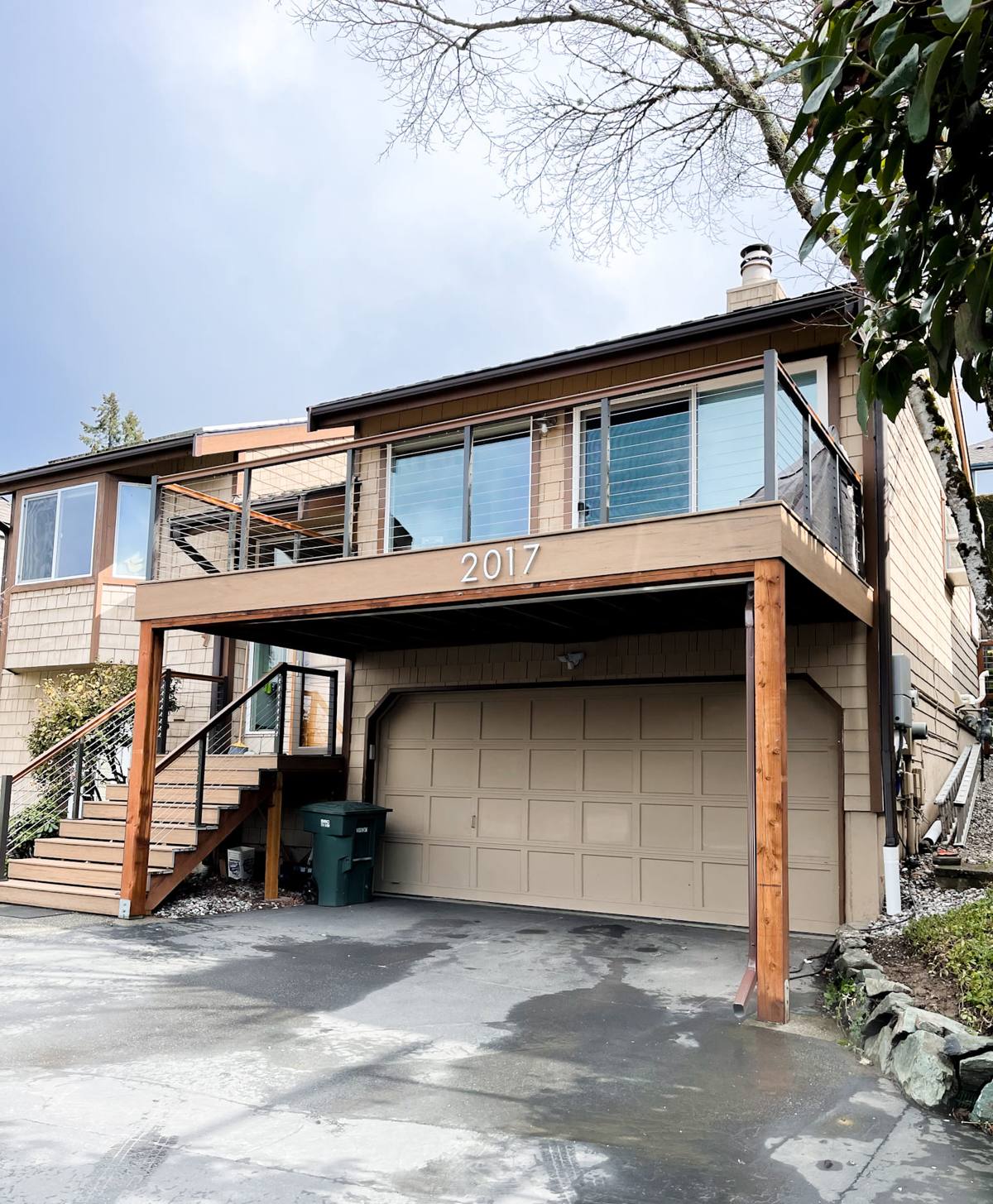
What Lynden's Climate Actually Does to a Deck
Moisture Is the Root of Almost Every Problem
Whatcom County gets a long wet season, and Lynden's mix of open farmland and tree-lined residential streets means decks here deal with both driving rain and heavy dew. Water that sits on a deck surface, pools in poorly sloped framing, or gets trapped behind ledger boards is what eventually causes rot, fastener corrosion, and warped boards. A deck doesn't fail because one big storm hit it — it fails slowly, from years of moisture that never fully dries between rain events.
Moss and Algae Growth
Anywhere shaded or north-facing in this region tends to grow moss on decking, railings, and even structural framing if it's exposed. Moss holds moisture against wood and composite surfaces alike, and left unaddressed it accelerates surface wear and creates a genuinely slippery, unsafe walking surface. Deck design that accounts for airflow and sun exposure — and material choices that resist organic growth — cut down on this substantially.
Salt Air and Metal Fasteners
Lynden is far enough inland that salt exposure is lighter than it is right on the water, but it's not zero — coastal air moves through this whole corridor. Over years, standard fasteners and hardware can corrode faster than homeowners expect, especially on decks that see a lot of wind-driven rain. This is why fastener and hardware grade isn't a detail we skip on estimates.
What a Correctly Built Deck Needs in This Region
- Framing lumber rated for ground contact or exposed exterior use, not standard interior-grade stock
- Corrosion-resistant fasteners and structural hardware — hot-dip galvanized or stainless, sized to the framing member and load
- Proper slope on decking boards so water sheds instead of pooling
- Ledger board flashing that actually keeps water out of the house rim joist, not just a bead of caulk
- Joist tape or a comparable moisture barrier on top of framing members before decking goes down
- Gapping between boards sized correctly for the decking material, allowing airflow and drainage
- Footings set to local frost depth and soil conditions, not a one-size-fits-all number
- Railing and stair construction that meets current Washington building code for height, baluster spacing, and load
Skip any one of these and the deck may look fine for a season or two before problems surface — usually right where you can't see them, underneath the decking boards.
Decking Material Options for Lynden Properties
There's no single right answer here — it depends on budget, how much upkeep a homeowner wants to do, and how much shade or sun the deck site gets. We walk through this honestly with every Lynden homeowner rather than pushing one product.
| Material | Upfront Cost | Maintenance in This Climate | Typical Lifespan |
|---|---|---|---|
| Pressure-treated lumber | Lowest | Needs regular cleaning and re-sealing to resist moss and moisture; most maintenance-intensive option | 15-20 years with upkeep |
| Cedar | Moderate | Naturally more rot- and insect-resistant, but still needs periodic sealing in a wet climate | 15-25 years with upkeep |
| Composite decking | Higher | Low maintenance — no staining or sealing, resists moss buildup better than wood, occasional cleaning | 25-30+ years, per manufacturer warranty |
| PVC decking | Highest | Lowest maintenance — fully moisture-resistant, best performance against algae and moss | 25-30+ years, per manufacturer warranty |
Homeowners who want the lowest-hassle option in a climate like this often lean toward composite or PVC decking, simply because they don't have to think about resealing every year or two. But plenty of Lynden homeowners still prefer the look and feel of real wood and are happy to keep up with maintenance — that's a legitimate choice too, as long as the maintenance actually happens.
Design Considerations Specific to Lynden Properties
Lot Size and Layout
Lynden has more room to work with than some of the tighter in-town lots elsewhere in Whatcom County — larger rural and semi-rural parcels are common. That opens up options for bigger multi-level decks, attached pergolas, or decks that wrap toward a specific view or sun exposure. We design around how the property actually sits, not a standard template.
Sun and Shade Exposure
Properties with mature trees or those backing up to farmland tree lines get significant shade for parts of the day, which affects both moss growth and how much the deck surface dries out after rain. We factor orientation into both material recommendation and structural layout — sometimes shifting a deck's footprint or adding a step for better airflow underneath makes a real difference over the deck's lifespan.
Attached vs. Freestanding Structures
Decks attached to the house need a correctly flashed ledger connection — this is the single most common failure point we see on older decks in this region, because the connection between deck and house rim joist is where water intrusion causes hidden rot. Freestanding decks avoid that specific risk but need their own independent footing and structural plan.
Our Process for a Lynden Deck Project
- On-site assessment. We look at the actual lot — sun exposure, drainage, existing structure if there's a deck to replace, and how the space will realistically be used.
- Honest material and design conversation. We walk through decking material trade-offs, layout options, and a realistic cost range based on size and complexity — no upselling to the most expensive option by default.
- Permitting. Deck projects in Whatcom County typically require a permit depending on size and height; we handle that process rather than leaving it to the homeowner.
- Structural build. Footings, framing, ledger flashing, and moisture barriers go in first — this is the part that determines whether the deck lasts, even though it's the part nobody sees once it's finished.
- Decking, railing, and finish work. Boards, railings, stairs, and any lighting or built-in features go in last, built to current code.
- Final walkthrough. We go over the finished deck with the homeowner, including basic maintenance guidance specific to whatever material was installed.
Maintenance Checklist for Lynden Deck Owners
- Clear leaves and debris from between boards and off the surface before the wet season sets in each fall
- Rinse or gently scrub moss off the surface as soon as it appears, rather than letting it establish
- Check ledger board flashing and any visible fasteners once a year for corrosion or gaps
- Reseal or re-stain wood decking on the manufacturer's or installer's recommended schedule — don't wait until it looks bad
- Confirm gaps between boards haven't clogged with debris, which blocks drainage and traps moisture
- Inspect stair stringers and railing posts for movement or soft spots, especially after a hard winter
Why Hiring a Crew That Knows This Area Matters
A deck built by a crew unfamiliar with Whatcom County's climate can still look good the day it's finished. The difference shows up two, five, ten years later — in whether the framing stayed dry, whether the fasteners held up against the damp and the salt air moving through the region, and whether moss became a maintenance headache or a non-issue. We build decks throughout the Ferndale area, including Lynden, with framing, flashing, and material choices specifically suited to this climate rather than a generic regional standard. That's the difference between a deck that needs real work again in eight years and one that's still solid in twenty-five.
If you're planning a new deck or replacing one that's showing its age, we're happy to come take a look and talk through honest options for your property. Reach out for a free, no-pressure estimate — there's a form below to get started.