 Ferndale Siding
 Custom Decks Built for Sudden Valley's Wooded, Lakeside Setting
Sudden Valley sits in a heavily treed, lake-adjacent pocket of Whatcom County, and decks out here live a different life than decks in an open subdivision closer to town. Tree canopy, filtered sun, and proximity to Lake Whatcom mean a deck spends more of the year damp than dry. Add in the driving rain and salt-tinged marine air that move through this part of Washington for much of the fall and winter, and you've got a structure that's working hard just to stay flat, tight, and safe. We build and repair decks for homeowners throughout the greater Ferndale service area, and Sudden Valley's combination of shade, moisture, and slope is one we plan for specifically rather than treat as an afterthought.
This page covers what a deck in this setting actually needs, what correct construction looks like, how we run the job from first call to final walkthrough, and why local experience in this particular neighborhood is worth something you can't get from a crew driving in from out of the area.
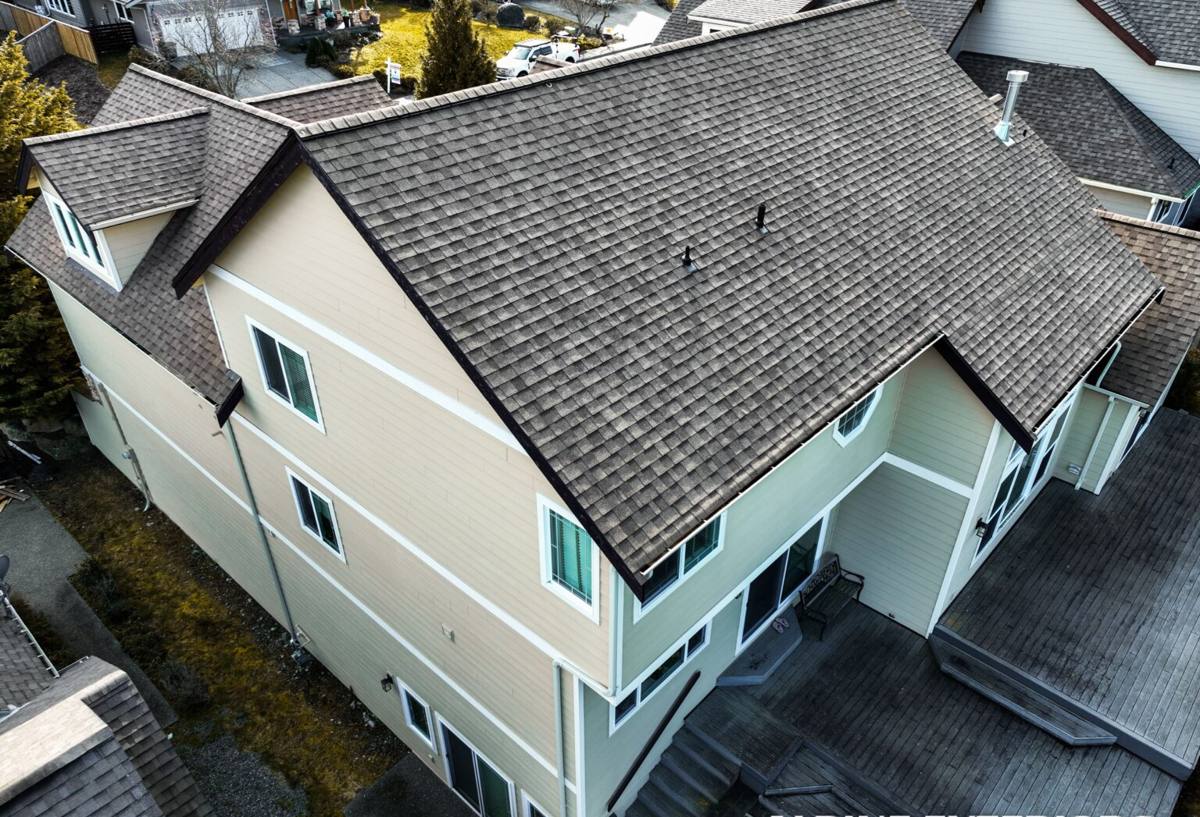
What Whatcom County Weather Does to an Outdoor Deck
Every deck in this region deals with the same baseline: long stretches of wet weather, seasonal windstorms that drive rain sideways into ledger boards and fascia, and a marine-influenced climate that keeps humidity elevated even between storms. None of that is unique to Sudden Valley, but a wooded, low-sun lot makes each of those factors worse and slower to dry out.
Why Shade and Tree Cover Matter More Here
A deck on an open, sun-exposed lot dries out between rain events. A deck tucked under fir and cedar canopy, or shaded by neighboring tree lines near the lake, doesn't get that break. Moisture sits in the wood grain, in fastener holes, and in the gaps between boards for days longer than it would in full sun. That extended dampness is exactly what moss, algae, and mildew need to take hold, and it's why we see moss seasons in this neighborhood run longer than they do just a few miles away in more open parts of the Ferndale area. Needle and leaf litter from surrounding trees adds to the problem — organic debris traps moisture against the decking surface and, left alone, accelerates rot in wood and staining in composite.
None of this means a deck can't hold up here. It means the build has to account for drainage, airflow, and material choice from the start instead of relying on maintenance to fix a design problem later.
What a Correctly Built Deck Requires in This Setting
Footings and Framing
Footings need to be sized and set to local frost depth and soil conditions, not guessed at. On sloped or partially wooded lots — common around Sudden Valley — that often means adjusting footing placement to avoid major roots and working around uneven grade rather than forcing a footing layout that ignores the lot. Framing lumber should be rated for ground contact where it's close to soil or vegetation, and joist spacing should match the decking material's actual span rating, not just what "looks right."
Ledger Attachment and Flashing
The ledger board — where the deck attaches to the house — is the single most common failure point on decks in wet climates. Correct flashing (not just caulk) between the ledger and the house siding is what keeps water from tracking behind the wall and causing rot you won't see until it's expensive. In a shaded, damp lot like this one, that detail matters even more than usual because the assembly rarely gets a chance to fully dry out on its own.
Fasteners and Hardware
Standard fasteners corrode faster in this climate's humidity and marine air influence than most homeowners expect. We use stainless or coated, corrosion-rated fasteners and structural hardware throughout — hangers, hurricane ties, ledger bolts — because a deck is only as strong as the connections holding it together, and those connections are the first thing damp air attacks.
Comparing Decking Materials for a Shaded, Damp Lot
Material choice matters more here than it does on a dry, sun-exposed site. Here's how the common options actually perform under Sudden Valley's conditions:
| Material | Moisture & Moss Behavior | Maintenance | Typical Lifespan |
|---|---|---|---|
| Cedar / natural wood | Absorbs moisture; needs sealing to resist moss and graying | Annual cleaning and re-sealing recommended | 15–20 years with upkeep |
| Pressure-treated wood | Resists rot well when properly maintained; still holds surface moisture | Periodic cleaning, stain/seal every 2–3 years | 15–25 years |
| Composite decking | Doesn't rot, but can still grow surface moss/mildew in shade if not cleaned | Occasional wash; no sealing or staining | 25–30+ years |
| PVC / capped composite | Best moisture resistance of the group; sheds algae growth most easily | Lowest — mostly rinsing | 30+ years |
There's no single "right" material for every home — a natural wood deck can look great here and last a long time if the owner is honest with themselves about the sealing schedule. What we won't do is install natural wood decking on a heavily shaded, low-airflow site and tell a homeowner it'll behave like it's in full sun. We'll walk you through how each option actually performs on your specific lot before you commit to one.
Our Process, Start to Finish
- Site walk: We look at sun exposure, tree cover, drainage, grade, and how the deck will tie into the house before talking materials.
- Design and material selection: We size the deck to how you'll actually use it and match materials to the site conditions, not just the budget line.
- Permitting: We handle the permit application and any required inspections for the jurisdiction covering your property.
- Build: Footings, framing, ledger flashing, decking, and railing installed in sequence, with structural connections inspected before decking goes down.
- Final walkthrough: We go over the finished deck with you, including what maintenance it does and doesn't need going forward.
Permits and Site Considerations Around Sudden Valley
Deck construction in this area typically requires a building permit, and depending on your lot's proximity to the lake, slope, or critical areas, additional review may apply. If your property is part of a community with its own design or exterior guidelines, those can layer on top of standard permitting. We check what applies to your specific address before pricing the job, so you're not guessing at approvals partway through construction. If you're unsure what governs your lot, that's a normal first question to bring to your estimate — we'd rather sort it out up front than mid-build.
Keeping a Sudden Valley Deck Sound Season After Season
A well-built deck in this setting still needs some seasonal attention — the climate doesn't give you a maintenance-free option, only a lower-maintenance one. A simple yearly routine goes a long way:
- Sweep leaves, needles, and debris off the surface and out of board gaps regularly, especially in fall
- Clean moss and algae off decking and stair treads before they become a slip hazard, not after
- Check ledger flashing and the house-to-deck connection for gaps or water staining once a year
- Re-seal or re-stain natural wood decking on the schedule the product actually requires — not "whenever it looks bad"
- Keep gutters and downspouts near the deck clear so runoff isn't draining directly onto or under it
- Trim back overhanging branches where practical to improve airflow and sun exposure on the deck surface
Why a Crew That Already Works in Sudden Valley Matters
Access and logistics in this neighborhood aren't always straightforward — private roads, tree-lined driveways, and sloped lots can complicate material delivery and equipment staging in ways a crew unfamiliar with the area doesn't anticipate. Knowing the typical soil and drainage patterns around the lake, the permitting jurisdiction that applies, and how shade patterns move across a given lot through the seasons all shape how we plan and price a job. A contractor who's built decks here before isn't guessing at any of that — we've already worked through it on other homes nearby.
New Build, Replacement, or Repair?
Not every deck problem means starting over. Surface graying, minor moss, or a loose board or two is normal wear and usually a repair. Soft or spongy decking, rot at the ledger connection, rusted or failing hardware, or a structure that flexes noticeably underfoot points to something more serious that needs an honest structural assessment rather than a cosmetic fix. If your deck was built before current flashing and fastener standards were common practice, that's also worth having looked at even if it seems fine on the surface — ledger rot in particular tends to stay hidden until it isn't.
Whether you're planning a new deck, replacing one that's reached the end of its life, or just want an honest read on what shape yours is in, we're happy to take a look. Reach out for a free, no-pressure estimate — we'll walk the site, talk through what your lot actually needs, and give you a straight answer, using the form below.