 Ferndale Siding
 Point Roberts Is a Different Kind of Job
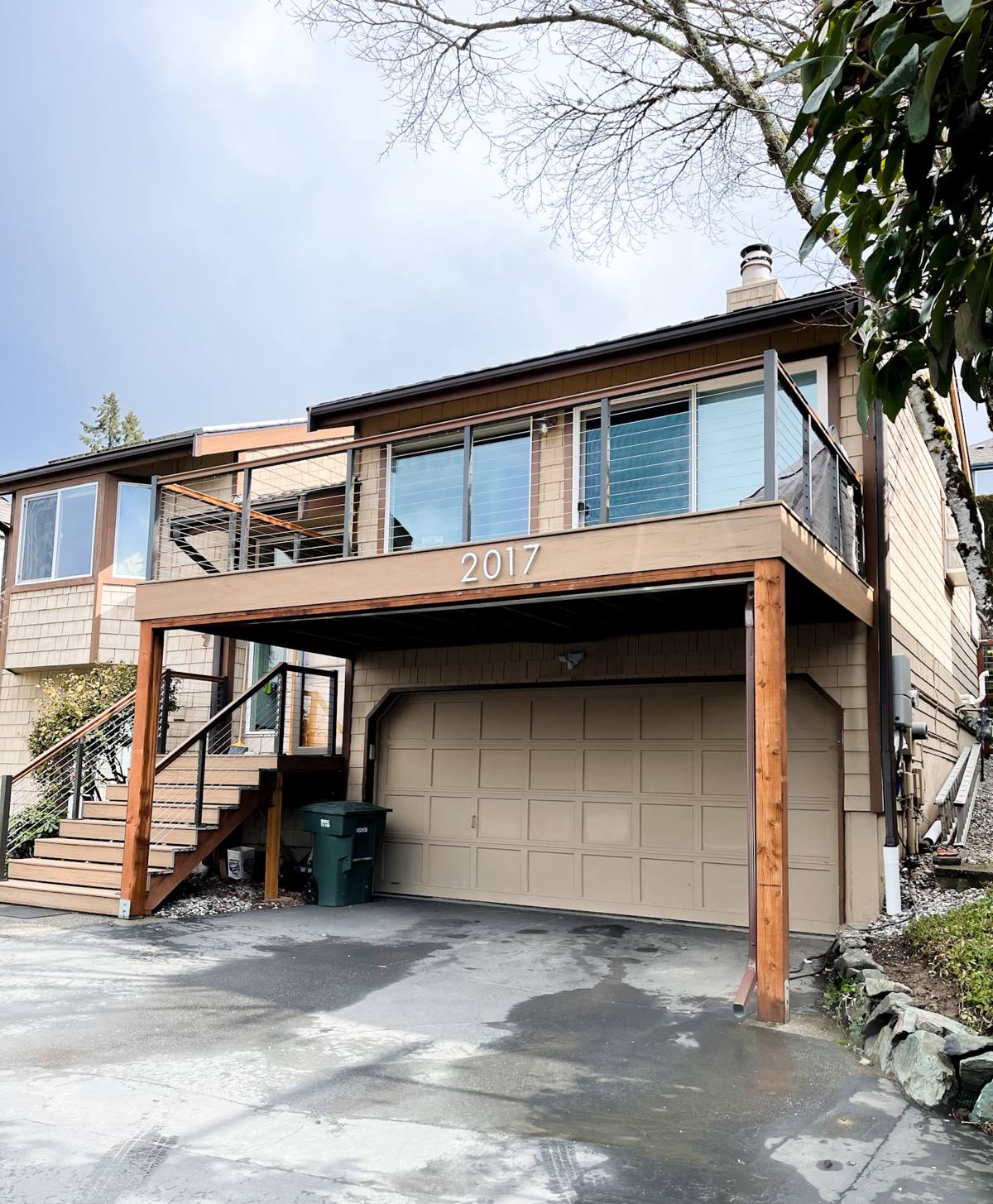
Point Roberts sits on its own peninsula, cut off from the rest of Whatcom County by the Canadian border, with water on three sides. That geography is exactly what makes it a beautiful place to live and exactly what makes window installation here different from a typical Ferndale or Bellingham job. Homes here take direct salt air off the Salish Sea, near-constant exposure to driving rain, and a moss and mildew season that runs longer than almost anywhere else in the county. Windows that would hold up fine twenty miles inland can fail early out here if they weren't chosen and installed with that exposure in mind.
We've done window work throughout Whatcom County long enough to know that "custom" doesn't just mean an odd-sized opening. In Point Roberts it usually means matching a window system to conditions the manufacturer's standard spec sheet doesn't fully account for.
What the Climate Actually Does to Windows Here
Salt Air
Salt-laden air corrodes exposed metal hardware, pits certain aluminum finishes over time, and accelerates the breakdown of cheaper sealants and gaskets. Locks, hinges, and cranks on lower-grade windows can start sticking or corroding years before they should. This is a bigger factor for waterfront and near-waterfront homes than most homeowners realize until they're dealing with it.
Driving Rain
Wind off the water doesn't just drop rain straight down — it drives it sideways into the wall, which puts real pressure on flashing details and window seals that a calmer, more sheltered lot never has to handle. A window that's watertight in a lab test can still leak on a house exposed to sustained wind-driven rain if the flashing and integration with the wall assembly weren't done correctly.
Moss and Sustained Moisture
Long, damp seasons mean wood trim, sills, and any organic material around a window opening stay wet longer and grow moss and mildew faster than they would in a drier climate. That moisture doesn't just sit on the surface — over years it can work into unsealed wood, painted-over caulk lines, and any gap where water can collect instead of shed.
What "Custom" Means for a Point Roberts Home
Custom windows aren't a luxury upsell — for a lot of homes out here, they're the only realistic option. Common reasons a standard off-the-shelf window won't work include:
- Older homes with openings that were never built to today's standard sizes
- Additions or remodels where the rough opening doesn't match any stock size
- Waterfront or view-facing walls where a larger or differently shaped window is wanted for the view itself
- Replacing a single odd window in an otherwise uniform row, where matching sightlines and proportions matters
- Homes where the original windows were themselves non-standard and a true custom unit is the only clean fix
In each of these cases, the window is built or ordered to the exact opening rather than the opening being reframed to fit a stock size. That keeps the work cleaner and avoids unnecessary structural changes, but it does mean accurate measurement and a supplier who can actually produce true custom sizes, not just a limited range of "near-custom" options.
Frame Material: What Holds Up Out Here
Every frame material has trade-offs. For a Point Roberts home, the deciding factors are usually how the material handles sustained moisture and salt exposure, and how much upkeep the homeowner actually wants to commit to.
| Material | Salt/Moisture Behavior | Maintenance | Best Fit |
|---|---|---|---|
| Vinyl | Won't corrode or rot; performs well in salt air | Low — occasional cleaning | Most homes; budget-conscious full replacements |
| Fiberglass | Very stable in moisture and temperature swings, holds paint well | Low to moderate | Larger openings, waterfront exposure, long-term durability priority |
| Wood-clad | Good if the cladding and seals are intact; the wood core is vulnerable if moisture gets past the clad exterior | Higher — seals and finish need monitoring | Homes prioritizing a traditional interior wood look |
| Aluminum | Can pit or corrode over time in direct salt air without a marine-grade finish | Moderate | Limited use; we're selective about where we recommend it here |
We're upfront that aluminum requires more scrutiny in a direct salt-air environment like this, and wood-clad units are only as good as their weakest seal — if that seal fails and water gets behind the cladding, the wood core underneath can be compromised before it's visible from outside. Neither is a wrong choice, but both come with maintenance obligations we make sure homeowners understand before they commit.
How a Correct Installation Works
The window itself is only part of the job. Most window failures we get called out to fix, in Point Roberts and elsewhere, trace back to the installation and flashing detail, not a bad window.
- Remove and inspect. The old window comes out and we check the framing, sheathing, and sill for hidden rot or moisture damage before anything new goes in — this is where problems that have been building for years often show up.
- Repair the opening. Any soft or damaged framing gets addressed now, not covered over. Installing a new window into a compromised opening just hides a bigger problem.
- Flash for wind-driven rain. Flashing tape and sill pans are layered so water that does reach the opening is directed back out, shingle-style, rather than trapped behind the window. This step matters more here than in sheltered inland locations because of how much sideways rain the walls actually see.
- Set and level the window. The unit is shimmed, leveled, and fastened per the manufacturer's specification — skipping or shortcutting this step is a common cause of operational problems and premature seal wear.
- Seal and insulate. Low-expansion foam or backer rod and sealant fill the gap between frame and rough opening for both air and moisture control, without overfilling in a way that can bow the frame.
- Exterior trim and final seal. Trim is reinstalled or replaced and sealed with a exterior-grade sealant suited to the material and exposure.
- Walkthrough. We check operation, locks, and seals with the homeowner before calling the job done.
Problems We Commonly Find on Point Roberts Homes
When we're called out to look at an existing window problem here, it's usually one of these:
- Failed seals letting in wind-driven rain — often from flashing that was never properly layered during a previous installation
- Fogged double-pane glass — the seal between panes has broken and moisture has gotten into the gas fill, which can't be repaired, only replaced
- Corroded hardware — locks and cranks that have pitted or seized from years of salt air exposure
- Moss and mildew buildup on sills and trim — a sign moisture is sitting instead of shedding, which points to a drainage or slope issue at the sill
- Soft framing around the opening — found once trim is pulled back, usually the result of long-term moisture intrusion that was never addressed
Working Point Roberts: The Logistics Side
Because Point Roberts is separated from the rest of Whatcom County by the border, scheduling and material logistics take more planning than a typical job in Ferndale or Lynden. Crews and materials generally have to route through Canada to reach the peninsula, which means we plan deliveries and crew time in efficient blocks rather than making multiple back-and-forth trips. Homeowners benefit from working with a crew that already accounts for this in scheduling, rather than one quoting the job as if it were a standard in-county drive.
This is also why accurate measurement and a clear scope up front matter even more here than elsewhere — a mid-project surprise that requires another material run costs real time on a job this remote.
What Affects Cost
We don't quote sight unseen, but these are the main factors that move a custom window job up or down in price:
| Factor | Why It Matters |
|---|---|
| Frame material | Vinyl is typically the most affordable; fiberglass and wood-clad run higher |
| True custom size vs. near-standard | Fully custom-built units cost more than sizes close to a manufacturer's standard range |
| Number of openings | Per-window cost usually drops as the total project size grows |
| Existing damage | Rotted framing or sheathing found during removal adds repair scope |
| Access and height | Second-story, waterfront-facing, or hard-to-access openings take more labor |
| Glass package | Upgraded glass coatings and gas fills for energy performance add cost |
A Quick Checklist Before You Hire
- Get exact measurements taken in person, not estimated from photos
- Ask specifically how flashing and sill pans will be handled, not just what brand of window is being installed
- Confirm whether any existing framing damage will be repaired as part of the job or treated as a change order
- Ask about the warranty on both the product and the labor — they're often separate
- Confirm the crew has worked in Point Roberts before and understands the logistics of getting materials there
- Get the scope and material specifications in writing before work starts
Why Hire a Crew That Already Works Here
A lot of exterior contractors will take a Point Roberts job, but fewer have actually built the scheduling, sourcing, and installation habits around what this specific location demands — the border logistics, the salt exposure, the wind-driven rain. We've worked throughout Whatcom County, including Point Roberts, and we bring the same flashing and installation standards to every job regardless of how far it is from our shop, because that's what actually keeps a window performing for its full expected life out here.
If you're dealing with a leaking window, foggy glass, or you're planning a full replacement for a Point Roberts home, we're happy to take a look and give you a straight, no-pressure estimate — just fill out the form below.