 Ferndale Siding
 Building Decks for Blaine's Marine Climate
Blaine sits right up against the Salish Sea, which means homes here deal with a combination that inland Whatcom County properties don't: salt-laden air rolling in off the water, wind-driven rain that hits decks sideways instead of straight down, and a moss season that can stretch from October well into spring. A deck built without those three things in mind will look fine for the first year or two and then start showing problems — soft spots near the house, corroding hardware, slick green film on the walking surface, and finish that fails faster than it should.
We build decks in Ferndale and the surrounding Whatcom County communities, including Blaine, and we treat this as a coastal build every time, not a generic Pacific Northwest build. That distinction changes material choices, fastener selection, and how we detail the spots where water actually gets in.
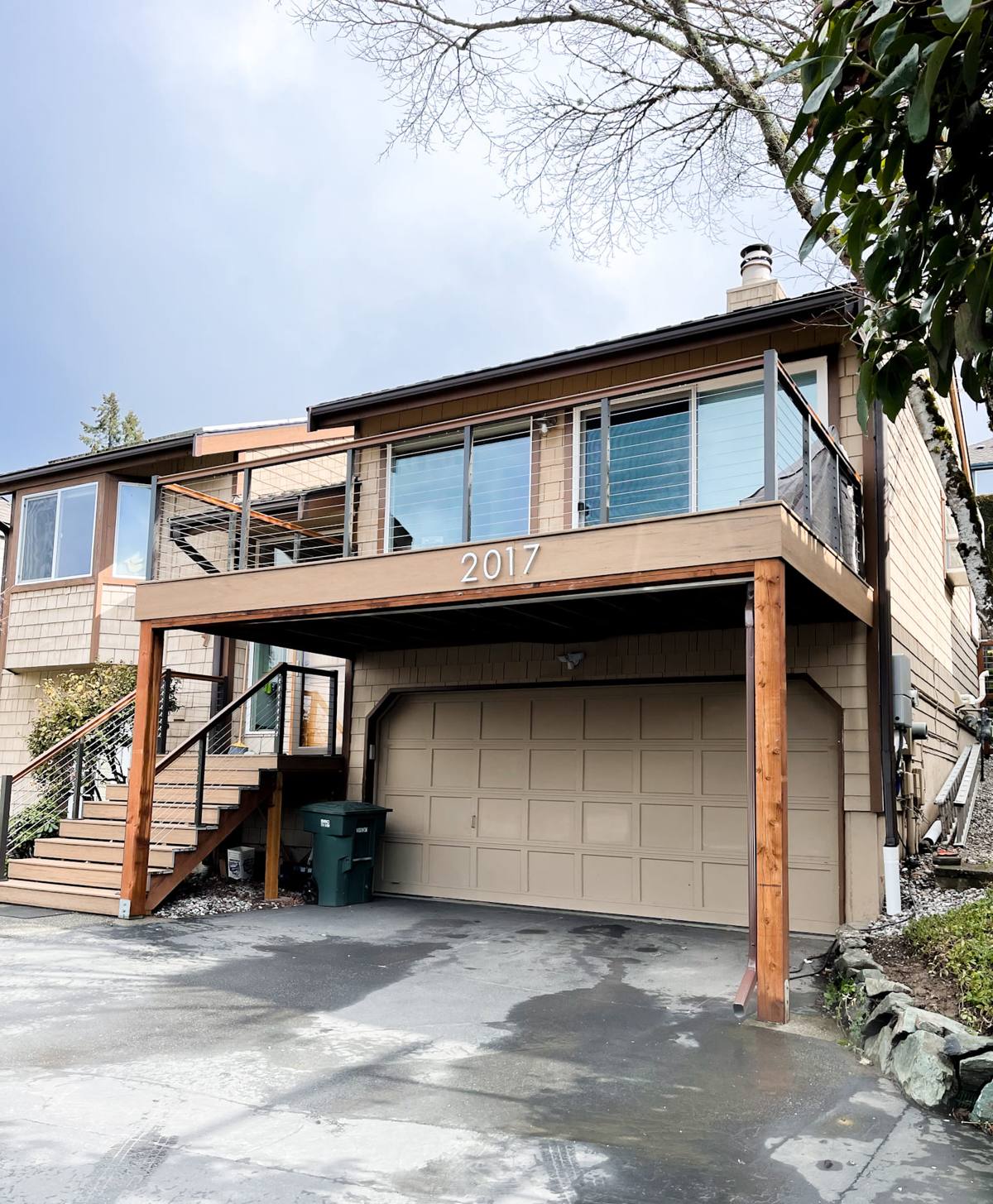
What Blaine Properties Need From a Deck
Every deck we build starts with a look at the site, not a catalog. A few things come up again and again on Blaine jobs:
- Wind exposure: Properties with a clear line to the water take more direct, driving rain and stronger gusts, which affects railing bracing and how tight we build the structure.
- Salt air corrosion: Standard fasteners and hardware corrode faster this close to salt water, especially where two dissimilar metals meet or where a fastener head sits exposed to weather.
- Shade and moisture retention: Decks tucked under trees or against the north side of a house dry out slower, which is exactly the environment moss and algae need.
- Grade and drainage: Coastal lots often have subtle grading issues that concentrate water at the foundation or under the deck if it isn't accounted for during framing.
None of this is exotic. It's just what actually happens to a structure that sits outside, uncovered, a few miles from saltwater, for the next twenty-plus years. The fix isn't complicated either — it's building to that reality from day one instead of patching it later.
Choosing the Right Decking Material
There's no single "best" decking material for Blaine — there's a best material for a given budget, sun exposure, and how much maintenance a homeowner actually wants to do. We walk through the real trade-offs rather than pushing one product line.
| Material | Upfront Cost | Maintenance | Moisture/Moss Behavior |
|---|---|---|---|
| Pressure-treated lumber | Lowest | Needs re-staining every 2-3 years | Absorbs moisture; needs airflow and cleaning to resist moss |
| Cedar | Moderate | Regular sealing to hold color and resist checking | Naturally decay-resistant but still needs cleaning in shaded areas |
| Composite decking | Higher | Occasional washing, no staining | Won't rot, but surface texture can still hold algae film if not cleaned |
| PVC decking | Highest | Lowest — washing only | Most resistant to moisture absorption; still needs periodic cleaning on shaded runs |
Composite and PVC products have gotten better about slip resistance and mildew-resistant surface caps, but "low maintenance" doesn't mean "zero maintenance" in this climate — even the best synthetic decking needs an occasional wash to keep organic film from building up in shaded corners. We'll give you an honest read on which material fits your specific site rather than defaulting to whatever has the best margin.
Framing and Structure: Where Decks Actually Fail
Most deck failures we see aren't in the decking boards themselves — they're in the structure underneath, where nobody's looking. Three spots matter most:
The Ledger Board Connection
Where the deck attaches to the house is the single most common source of rot and, in worst cases, structural failure. It needs proper flashing that sheds water away from the house framing, not just caulk over a lag bolt. In a climate with as much driving rain as Blaine gets, a poorly flashed ledger can let water track behind the siding for years before anyone notices a soft spot.
Post Bases and Footings
Posts that sit directly on or in concrete without a proper standoff base wick moisture up into the wood grain. We keep wood off direct concrete contact and make sure footings are sized and set to local frost and load requirements.
Joist Protection
Joist tape or a comparable moisture barrier on top of the joists, under the decking, keeps standing water from sitting in fastener holes and starting rot from the inside out — a slow failure mode that's invisible until a board finally gives.
Fasteners and Hardware for Salt Air
This is the detail that separates a deck that ages well near saltwater from one that doesn't. Standard galvanized fasteners can start showing rust streaks within a few seasons this close to the water. We spec stainless steel or high-grade coated fasteners and hardware rated for coastal exposure, and we're careful about mixing metals — an aluminum flashing detail paired with the wrong fastener can set off galvanic corrosion faster than either material would fail on its own. It costs a little more up front and saves a lot of grief later, including rust staining on light-colored decking, which is hard to fully remove once it sets in.
Our Deck Building Process
We keep the process straightforward and communicate at each stage so there are no surprises:
- Site visit and consultation. We look at sun exposure, drainage, wind exposure, and how the deck will actually be used before talking materials.
- Design and material selection. We lay out size, layout, railing style, and material based on your budget and how much upkeep you want to take on.
- Permitting. We handle the permit application and inspections through the appropriate local jurisdiction so you don't have to chase paperwork.
- Demolition, if replacing an old deck. We check the ledger area and framing underneath for hidden rot before building new.
- Framing. This is where the flashing, joist protection, and fastener choices described above get built in — the part of the job that determines how the deck holds up in ten years, not just how it looks on day one.
- Decking, railing, and finish work. Boards, railings, stairs, and any trim get installed to a level surface with proper spacing for drainage and material expansion.
- Final walkthrough. We go over care instructions specific to the material you chose, including cleaning frequency for our moss season.
Living With Moss and Algae Season
Even a well-built deck in this part of Whatcom County will need seasonal upkeep to stay safe and looking good. Moss and algae don't mean something was done wrong — they mean the deck is doing what decks near the coast do every fall and winter. The goal is managing it, not being surprised by it.
- Sweep debris and standing leaves off the deck regularly through fall — trapped organic matter is what feeds moss growth.
- Wash the surface at least once before winter and again in early spring with a deck-safe cleaner, not just a pressure washer on high, which can damage softer woods and composite caps.
- Check gaps between boards periodically to make sure they haven't filled with debris that traps moisture against the joists.
- Re-seal wood decking on the schedule the product calls for — skipping a season in this climate shows up fast.
- Keep an eye on shaded, low-airflow corners; they'll need attention more often than open, sunny sections of the same deck.
Permits and Local Considerations
Deck projects in and around Blaine generally require a building permit once you're above a certain height or attached to the structure, and there can be setback requirements depending on your lot and its proximity to shorelines or critical areas. Requirements vary by parcel, so we confirm the specifics for your property rather than assuming — this is part of what we handle during the permitting step of the process so you're not left figuring it out alone.
Why It Matters to Hire a Crew That Already Works Blaine
A contractor who mostly builds decks on drier, inland lots will still build a structurally sound deck — but they may not automatically reach for coastal-grade fasteners, extra ledger flashing, or material choices suited to salt air and heavy moss exposure, because those aren't problems they see every week. We work this stretch of Whatcom County regularly, so the coastal details aren't an upsell we tack on — they're just how we build here. That familiarity also means we're not guessing at local permitting requirements or how a given site's exposure to wind and water will affect long-term performance.
If you're planning a new deck or replacing one that's showing its age, we're happy to take a look and talk through what makes sense for your property. Reach out for a free, no-pressure estimate using the form below.