 Ferndale Siding
 Deck Building for Nooksack, Built for the Water Table It Sits On
Nooksack sits in the low, green country east of Ferndale, where the river valley keeps the ground damp for most of the year and tree cover holds moisture close to every structure built under it. A deck out here isn't judged by how it looks on a dry August afternoon — it's judged by how it holds up in November, when the rain settles in for weeks and doesn't let up. We've built and repaired decks throughout this part of Whatcom County, and the pattern is always the same: the decks that fail early aren't the ones that were built cheap, they're the ones that were built for a drier climate than the one they're actually in.
This page is about doing deck construction right for Nooksack specifically — the ground conditions, the moisture load, and the long stretch of gray, mossy months that separate a deck that lasts fifteen years from one that starts showing rot at year five.
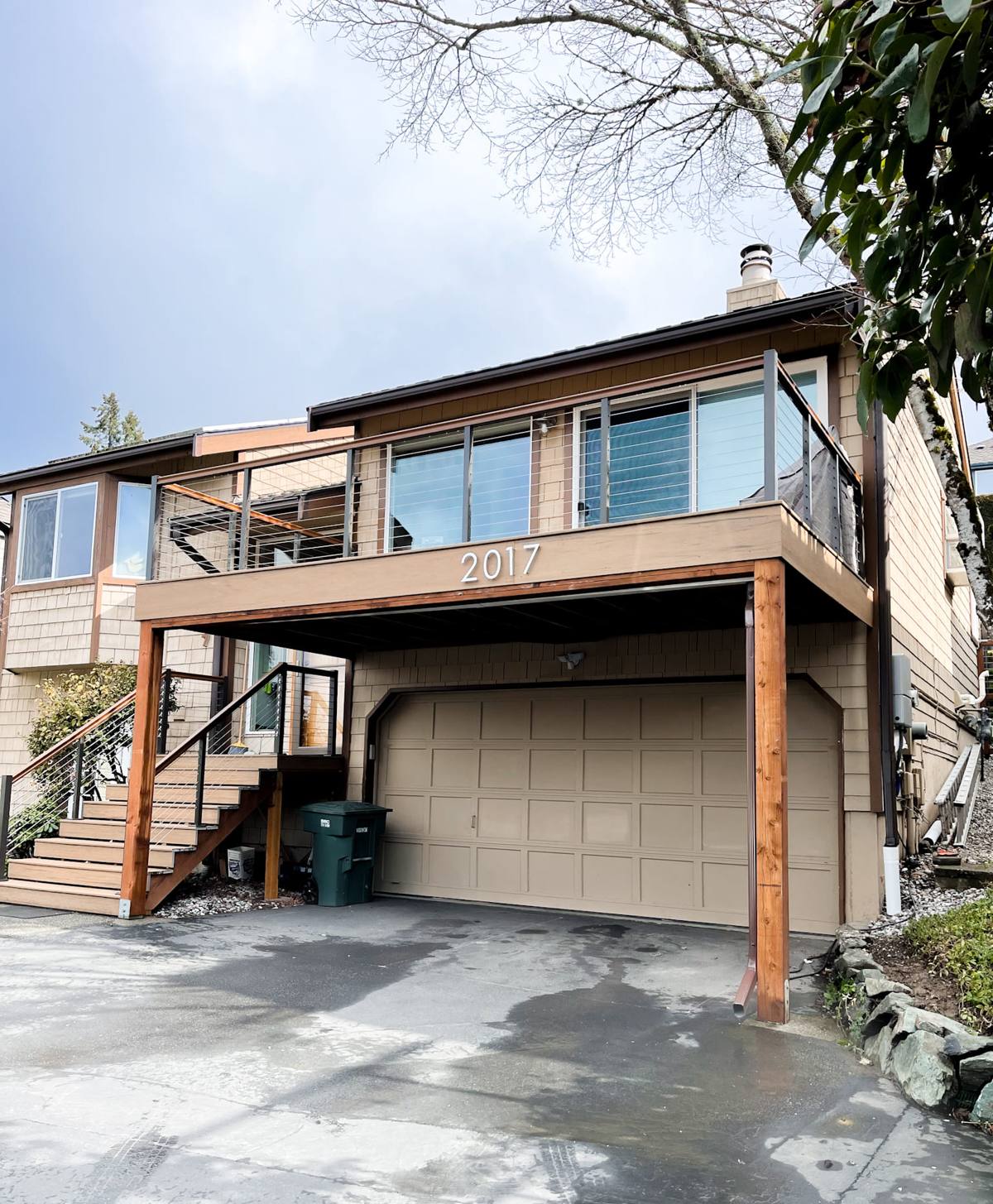
What This Climate Actually Does to a Deck
Whatcom County's marine-influenced climate means driving rain, high humidity, and long shoulder seasons where wood and composite surfaces almost never fully dry out. Add Nooksack's river-valley setting and tree canopy, and you get a few specific problems that don't show up the same way in a drier or more exposed part of the region:
Moss and Algae, Not Just on the Surface
Moss doesn't just make decking slippery — it holds water against the board surface and, on wood, feeds rot at the exact points where boards meet joists. Once moss establishes itself in fastener heads or board gaps, it's doing damage you can't see from above.
Ground Moisture and Splash-Back
Low-lying, shaded lots hold moisture at grade longer after a storm. Deck posts, ledger boards, and the underside of framing take a constant low-level soaking that never fully evaporates between rain events — this is where hidden structural rot starts, usually years before it's visible from the top.
Fastener and Hardware Corrosion
Salt-influenced air moving inland off the Strait combines with constant dampness to accelerate corrosion on anything less than fully rated hardware. Cheap or mismatched fasteners are one of the most common causes of early deck failure we see on service calls in this area.
What a Correctly Built Deck Looks Like Here
A deck built for Nooksack's conditions isn't a different product than a deck built anywhere else — it's the same job done with the moisture load taken seriously at every stage, not just at the decking surface.
Footings and Posts
Footings need to be set below frost depth and sized for the actual soil conditions on the lot, not a generic assumption. In low or poorly draining yards, that can mean larger footings, better drainage gravel, or post bases that keep wood well clear of standing water at grade.
Framing
Joists and beams should be either factory-treated for ground contact where they're close to grade, or protected with a joist tape/flashing system at every cut and fastener point. Every cut end of pressure-treated lumber needs to be re-sealed on site — the factory treatment doesn't reach a fresh saw cut.
Ledger Attachment
Where the deck attaches to the house, proper flashing behind and over the ledger board is not optional. This is the single most common point of hidden water intrusion on ledger-attached decks, and it's also where a poorly built deck can start feeding moisture into the house's own siding and framing.
Decking Surface
Whatever material you choose, board spacing, airflow underneath, and a consistent slope away from the house all matter more here than in a drier climate — standing water anywhere on the deck surface is where moss gets its start.
Choosing a Decking Material for This Climate
There's no universally "best" decking material — there's a best material for your budget, your maintenance appetite, and how much shade and moisture your specific lot deals with. Here's how the common options actually perform in Nooksack's conditions:
| Material | How It Handles This Climate | Maintenance | Typical Lifespan |
|---|---|---|---|
| Pressure-treated wood | Good if detailed correctly; needs sealing and is prone to moss in shaded spots | Annual cleaning, re-sealing every 1-3 years | 10-15 years |
| Cedar | Naturally rot-resistant but softer surface; still needs regular care in shade | Cleaning and finish maintenance every 1-2 years | 15-20 years with upkeep |
| Composite (capped) | Resists rot and moisture absorption; can still grow surface moss in deep shade | Periodic washing, no sealing or staining | 25-30 years |
| PVC/vinyl decking | Fully moisture-resistant, best option for heavily shaded, damp yards | Low — occasional washing | 25-30+ years |
For lots with heavy tree cover — common around Nooksack — we generally steer clients toward capped composite or PVC decking specifically because they don't absorb moisture into the board itself. Wood can still be the right call on a sunnier, more open lot, or when the homeowner wants the natural look and is comfortable with the upkeep. We'll give you our honest read on your specific site rather than pushing one product line.
A Note on Fasteners and Hardware
Regardless of decking material, we spec stainless steel or coated fasteners rated for treated lumber contact, and structural connectors rated for exterior/coastal exposure. This adds a modest amount to material cost and is one of the cheapest ways to add years to the life of the structure — skipping it to save a small amount up front is a false economy in this climate.
Our Process for a Nooksack Deck Build
We run the same disciplined process on every deck, adjusted for what your specific lot needs:
- Site walk and drainage assessment — we look at grade, shade, existing moisture problems, and how water actually moves across your yard, not just where the deck will sit.
- Design and material selection — layout, footing plan, and decking material matched to your budget and the site's moisture exposure.
- Permitting — deck permitting in this area runs through Whatcom County or the City of Ferndale depending on the parcel; we handle the application and inspections so you don't have to chase it down.
- Footings and framing — footings set to proper depth, framing built with full flashing and joist protection at every vulnerable point.
- Decking, railing, and finish work — installed with consistent drainage slope and airflow underneath.
- Final walkthrough — we go over maintenance expectations specific to your material choice and site conditions before we call the job done.
Living With a Deck in a Moss-Prone Climate
No deck in this region is truly maintenance-free — even PVC decking benefits from a wash-down once the moss season gets going. The difference between a deck that stays sound and one that starts failing early usually comes down to a short annual routine:
- Sweep or blow off leaves and debris before they mat down and hold moisture against the boards
- Wash the surface at least once a year — more often on shaded sections — to knock back moss and algae before they establish
- Check board gaps and drainage paths to make sure water isn't pooling anywhere on the surface
- Inspect railing posts and stair connections annually for movement or soft wood
- For wood decks, re-seal on the schedule recommended for your product — don't wait until the finish has visibly failed
- Keep an eye on the area under the deck for standing water or vegetation growing against the framing
None of this is difficult, but it does need to actually happen. A deck that gets ignored for three or four wet seasons in a row will show it, regardless of what material it's built from.
Why It Matters to Hire a Crew That Works This Area
Deck-building fundamentals are the same everywhere, but the details that make a deck last in Nooksack — footing depth for this soil, ledger flashing for this rainfall pattern, material choices for this much shade — come from having actually built and serviced decks in this specific stretch of Whatcom County. A crew that mostly works drier, more exposed areas can build a deck that looks fine on installation day and still be underspecced for what this climate does to it over a decade.
We're not interested in cutting corners to hit a lower number, and we're not interested in overselling materials you don't need. We'll tell you plainly what your lot requires and what's optional, so you're spending money where it actually protects the structure.
Get a Straight Answer on Your Deck Project
If you're planning a new deck or replacing one that's showing its age, we're glad to take a look and give you a clear, no-pressure estimate — including an honest read on what your specific lot needs given its drainage, shade, and exposure. Use the form below to get started.