 Ferndale Siding
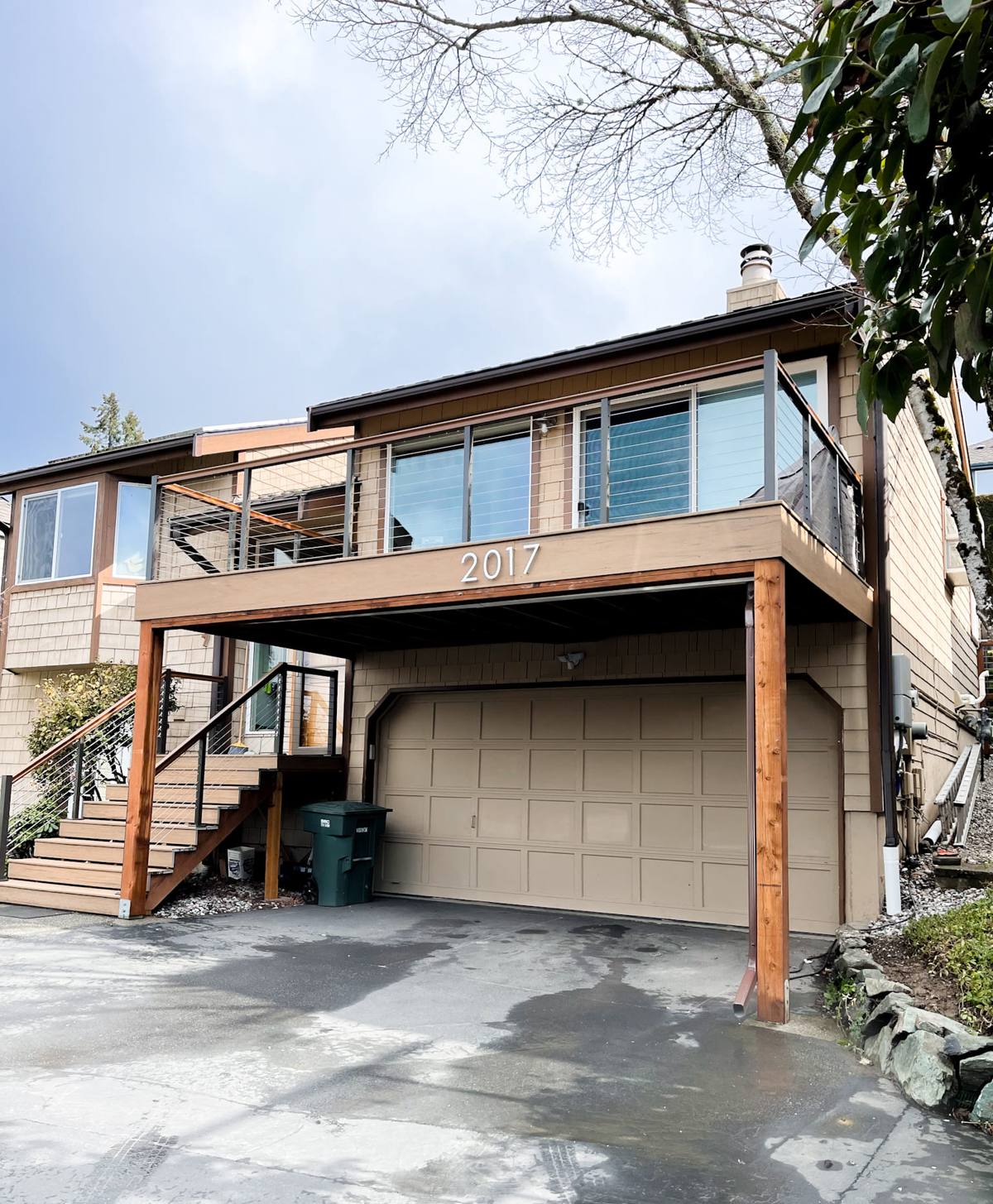
 Deck Replacement for Custer Homes
Custer sits close enough to the water and open farmland that its decks take a harder beating than people expect. Between the salt-tinged air rolling in off the Strait, wind-driven rain that gets up under railings and ledger boards, and a moss season that can run from October through April, a deck out here ages differently than one across the mountains. If yours is graying, springy underfoot, or growing moss in the shady corners no matter how often you sweep it, that's not cosmetic — it's the wood or hardware telling you it's past patching.
We work on decks throughout Ferndale and the surrounding Whatcom County communities, including Custer, and we've replaced enough of them out here to know which failure points show up first in this climate and which ones homeowners in drier parts of the state never have to think about.
Why Decks Wear Out Faster Near Custer
Salt Air and Metal Fasteners
Custer's proximity to Puget Sound and Georgia Strait means a steady low-level dose of salt in the air, even on days that don't feel "coastal." Salt air accelerates corrosion on any exposed metal — nails, screws, joist hangers, and structural connectors. Once fasteners start rusting, they lose holding strength long before the wood around them looks bad, which is why a deck can feel solid to the eye and still be unsafe underneath.
Driving Rain and Hidden Moisture
Whatcom County rain rarely falls straight down. Wind pushes it sideways, and that means it finds its way behind railings, under handrail caps, and into the ledger board connection where the deck meets the house — one of the most common rot locations we find. Water that gets trapped there doesn't dry out quickly in our climate, and trapped moisture against wood is exactly what starts rot.
Moss, Shade, and Slow Drying
A long moss season means moss and algae get a real foothold on any deck surface that stays damp — shaded sides of the house, spots under trees, areas with poor airflow underneath. Moss holds moisture against the boards even after the rain stops, softens the wood surface over time, and makes the deck genuinely slippery, which is a safety issue as much as a maintenance one.
Signs Your Custer Deck Needs Replacement, Not Just Repair
- Boards that feel spongy, springy, or soft when you walk across them, especially near the house or railing posts
- Visible gaps opening up between boards, or boards that have cupped or warped noticeably
- Rust streaks running down from screws or nails, or fasteners that back out on their own
- A ledger board area (where the deck attaches to the house) that looks discolored, swollen, or has a gap where it meets the siding
- Railings or posts that wiggle when pushed — this is a structural issue, not a cosmetic one
- Persistent moss or dark staining that comes back within weeks of cleaning
- A deck older than 15-20 years that has never had the structural framing inspected
If you're only seeing one or two of these, repair might still make sense. If you're seeing several at once, especially anything at the ledger board or support posts, replacement is usually the more honest recommendation — patching around failing framing just delays the real cost.
What a Correct Deck Replacement Involves
A deck replacement isn't just pulling up old boards and screwing down new ones. In this climate, the parts you don't see matter more than the parts you do.
Structural Framing First
We start below the decking — joists, beams, posts, and footings. If the framing is undersized, rotted, or was never built to current code, replacing the surface boards on top of it just buys a few more years before the same problems resurface. Post bases in contact with soil or standing water are a common weak point we check closely.
The Ledger Board Connection
Because this is where most water intrusion problems start, we pay particular attention to proper flashing at the ledger — the board's connection to the house needs a flashing detail that sheds water away from the wall, not one that lets it pool and soak in. This single detail is responsible for a large share of the deck failures we see in Whatcom County.
Fasteners and Hardware
Given the salt air, we use corrosion-resistant, code-rated hardware and fasteners rated for exterior/coastal exposure rather than standard-grade hardware store screws. It costs a bit more up front and it's the difference between hardware that lasts the life of the deck and hardware that starts failing in five to eight years.
Decking Material Choice
Whether you go with pressure-treated lumber, cedar, or composite decking, the right choice depends on your budget, how much upkeep you want to do, and how much shade and moisture the deck's location gets. We'll walk through the honest trade-offs for your specific site rather than push one product across the board.
Decking Material Comparison for This Climate
| Material | Upkeep in Wet/Shaded Areas | Typical Lifespan Here | Notes |
|---|---|---|---|
| Pressure-treated lumber | Needs periodic cleaning and re-sealing to resist moss and rot | 15-20 years with maintenance | Lowest upfront cost; performance depends heavily on upkeep |
| Cedar | Naturally moderate rot resistance, but still needs cleaning and finish upkeep in shaded, damp spots | 15-25 years | Attractive appearance; softer wood, more prone to surface wear |
| Composite decking | Low — resists moisture absorption and moss much better than wood | 25-30+ years | Higher upfront cost; still needs occasional washing to prevent surface algae film |
None of these are maintenance-free in a Whatcom County climate — even composite decking collects a thin algae film in shaded spots eventually. The difference is how much work that upkeep takes and how forgiving the material is if you fall behind on it for a season.
Our Deck Replacement Process
- On-site assessment — we inspect the existing deck's framing, posts, footings, and ledger connection, not just the surface boards, so any quote reflects the real scope of work.
- Honest scope and estimate — you'll know upfront whether this is a full tear-off and rebuild or whether part of the structure can be reused safely.
- Permitting — deck replacements of most sizes require a permit through Whatcom County or the City of Ferndale depending on your property; we handle that process as part of the job.
- Demolition and disposal — old decking, framing, and hardware removed and hauled off.
- Framing and flashing — new or reinforced structural framing, with proper ledger flashing to keep water out of the house connection.
- Decking installation — boards installed with correct spacing for drainage and seasonal wood movement, using corrosion-resistant fasteners throughout.
- Railings and finish details — railings, stairs, and any trim installed to code, with attention to how water will shed off the top rail.
- Final walkthrough — we go over the finished deck with you, including basic care guidance for our climate specifically.
Keeping a New Deck Ahead of Whatcom County Weather
A properly built deck still needs some seasonal attention out here. A few habits go a long way toward getting the full lifespan out of the materials you paid for:
- Sweep leaves and debris off the deck regularly in fall — trapped organic matter holds moisture and feeds moss growth
- Rinse off algae or moss film before it gets established, rather than waiting until it's visibly thick
- Check that gutters and downspouts near the deck are directing water away, not dripping onto it
- Re-seal wood decking on the manufacturer's recommended schedule — skipping a year in this climate shows up faster than it would somewhere drier
- Keep an eye on the ledger board area each spring for any discoloration or gap forming at the house connection
Why Hire a Crew That Already Works in Custer
Custer and the surrounding Ferndale area have specific conditions that don't show up the same way in a builder's guide written for a national audience — the combined effect of salt air, wind-driven rain, and a long wet-and-mossy stretch of the year. A crew that's replaced decks in this specific pocket of Whatcom County has already seen where the ledger boards tend to fail first, which post-base setups hold up and which don't, and how much drainage spacing actually matters once the rain starts in October. That local pattern recognition is the difference between a deck that just looks new and one that's actually built to hold up here.
We also know the permitting expectations for Whatcom County and the City of Ferndale, so there are no surprises mid-project on inspections or documentation.
Get a Free Estimate for Your Custer Deck
If your deck is showing any of the warning signs above, or you're just not sure whether it needs repair or full replacement, we're happy to take a look. The estimate is free, there's no pressure, and you'll get a straight answer about what your deck actually needs — use the form below to get started.