 Ferndale Siding
 Deck Replacement in Sumas, Built for What This Climate Actually Does to Wood
A deck near Sumas takes a different kind of beating than a deck in a dry climate. It's not one big event that wrecks a deck out here — it's the slow accumulation of damp air, standing moisture, and moss creeping into every joint and fastener over years of Whatcom County winters. By the time a homeowner notices soft boards or a wobble in the railing, the framing underneath has usually been dealing with moisture for a lot longer than the surface let on. Deck replacement in this area isn't just swapping old boards for new ones — it's rebuilding with the local weather pattern in mind from the ground up.
We work on homes throughout the Ferndale area, including Sumas, and we see the same failure patterns repeat because the climate factors repeat: long stretches of driving rain, a moss season that can run most of the year in shaded yards, and moisture-heavy marine air that moves through Whatcom County even well away from the water. A deck built without that in mind might look fine for a few seasons before the problems show up.
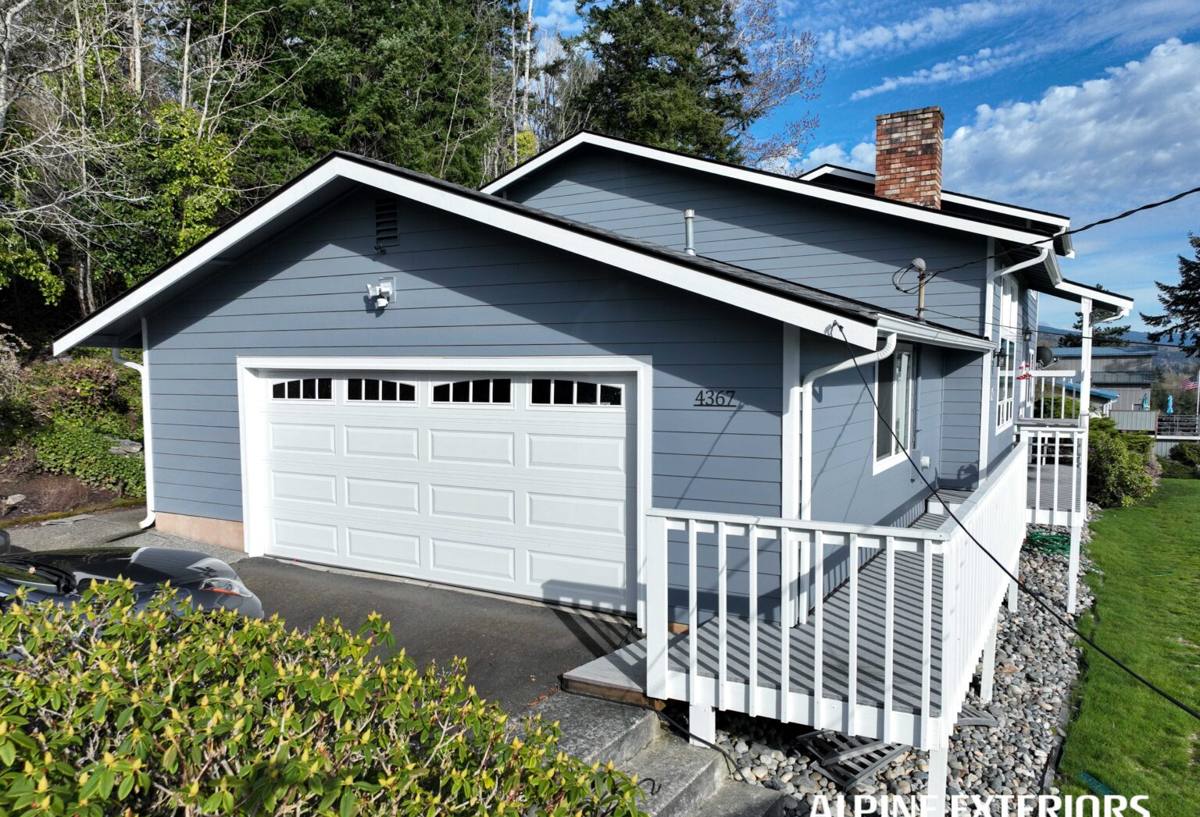
Why Decks Near Sumas Wear Out Faster Than People Expect
Moisture that never fully dries out
In a lot of the country, decks get wet, then get a long dry stretch to recover. Here, that recovery window is short. Ledger boards, joist tops, and the underside of decking spend long periods just barely damp instead of alternating wet and bone-dry. That's the exact condition that lets rot organisms and mold take hold in wood that hasn't been properly sealed or spaced for airflow.
Moss and organic buildup
A long moss season means organic growth on deck surfaces, in the gaps between boards, and on north-facing or shaded structures that never get direct sun. Moss holds moisture against the wood surface and against fasteners, and it can make a deck surface genuinely slick and unsafe in wet weather, not just unattractive.
Driving rain and wind-blown moisture
Rain in this region doesn't just fall straight down — wind-driven rain gets pushed sideways into rim joists, under railings, and into any gap where flashing or trim wasn't detailed correctly. Homes near Sumas see enough of this that flashing details which might be optional in a drier climate are not optional here.
Marine air and metal fatigue
Whatcom County sits close enough to Puget Sound and the Strait that salt-tinged marine air moves through the broader region, including inland communities. Over years, that air accelerates corrosion on cheaper fasteners, brackets, and hardware — which is part of why we don't cut corners on the metal components most homeowners never see or think about.
Signs a Deck Needs Replacing, Not Just Patching
Not every tired-looking deck needs a full tear-off. But there's a point where repair is just delaying the inevitable and spending money on a structure that's already compromised underneath. Here's what tells us a deck has crossed that line:
- Soft, spongy, or springy spots in the decking surface, especially near the house or in shaded corners
- Rust streaking or corrosion visible around fasteners, joist hangers, or ledger bolts
- Gaps or separation where the ledger board meets the house — a common point of hidden rot
- Railings or posts that flex or wobble when pushed, which usually points to compromised framing, not just a loose railing
- Persistent moss or dark staining that comes back within weeks of cleaning
- A deck more than 15-20 years old built with older fastener types or without proper flashing at the house connection
- Visible daylight or gapping between deck boards that has widened significantly since installation
If a deck is showing two or more of these, it's usually more cost-effective in the long run to replace it correctly than to keep patching a structure whose framing is already compromised.
What a Correct Deck Replacement Actually Involves
A deck replacement done right isn't just about the decking boards on top. The parts that determine whether a new deck lasts 10 years or 30 are mostly invisible once the project is finished:
Structural framing
Joists, beams, and posts sized correctly for the actual span and load, not just matched to what was there before. Older decks were often built to lighter standards than current code requires.
Ledger connection and flashing
The point where the deck attaches to the house is the single most common source of hidden rot in this climate. Proper flashing, correct fastener spacing, and a real gap for water to shed away from the house structure matter more here than almost anywhere else in the build.
Footings and post bases
Concrete footings set to the correct depth and post bases that keep wood off standing moisture, rather than embedding posts directly in concrete or soil.
Fastener and hardware selection
Corrosion-resistant, code-rated hardware throughout — hangers, screws, and structural connectors matched to the decking and framing material, not generic hardware store fasteners.
Decking material and spacing
Board spacing and fastening set up to allow drainage and airflow underneath, which matters more in a climate where the underside of a deck rarely gets a chance to fully dry.
Comparing Decking Materials for This Climate
| Material | How It Handles Local Moisture | Maintenance | Typical Lifespan Here |
|---|---|---|---|
| Pressure-treated wood | Good if properly sealed and re-sealed on schedule; vulnerable if maintenance lapses | Annual cleaning and re-sealing recommended | 10-15 years with upkeep |
| Cedar | Naturally rot-resistant but still needs sealing in a wet climate | Periodic sealing, moss removal | 15-20 years with upkeep |
| Capped composite | Strong moisture resistance, doesn't absorb water like wood | Occasional washing, no sealing needed | 25-30+ years |
| Uncapped composite (older style) | More prone to moisture absorption and mold staining over time | Requires more regular cleaning | Shorter than capped composite |
We don't push one material on every homeowner. The right choice depends on budget, how much upkeep someone wants to do, and how shaded or exposed the deck's location is. What we won't do is install a product in a way that ignores how it actually behaves in wet, shaded conditions — that's where corners get cut and callbacks happen.
Our Process for a Sumas-Area Deck Replacement
- On-site assessment. We look at the existing structure, check for hidden rot at the ledger and framing, and evaluate drainage, sun exposure, and moss patterns specific to the yard.
- Honest scope discussion. We tell you plainly whether full replacement is warranted or if a smaller repair genuinely solves the problem — we'd rather lose a bigger job than talk someone into unnecessary work.
- Material and design decisions. We walk through decking material options, railing style, and any layout changes, with real trade-offs explained, not just upsells.
- Permitting. Deck replacements of significant size typically require a permit through the applicable local jurisdiction. We handle that process rather than leaving it to the homeowner.
- Demolition and disposal. Old decking, framing, and hardware are removed and hauled off completely.
- Framing and structural work. New footings, framing, ledger flashing, and hardware installed to current code, sized for the actual deck load.
- Decking, railing, and finish work. Boards, railings, stairs, and any trim installed with attention to drainage gaps and fastener spacing.
- Final walkthrough. We go over the finished deck with the homeowner and flag any maintenance items specific to the material chosen.
Permits, Code, and Structural Considerations
Deck replacements in Whatcom County generally require a building permit once you're beyond very small, low structures, and inspections check things like footing depth, ledger attachment, guardrail height, and stair geometry. Skipping permitting on a deck replacement is a real liability — for resale, for insurance, and for safety if something is built to a lighter standard than current code requires. We pull the permits and coordinate inspections as part of the job rather than leaving that step to the homeowner to figure out.
Snow load and rainfall exposure also factor into framing decisions in this region more than in drier climates. A deck sized correctly for local conditions holds up; one built to a generic national minimum can end up undersized for what Whatcom County winters actually deliver.
What Drives the Cost of a Deck Replacement
| Factor | Why It Matters |
|---|---|
| Deck size and layout | Square footage, number of levels, and stair count directly affect material and labor |
| Decking material chosen | Wood costs less upfront; composite costs more but needs less ongoing maintenance |
| Condition of existing framing | Rotted joists, posts, or ledger boards found during demo add scope that's hard to know until the old deck comes off |
| Railing style and height requirements | Code-required guardrail height and style (cable, glass, wood baluster) changes both cost and labor |
| Site access | Decks on slopes, near property lines, or with limited equipment access take more labor time |
| Permit and inspection requirements | Larger or elevated decks require more inspection steps built into the schedule |
We won't quote a number without seeing the deck in person — too much of the real cost depends on what condition the framing is in once the old decking comes off, and giving a number before that is just a guess.
What to Ask Before Hiring a Deck Contractor Near Sumas
- Are you licensed and insured to work in Washington, and can you show proof?
- Will you pull the permit, or is that left to me?
- Do you inspect and replace framing that's found to be rotted, or just install new boards over old structure?
- What fastener and hardware grade do you use, and is it rated for this climate?
- Can you walk me through drainage and flashing details at the house connection?
- What does your workmanship warranty actually cover, and for how long?
- Have you worked on decks in this specific area before, and do you know the local permitting process?
A contractor who hesitates on any of these, especially the permit and framing questions, is worth a second look before signing anything.
Why a Crew That Already Works in Sumas Makes a Difference
A deck replacement isn't just carpentry — it's a decision about materials, drainage, and structure that has to hold up specifically to this region's rain, moss, and moisture patterns, not a generic national average. A crew that already works throughout the Ferndale area, including Sumas, has already seen how ledger connections fail here, which decking materials actually hold up under a long moss season, and what the local permitting process expects. That local familiarity shows up in fewer surprises during the job and a deck that's built for the conditions it will actually face, not just the conditions on a spec sheet.
If your deck is showing its age, or you're just done fighting moss and soft boards every spring, we're happy to take a look and give you an honest assessment — no pressure, no obligation. Use the form below to request a free estimate.