 Ferndale Siding
 Why Blaine Windows Wear Out Faster Than the Manufacturer's Warranty Suggests
Blaine sits about as close to open water and the Canadian border as a Whatcom County town gets, and that location comes with a specific set of problems for windows. Salt-laden air moves inland off the water and settles into every metal component on a window — hardware, hinges, screen frames, even the fasteners holding trim in place. Add driving rain that gets pushed sideways by wind off the water, and you have a climate that tests seals, flashing, and frame materials harder than most window warranties were written to handle.
We work throughout Whatcom County out of Ferndale, and Blaine jobs are different from the ones we do further inland. A window that performs fine in a sheltered spot can fail early on a home that takes the wind straight on. That's not a reason to avoid replacement — it's a reason to be specific about what you install and how it goes in.
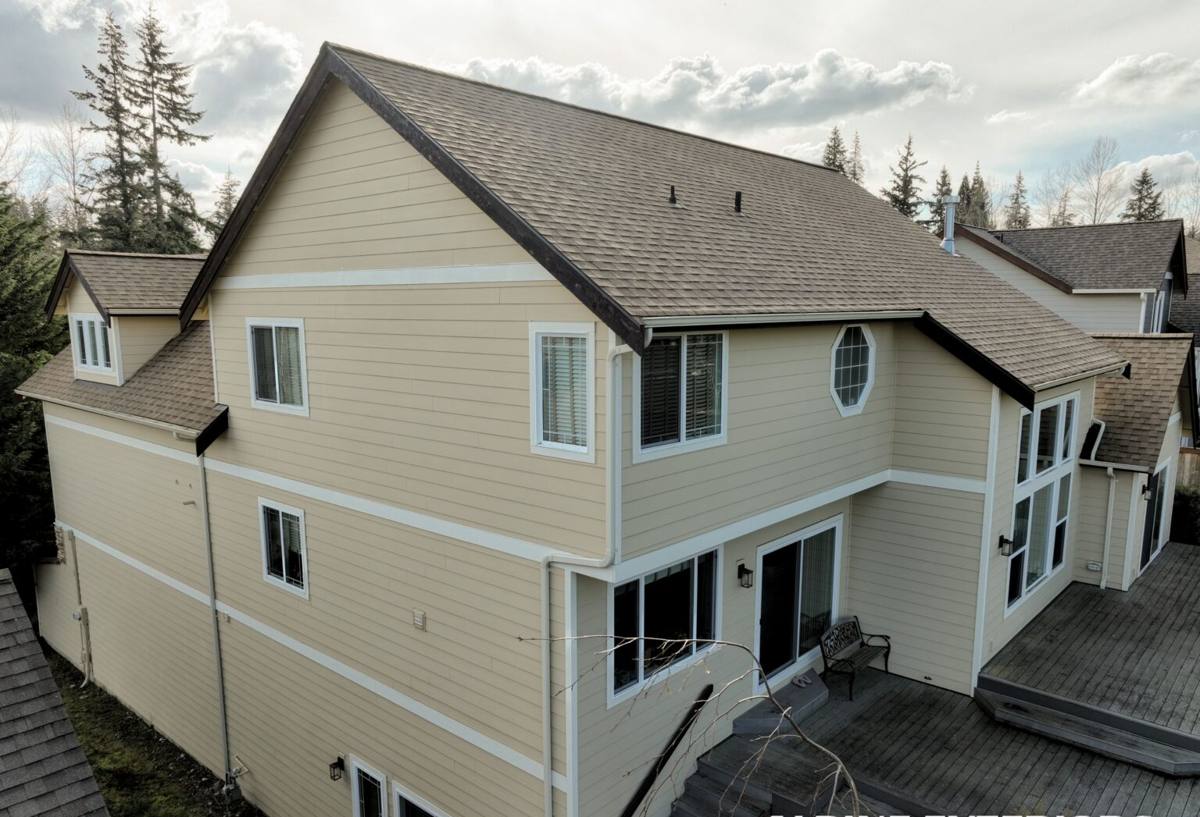
What "Energy-Efficient" Actually Means in a Window
"Energy-efficient" gets used loosely by manufacturers and installers alike. For a real comparison, you want to look at the numbers on the NFRC label that comes on every code-compliant window, not just the marketing sticker.
- U-factor: how well the window resists heat loss. Lower is better. This is the number that matters most for our winters.
- Solar Heat Gain Coefficient (SHGC): how much solar heat passes through the glass. Matters more on south- and west-facing walls.
- Air leakage: how much air moves through the assembly when it's closed and locked. Directly tied to draft complaints.
- Condensation resistance: how well the glass and frame resist fogging and moisture buildup on the interior face during cold, damp weather.
In a marine climate like ours, condensation resistance and air leakage often matter as much as raw U-factor. A window with a slightly higher U-factor but excellent air sealing and condensation performance can outperform one that looks better on paper but leaks air at the sash.
Glass Packages Worth Discussing
Double-pane with a low-E coating and argon fill is the standard baseline for this region and performs well for most Blaine homes. Triple-pane adds real value on north-facing rooms, rooms over unheated spaces, or homes right along the water where wind load and heat loss are both higher — but it adds weight and cost, and on a smaller or well-shaded window the payback is slower. We'll tell you honestly when triple-pane is worth it and when it isn't for a specific opening.
Frame Materials: What Holds Up Near Salt Air
The frame matters as much as the glass, maybe more, in a coastal climate. Here's how the common options actually behave over time near salt air and constant moisture:
| Frame Material | Salt Air / Moisture Behavior | Maintenance |
|---|---|---|
| Vinyl | Doesn't corrode; UV-stable vinyl holds color well; no paint to fail | Low — occasional cleaning |
| Fiberglass | Excellent stability, resists warping and pitting from salt exposure | Low |
| Aluminum | Prone to pitting and corrosion in salt air unless marine-grade and properly coated | Moderate — watch hardware and finish |
| Wood / wood-clad | Handsome, but exposed wood is vulnerable to rot if any seal fails; cladding protects the exterior face only | Higher — periodic inspection and refinishing |
We default to vinyl and fiberglass for most Blaine replacements because they hold up with the least ongoing attention. Where a homeowner wants the look of wood, we'll talk through the maintenance commitment honestly rather than let it be a surprise five years in. We also spec corrosion-resistant hardware — stainless or coated fasteners and hinges — instead of standard aluminum hardware that pits quickly this close to the water.
Installation Details That Matter More Than the Window Itself
A well-rated window installed poorly will underperform a mid-grade window installed correctly, especially where wind-driven rain is a regular event. Most of the leaks and drafts we get called out to fix in Blaine trace back to installation shortcuts, not product failure.
What a Correct Installation Includes
- Removing old flashing and building paper around the opening rather than caulking over it
- Installing new self-adhered flashing tape at the sill, jambs, and head in the correct shingle-lap order so water sheds outward, not into the wall
- A sloped sill pan under every window to direct any incidental water back outside instead of into the framing
- Proper shimming so the frame isn't racked, which is what causes locks to bind and seals to fail early
- Low-expansion foam or backer rod and sealant at the gap between frame and rough opening — not just a bead of caulk at the exterior trim
- Exterior sealant rated for sustained UV and moisture exposure, applied at the right joints, not everywhere
Skipping the sill pan or reusing old flashing is the single most common shortcut we see, and it's the one most likely to cause hidden water damage behind the wall long before anyone notices a problem at the surface.
Our Process for a Blaine Window Job
1. On-Site Assessment
We look at each opening individually — exposure to prevailing wind and rain, condition of the existing flashing and sheathing once trim is removed, and whether there's any sign of past moisture intrusion. Blaine homes on more exposed lots get a different recommendation than a home tucked behind mature trees or neighboring structures.
2. Product Selection
We walk through frame material, glass package, and grille or hardware options based on your budget and how exposed the home is, not a one-size answer for every house on the street.
3. Installation
Full removal of the old unit and flashing, sill pan and flashing tape installed to shed water correctly, new window set plumb and level, insulated and sealed inside and out.
4. Final Check and Cleanup
We test operation, check the seal from inside and outside, and walk the site before we leave. Debris and old materials go with us, not into a pile for you to deal with.
Signs Your Current Windows Are Already Costing You Money
- Condensation or fogging between the panes — the seal has failed and the insulating gas is gone
- Visible moisture or staining on the interior sill or the wall below the window
- Drafts you can feel with a hand near the sash on a windy day
- Difficulty locking or operating the window, or a frame that looks warped or out of square
- Rooms that are noticeably colder or noisier than the rest of the house
- Paint or trim failing repeatedly around one specific window, which usually points to a hidden leak
Any one of these on its own isn't an emergency, but a window showing two or three of these signs is usually costing more in heating bills and hidden moisture damage than a replacement would.
Cost Factors for Energy-Efficient Window Replacement
| Factor | How It Affects Cost |
|---|---|
| Frame material | Vinyl is typically the most affordable; fiberglass and wood-clad cost more upfront |
| Glass package | Triple-pane and specialty coatings add cost over standard low-E double-pane |
| Window size and count | Larger openings and full-home replacements have better per-unit pricing than one-off jobs |
| Condition behind the trim | Rot or old flashing damage found during removal adds repair cost before the new window goes in |
| Access and exposure | Second-story or hard-to-access openings on exposed elevations take longer to do right |
We give a written estimate after the on-site assessment, not a phone quote, because the condition behind the old trim is often the biggest variable in the final number.
Why It's Worth Hiring a Crew That Already Works Blaine
Window installation isn't identical from town to town. A crew that mostly works drier, more sheltered inland areas can still do a technically fine install and have it underperform here, simply because they're not used to designing for sustained wind-driven rain and salt exposure as the default condition rather than the exception. We're based in Ferndale and work this part of Whatcom County regularly, so the flashing details, frame material recommendations, and hardware choices we make for a Blaine home already account for what the coast does to a window over time — not what happens in a mild, sheltered yard fifteen miles inland.
That local familiarity also means we're not guessing about permit expectations or typical construction in the area. We can look at an older window and tell you fairly quickly whether you're dealing with a straightforward swap or a job that will uncover moisture damage once the trim comes off.
Get a Straight Answer Before You Commit
If you're not sure whether your current windows are worth repairing, replacing, or leaving alone for now, we're glad to take a look and give you an honest read — no pressure, no upsell. Fill out the form below for a free estimate on energy-efficient window replacement for your Blaine home.