 Ferndale Siding
 Why Lummi Island Puts Extra Stress on Windows
Lummi Island sits out in open water, and that changes what a window has to survive compared to a house a few miles inland in Ferndale or Bellingham. Salt-laden air moves off the water and settles on everything, including window frames, hardware, and screens. Combine that with the wind-driven rain that comes through Whatcom County for much of the year, and you get windows that are working harder than most manufacturers' warranties assume. Add a long moss season, when shaded and north-facing parts of a house stay damp for weeks at a time, and it's easy to see why island windows tend to show their age sooner than windows in drier, more sheltered spots.
None of this means windows on Lummi Island are doomed to fail early. It means the material choices, the installation details, and the ongoing maintenance all need to account for the environment the window actually lives in, not a generic climate zone. That's the difference between a window replacement that holds up for decades and one that starts leaking or fogging within a few years.
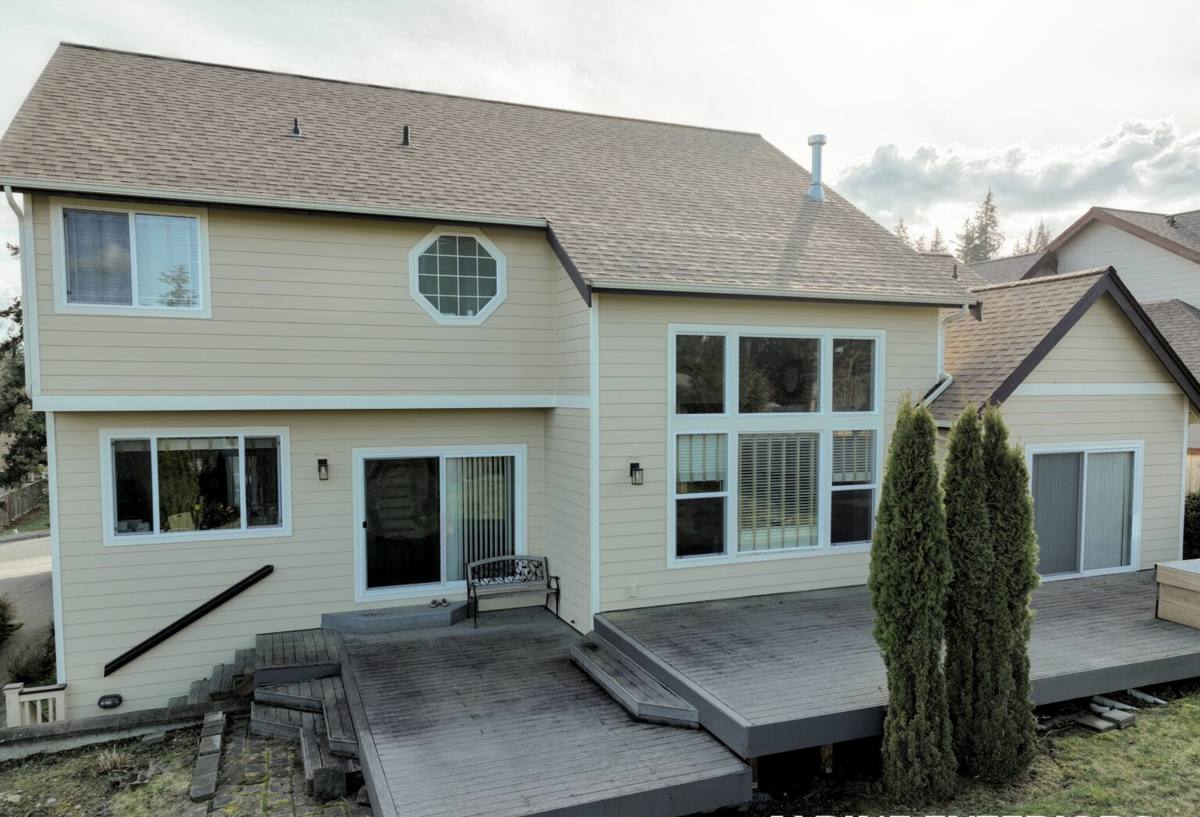
Signs Your Windows Are Ready for Replacement
Some of these show up gradually, and homeowners often adjust to them without realizing how much they've declined. Others are clear warning signs that moisture is already getting where it shouldn't.
- Fogging or a permanent haze between the panes of a double-pane window (the seal has failed and the gas fill is gone)
- Hardware — locks, cranks, hinges — that's stiff, corroded, or leaves rust streaks on the sill
- Soft or discolored wood around the frame or sill, especially on walls that face prevailing wind and rain
- Visible moss or dark streaking building up on the sill or lower sash faster than you can keep it cleaned off
- Drafts you can feel with your hand near the frame, even when the window is fully latched
- Windows that are difficult to open, close, or lock, particularly after damp weather
- Single-pane glass, which is common in older island cottages and offers little insulation or noise control
One or two of these on their own might just mean a repair or a re-caulk. Several at once, especially on the same window, usually means the unit has reached the end of its useful life.
What a Correct Window Replacement Actually Involves
Full-Frame vs. Insert Replacement
There are two basic approaches. An insert (or "pocket") replacement keeps the existing exterior frame in place and fits a new window into it — faster and less invasive, but it only makes sense if the existing frame is still solid and properly flashed. A full-frame replacement removes the old unit down to the rough opening, which is the right call whenever there's any sign of water damage, rot, or a frame that was never flashed correctly to begin with. On a lot of older Lummi Island homes, especially ones built before modern flashing standards were common, full-frame replacement is what actually solves the underlying problem rather than sealing it in behind a new window.
Flashing and Sill Pans
This is the part of the job nobody sees once it's finished, and it's the part that determines whether the window leaks in five years. A proper installation includes a sloped sill pan so any water that gets past the glass drains back outside instead of pooling against the framing, plus flashing tape integrated with the house wrap or building paper above and around the opening so water sheds down and out, not into the wall cavity. In a wind-driven rain climate, rain doesn't just fall — it gets pushed sideways into gaps that would stay dry in calmer weather. Flashing details that would be adequate in a sheltered inland location aren't always enough on an exposed island lot.
Sealant and Weep Holes
Exterior sealant should be a purpose-built window and door sealant rated for the material being joined, not general-purpose caulk, and it needs a clean, dry surface to bond to. On operable windows, weep holes along the bottom track let condensation and any intruded water escape — they need to stay clear, and a rushed installation sometimes buries or blocks them with sealant or trim.
Choosing Window Materials for Salt Air and Moisture
Every window material has trade-offs. In a salt-air, high-moisture environment, the trade-offs that matter most are corrosion resistance, how the material handles repeated wetting and drying, and how much upkeep it demands over time.
| Material | How It Handles Salt Air & Moisture | Maintenance |
|---|---|---|
| Vinyl | Doesn't corrode or rot; performs consistently in coastal exposure | Low — periodic rinsing to keep salt film and moss spores from building up |
| Fiberglass | Very stable in temperature swings and moisture; strong resistance to warping | Low — occasional cleaning, factory finish holds up well |
| Wood-clad | Good insulating properties, but any breach in the cladding exposes wood to rot risk | Higher — cladding seams and any exposed wood need regular inspection |
| Aluminum | Prone to corrosion and pitting in salt air unless marine-grade and properly coated | Higher — hardware and frame finish need more frequent attention |
We don't push one brand or one material on every job. We install what fits the specific house, the specific exposure, and the homeowner's budget and priorities. What we do steer people away from, on an exposed island lot, is uncoated or standard-grade aluminum hardware and fasteners — stainless steel hardware costs a little more up front and holds up dramatically longer once salt air gets involved.
What Drives the Cost of a Window Replacement Project
Every project is different, but the same handful of factors move the price up or down on most jobs. Getting a specific number requires an on-site look at your windows, which is part of what a free estimate is for.
| Factor | Why It Matters |
|---|---|
| Insert vs. full-frame replacement | Full-frame costs more but is often necessary when the existing frame is damaged |
| Window size and configuration | Large or custom-shaped openings, bays, and multi-window units cost more than a standard single unit |
| Frame material | Vinyl is typically the most budget-friendly; fiberglass and wood-clad cost more up front |
| Number of windows replaced at once | Doing several windows in one project usually lowers the per-window cost versus one at a time |
| Condition of the existing opening | Rot repair or rough-opening rebuild adds labor beyond the window itself |
| Access and site logistics | Upper-story windows, tight access, or ferry-dependent scheduling can affect labor time |
Our Process for Lummi Island Homeowners
We start with an on-site assessment — looking at the actual condition of your existing windows and frames, not just taking measurements over the phone. From there we talk through material and product options that fit your home's exposure, your budget, and how the window needs to perform, whether that's cutting drafts, reducing outside noise, or simply stopping a leak that's been bothering you for a season or two.
Once you approve a plan, we order product, schedule the install, and build the ferry crossing into the timeline up front rather than treating it as a surprise. Because we already work on the island regularly, we plan crew time, materials, and tools around the ferry schedule instead of losing a day mid-project to a missed sailing. On installation day, that means removing the old window, correcting any flashing or framing issues we find, setting and leveling the new unit, sealing it properly, and cleaning up the site before we leave — including hauling away the old windows and job debris.
Living with Moss Season: Maintenance After Installation
A correctly installed window in a good material needs relatively little upkeep, but "little" isn't "none," especially in a climate that stays damp and shaded for a good part of the year. A simple seasonal routine goes a long way:
- Rinse frames and sills periodically to clear salt residue and moss spores before they take hold
- Keep weep holes clear of debris, moss, and dirt so water can drain as designed
- Check exterior sealant lines once a year for cracking or gaps and have them touched up before they fail
- Wipe down hardware occasionally, especially on operable windows that see regular use
- Trim back vegetation that keeps a window in constant shade and dampness, if that's practical for your property
None of this requires special equipment or products — it's mostly about not letting moss and salt film sit undisturbed for years at a stretch.
Why a Crew That Already Works Lummi Island Matters
Window replacement isn't exotic work, but doing it well on an island in Whatcom County has a logistics layer that inland jobs don't. A contractor who hasn't worked the island before has to learn the ferry schedule, figure out material and tool logistics, and estimate travel time on the fly — often at the homeowner's expense in the form of longer timelines or padded quotes to cover the unknowns. A crew that already services Lummi Island has that figured out before your project starts, which means fewer surprises, more predictable scheduling, and a quote that reflects real conditions instead of guesswork.
It also means we've seen how homes on the island actually age — which sides of a house take the worst weather, which older window styles are common, and which shortcuts in a prior installation tend to cause problems years later. That local pattern recognition doesn't replace a proper on-site assessment of your specific home, but it does mean we're not learning the island's climate on your project.
If your windows are drafty, fogged, hard to operate, or just older than you'd like to think about, we're happy to take a look and give you a straight, no-pressure assessment of what they need. Fill out the form below for a free estimate, and we'll work with you on timing that fits the ferry schedule and your household.