 Ferndale Siding
 Birch Bay's Weather Is Hard on Windows
Birch Bay sits right on the water, and that changes what a window has to survive. A window installed a few miles inland in Ferndale deals with rain and cold. A window installed near the Birch Bay shoreline deals with all of that plus salt-laden air, wind-driven rain that hits the glass sideways instead of straight down, and a moss and algae season that runs long into a wet Pacific Northwest year. None of this is exotic — it's just a more demanding version of the same Whatcom County climate — but it means a window that's "fine" somewhere else can fail early here if it isn't installed with that exposure in mind.
We're a Ferndale-based crew, and Birch Bay is part of our regular service area, not a special trip. That matters more than it sounds like it should. A lot of what separates a window installation that lasts twenty-plus years from one that starts leaking in five comes down to details that only show up when you've actually worked on homes in this specific stretch of coastline.
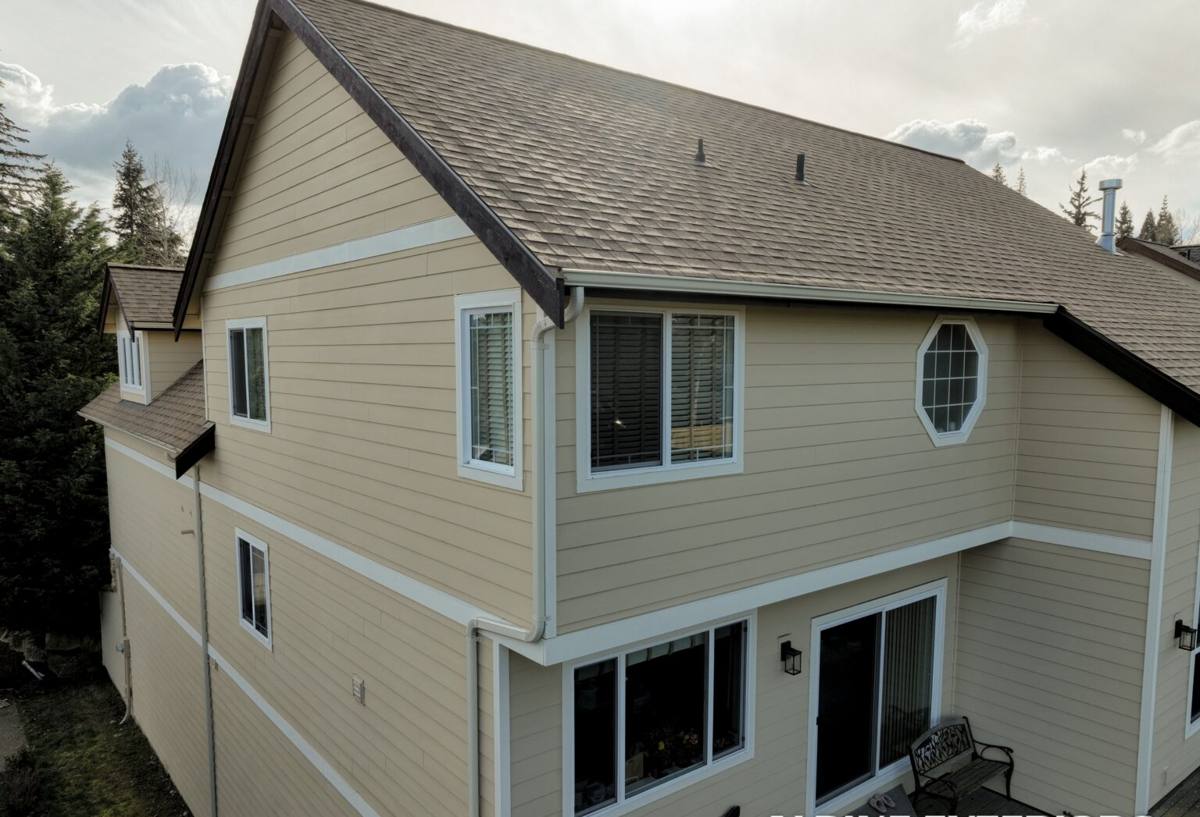
How Salt Air and Moisture Damage Windows Over Time
Corrosion of Hardware and Frames
Salt air is corrosive, and it doesn't need to be a stormy day to do its work — it's just present in the air near the water, day after day. Window hardware (hinges, locks, balance mechanisms) and metal components in some frame systems are the first things affected. Aluminum-clad and lower-grade hardware can pit, stiffen, or discolor years before an inland window shows the same wear. This is one reason frame and hardware material choice matters more in Birch Bay than it does a few miles inland.
Wood Rot and Sill Damage
Driving rain off the water finds gaps that calmer weather never would. Combined with the region's long wet season, any point where water can get behind trim or sit against a sill will eventually cause rot in wood components, staining, or swelling. This is almost always an installation problem, not a window problem — the window itself can be excellent and still fail if the flashing and drainage behind it weren't done correctly.
Signs Your Birch Bay Home Needs Window Attention
Coastal homes tend to show window problems earlier than inland homes, simply because the conditions are harsher. Common signs we see on service and replacement calls in this area include:
- Fogging or a permanent haze between the panes of a double-pane window — the seal has failed and the gas fill is gone
- Soft or discolored wood at the sill, sash corners, or exterior trim
- Windows that are noticeably harder to open, close, or lock than they used to be
- Visible corrosion or stiffness in the hardware, especially on the side of the house facing the water
- A cold draft near the frame even when the window is fully latched
- Paint or finish that's bubbling, peeling, or chalking faster than it should
- Interior condensation or moisture staining on the wall below the window
Any one of these on its own might just mean a repair or a re-seal. Several of them together, or a window over 20 years old, usually means it's time to talk about replacement rather than patching.
What a Correctly Installed Window Actually Involves
Most window failures we get called out to fix in this area aren't a bad window — they're an installation that skipped a step that only matters in a wet, wind-exposed climate. A correct install is mostly invisible once it's done, which is exactly why it's worth understanding what should be happening behind the trim.
Flashing and Water Management
Every opening needs a sill pan or back-dam flashing so that any water that does get past the window has somewhere to go besides your wall framing. Self-adhered flashing membrane needs to be lapped correctly with the house's weather-resistive barrier — shingle-style, so water always drains outward and down, never into a seam. This is the single most common shortcut we find on older or poorly done installs, and it's the one most likely to cause slow, hidden rot.
Sealants and Air Sealing
Exterior sealant closes the visible gap between the window and the siding, but it isn't a substitute for proper flashing — caulk alone will eventually crack, shrink, or lose adhesion, especially with the UV and moisture cycling a shoreline location gets. Interior air sealing (a backer rod and sealant, or a proper low-expansion foam) stops drafts and condensation without trapping moisture where it can't dry out.
Fasteners, Shimming, and Squaring
A window that isn't shimmed square will bind, won't lock properly, and puts uneven stress on the seals over time — that stress shows up years later as premature seal failure or hardware wear. Fasteners need to be the right type and length for the framing and cladding involved, and corrosion-resistant given the salt air exposure.
Choosing a Frame Material for a Salt-Air, High-Moisture Climate
There's no single "best" window material — it depends on budget, the look you want, and how much maintenance you're willing to do. For a Birch Bay property, salt air resistance and moisture behavior matter more than they would inland. Here's how the common options generally compare in this specific environment:
| Frame Material | Salt Air / Corrosion Resistance | Moisture & Rot Risk | Maintenance in Moss Season | Relative Cost |
|---|---|---|---|---|
| Vinyl | Good — won't corrode or rust | Low; won't rot, but seams need proper installation to stay watertight | Low — occasional rinse to clear salt film and grime | $ |
| Fiberglass | Very good — dimensionally stable, resists pitting | Low; handles moisture and temperature swings well | Low — similar upkeep to vinyl | $$–$$$ |
| Wood-Clad | Depends on cladding; exposed wood trim needs protection | Higher if finish or flashing is neglected | Higher — finish and joints need periodic inspection | $$$ |
We'll walk you through the honest trade-offs for your specific home rather than pushing one material for every job — a shaded, wind-sheltered lot and an exposed waterfront lot in the same neighborhood can reasonably call for different choices.
Our Window Installation Process
We run the same process on every Birch Bay job, adjusted for the specific exposure of that wall or elevation:
- Assessment. We look at the existing opening, check for hidden rot or water damage behind the trim, and note which elevations take the most wind-driven rain.
- Careful removal. The old window and any damaged sheathing or framing come out cleanly, and we inspect what was behind it before closing anything back up.
- Flashing and waterproofing. Sill pan, back-dam, and flashing membrane go in first, tied properly into the house's weather barrier.
- Setting and squaring the window. The new window is shimmed level, plumb, and square, then fastened per the manufacturer's specification for the wall type.
- Sealing, inside and out. Interior air sealing and exterior sealant are applied as separate, correct steps — not one doing the other's job.
- Trim and finish work. Exterior trim is reinstalled or replaced and sealed to shed water outward.
- Final check. We test operation, locks, and seals before we call the job done.
Depending on the number of openings and any hidden repair work discovered along the way, most single-home jobs take anywhere from one day to about a week.
Why a Local Ferndale Crew That Works Birch Bay Matters
A crew that mostly works dry, sheltered, inland jobs can still do a technically correct installation and still under-build it for a shoreline exposure — not because they're careless, but because it's simply not what they see day to day. Working Birch Bay regularly means we already have a feel for which elevations of a home take the worst of the wind-driven rain, how quickly moss and algae build up on north- and west-facing trim here, and what level of flashing and sealant detail actually holds up through a full wet season on the water.
It also means we're not learning Whatcom County's permitting and inspection expectations on your job. For most straightforward window replacements — same size opening, no structural changes — permitting is minimal, but anything involving a resized opening or structural header work should go through the proper process, and we handle that as part of the job rather than leaving it for you to sort out.
Questions Worth Asking Before You Hire
Window installation is one of those jobs where the quality is mostly hidden once the trim goes back on, so it's worth vetting who's doing the work rather than just comparing quotes. A few questions worth asking any contractor bidding a Birch Bay job:
- Do you install a sill pan and back-dam flashing on every opening, or only when asked?
- How do you tie new flashing into the existing weather-resistive barrier?
- Are you licensed and insured to work in Washington, and can you provide proof?
- Will the same crew that gives the estimate be doing the installation?
- What's your plan if you find rot or water damage once the old window is out?
- What warranty covers the installation itself, separate from the manufacturer's product warranty?
A contractor who answers these clearly and specifically, without hedging, is generally a good sign. Vague answers about flashing or drainage are worth pushing on further.
Living With Coastal Windows: Maintenance in Moss Season
Even a well-installed window benefits from a little seasonal attention in a spot like Birch Bay. A simple rinse of the exterior glass and frame a couple of times a year clears salt film before it has a chance to etch or dull the finish. Weep holes along the bottom of the frame — the small openings that let trapped water drain back out — should be checked and cleared if moss, dirt, or algae build up and block them, since a blocked weep hole can turn a well-drained window into a wet one. Wood trim and sills, wherever they're used, hold up much better with prompt attention to any peeling paint or failing caulk rather than waiting until it's visibly rotted. None of this is heavy maintenance, but skipping it entirely in a high-moisture climate shortens the life of even a good installation.
Get a Free Estimate for Your Birch Bay Home
If your windows are drafty, fogged, hard to operate, or just original to a home that's due for an update, we're happy to take a look and give you a straightforward, no-pressure estimate. Use the form below to get in touch, and we'll schedule a time to come out and walk the property with you.