 Ferndale Siding
 Windows in Fairhaven: Why the Bay Changes the Math
Fairhaven sits right on Bellingham Bay, and that waterfront position changes what "energy-efficient windows" actually needs to mean for a home there. Everywhere in Whatcom County, an efficient window has to hold heat in through a long, damp heating season. In Fairhaven specifically, it also has to survive salt-tinged marine air, wind that drives rain sideways into the wall, and a moss and mildew season that can run most of the year on the neighborhood's shaded, tree-covered lots. A window that only solves the energy side of that equation and ignores the moisture side won't stay efficient for long — a failed seal or a rotting frame will erase whatever the glazing package was rated to save.
We work on siding, roofing, windows, and decks throughout this stretch of Whatcom County, from Ferndale down through Bellingham's waterfront neighborhoods, and Fairhaven is one of the areas where we see window performance degrade fastest if the original installation didn't account for its specific exposure. This page is about what a correct, genuinely energy-efficient window job looks like for a Fairhaven home — not just which glass package to buy, but how the window gets installed so that performance actually holds up.
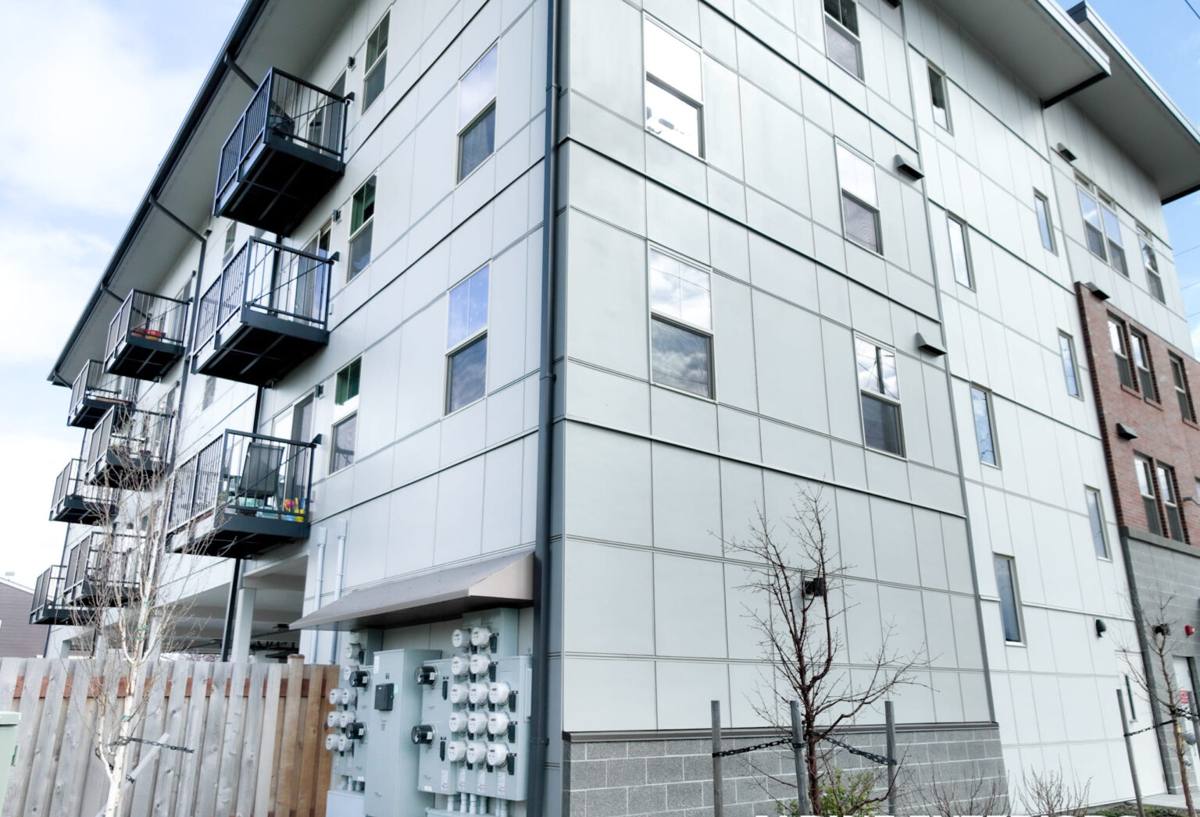
What Fairhaven's Marine Climate Does to Window Performance Over Time
Salt Air and Corrosion at the Frame and Hardware
Homes close to Bellingham Bay sit in a steady drift of salt-influenced, moisture-laden air, not just during storms but as a background condition most of the year. That kind of exposure works slowly on lower-grade window hardware, fasteners, and weatherstripping. Locks get stiff, hinges pit, and weatherstripping compresses or degrades years ahead of schedule — and every one of those failures is also an energy failure, since a window that doesn't latch tightly or seal fully against its weatherstripping is leaking conditioned air no matter how good its glass is.
Wind-Driven Rain at the Rough Opening
Fairhaven's position on open water means storms push rain sideways rather than letting it fall straight down. That matters for windows because wind-driven rain finds gaps at the rough opening — where the frame meets the wall — that would stay dry in a calmer, more sheltered setting. Water that gets behind the frame doesn't just risk rot; it also compromises the insulation packed into that gap, which is part of the window's real-world thermal performance, not just the glass itself.
A Long Moss and Mildew Season on Sills and Trim
Mild temperatures, near-constant dampness, and Fairhaven's mature tree canopy add up to a moss and mildew season that runs long on shaded, north-facing elevations. Window sills and trim are common places it takes hold, especially where drainage is poor or water sits instead of running off. Beyond the cosmetic issue, standing moisture at a sill is a sign water isn't draining the way the installation intended — the same condition that lets cold, damp air work its way past a window's seals.
Condensation and Comfort Swings
The temperature difference between a heated Fairhaven interior and a cold, wet exterior creates real condensation pressure on window glass, especially through the winter months. Older single-pane windows or double-pane units with a failed seal show this constantly — fogging between panes, water pooling on sills, cold radiating off the glass into the room. That's not just an energy loss; it's often the clearest early sign that a window's insulating value has already dropped well below what it was rated for.
What Actually Makes a Window Energy-Efficient
"Energy-efficient" gets used loosely in window marketing, so it's worth being specific about what actually drives performance, especially in a climate like this one where the priority is holding heat in through a long wet season more than blocking summer sun.
- U-factor: Measures how much heat the window loses. Lower is better, and it's the single most important number for a Fairhaven home given how many months of the year the heating system is running against cold, damp air outside.
- SHGC (solar heat gain coefficient): Measures how much solar heat passes through the glass. It matters less here than it would in a sunnier climate, but it's still worth checking on west- and south-facing windows that catch afternoon sun off the water.
- Low-E coatings: A microscopically thin coating that reflects radiant heat back into the room in winter and reduces unwanted heat gain in summer. It also raises the interior glass surface temperature, which is a direct, practical way to cut down on the condensation problem described above.
- Gas fill between panes: Argon or krypton gas fills are denser than air and slow the convective heat transfer between panes. It's a small line item on a spec sheet that has a real, measurable effect on U-factor.
- Warm-edge spacers: The spacer that separates the panes at the edge of the glass affects how much heat and condensation form right at that edge — an old-style metal spacer conducts heat and cold far more than a modern warm-edge design.
The NFRC label on a legitimate window shows U-factor and SHGC as tested numbers, not marketing language. When comparing options, that label is worth more than a sales brochure's description of the glass package.
| Frame Material | Energy Performance | How It Handles Fairhaven's Exposure |
|---|---|---|
| Vinyl | Good insulating value; multi-chamber frames perform well | Resists rot and corrosion well; a solid, affordable fit for this climate |
| Fiberglass | Excellent; low thermal expansion holds seals tighter over time | Very stable against temperature swings and moisture; among the best long-term fits for a marine site |
| Wood-clad | Good, with attractive interior wood option | Cladding protects the exterior face, but any exposed or damaged cladding lets moisture reach the wood core |
| Aluminum (thermal-break) | Weaker than the others unless a true thermal break is engineered in | Naturally corrosion-resistant, but a poor thermal break turns the frame into a cold spot and condensation source |
Installation: Where Efficiency Numbers Either Hold Up or Fall Apart
A window's rated U-factor and SHGC are lab numbers, tested on a properly installed unit. In the field, installation is what determines whether a Fairhaven home actually gets that performance or something well short of it. The gap between the window frame and the rough opening needs to be insulated correctly, not left empty or overstuffed with the wrong material. The flashing has to lap correctly with the house wrap and siding so wind-driven rain is directed out and away rather than trapped behind the frame. And the interior and exterior seals both need to be continuous, because a gap in either one is a direct path for conditioned air to leak out and damp exterior air to leak in — regardless of how good the glass package is.
Common Installation Shortcuts We See on Older Fairhaven Homes
On repair and replacement calls in Fairhaven's older housing stock, the most common source of both energy loss and water damage isn't the window unit itself — it's a retrofit installation that went in over an old frame without addressing rot underneath, or caulk used as the only line of defense against wind-driven rain instead of proper flashing. Caulk is a supplement to flashing, not a substitute for it, and it's one of the first things we check when a homeowner tells us a "new" window still drafts or fogs.
Signs a Fairhaven Home Is Losing Energy Through Its Windows
- Noticeable drafts or cold spots near the frame even when the window is fully latched
- Fogging or moisture trapped between the panes of a double-pane window
- Rooms near windows that feel noticeably colder than the rest of the house in winter
- Heating bills that have crept up without another clear explanation
- Single-pane glass, or older double-pane units with no low-E coating
- Visible daylight or gaps where the frame meets the surrounding siding or trim
- Sashes or locks that no longer close and latch as tightly as they used to
Repair, Reglaze, or Full Replacement
Not every window showing one of these signs needs to come out entirely. A window with a failed seal but a sound frame and working hardware is often a reasonable reglaze or seal-replacement candidate, and that can restore most of its energy performance at a fraction of replacement cost. A window with a corroded frame, rotted framing underneath, or hardware that's been failing for years usually isn't — at that point, a full-frame replacement that also lets us correct the flashing and insulation behind it is what actually solves the problem instead of deferring it.
Cost Factors for Energy-Efficient Window Work in Fairhaven
| Factor | What It Affects | Why It Matters Here |
|---|---|---|
| Number and size of openings | Total material and labor cost | Older Fairhaven homes often have more, smaller windows than newer construction |
| Frame material selected | Upfront cost and long-term performance | Fiberglass and quality vinyl cost more up front but hold up longer against marine exposure |
| Glazing package | U-factor, SHGC, and condensation resistance | Low-E coatings and gas fills matter more here given how many months the heating system runs |
| Retrofit vs. full-frame replacement | Labor scope and access to the rough opening | Full-frame replacement is the only way to correct old flashing and insulation problems, common in older housing stock |
| Hidden moisture or rot found at tear-out | Additional repair cost before new windows go in | Wind-driven rain and hillside drainage in Fairhaven make trapped moisture behind old frames a common find |
Real numbers depend on the specific windows and how the house was built, which is why we walk the property and look at each opening individually before quoting rather than pricing off a flat per-window average.
Our Process
We start with an on-site look at every window in question — checking frame condition, seal integrity, hardware function, and how the existing flashing ties into the siding around each opening. From there we give a straight answer on which windows are reasonable repair or reglaze candidates and which make more sense to replace, along with a written scope before any work begins. Correct flashing, air-sealing, and insulation at the rough opening are handled as standard practice on every window we install, not offered as an upgrade — because that's the work that actually determines whether the energy performance on the spec sheet shows up in the utility bill.
Why a Local Fairhaven Crew Matters
A contractor who already works Fairhaven regularly understands how this neighborhood's combination of hillside terrain, mature tree cover, and direct exposure to Bellingham Bay affects a window installation compared to a drier, more sheltered inland property. That shows up in specific decisions — how much lap a flashing detail gets, what spacer and gas-fill package makes sense given how long the heating season runs, which hardware grade is worth specifying against salt air — and those decisions are what separate a window that performs for one winter from one that performs for decades. Because we also handle siding, roofing, and decks, window work never happens in isolation from the rest of the building envelope it's tied into.
If your Fairhaven home has drafty, foggy, or hard-to-close windows, or you're just not sure whether repair or replacement makes more sense, we're glad to take a look and give you an honest read. Reach out below for a free, no-pressure estimate.