 Ferndale Siding
 Decks Built for the Fairhaven Area's Coastal Conditions
A deck in the Fairhaven area lives a harder life than a deck built fifty miles inland. Between the salt-laden air coming off the water, the long stretch of wet months every fall through spring, and the shade that many Whatcom County lots carry from mature fir and cedar trees, a deck out here is under near-constant moisture pressure for a good chunk of the year. We build custom decks specifically with those conditions in mind, not with a one-size-fits-all approach borrowed from drier parts of the state.
This page covers what we've learned building and repairing decks for homeowners in and around Ferndale and the Fairhaven area — what the climate actually does to a deck over time, what a correctly built one looks like, and how our process works from first estimate to final walkthrough.
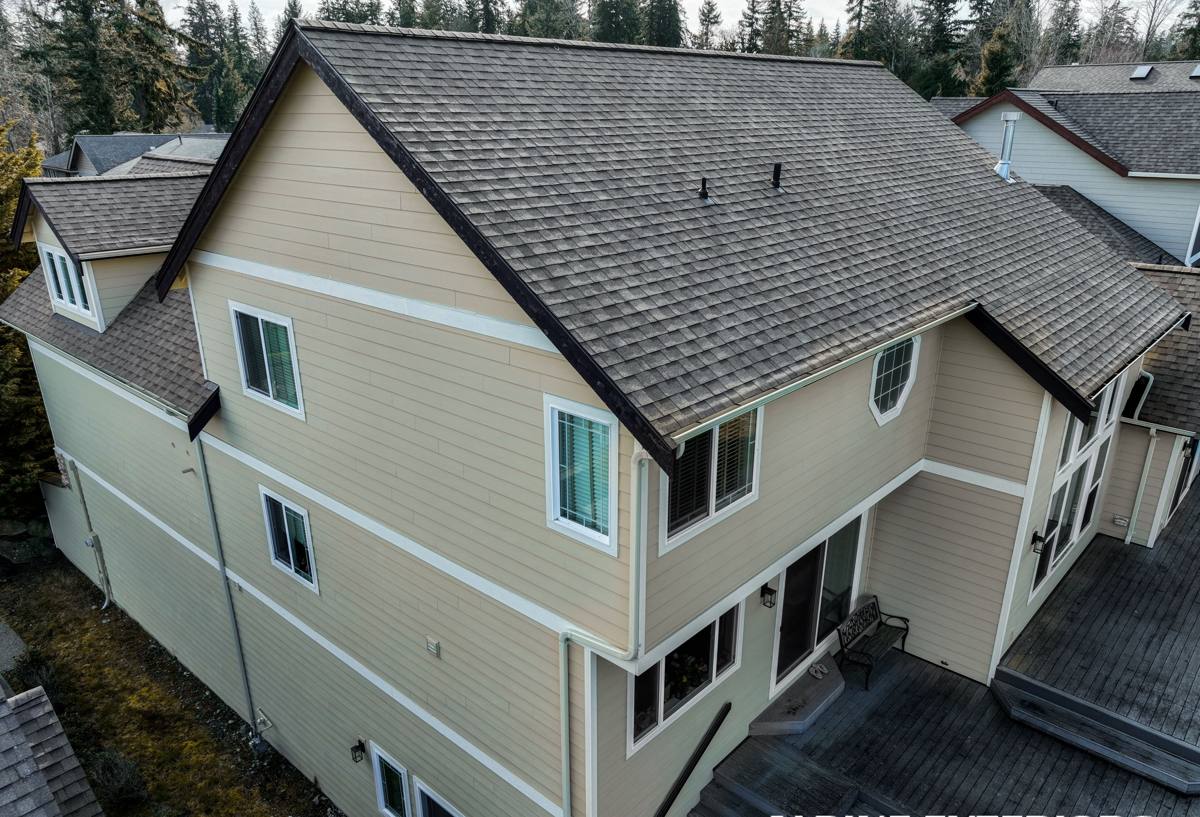
What Local Conditions Actually Do to a Deck
Salt Air and Hardware Corrosion
Homes closer to the water deal with airborne salt that settles on everything, including deck hardware. Standard zinc-coated fasteners and connectors corrode faster in this environment than they would inland — you'll see rust bleeding through decking boards, streaking down fascia, and weakening joist hangers years before they should fail. This is one of the most common issues we get called out to look at on older decks in the area: the wood itself is often fine, but the fasteners holding it together have quietly failed.
Moss, Algae, and a Long Wet Season
Whatcom County's moss season isn't a two-week nuisance — it runs long, especially on decks that sit in shade for part of the day or under tree cover. Moss and algae hold moisture against the wood surface, and that trapped moisture is what actually causes rot, not the rain itself. A deck with poor drainage or tight board spacing will grow a moss carpet faster than one built with airflow and gaps in mind.
Driving Rain and Water Intrusion Points
The rain here often comes sideways, which means water finds its way into places a straight-down rain wouldn't reach — behind ledger boards, around post bases, and under poorly flashed rim joists. Most of the structural failures we see on older decks trace back to one or two water entry points that were never properly sealed or flashed when the deck was built.
Sun Exposure vs. Shaded Decks
Not every Fairhaven-area lot is heavily shaded, and full-sun decks have their own issue: UV breakdown of finishes and faster fading of composite decking colors. The right build and maintenance plan depends on which problem your specific lot actually has, and often it's a mix of both across different parts of the same deck.
Material Choices That Make Sense Here
There's no single "best" decking material — there's a best material for your site conditions, budget, and how much upkeep you want to do. Here's how the common options actually perform in this climate:
| Material | How It Handles Our Climate | Maintenance Burden |
|---|---|---|
| Pressure-treated fir/hem-fir | Affordable, but needs consistent sealing to resist moss and moisture intrusion in shaded spots | High — annual cleaning and re-sealing |
| Cedar | Naturally more rot- and insect-resistant, ages well with our rain if finished and maintained | Moderate — periodic cleaning and refinishing |
| Composite decking | Resists moisture absorption and moss takes longer to establish, though algae can still grow on the surface film | Low — occasional washing, no sealing |
| PVC/capped composite | Best moisture and mildew resistance of the group, holds color well even in shaded, damp areas | Lowest — washing only |
We're upfront about trade-offs. Composite and PVC materials cost more up front but save on the recurring labor of sealing and staining — which matters more here than in drier climates because that maintenance window is short between wet seasons. Wood costs less initially but only performs as advertised if the maintenance actually happens on schedule.
What a Correctly Built Deck Involves
A deck that holds up in this environment isn't about using more material — it's about getting a handful of details right that a rushed job skips.
- Footings sized and set below frost depth and rated for the actual load of the structure, not a generic minimum.
- Proper ledger board flashing where the deck attaches to the house, with a drip cap and membrane that actually sheds water away from the rim joist — this is the single most common failure point we find on older decks.
- Stainless or coated fasteners and connectors rated for the corrosion exposure of a coastal-influenced climate, not standard interior-grade hardware.
- Board spacing and joist layout that allow airflow underneath and between boards so moisture doesn't sit and encourage moss growth.
- Post bases that keep wood off standing water, with proper drainage at grade so the base of every post isn't sitting in a puddle every winter.
- Railing and stair connections built to code, not just to look right — these are the components most likely to be checked during resale inspections.
Our Process, Start to Finish
1. On-Site Estimate
We walk the site with you, look at sun/shade exposure, drainage, and how the deck will tie into the house, and talk through material options that fit your budget and how much upkeep you want going forward.
2. Design and Permitting
We handle the design details — footprint, railing style, stair placement — and pull any required permits for the jurisdiction. Decks tied to living space or elevated more than a modest height typically require a permit and inspection, and skipping that step is a common source of problems at resale.
3. Site Prep and Structural Build
Footings, framing, ledger attachment and flashing, and structural inspection happen before a single decking board goes down. This is the stage that determines whether the deck lasts fifteen years or forty.
4. Decking, Railing, and Finish Work
Decking material goes down with proper spacing, railings and stairs are installed to code, and any finish (sealer, stain) is applied per manufacturer spec, not rushed to beat weather.
5. Final Walkthrough
We walk the finished deck with you, cover the maintenance schedule specific to the material you chose, and answer questions before we consider the job done.
Keeping a Fairhaven-Area Deck in Good Shape
Whatever material you choose, a little regular attention goes a long way in this climate. A basic seasonal checklist:
- Sweep debris and standing leaves off the deck surface regularly through fall — trapped organic matter is what feeds moss and algae growth.
- Rinse or wash the surface at least once or twice a year, more often in shaded areas, to knock back early moss before it establishes.
- Check fastener heads and connectors annually for rust staining, especially on decks facing prevailing wind and weather.
- Inspect ledger board flashing and any caulked joints yearly — this is the first place a leak starts.
- Re-seal or re-stain wood decking on the schedule the product actually calls for, not "whenever it looks bad" — by the time it looks bad, moisture has already gotten in.
- Clear gutters and downspouts near the deck so roof runoff isn't dumping directly onto or under the structure.
Mistakes We Commonly Find on Existing Decks
When we're called out to repair or replace a deck in the area, a few issues show up again and again: ledger boards attached without any flashing at all, joists spaced too tight for drainage, standard interior fasteners used in an exterior coastal environment, and post bases set directly against soil instead of proper drainage gravel. None of these are visible from a quick look at a finished deck — they only show up once something starts failing, which is exactly why the build quality underneath matters more than how the surface looks on day one.
Why a Local Crew Matters for This Job
A deck contractor working across the whole state has to design for the average climate everywhere they work. A crew that's out in Ferndale and the surrounding Fairhaven area regularly builds every deck already knowing which lots hold moisture, which fastener grade actually holds up near the water, and how long the moss season really runs here versus what a spec sheet assumes. That local knowledge shows up in the small decisions — flashing details, hardware grade, board spacing — that determine whether a deck needs major repair in year eight or is still solid at year thirty.
If you're planning a new deck or need an honest look at an existing one, we're happy to come out for a free, no-pressure estimate. Use the form below to get started.