 Ferndale Siding
 Fairhaven's Coastal Climate Is Tougher on Siding Than People Expect
Homes near the water in the Fairhaven area deal with a combination of weather stresses that inland Whatcom County homes simply don't see as often. Salt-laden air off Bellingham Bay accelerates corrosion on fasteners, trim, and anything with exposed metal. Wind-driven rain doesn't fall straight down here — it gets pushed sideways into wall assemblies, lap joints, and butt seams that were never designed to handle horizontal water intrusion. And because the region rarely gets long dry stretches, north-facing and shaded walls stay damp for weeks at a time, which is exactly the environment moss, algae, and mildew need to take hold.
None of this is unique to any one house — it's a function of geography. But it means siding decisions that work fine in a drier part of the state can fail early here. Paint film breaks down faster in salt air. Wood-based products swell and rot at seams that stay wet. Vinyl can warp or fade under the combination of UV and moisture cycling. The material and the installation both have to be matched to what the coast actually does to a building envelope over 20 or 30 years, not just what it looks like on installation day.
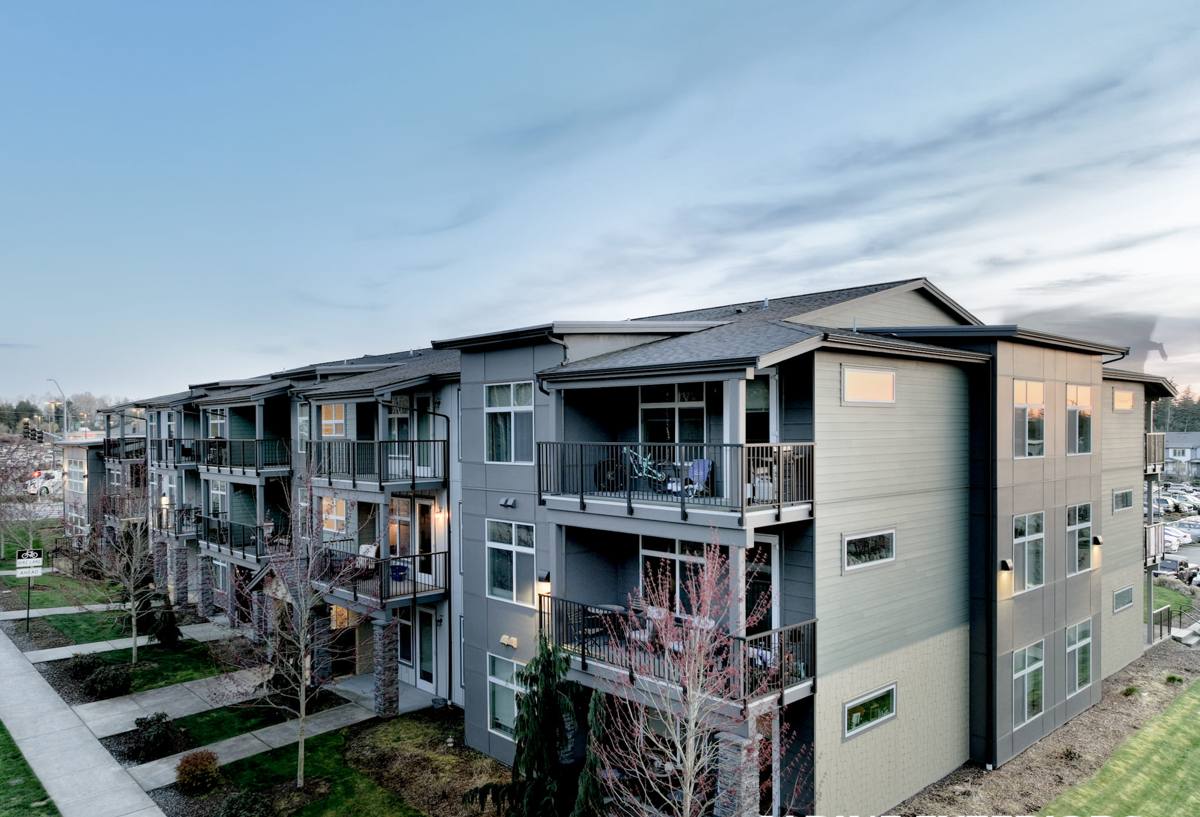
What Fairhaven Homes Actually Need From Their Siding
Given the salt air, driving rain, and extended moss season, a siding system for this area needs to do a few specific things well:
- Resist moisture absorption at the panel level, not just rely on paint to keep water out
- Hold a factory finish that doesn't chalk, fade, or need repainting every few years in salty, UV-exposed conditions
- Manage water at every joint — laps, corners, window and door openings — with flashing and clearances that assume wind-driven rain, not just vertical rainfall
- Resist organic growth on shaded and north-facing walls where moss and algae have weeks of damp conditions to work with
- Stay dimensionally stable through the area's wet winters and drier summers without cracking, cupping, or separating at seams
This is the standard we hold every Fairhaven-area project to, and it's the reason we don't treat "siding" as a single category of product. Some materials meet two or three of these requirements. Very few meet all five.
Why We Install Only James Hardie Fiber Cement
We standardized on James Hardie fiber cement siding and don't install LP SmartSide, vinyl, Cemplank, Allura, primed spruce, or cedar. That's a deliberate professional decision, not a sales preference. Fiber cement is non-combustible, doesn't rely on a resin-treated wood substrate the way engineered wood products do, and Hardie's ColorPlus factory finish is baked on and warranted against fading and peeling in a way field-applied paint can't match — which matters directly in a salt-air environment where paint film is under more stress than it would be further inland.
Hardie also engineers its siding by climate zone. Western Washington falls under the HZ5 HardieZone specification, meaning the panels we install are formulated for a wet, moderate, non-desert climate rather than a generic one-size-fits-all mix. Combined with a strong transferable warranty and a long track record in Pacific Northwest coastal markets, it's the product we're comfortable standing behind on homes that take the kind of weather Fairhaven gets.
What This Means in Practice
Choosing the material is only half the equation. A James Hardie job installed to spec and a James Hardie job installed to "close enough" can perform very differently after a few wet winters — which is why installation detail matters as much as the product choice itself.
What a Correct Fiber Cement Installation Involves
Fiber cement siding is unforgiving of shortcuts in a way that's easy to miss until years later. The materials and methods below are what separate a job that holds up on the coast from one that doesn't.
Moisture Management Details
- Weather-resistive barrier installed and lapped correctly behind the siding, not just stapled up quickly
- Proper flashing at every window, door, and roof-to-wall intersection — the places wind-driven rain actually finds its way in
- Correct clearances from grade, roof lines, and decks so siding isn't sitting in standing water or constant splash-back
- Rainscreen or drainage gap where conditions call for it, so any moisture that does get behind the panel has somewhere to go
Fastening and Finish Details
- Corrosion-resistant fasteners set to Hardie's specified depth — critical near salt air, where the wrong fastener corrodes and stains the face of the siding
- Correct nailing pattern and blind-nailing at laps where the product calls for it
- Factory-cut and factory-primed edges kept intact; field cuts sealed per manufacturer instruction
- Caulking used only where Hardie specifies it — over-caulking traps moisture just as badly as under-caulking lets it in
Every one of these details is inspectable, and every one of them is also easy to skip if a crew is moving fast. On a coastal job, skipped details show up as problems in years three through seven, not on day one — which is exactly why they're worth getting right the first time.
Our Process for a Fairhaven Siding Project
- On-site assessment — we walk the exterior, check the current siding and sheathing condition, and note trouble spots like shaded walls, poor drainage, or existing moisture damage
- Scope and product selection — we go over the right Hardie plank, panel, or shingle profile and ColorPlus color for the home, and give a clear, honest scope of work
- Removal and substrate check — old siding comes off and we inspect the sheathing underneath before anything new goes up; hidden rot gets addressed, not covered
- Weather barrier and flashing — the water management layer goes in correctly before a single piece of siding is hung
- Installation to Hardie spec — fastening, clearances, and joint treatment done to manufacturer requirements, not a shortcut version of them
- Final walkthrough — we inspect the finished job with the homeowner and address anything that isn't right before we consider the job done
Comparing Siding Options for a Coastal Whatcom County Home
| Factor | James Hardie Fiber Cement | Vinyl | Wood / Engineered Wood |
|---|---|---|---|
| Salt air / coastal durability | Strong — factory finish holds up well | Moderate — can fade and become brittle | Weaker — finish and substrate both vulnerable |
| Moisture and rot resistance | High when installed to spec | Doesn't rot, but seams can trap moisture | Prone to rot and swelling at seams |
| Moss and algae resistance on shaded walls | Good, especially with factory finish | Fair | Weaker — organic material feeds growth |
| Fire resistance | Non-combustible | Combustible | Combustible |
| Finish longevity | Factory-applied, long warranty | Color molded in, can chalk/fade | Field-applied paint, needs recoating |
This isn't a claim that other products are unusable everywhere — it's specifically why fiber cement is the better fit for the weather this part of Whatcom County actually produces.
What Affects the Cost of a Fairhaven Fiber Cement Project
| Cost Factor | Why It Matters |
|---|---|
| Square footage and home shape | More corners, gables, and dormers mean more cutting, trim work, and labor time |
| Removal of existing siding | Tear-off and disposal add labor and dump costs on top of the new install |
| Sheathing or moisture repair | Rot found once old siding comes off has to be repaired before new siding goes on |
| Siding profile and trim detail | Lap width, shingle-style panels, and trim complexity all shift labor and material costs |
| Access and home height | Multi-story homes and tight lot access can require more equipment and time |
We give a specific number after we've actually looked at the house — broad ranges without an on-site walkthrough tend to be more misleading than helpful.
What to Look for in a Fairhaven-Area Siding Contractor
- Experience specifically with coastal or near-coastal installations, not just inland siding work
- Willingness to explain flashing, fastening, and clearance details, not just color and product line
- James Hardie product knowledge, including which HardieZone products fit this climate
- A clear, written scope of work before any tear-off begins
- Straight answers about what they will and won't install, and why
A crew that already works this part of the coast has usually already seen what happens when installation details get skipped near salt air — which is a different kind of experience than simply having installed a lot of siding somewhere drier.
Long-Term Care Once Your Siding Is Installed
Fiber cement is low-maintenance, not no-maintenance, especially in a salt-air, high-moisture environment. A periodic rinse to clear salt residue and organic buildup, keeping gutters and downspouts clear so water isn't sheeting down the wall, and trimming back vegetation that keeps a wall shaded and damp all go a long way toward getting the full lifespan out of the material. None of it is difficult, but it does help to know it's expected rather than being surprised by moss on a north wall a few years in.
If you're planning a siding project for a home in the Fairhaven area and want a straight answer about what your house actually needs, we're happy to take a look and put together a free, no-pressure estimate — no obligation either way.