 Ferndale Siding
 Siding Built for Fairhaven's Coastal Exposure
Fairhaven sits close enough to the water that homes here take a different kind of weathering than siding installed a few miles inland in Whatcom County. Salt-laden air corrodes fasteners and finishes faster, wind-driven rain finds every gap in a poorly flashed wall, and the shaded, damp stretches of fall through spring keep moss and algae active for months longer than in drier parts of the state. Siding that isn't specified and installed with that combination in mind tends to show its age early — fading, staining, soft spots, and paint failure show up years before they should.
We install siding across Ferndale and the surrounding communities, and Fairhaven's exposure is one of the more demanding profiles we work with regularly. That matters because siding installation isn't one generic job — the right approach changes based on how much weather a wall actually sees, and a home a block from open water needs different detailing than one tucked behind a treeline.
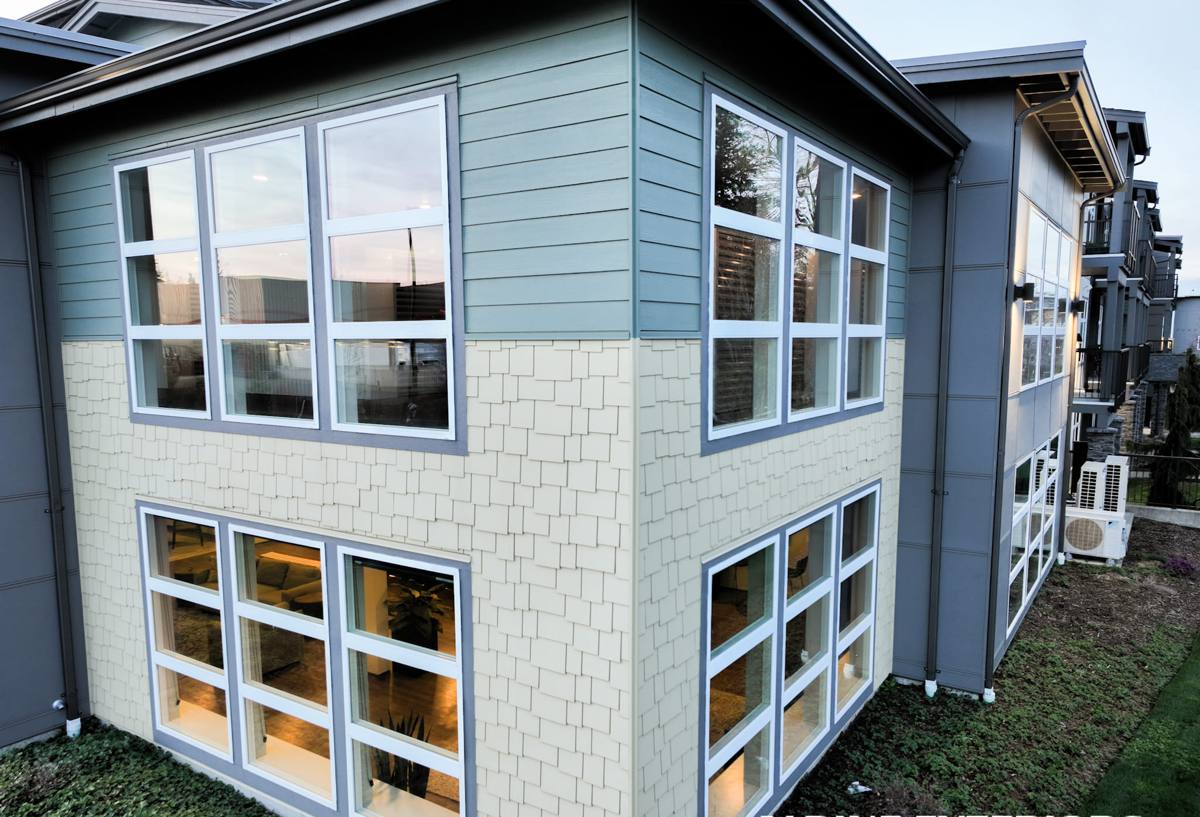
What Salt Air, Driving Rain, and Moss Season Actually Do to a Home
Salt Air
Airborne salt is corrosive to metal and abrasive to finishes. Uncoated or poorly coated fasteners rust and streak the face of the siding. Cheaper trim coil and flashing metals pit and discolor faster near the coast. Over years, salt exposure also accelerates the breakdown of factory paint films that weren't engineered to handle it, leading to chalking and color loss well ahead of the manufacturer's expected service life.
Driving Rain
Wind off the water doesn't just drop rain straight down — it pushes it sideways, into laps, seams, and any penetration in the wall. On a home in Fairhaven, that means the weather-resistive barrier behind the siding, the flashing details around windows and doors, and the way each course of siding overlaps the one below all matter more than they would on a sheltered inland lot. A siding system can look fine from the street and still be letting water behind it if these details were rushed.
Moss Season
Whatcom County's long wet season keeps shaded walls, north-facing elevations, and anything near overhanging trees damp for extended stretches. Moss and algae don't just look bad — they hold moisture against the siding surface, which is hard on paint film and can accelerate deterioration in materials that aren't dimensionally stable when wet. The lower sections of a home and any areas with poor sun exposure or airflow are usually the first to show growth.
What a Correct Siding Installation Involves
A proper installation in a coastal-exposure area like Fairhaven isn't just nailing panels to the wall. The details that don't show up in a driveway estimate are usually the ones that determine whether the siding lasts 10 years or 40.
- Weather-resistive barrier installed correctly and lapped shingle-style so water sheds down and out, never into the wall assembly
- Flashing at every penetration — windows, doors, hose bibs, vents, and any trim-to-wall transition — set to direct water outward, not just caulked over
- Correct fastener type and spacing for the specific siding product, driven to the manufacturer's depth (not overdriven, not proud)
- Proper clearance from grade, roof lines, decks, and patios so splash-back and standing water don't sit against the bottom course
- Rainscreen or drainage gap where conditions call for it, so incidental moisture behind the siding can drain and the wall can dry
- Factory-finished panels wherever possible, so the protective coating is applied and cured under controlled conditions rather than brushed on in the field
Skip any one of these and the siding may still look acceptable for a few seasons — but in a location that gets Fairhaven's combination of salt, wind-driven rain, and prolonged dampness, shortcuts show up early, not late.
Our Installation Process
1. On-Site Assessment
We walk the home and look specifically at the elevations that take the most weather — typically the sides facing prevailing wind and any shaded, damp areas prone to moss. We check the current condition of the wall assembly, existing flashing, and any signs of past water intrusion before we talk about product.
2. Tear-Off and Wall Inspection
Removing the old siding is also when problems get found — soft sheathing, missing or failed flashing, and moisture damage that wasn't visible from outside. We address what we find rather than covering it back up, because new siding over a compromised wall just hides the problem for a few more years.
3. Weather Barrier and Flashing
This is the step that determines long-term performance more than any other. We install the water-resistive barrier and flash every penetration and transition before a single piece of siding goes up.
4. Installation to Manufacturer Specification
Siding goes on with the fastener pattern, spacing, gaps, and clearances the manufacturer specifies for the product and our climate zone — not a generalized approach used on every job regardless of exposure.
5. Trim, Caulking, and Final Detailing
Trim, corners, and joints get finished so water sheds away from the wall at every transition, and touch-up on cut edges is done with a matched, compatible product.
6. Final Walkthrough
We review the finished work with the homeowner, point out where flashing and drainage details are (so there's a record of what's behind the walls), and cover basic care going forward.
Why We Install Only James Hardie Fiber Cement
We standardized on James Hardie fiber cement siding and don't install vinyl, LP SmartSide, cedar, primed spruce, or other fiber cement brands. That's a deliberate call, not a sales preference, and it matters more in an exposure like Fairhaven's than it would somewhere drier and more sheltered.
Fiber cement is non-combustible and dimensionally stable — it doesn't expand, contract, warp, or rot the way wood-based products can when they take on repeated moisture. James Hardie's ColorPlus factory finish is baked on under controlled conditions and engineered to hold color and resist fading better than field-applied paint, which matters directly where salt air and UV accelerate finish breakdown. Hardie also makes climate-engineered HZ5 product lines specifically for regions like ours, and backs installations with a strong, transferable warranty when the work is done to spec.
Vinyl siding is inexpensive and easy to install, but it can warp in temperature swings, fade over time with no way to refinish it short of replacement, and it's a poor performer against wind-driven rain if the underlying wall isn't detailed well — the siding itself does little of the real weatherproofing work. LP SmartSide and other wood-strand products are engineered better than raw lumber, but they're still wood-based, meaning any breach in the finish or a caulking failure gives moisture a path to swell and deteriorate the substrate — a real risk in a location with Fairhaven's wet season. Cedar and primed spruce look good initially but require ongoing maintenance — recoating, caulking, and vigilance — to hold up against sustained damp exposure, and that maintenance burden tends to get deferred over time. We'd rather put one product on every home, install it correctly, and stand behind it, than offer options we know perform less consistently in this specific climate.
Comparing Siding Options for a Coastal-Exposure Home
| Factor | Vinyl | Wood/Engineered Wood | James Hardie Fiber Cement |
|---|---|---|---|
| Salt air / corrosion resistance | Fair — can chalk and fade | Depends on coating upkeep | Strong with ColorPlus finish |
| Moisture / rot risk | Low rot risk, but poor wall performance if not backed by good detailing | Higher if finish is breached | Very low — dimensionally stable |
| Fire resistance | Melts/deforms | Combustible | Non-combustible |
| Maintenance | Low, but limited repair options | Regular recoating/caulking | Low with factory finish |
| Expected service life | Moderate | Moderate, upkeep-dependent | Long, when installed to spec |
What Drives Cost on a Fairhaven Job
Every home is different, and we'll always give a firm number after a walkthrough rather than a rough guess — but a few factors consistently move the price on jobs in this area:
- Condition of the existing wall assembly once old siding comes off (sheathing repair adds cost but shouldn't be skipped)
- Home size, number of stories, and complexity of the roofline and trim details
- Amount of flashing and detail work needed around windows, doors, and penetrations
- Siding profile and ColorPlus color selection
- Access — tight lots, fencing, and landscaping near the home affect labor time
Signs Fairhaven Homeowners Should Watch For
- Persistent moss or algae streaking, especially on shaded or north-facing walls
- Chalking, fading, or blotchy color loss on painted siding
- Soft spots, bubbling, or visible warping in wood-based siding
- Rust streaks running down from fastener heads or metal trim
- Caulk that's cracked, shrunk, or pulled away from joints and trim
- Any soft or spongy feel when pressing on siding near the base of the wall
Any one of these on its own isn't necessarily an emergency, but they're worth a professional look before they turn into sheathing or framing repairs.
Why Local Experience in Fairhaven Matters
A contractor who mostly works drier, inland jobs can still do competent work — but a crew that regularly installs siding in Fairhaven's exposure already knows which elevations need extra flashing attention, how moss growth patterns show up on local homes, and what fastener and finish choices actually hold up here versus on paper. That familiarity shows up in the details that aren't visible after the job is done: the flashing behind the wall, the gap left for drainage, the clearance from grade. We work in Ferndale and the surrounding Whatcom County communities regularly, and Fairhaven's coastal conditions are part of what we plan for on every visit, not something we're guessing at.
If your siding is showing wear, or you're planning ahead for a replacement, we're happy to walk the property, look at what your home's specific exposure is dealing with, and give you a straightforward assessment. There's no pressure and no obligation — just a clear look at what your home needs and what correct installation would involve. Use the form below to request a free estimate.